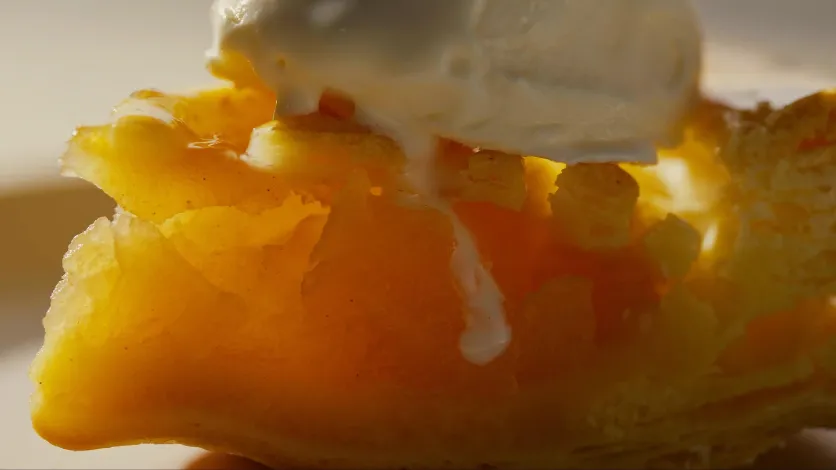
Cinematic Video Focus Techniques Part 1

Cinematic Video Techniques: Composition, Direction and Focus

Creating a cinematic video involves much more than simply pointing a camera at a subject and recording. Cinematic video techniques such as composition, pacing, focus, and the use of bokeh can influence how viewers experience a story and where their attention goes.

In this article, we explore how these techniques were used to create a short film about making an apple pie. The project was directed by video director Saki Matsumoto, who developed the story, composition, and visual direction around the idea of leading the viewer’s gaze naturally while taking advantage of the lens’s bokeh.

Rather than simply documenting the cooking process, the production uses carefully planned shots, changes in rhythm, selective focus, and shallow depth of field to create a distinct visual world.

The result demonstrates how video composition techniques, storytelling, and focus can work together to make even an everyday subject feel cinematic.

The Basics of Video Storytelling

Before thinking about camera angles or lenses, a strong video begins with a clear story.

For this production, director Saki Matsumoto approached the short film using a three-act structure: ACT 1 for setting, ACT 2 for development, and ACT 3 for resolution.

This structure can be applied to everything from short films and commercials to longer-form productions. Even when a video is only a few minutes long, establishing a beginning, development, and conclusion gives viewers a reason to continue watching.

For the apple-pie film, the basic subject was simple: making an apple pie. The challenge was turning that process into a story rather than simply showing a sequence of cooking steps.

Matsumoto focused on an important question throughout production:

Where should the viewer look?

That question became the foundation for the film’s video storytelling techniques.

Instead of showing every step of the recipe, the production selected specific actions and details that would communicate the story while maintaining a particular rhythm.

Building a Story That Keeps Viewers Interested

The short film was designed to be approximately two and a half minutes long. Because viewers have limited time, the story needed to create curiosity about what would happen next.

The first half establishes the world of the film more gradually. Longer shots allow the viewer to understand the environment and recognize the ingredients and tools being used.

As the story progresses, the pace becomes faster.

Actions such as preparing the pie dough and putting the pie into the oven are presented through quicker cuts. This creates a gradual increase in energy and anticipation as the pie gets closer to completion.

This is an important principle in video storytelling techniques: the pace of editing can change the viewer’s emotional response even when the subject itself remains simple.

Cinematic video composition showing eggs and rolling pin
The opening shots establish the world of the film using carefully selected cooking elements.

The eggs, cutting board, and rolling pin immediately suggest that the story is about cooking without explaining it directly. This is an example of cinematic video composition communicating information visually.

Using Video Composition Techniques to Establish a World

The opening shots are deliberately simple.

Rather than showing every ingredient or piece of equipment, the production selects a few recognizable objects that allow viewers to understand the setting almost immediately.

This is one of the fundamental video composition techniques to consider when creating a short film: show enough information for the viewer to understand the scene, but avoid filling the frame with unnecessary details.

The composition should give the viewer a reason to look at the important elements.

The same principle continues throughout the film.

Creating a Natural Flow Through Direction

Good direction does not always have to be obvious.

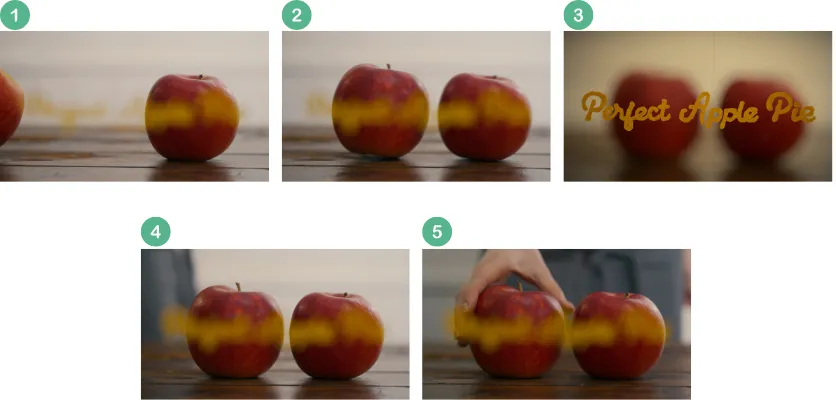
For the opening sequence, an apple rolls into the frame from the left and naturally leads into the opening title. Rather than breaking the movement into multiple conventional shots, the production keeps the action within a single shot to give the sequence a playful quality.

The challenge was to make the direction feel intentional without making the audience overly aware of the directing itself.

If a visual effect becomes too obvious, it can pull viewers out of the story.

For this reason, one of Matsumoto’s goals was to establish a natural flow while still carefully controlling what the viewer sees.

Storyboard showing apple and title focus transition
The opening sequence uses a controlled focus transition between the apple and handwritten title.

Planning Cinematic Video Composition with a Storyboard

A storyboard helps translate the creative idea into individual shots before production begins.

For this project, the storyboard specified the sequence of actions and the intended focus movement. This gave the production team a clear understanding of where the viewer’s attention should move.

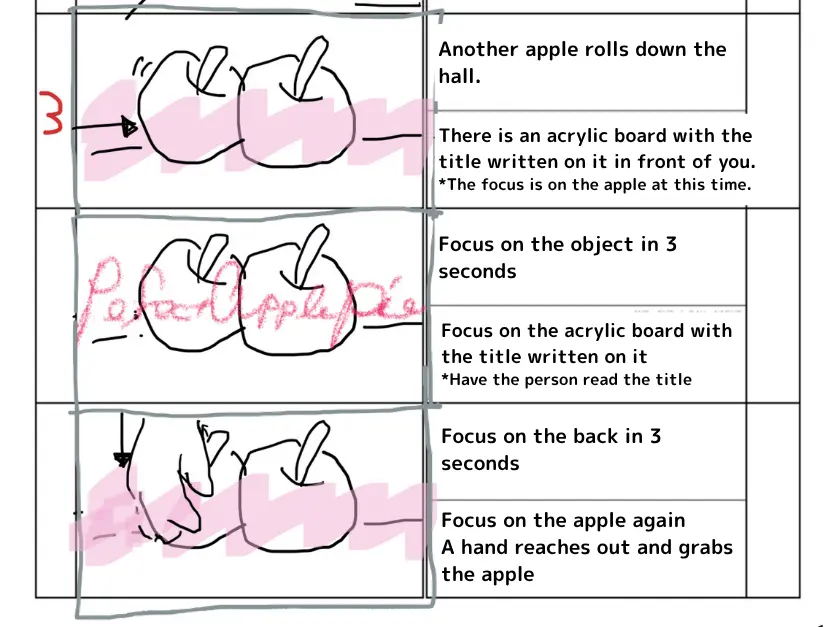
Storyboard showing cinematic focus transition from apple to title
The storyboard maps the intended focus movement from the apple to the handwritten title and back again.

The storyboard called for the focus to move from the apple to the acrylic title and then return to the apple. Although the shot was planned for a specific duration, the actual timing was refined during filming.

This illustrates an important point: cinematic video composition is planned before filming, but it can still be adjusted during production to match the natural movement of the scene.

Using Bokeh in Video to Guide the Viewer

Bokeh can be more than a visual effect.

When parts of the frame are intentionally blurred, the filmmaker can use that blur to guide attention toward the subject that matters.

For this film, the shallow depth of field was deliberately incorporated into the storytelling. The goal was not simply to create attractive backgrounds, but to use bokeh in video as a visual tool.

The viewer’s eye naturally moves toward areas of greater detail and sharpness. By controlling which subject is in focus, the filmmaker can influence that movement.

This becomes particularly effective when the subject moves or when one action needs to lead naturally into another.

The Opening Title: Focus as Part of the Story

The handwritten opening title was designed to reinforce the handmade character of the film.

Instead of adding the title entirely during post-production, the production team wanted the handwritten element to exist naturally within the scene.

The focus therefore moves between the apple and the handwritten title.

This turns focus itself into part of the visual direction.

TAMRON Lens Utility Mobile™ Ver.4.0 was used to control the focus transition and experiment with different movement speeds during filming.

Fine-Tuning Focus Movement

A focus transition that is supposed to last three seconds may sound simple, but reproducing that timing manually can be surprisingly difficult.

The actual speed of a focus movement can affect how a scene feels. Moving too quickly can make the transition feel abrupt, while moving too slowly can make the shot lose energy.

With TAMRON Lens Utility Mobile, the production team could test different focus speeds during filming and adjust them while viewing the actual footage.

This made it easier to achieve a repeatable focus movement and gave the editor more reliable footage to work with.

For beginners especially, this demonstrates how technical tools can support rather than replace creative direction.

Using Focus and Bokeh to Create Sizzle

The apple-cutting scene is one of the strongest examples of the film’s visual approach.

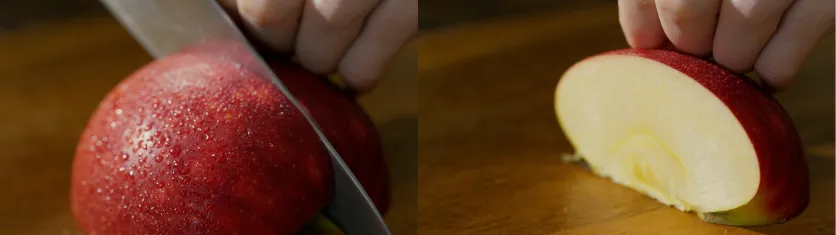
Apple cutting close-up using shallow depth of field
Selective focus emphasizes the texture and freshly cut surface of the apple.

The shot combines a narrow focal plane with a large amount of background blur.

The footage was recorded at 60 frames per second and slowed during editing to emphasize the action while maintaining natural movement.

This combination of slow motion, shallow depth of field, and carefully controlled focus creates a strong sense of texture and presence.

The technique is particularly effective for food-related imagery, where small details such as moisture, texture, and movement can make the subject feel more tangible.

Using Bokeh in Video to Create a Sense of Place

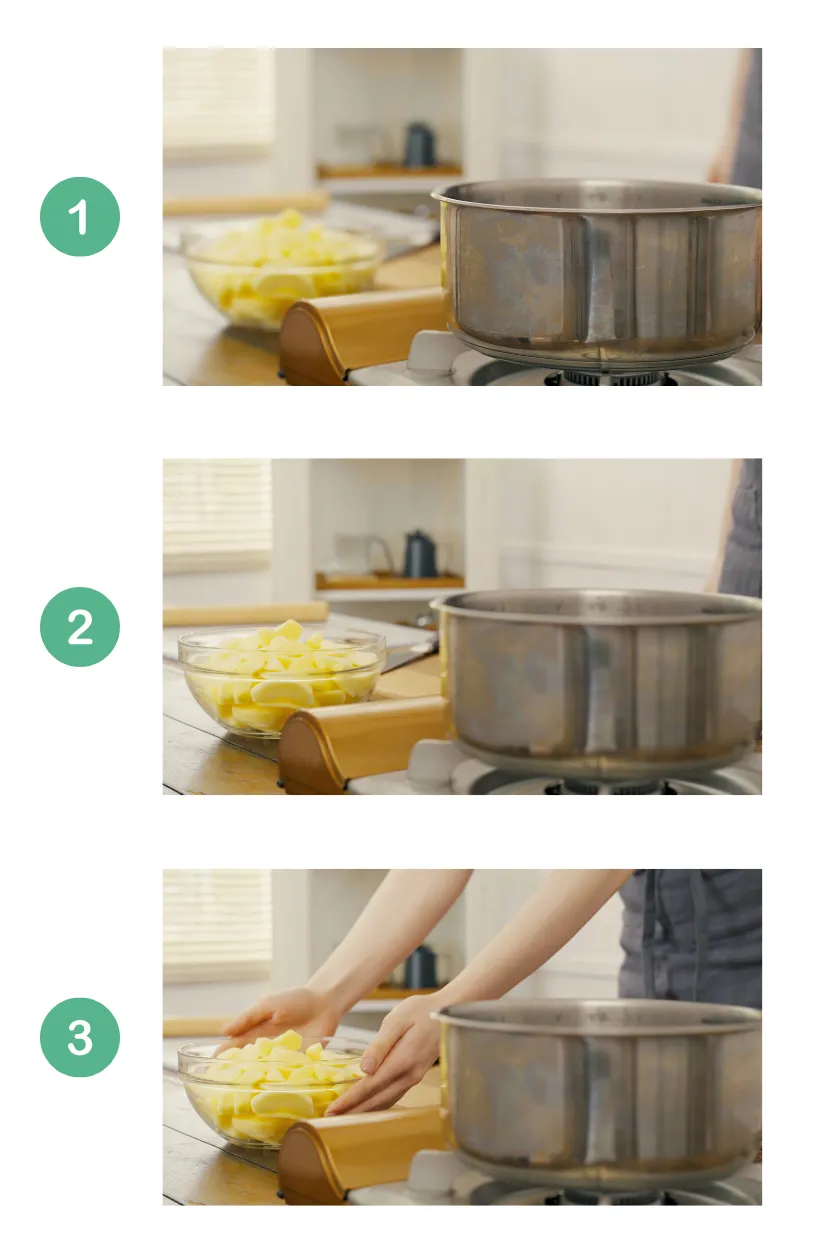
The next sequence moves from cutting the apple to placing it into the pot.

Rather than cutting immediately from one action to another, the production allows certain moments to linger.

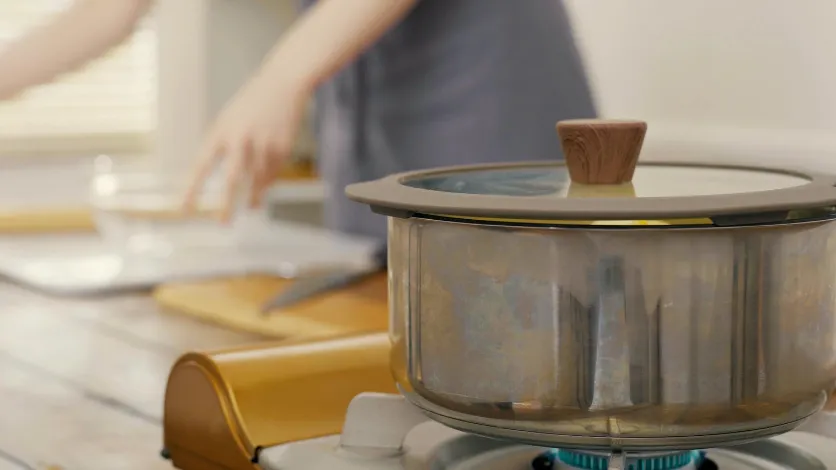
Apple pie cooking scene with blurred background
The person in the background remains deliberately out of focus while the pot becomes the visual subject.

The person’s hands can be seen moving in the background, but the focus remains on the pot.

This is a deliberate choice.

If the person had been sharply focused, the viewer’s attention would have shifted away from the pot and the transition into the following shot would have felt different.

By keeping the movement in the background soft, the production creates what the director describes as a lingering impression.

This is a particularly good example of bokeh in video being used as a storytelling device rather than simply an aesthetic effect.

Guiding the Viewer Before the Next Shot

The next sequence continues this idea.

Cinematic focus sequence guiding attention toward the bowl
Focus and background blur guide the viewer's attention toward the next action.

Instead of making every element equally sharp, the composition determines which information the viewer should process first.

This is one of the most useful principles behind video composition techniques: not everything in the frame needs equal visual importance.

Bokeh Effects and Focus Techniques for Video

Zooming is one of the easiest camera techniques for beginners to experiment with. By changing the focal length of a zoom lens while keeping the camera in place, the subject can appear larger or smaller within the frame.

However, zooming does not always create the strongest sense of depth.

Physically moving the camera, such as with a dolly or slider, can create a stronger sense of spatial relationships because the perspective changes as the camera moves.

For this production, the filmmakers instead relied heavily on composition, shallow depth of field, and focus to create depth.

This demonstrates how focus techniques for video can sometimes be used to create visual separation without relying entirely on camera movement.

Building Anticipation Through Editing and Composition

As the film moves into its second half, the rhythm changes.

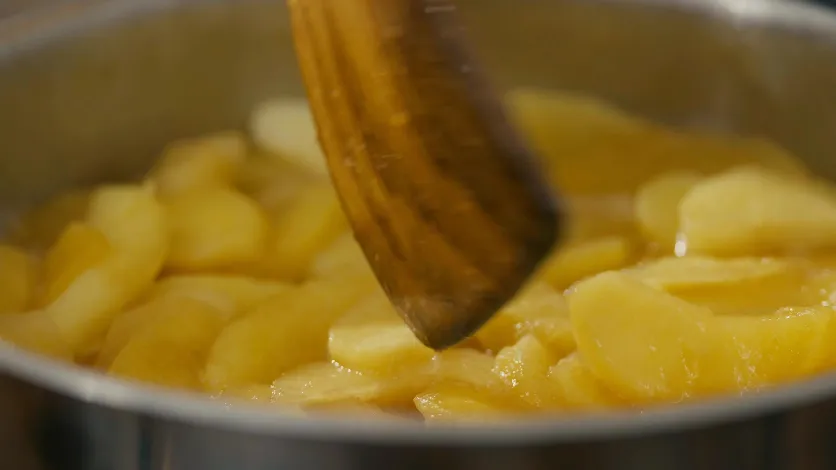
Apple filling cooking close-up with shallow depth of field
Selective focus emphasizes the movement and texture of the apple filling.

The earlier scenes use a slower rhythm to establish the world of the film.

The later scenes become faster.

This change creates a feeling that the story is moving toward its conclusion.

That is a useful video storytelling technique: pacing can communicate progression without requiring additional dialogue.

Using Focus to Add Depth to Fast-Paced Scenes

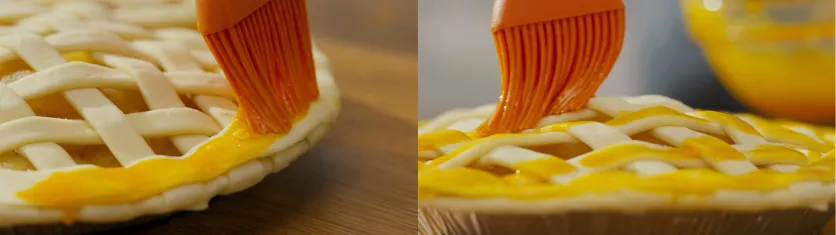
The scene where the egg mixture is brushed onto the pie uses a tighter focus range.

1-18-1_1-18-4.webp
The focus follows the brush as it moves across the pie, creating depth within the close-up.

Even though the editing pace becomes faster, the focus remains controlled.

If everything were equally sharp, the image could lose some of the depth and visual richness established earlier.

Instead, the production continues to use shallow depth of field to keep the viewer’s attention on the brush and the surface of the pie.

Planning Focus Movement Around the Action

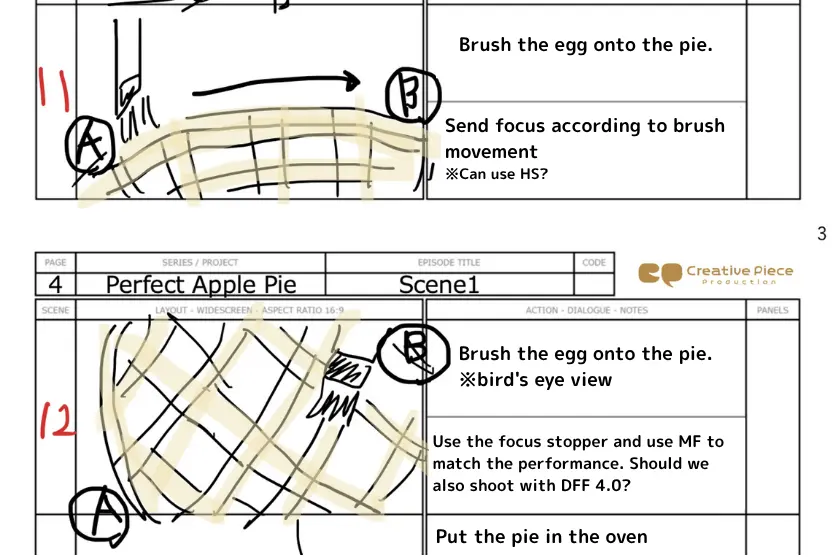
Storyboard showing focus movement following brush action
The storyboard specifies how focus should follow the brush as it moves across the pie.

The storyboard shows that focus movement was planned together with the action.

This is an important distinction: focus does not have to be something that happens after composition has been decided.

It can be part of the composition itself.

When planning cinematic video composition, consider not only where the subject will be positioned, but also where the viewer’s attention should move during the shot.

Creating Anticipation with Fast-Paced Video

The faster pace of the second half serves another purpose: it creates anticipation.

As the pie gets closer to completion, the cuts become more energetic.

The viewer understands that the process is approaching its conclusion even before seeing the finished pie.

This is where video storytelling techniques and editing rhythm work together.

The music also changes with the visual rhythm, reinforcing the feeling that the story is building toward something.

Using Focus to Show the Passage of Time

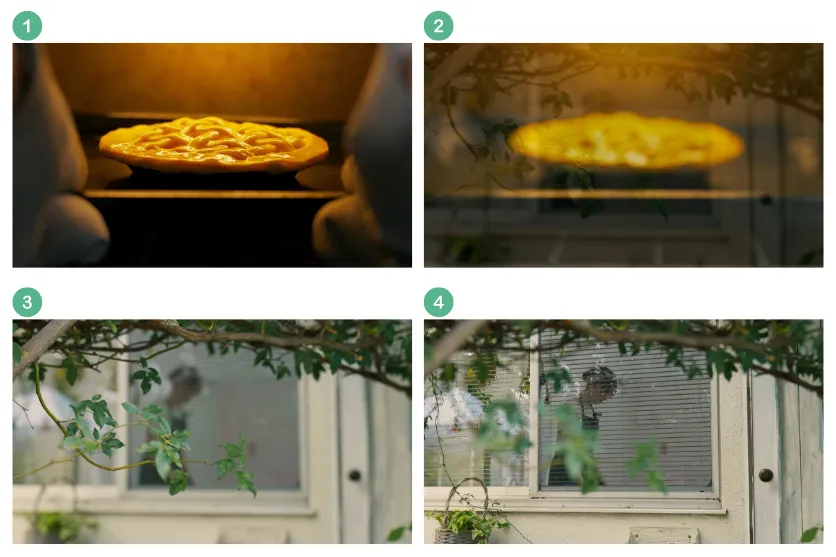
The transition into the oven sequence provides another example of how composition and focus can communicate information without dialogue.

Cinematic focus transition from oven to exterior scene
Focus and scene transitions help communicate the passage of time as the pie bakes.

The sequence begins with the pie inside the oven and gradually transitions toward the exterior of the house.

The change in location gives the viewer a visual break while also communicating that time has passed.

Rather than simply cutting directly from an uncooked pie to a finished one, the production uses visual transitions to make the progression feel natural.

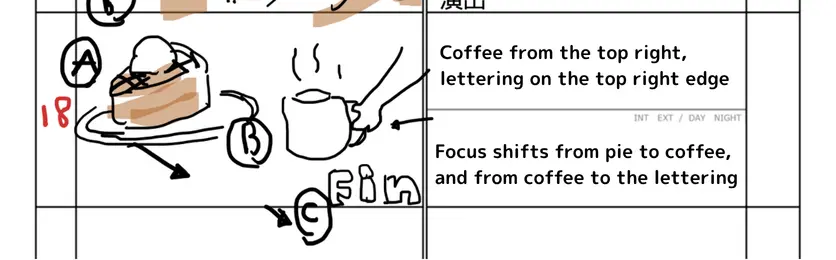
Planning the Final Focus Transition

Storyboard showing final focus transition between pie and coffee
The final sequence uses planned focus points to connect the pie, coffee, and foreground lettering.

The storyboard shows how the final focus movement was designed to connect multiple subjects within the frame.

This is another example of cinematic video composition being planned around movement rather than treating each frame as a static image.

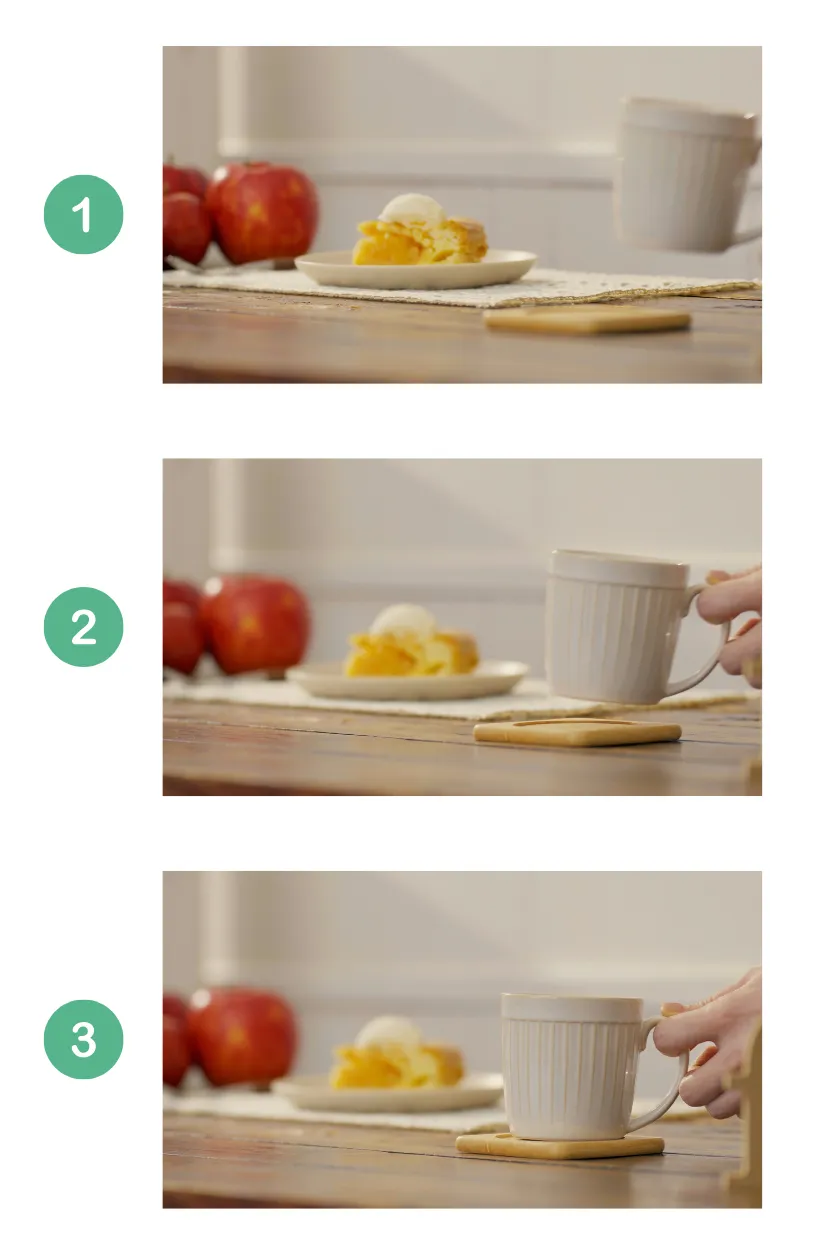
Timing Focus with Camera Movement

The final sequence combines camera movement with focus movement.

Cinematic focus transition from apple pie to coffee cup
The focus shifts between the pie, coffee cup, and foreground elements to guide the viewer's gaze.

Timing Focus with Camera Movement

The final sequence combines camera movement with focus movement.

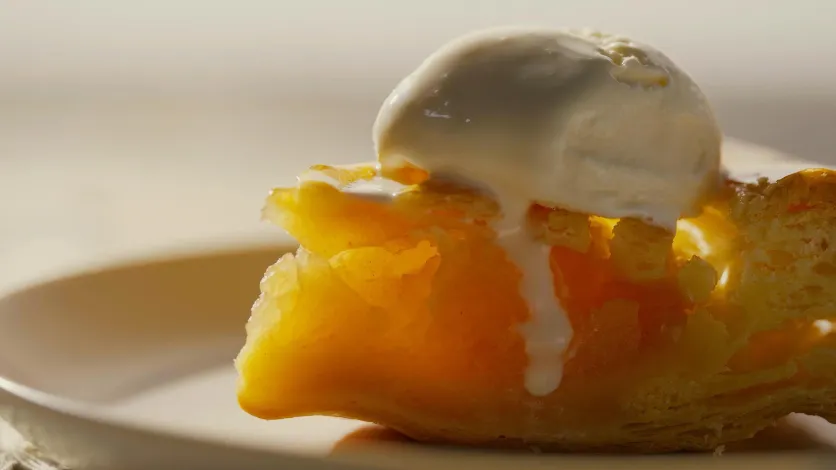
Cinematic apple pie close-up with soft bokeh
Soft background blur and controlled lighting emphasize the texture of the finished apple pie.

How Focus Can Guide the Viewer’s Gaze

One of the central ideas behind this short film is that focus can be used to control where the viewer looks.

The goal isn’t necessarily to keep the most important subject in focus at all times.

Sometimes, placing a subject in the background blur can create anticipation. At other times, shifting focus from one subject to another can create a connection between two actions.

This is why bokeh in video can be considered a storytelling tool.

When combined with thoughtful composition, focus becomes part of the visual language of the film.

Final Close-Up


Close-up apple pie with shallow depth of field
The final close-up combines shallow depth of field, natural rendering, and carefully controlled lighting.

These shots were particularly important to the director because the macro lens produced a natural rendering with enough resolution to preserve detail without making the image feel excessively harsh.

The combination of lighting and lens characteristics helped create the “sizzle” effect that suited the visual world of the film.

Choosing Composition as the Foundation of Video

Composition is one of the most important foundations of video production.

Before deciding which camera or lens to use, it is important to understand what the viewer needs to see, where their attention should go, and how the scene should progress.

The apple-pie film demonstrates how a relatively simple subject can become visually engaging through deliberate choices in composition, direction, pacing, focus, and bokeh.

The production does not rely on one technique.

Instead, the techniques work together:

  • Video composition techniques establish the visual hierarchy.
  • Cinematic video composition determines how subjects relate within the frame.
  • Video storytelling techniques create progression and anticipation.
  • Bokeh in video directs attention and creates depth.
  • Focus transitions connect one visual element to another.

The most effective cinematic images often come from combining these elements rather than relying on any single effect.


Final Thoughts

A cinematic video does not necessarily require a complicated story or elaborate production.

Even a familiar process such as making an apple pie can become visually compelling when the filmmaker carefully considers what to show, when to show it, and where the viewer should look.

By starting with a clear story, establishing the world through composition, controlling the rhythm of the edit, and using focus and bokeh deliberately, filmmakers can create a more immersive viewing experience.

The key is to make these choices feel natural.

When composition and direction work together successfully, the audience may not consciously notice every technique being used. Instead, they simply become absorbed in the story.

That is the strength of thoughtful cinematic video techniques: they guide the viewer’s experience without taking attention away from the story itself.


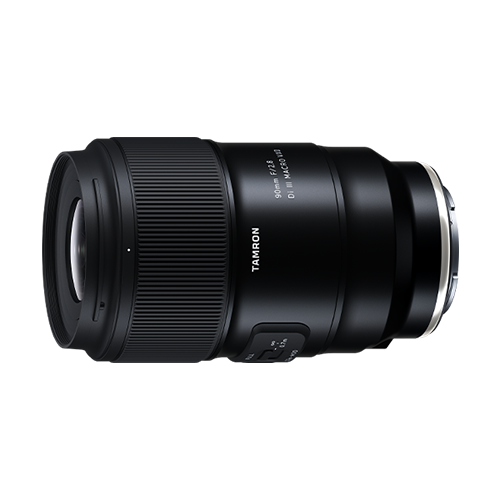
TAMRON products mentioned in this article