
How to Create Beautiful Bokeh Effects in Photography
Bokeh is one of the most beautiful and recognizable effects in photography. It can turn a busy background into a soft, dreamy backdrop, draw attention to your subject, and add depth and atmosphere to an image.
But creating beautiful bokeh photography is about more than simply opening the aperture. The appearance of bokeh depends on several factors, including aperture, focal length, shooting distance, and the distance between your subject and the background.
In this guide, we’ll explain how to create bokeh, the different types of bokeh you can use, and practical ways to incorporate beautiful background blur into portraits, landscapes, street photography, tabletop images, and macro photography.
What Is Bokeh in Photography?
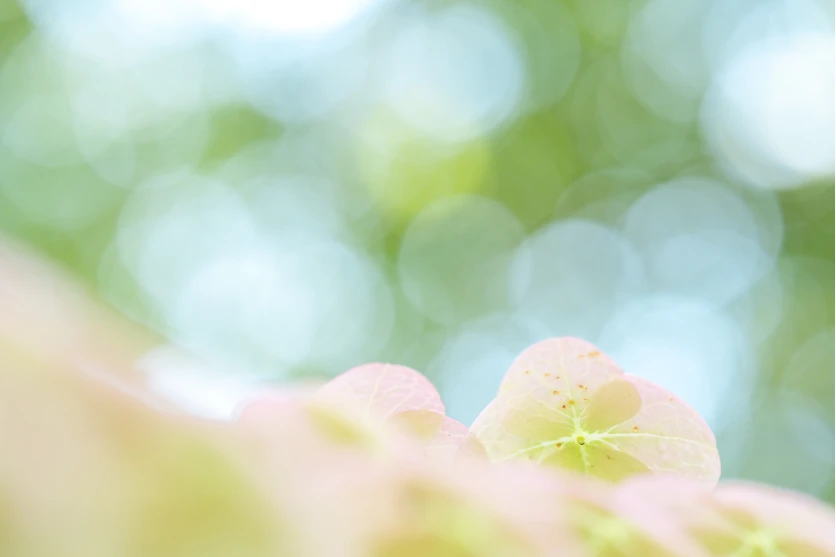
Bokeh refers to the appearance and quality of out-of-focus areas in a photograph. While it is often associated with a blurred background, bokeh is more than simply making everything behind your subject blurry.
Beautiful bokeh can help simplify a composition by reducing distracting background details and directing the viewer’s attention toward the main subject.
The appearance of bokeh can also change the mood of an image. Soft, smooth background blur can create a gentle and calm atmosphere, while larger or more prominent bokeh can produce a dramatic and eye-catching effect.
Light sources can also become distinctive bokeh shapes when they are sufficiently out of focus. Streetlights, decorative lights, reflections, and sunlight filtering through leaves can become soft circles or other pleasing shapes in the background.
How to Create Beautiful Bokeh
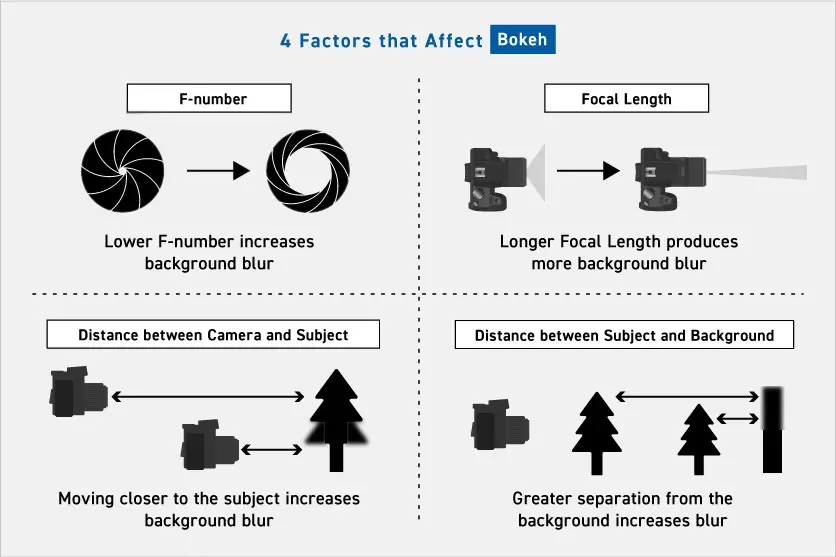
Four main factors influence the appearance of bokeh:
- Aperture
- Focal length
- Distance between the camera and subject
- Distance between the subject and background
Understanding how these factors work together gives you much more control over your bokeh effect photography.
1. Use a Wide Aperture
Aperture is one of the most important settings when creating bokeh.
A smaller F-number means a wider aperture and a shallower depth of field. For example, shooting at F2.8 generally creates more background blur than shooting at F5.6, provided other conditions remain similar.
A wide aperture can separate your subject from the background, making it stand out more clearly.
For portraits, flowers, and other subjects where you want strong separation, try opening the aperture as much as practical. For scenes where you want more of the subject to remain in focus, stopping down slightly can provide a useful balance between sharpness and background blur.
Aperture Priority mode can also make experimenting with bokeh easier because you can control the F-number while the camera helps maintain an appropriate exposure.
2. Choose the Right Focal Length
Focal length also affects how bokeh appears in a photograph.
Longer focal lengths provide a narrower angle of view and can make background elements appear larger and more compressed. This can be particularly effective when photographing portraits, distant subjects, or scenes where you want the background to become a prominent blur.
A standard focal length can provide a more natural perspective, making it useful for portraits, snapshots, and everyday photography.
Telephoto lenses can be especially useful when you want to isolate a subject against a distant background. The combination of focal length, subject distance, and background distance can produce strong subject separation even when using a narrower maximum aperture.
3. Move Closer to Your Subject
Your distance from the subject also plays an important role.
Generally, moving closer to your subject while maintaining focus can make the background appear more blurred. This is especially useful for close-up photography of flowers, food, objects, and other small subjects.
However, getting closer also reduces the depth of field. At close distances, even a small change in focus can determine which part of the subject appears sharp.
For this reason, precise focusing becomes particularly important when creating close-up bokeh photography.
4. Increase the Distance Between Your Subject and Background
One of the easiest ways to strengthen background blur is to move your subject farther away from the background.
For example, if you are photographing a person, placing them several meters away from a wall or other background can produce much stronger separation than having them stand directly against it.
This technique becomes especially effective when the background contains small light sources. Streetlights, decorative lights, reflections, and sunlight passing through foliage can transform into attractive bokeh.
Try changing the subject’s position rather than relying only on aperture. Even a small change in the distance between your subject and background can noticeably change the appearance of the image.
Different Types of Bokeh
Bokeh can be used in different parts of a composition. Three common approaches are foreground bokeh, background bokeh, and bokeh circles.
Foreground Bokeh
Foreground bokeh occurs when an out-of-focus object is positioned between the camera and the main subject.
Plants, flowers, leaves, decorations, and other nearby objects can be used to create this effect.
Foreground blur can add depth to a photograph and make the image feel more three-dimensional. It can also create the impression that the viewer is looking through an object toward the subject.
When using foreground bokeh, avoid completely covering important parts of your subject. Position the blurred element carefully so it enhances rather than distracts from the composition.
Background Bokeh
Background bokeh is the most familiar type of bokeh photography.
It occurs when elements behind the subject fall outside the depth of field and become blurred. The resulting background can help isolate the subject while retaining colors, shapes, and light that contribute to the overall mood.
The amount of blur you use should depend on the image. Strong bokeh can completely simplify a busy background, while more subtle blur can preserve enough environmental detail to tell the viewer where the photograph was taken.
Combining foreground and background bokeh can create even greater depth by placing the sharp subject between two layers of blur.
Bokeh Circles and Bokeh Balls
Small points of light can turn into attractive circles when they are sufficiently out of focus.
Streetlights, decorative lights, illuminated signs, reflections, and other light sources can become bokeh circles. This technique is particularly effective for nighttime photography.
To create prominent bokeh circles, try using a wide aperture and positioning your subject well in front of the background lights.
Changing the distance between your subject and the lights can also change the size and appearance of the bokeh.
How to Use Bokeh in Different Types of Photography
Bokeh photography can be used in many different genres. The key is to use background blur as part of the composition rather than treating it as an effect that should always be maximized.
Portrait Photography
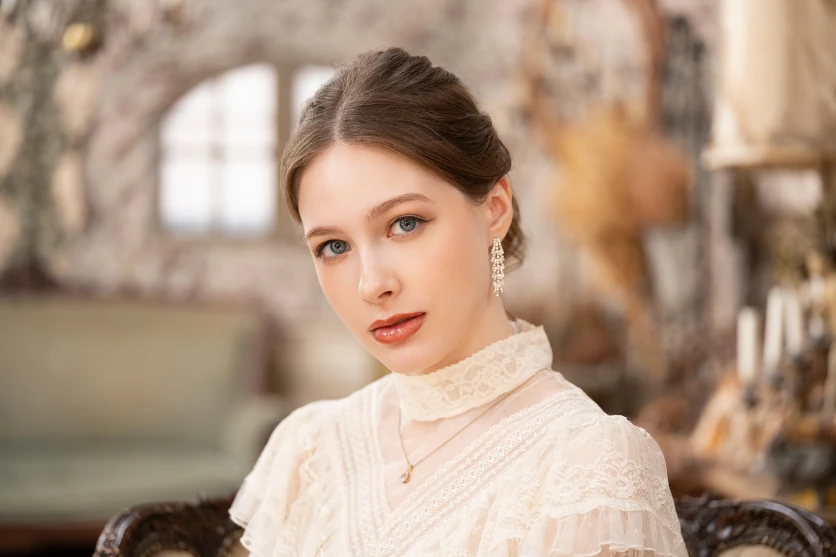
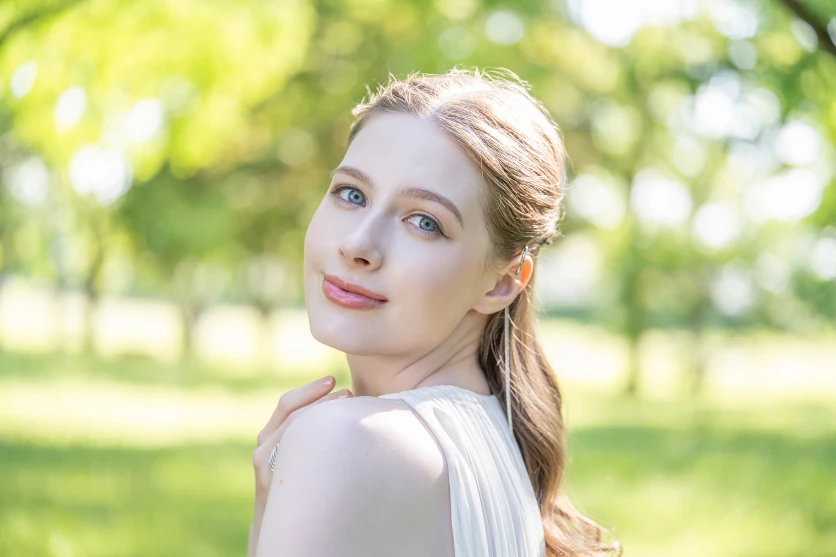
Portraits are one of the most popular applications for bokeh.
A wide aperture can help separate the person from a distracting background while directing attention toward their face and expression.
A standard or medium telephoto lens can be particularly useful for portraits. Pay attention to the distance between the camera, subject, and background to control the amount of separation.
When photographing people, accurate focus is essential. Eye Autofocus can help keep the subject’s eyes sharp while the surrounding areas gradually fall out of focus.
You can also incorporate distant lights, foliage, or other background elements to create a more atmospheric portrait.
Landscape Photography
Bokeh is not limited to portraits.
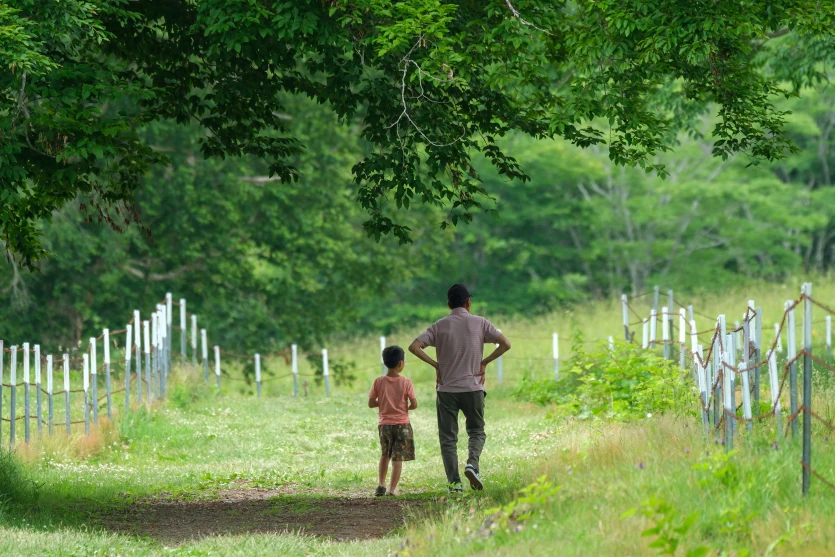
In landscape photography, foreground and background blur can be used creatively to introduce depth and guide the viewer’s attention.
For example, a nearby flower can become a soft foreground element while distant mountains or buildings become less prominent in the background.
During sunrise, sunset, or twilight, colors in the sky can also become part of the background composition.
Rather than trying to blur the entire scene, consider using bokeh selectively to create layers and emphasize a particular subject.
Street Photography
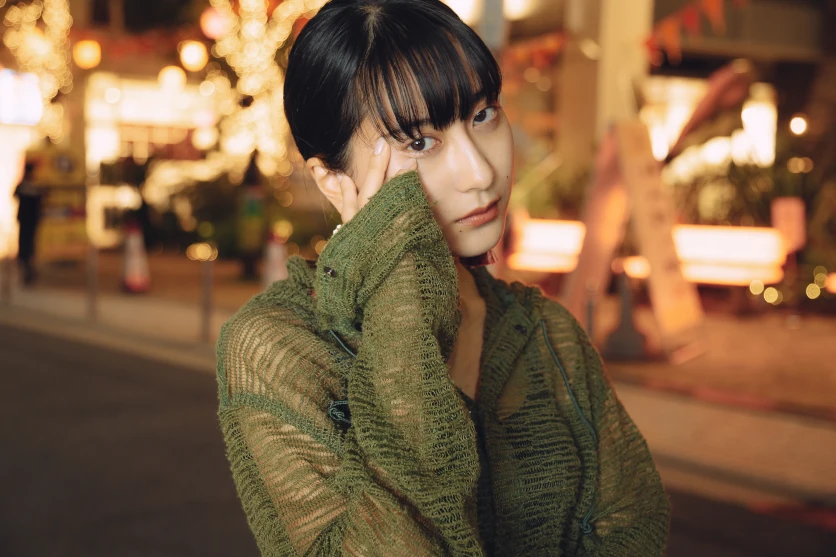
Bokeh can help isolate a person or detail within a busy urban environment.
A slightly open aperture can soften crowds, buildings, signs, and other distractions while keeping the main subject prominent.
At night, streetlights and illuminated signs can become colorful background bokeh. Reflections on wet pavement, glass, and other surfaces can also provide interesting shapes and light.
Try experimenting with different distances and shooting angles to find combinations of subject and background that create a strong visual story.
Tabletop and Food Photography
Bokeh is also useful for food and tabletop photography.
A shallow depth of field can emphasize the main dish while allowing surrounding plates, decorations, and other objects to fall softly out of focus.
Rather than eliminating every background detail, use blurred objects to provide context and color.
Lighting is equally important. Side lighting or backlighting can emphasize texture and create greater depth. Combining the lighting direction with a carefully chosen background can make the photograph feel more dimensional and engaging.

Macro Photography
Macro photography is particularly well suited to bokeh.
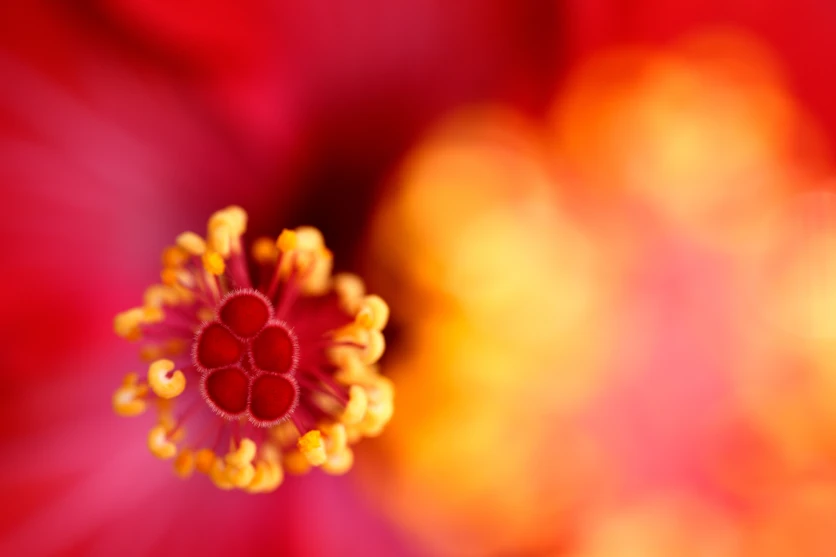
When photographing flowers, insects, or small objects, getting close to the subject can create extremely shallow depth of field. The result can be a sharply defined subject surrounded by soft foreground and background blur.
Precise focusing becomes especially important at close distances. Choose the specific detail you want the viewer to notice and focus carefully on that area.
You can also experiment with the colors of your surroundings. A background containing similar colors can produce a soft, harmonious appearance, while contrasting colors can make the subject stand out more strongly.
Choosing a Lens for Bokeh Photography
Your camera settings are important, but the lens you use also affects the type of bokeh you can create.
Here are several characteristics to consider when choosing a lens for bokeh photography.
Wide Maximum Aperture
A lens with a wide maximum aperture, such as F2.8, gives you greater control over depth of field and can make it easier to create strong background blur.
A wide aperture can also be useful when shooting in lower-light conditions because it allows more light to reach the camera sensor.
Focal Length
Different focal lengths produce different perspectives and approaches to background blur.
Wide-angle lenses can be useful when you want to include more of the surrounding environment, while telephoto lenses can help isolate distant subjects and compress the appearance of the background.
Standard focal lengths can provide a natural perspective that works well for portraits, everyday photography, and environmental subjects.
Minimum Object Distance
A lens that can focus closely gives you more opportunities to create strong background blur.
Getting closer to your subject can dramatically reduce the depth of field, making lenses with good close-focusing capabilities particularly useful for flowers, food, products, and macro photography.
Autofocus Performance
Accurate autofocus is important when working with shallow depth of field.
When the depth of field is very narrow, a small focusing error can place the sharpest area somewhere other than where you intended.
For moving subjects, autofocus tracking can also help maintain focus as the subject moves through the frame.
Image Stabilization
Image stabilization can be useful when shooting handheld, particularly in low-light situations or when using longer focal lengths.
By helping reduce the effects of camera shake, stabilization can make it easier to use slower shutter speeds while maintaining a sharp subject.
Tips for Better Bokeh Photography
Once you understand the basic principles, try these practical techniques:
Move your subject away from the background.
More distance between your subject and background generally makes it easier to create stronger background blur.
Get closer to your subject.
Closer focusing distances can produce a shallower depth of field and more pronounced blur.
Experiment with your aperture.
Don’t always shoot at the widest setting. Compare different apertures and see how they affect both the subject and background.
Look for background light sources.
Streetlights, decorations, reflections, and sunlight can become attractive bokeh when sufficiently out of focus.
Watch your focus carefully.
Strong bokeh is most effective when the intended subject remains sharp.
Use bokeh as part of the composition.
The goal is not necessarily to create the largest possible blur. Consider how the colors, shapes, and light in the blurred areas contribute to the image.
Create More Impact with Bokeh
Bokeh photography is a powerful technique for controlling attention, simplifying backgrounds, and adding depth and atmosphere to your images.
Start by understanding the four major factors: aperture, focal length, camera-to-subject distance, and subject-to-background distance. Then experiment with foreground bokeh, background blur, and out-of-focus light sources.
Different subjects call for different approaches. Portraits can benefit from smooth background separation, landscapes can use bokeh to create depth, street photography can turn city lights into atmosphere, while macro photography can use shallow depth of field to reveal details that might otherwise go unnoticed.
The most beautiful bokeh isn’t necessarily the strongest bokeh. Instead, use background blur intentionally to support your subject, composition, and visual story.
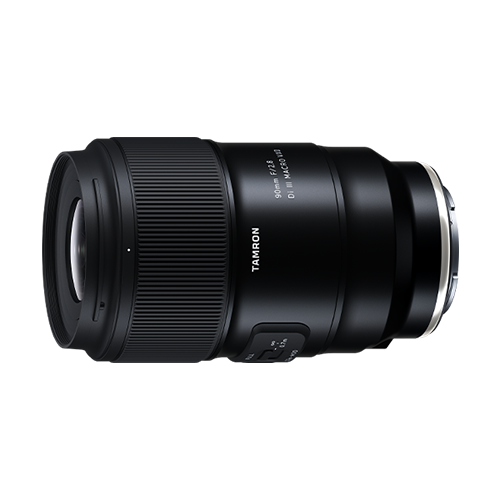
TAMRON products mentioned in this article