
Depth of Field in Photography: A Complete Guide
Depth of field is one of the most important concepts to understand when using an interchangeable-lens camera. It determines how much of an image appears acceptably sharp in front of and behind the point of focus.
By controlling depth of field, photographers can decide whether to isolate a subject against a beautifully blurred background or keep a larger portion of a scene sharp.
This is especially important when creating bokeh, a popular photographic effect often used in portraits, flowers, snapshots, and other subjects where separating the main subject from the background can make the image more visually striking.
In this guide, we’ll explain what depth of field means, the factors that affect it, the difference between shallow and deep depth of field, and how to use it effectively in different types of photography.
What Is Depth of Field?
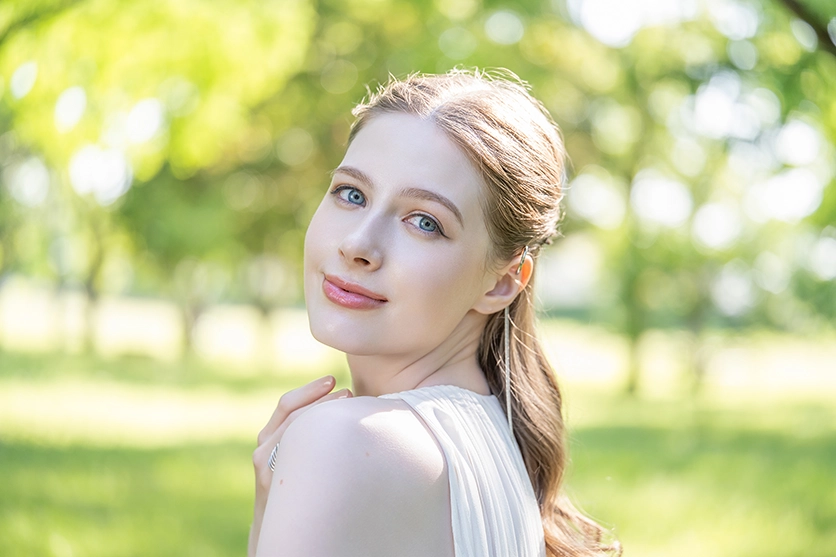
Depth of field (DOF) refers to the range of an image that appears acceptably in focus.
Although the camera focuses at a specific distance, areas immediately in front of and behind that focus point can also appear sufficiently sharp to the viewer. This range is called the depth of field.
The amount of depth of field can vary considerably depending on the camera and lens settings.
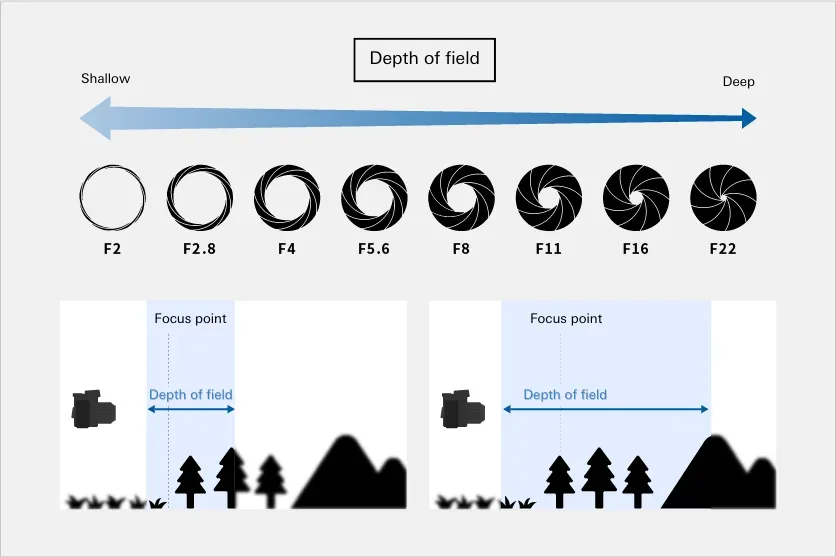
A shallow depth of field means that only a relatively small area appears sharp, while areas in front of and behind the subject become blurred more quickly.
A deep depth of field means that a larger range of the scene appears sharp, from relatively near objects to elements farther away.
Understanding this difference gives you greater control over how viewers perceive your photographs.
Shallow vs. Deep Depth of Field
The easiest way to understand depth of field is to compare shallow and deep focus.
What Is Shallow Depth of Field?
A shallow depth of field means that a limited area of the scene appears sharp.
For example, when photographing a person with a wide aperture, you can focus on the subject’s eyes while allowing the background to become softly blurred.
This creates separation between the subject and the surroundings.
Shallow depth of field is commonly used for:
- Portrait photography
- Flower photography
- Food photography
- Close-up photography
- Lifestyle photography
- Detail shots
- Some street and snapshot photography
The resulting background blur can help reduce distractions and direct attention toward the main subject.
What Is Deep Depth of Field?
A deep depth of field means that a larger portion of the scene appears acceptably sharp.
This is particularly useful when you want the foreground, subject, and background to contribute to the photograph.
Landscape photography is a common example. When photographing a mountain, cityscape, or expansive natural scene, you may want both nearby elements and distant scenery to remain sharp.
Deep depth of field can also be useful for:
- Landscape photography
- Architecture
- Group photography
- Interior photography
- Cityscapes
- Travel photography
The choice between shallow and deep depth of field depends on the story you want the photograph to communicate.
What Factors Affect Depth of Field?
Three major factors have a strong influence on depth of field:
- Aperture
- Focal length
- Distance between the camera and subject
Understanding how these factors interact allows you to control the appearance of your photographs more intentionally.
1. Aperture
Aperture is one of the most important controls for changing depth of field.
The aperture is represented by an F-number, such as F1.8, F2.8, F4, F8, or F11.
A smaller F-number represents a wider aperture.
For example:
F2.8 → wider aperture → shallower depth of field
F8 → narrower aperture → deeper depth of field
When you open the aperture, less of the scene remains within the range that appears sharp. This can produce stronger background blur and greater subject separation.
When you stop down the aperture, more of the scene can appear sharp.
Using a Wide Aperture
A wide aperture such as F2.8 can be useful when photographing a portrait.
You can focus carefully on the subject’s eyes while allowing the background to become soft and unobtrusive.
This can make the subject stand out without requiring you to remove distracting elements from the scene physically.
Using a Narrow Aperture
A narrower aperture such as F8 or F11 can be useful when photographing landscapes or architecture.
More of the scene can remain within the acceptable focus range, helping preserve details throughout the composition.
However, aperture should not be selected based on depth of field alone. The available light, shutter speed, ISO, lens characteristics, and desired image quality should also be considered.
2. Focal Length
The focal length of your lens also influences the way depth of field and background blur appear in photographs.
In general, longer focal lengths can make it easier to achieve noticeable background separation, while shorter focal lengths tend to show more of the surrounding scene.
Telephoto lenses are particularly useful for isolating subjects because they provide a narrower angle of view and can make the background appear more compressed.
This can be especially effective in portrait photography.
For example, a telephoto zoom can allow you to frame a person’s face tightly while producing a soft background that keeps attention on the subject.
Wide-angle lenses, on the other hand, capture a broader field of view and are useful when you want the surrounding environment to remain an important part of the composition.
3. Distance Between the Camera and Subject
Your distance from the subject also plays an important role.
Moving closer to your subject can make the depth-of-field range shallower, particularly when combined with a wide aperture.
This is one reason close-up and macro photography can be challenging. When you move very close to a small subject, the area that appears sharp can become extremely limited.
Moving farther away generally makes it easier to keep more of the scene within the acceptable focus range.
The relationship between subject distance, focal length, and aperture is therefore important when planning a photograph.
How Depth of Field Creates Bokeh
Depth of field and bokeh are closely related, but they are not exactly the same thing.
Depth of field describes the range that appears acceptably sharp.
Bokeh refers to the visual appearance of out-of-focus areas, particularly the quality and character of blurred highlights and backgrounds.
A shallow depth of field can produce a strong background blur, which can make bokeh more noticeable.
For example, photographing a person against a background containing small lights can produce attractive circular or polygonal highlights when the background is sufficiently out of focus.
The lens design, aperture, distance between the subject and background, and shooting conditions can all influence the appearance of the blur.
How to Create a Shallow Depth of Field
If you want to create stronger background separation, try the following approach.
Use a Wide Aperture
Start with a relatively wide aperture, such as F2.8 or wider when your lens allows it.
A wider aperture reduces the depth of field and can produce stronger background blur.
Move Closer to Your Subject
Reducing the distance between you and your subject can help create a shallower depth of field.
However, make sure your composition still looks natural and that you are not getting so close that the lens cannot focus properly.
Increase the Distance Between Subject and Background
The farther your subject is from the background, the easier it can be to make that background appear blurred.
For example, instead of positioning a portrait subject directly against a wall, move the subject several meters away from it when possible.
This can create much stronger separation.
Use a Longer Focal Length
A telephoto lens can be useful when you want to isolate a subject.
Rather than physically moving extremely close, you can use a longer focal length to achieve a tighter composition from farther away.
This approach is particularly useful for portraits, sports, wildlife, and other subjects where physical distance may be necessary.
How to Create a Deep Depth of Field
There are situations where background blur is not desirable.
If you want more of the scene to remain sharp, consider the following techniques.
Stop Down the Aperture
Using a smaller aperture, such as F8 or F11, can increase the depth of field.
This is useful for landscapes, architecture, interiors, and group photographs where more of the scene needs to remain clear.
Use a Wider Focal Length
A wide-angle lens can capture a larger portion of the scene and can be useful when you want to emphasize both the foreground and background.
This is particularly effective for landscapes and architectural photography.
Consider Your Focus Distance
Your focusing distance also affects the depth of field.
Rather than automatically focusing on the closest object, consider where the most important part of the composition is and how much of the scene needs to remain sharp.
Careful focus placement can make a significant difference when photographing scenes with considerable depth.
Using Depth of Field in Portrait Photography
Portrait photography is one of the most common situations where depth of field becomes an important creative tool.
A shallow depth of field can separate the subject from a busy environment.
Using a wide aperture allows the background to become softer, reducing distractions and emphasizing the person’s face.
When photographing a person, pay particular attention to the eyes.
If the depth of field is very shallow, even a small focusing error can result in the most important part of the portrait appearing soft.
For portraits, a telephoto lens combined with a relatively wide aperture can provide strong subject separation while producing a natural-looking composition.
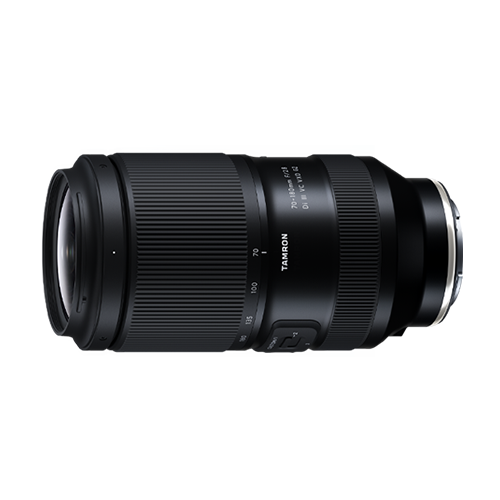
The TAMRON 70-180mm F/2.8 Di III VC VXD G2 (Model A065), for example, combines a telephoto zoom range with a constant F2.8 maximum aperture, making it suitable for portraits and situations where background separation is desirable.
Using Depth of Field in Landscape Photography
Landscape photography often benefits from a deeper depth of field.
You may want the foreground, middle ground, and distant background to contribute to the image rather than allowing one area to become heavily blurred.
A narrower aperture can help increase the range of the scene that appears sharp.
Wide-angle lenses are also commonly used for landscapes because their broad angle of view allows photographers to include more of the environment.
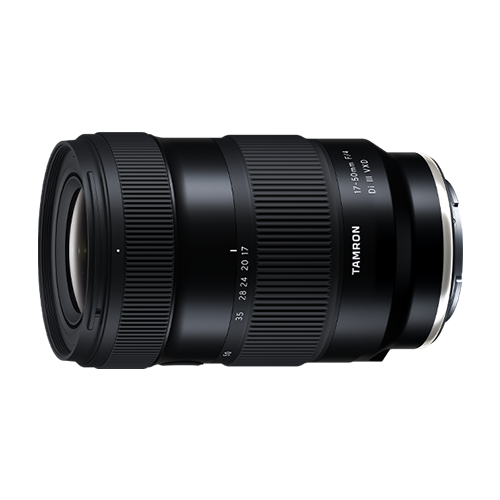
The TAMRON 17-50mm F/4 Di III VXD (Model A068), for example, covers an ultra-wide 17mm focal length through a standard 50mm focal length, providing flexibility for expansive scenes and other compositions.
Using Depth of Field for Group Photos
Group photography presents a different challenge.
When multiple people are standing at different distances from the camera, using an extremely shallow depth of field can cause some people to fall outside the acceptable focus range.
A narrower aperture can help increase the depth of field and make it easier to keep people in different rows sharp.
Your position also matters.
Whenever possible, arrange group members so that their faces are positioned at relatively similar distances from the camera.
This can make it easier to achieve consistent focus throughout the group.
Using Depth of Field in Food and Product Photography
Depth of field can also be used to control attention in food and product photography.
A shallow depth of field can emphasize one particular part of a dish or product.
For example, you could focus on the texture of a dessert while allowing the rest of the plate and background to gradually become softer.
For product photography where the entire object needs to be clearly visible, a deeper depth of field may be more appropriate.
The important consideration is not whether shallow or deep depth of field is better, but whether the chosen depth of field supports the subject and purpose of the photograph.
Depth of Field and Low-Light Photography
Depth of field also interacts with exposure.
Opening the aperture allows more light to reach the camera sensor. This can be useful when photographing in darker environments because it may allow you to use a faster shutter speed or lower ISO.
However, opening the aperture also reduces depth of field.
This means that low-light photography often involves balancing several priorities:
- Brightness
- Shutter speed
- ISO
- Depth of field
- Subject movement
- Desired background blur
For example, photographing a person in a dim indoor environment may require a wide aperture to maintain a sufficiently fast shutter speed. In this situation, you may accept a shallower depth of field as part of the creative result.
Depth of Field for Weddings and Events
Events such as weddings combine many different photographic situations.
You may need a shallow depth of field for portraits, a deeper depth of field for group photographs, and different focal lengths for wide venue shots and close-up moments.
A versatile zoom lens can therefore be useful because it allows you to adjust framing without constantly changing lenses.
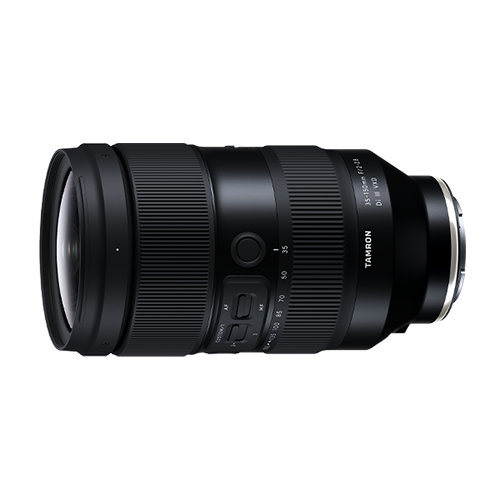
For example, TAMRON’s 35-150mm F/2-2.8 Di III VXD (Model A058) covers a broad range from semi-wide angle through telephoto while offering a bright maximum aperture. This makes it suitable for a variety of event and portrait situations.
The key is to change your settings according to the scene rather than trying to use the same aperture for every photograph.
How to Choose the Right Depth of Field
Instead of asking, “What aperture should I use?”, start by asking:
What do I want the viewer to notice?
If the answer is one specific subject, a shallow depth of field may help direct attention toward it.
If the answer is the entire scene, a deeper depth of field may be more appropriate.
Here are some general starting points:
| Photography Situation | Possible Approach |
|---|---|
| Portrait | Wide aperture, shallow depth of field |
| Flower | Wide aperture for subject isolation |
| Landscape | Narrower aperture, deeper depth of field |
| Architecture | Narrower aperture for broader sharpness |
| Group photo | Narrower aperture to accommodate multiple subjects |
| Food | Shallow or moderate depth of field |
| Wildlife | Telephoto lens with subject separation |
| Street photography | Depends on subject and desired context |
These are starting points rather than fixed rules. The appropriate setting depends on your lens, camera, subject distance, lighting, and creative intent.
Experiment With Depth of Field
Depth of field is not simply a technical setting. It is a creative tool.
Try photographing the same subject several times while changing only the aperture. Compare an image taken at a wide aperture with one taken at a narrower aperture.
Then change your distance from the subject.
Next, try a different focal length.
You will begin to see how aperture, focal length, and subject distance interact and how they affect the relationship between your subject and background.
This kind of experimentation is one of the easiest ways to develop a practical understanding of depth of field.
Use Depth of Field to Tell the Story
Depth of field can influence where viewers look first and how they understand a photograph.
A shallow depth of field can isolate a person, flower, object, or detail from its surroundings.
A deep depth of field can connect the subject with the environment and communicate a stronger sense of place.
Neither approach is universally better.
The most effective choice depends on the subject, the environment, and the story you want the photograph to tell.
Once you understand how aperture, focal length, and subject distance affect depth of field, you can move beyond simply creating background blur and begin using focus as an intentional part of your photographic composition.
TAMRON products mentioned in this article