
Sports Day Photography: Tips for Taking Great Photos of Kids
A school sports day is one of those events that parents look forward to every year.
From running races and relays to dances, team competitions, and award ceremonies, there are countless moments worth remembering. Children are constantly moving, the shooting positions may be limited, and important moments can happen in just a fraction of a second.
This can make sports day photography challenging, especially if you’re using an interchangeable-lens camera for the first time.
The good news is that you don’t need complicated techniques to capture memorable photographs.
Choosing the right lens, using an appropriate shutter speed, setting up autofocus correctly, and paying attention to your position can make a significant difference.
A telephoto zoom lens can be especially useful because parents are often required to photograph their children from designated areas rather than standing directly beside the action. An all-in-one zoom lens can also be convenient because it provides both wide-angle and telephoto perspectives without requiring you to change lenses.
In this article, we’ll explain how to photograph children during sports day events, including useful camera settings, composition tips, autofocus techniques, and how to choose a sports photography lens that suits the occasion.
Why Sports Day Photography Can Be Challenging
Sports day events are different from ordinary family photography.
You usually don’t have complete control over the environment.
You may not be able to:
- Move wherever you want
- Approach your child closely
- Ask the subject to pose
- Control the lighting
- Repeat an important moment
Your child may also be moving quickly.
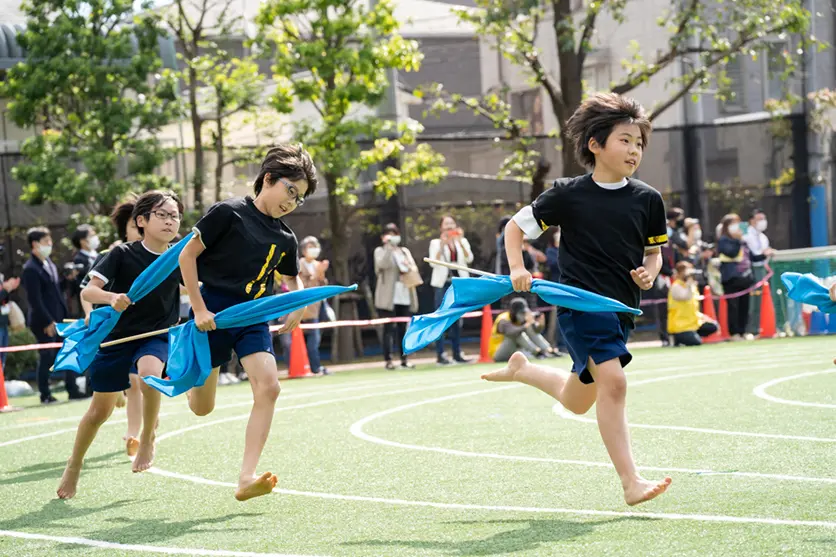
A running race can be over in seconds, while a relay handoff or jumping event may happen even faster.
At the same time, you’ll often be photographing from a considerable distance.
This is why lens selection and camera settings are particularly important.
A standard kit zoom may be useful for group photographs and nearby subjects, but it may not provide enough reach when your child is on the other side of the field.
A telephoto zoom or all-in-one zoom can make it much easier to fill the frame with your child without physically moving closer.
What Is the Best Lens for Sports Day Photography?
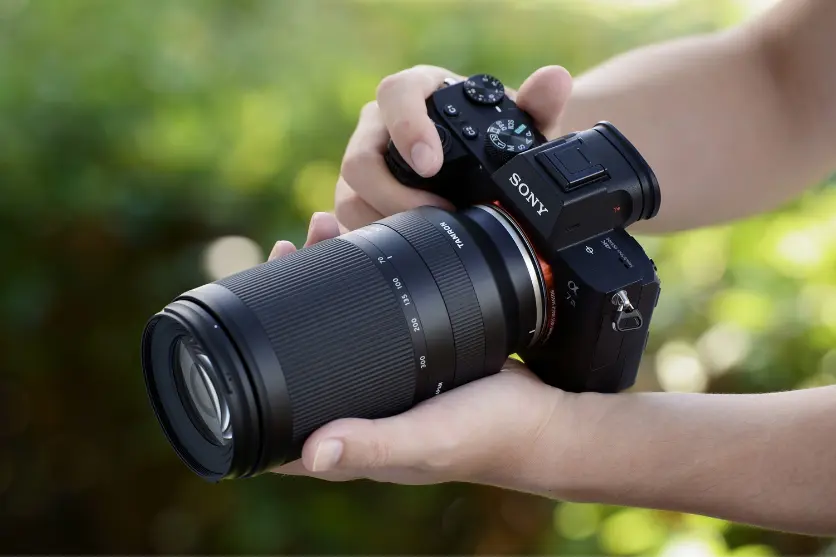
For most sports day events, a lens with a useful telephoto range is one of the most important pieces of equipment.
A telephoto lens allows you to photograph distant subjects with a tighter field of view.
This is particularly useful when:
- Your child is running across a field
- You are seated far from the track
- The school restricts where parents can stand
- You want to capture facial expressions
- You want photographs of individual children rather than the entire group
The original TAMRON guide recommends all-in-one zoom lenses and telephoto zoom lenses for sports day photography because children are often photographed from a distance.
A lens reaching approximately 200mm to 300mm can be particularly useful for these situations.
However, the ideal focal length depends on the size of the venue, your shooting position, and whether you’re using a full-frame or APS-C camera.
All-in-One Zoom Lenses for Sports Day
An all-in-one zoom lens can be especially convenient for a school sports day.
Why?
Because sports day isn’t only about photographing the competition.
You may want to photograph:
- Your child running
- A group performance
- Friends talking
- The school grounds
- Family members
- Lunch
- Decorations
- Award ceremonies
- Candid moments between events
Using several lenses can mean repeatedly changing equipment.
An all-in-one zoom allows you to move between wide-angle and telephoto perspectives without changing lenses.
This means you can be ready when an unexpected moment happens.
It can also reduce the amount of equipment you need to carry.
TAMRON describes all-in-one zoom lenses as particularly convenient for sports festivals because a single lens can cover both wider scenes and distant subjects.
Telephoto Zoom Lenses for Sports Day
A telephoto zoom lens is another excellent option.
Compared with an all-in-one lens, a telephoto zoom generally concentrates more heavily on longer focal lengths.
This makes it particularly useful when your child is far away.
For example, a 70-300mm lens gives you flexibility at the 70mm end while providing considerably more reach at 300mm.
This allows you to photograph:
- Full-body shots
- Half-body shots
- Facial expressions
- Running poses
- Action moments
- Individual performances
The longer focal length also makes it easier to isolate your child from a busy background.
Prepare Before Sports Day
One of the best ways to improve your photographs is to prepare before the event.
Don’t wait until the first race begins to figure out where you’re allowed to stand.
Check the school’s instructions beforehand.
Look for information about:
- Photography areas
- Restricted areas
- Event schedules
- Performance times
- Race routes
- Starting points
- Finish lines
- Seating arrangements
The original TAMRON article also emphasizes checking the event’s rules and program before photographing because schools may have specific restrictions regarding where photography is permitted.
This isn’t only about following the rules.
It can also help you plan your photographs.
Study the Sports Day Program
If you receive a schedule before the event, study it.
Find out when your child’s events will happen.
Then think about where the best photographic opportunities might occur.
For example:
Running race
Look for the starting line, finish line, or a section where the child approaches you.
Relay
The handoff can be a particularly dynamic moment.
Dance or performance
Find out where your child will stand.
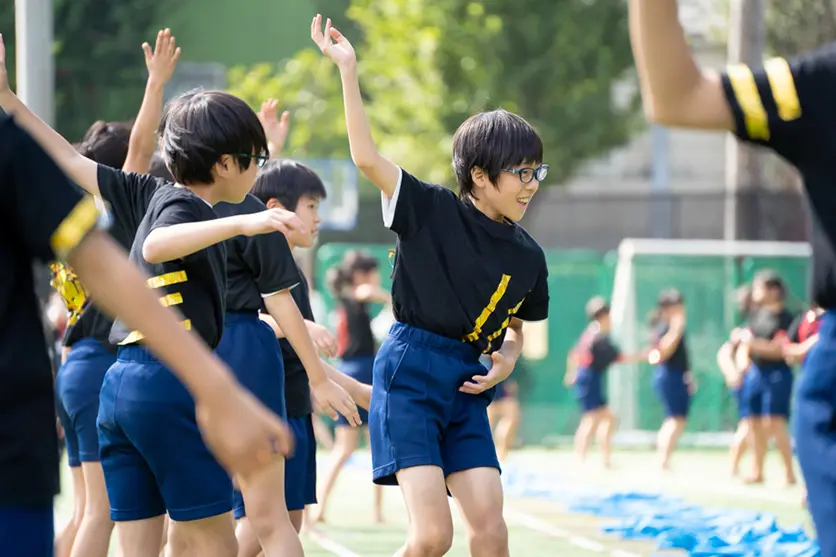
Tug-of-war
Look for moments when the children are pulling together.
Award ceremony
A wider lens may be more useful for group photographs.
Knowing what is coming allows you to prepare your camera and position before the action begins.
Recommended Camera Settings for Sports Day Photography
Camera settings don’t need to be complicated.
The most important things to consider are:
- Shutter speed
- Aperture
- ISO
- Autofocus
- Burst shooting
- Image stabilization
Let’s look at each one.
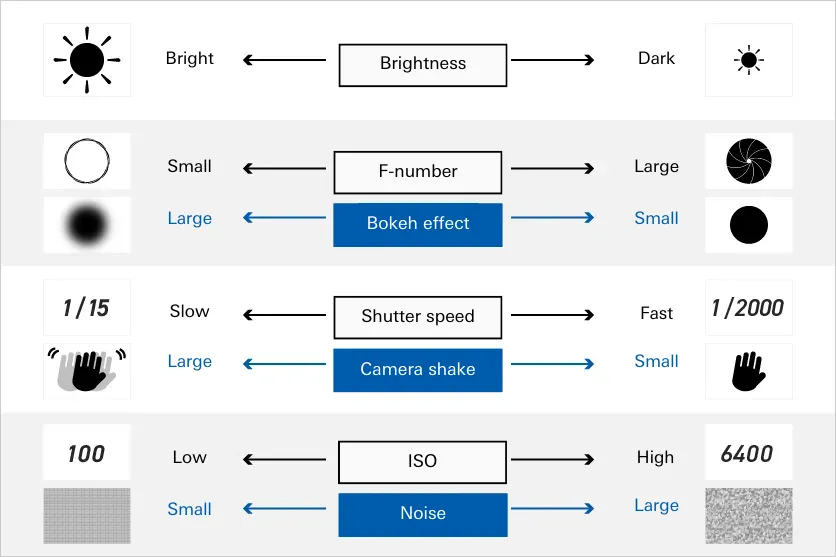
Use a Fast Shutter Speed
The shutter speed determines how long the camera’s shutter remains open.
A fast shutter speed helps freeze movement.
This is particularly important when photographing children running or jumping.
For fast-moving sports day events, you can start around:
1/1000 sec
and increase the shutter speed further when necessary.
For particularly fast movement, you may want to try:
1/1600 sec
or
1/2000 sec
The appropriate setting depends on the lighting and the speed of the subject.
The original TAMRON example of a running race uses a shutter speed of 1/1600 sec, demonstrating how a fast shutter speed can be used to freeze a moving child.
If your shutter speed is too slow, you may see motion blur in the child’s arms, legs, or face.
Shutter Priority Mode
If you’re still learning manual exposure, Shutter Priority mode can be a convenient option.
Depending on your camera, it may be labeled:
- S
- Tv
You choose the shutter speed, and the camera automatically adjusts the aperture to achieve an appropriate exposure.
For example, you could set:
1/1000 sec
and allow the camera to determine the aperture.
This lets you focus on capturing the action without constantly adjusting exposure manually.
Use Continuous Autofocus
Children rarely stay still during sports day.
For this reason, continuous autofocus is extremely useful.
Depending on the camera manufacturer, it may be called:
- AF-C
- Servo AF
- Continuous AF
The camera continuously adjusts focus while the subject is moving.
This is particularly useful for:
- Running
- Relays
- Dancing
- Jumping
- Ball games
- Tug-of-war
The original TAMRON guide recommends continuous AF for moving subjects during sports day events.
Use Subject Detection if Available
Many modern cameras include subject-detection autofocus.
If your camera can detect people or faces, enable the appropriate subject-detection mode.
This can help the camera maintain focus on your child as they move through the frame.
However, sports day events can contain many children.
The camera may occasionally lock onto the wrong person.
If this happens, consider:
- Using a smaller AF area
- Selecting your subject manually
- Tracking your child before the action begins
- Using face/eye detection when appropriate
Practice with your camera before the event.
You don’t want to be learning the autofocus system during the final race.
Use Burst Shooting
Another useful feature for sports day photography is continuous or burst shooting.
Instead of taking a single photograph, the camera captures a sequence of images while you hold down the shutter button.
This can help you capture:
- The moment both feet leave the ground
- A runner’s expression
- A relay handoff
- A jump
- A ball being thrown
- A child’s reaction after finishing
Not every frame will be perfect.
That’s normal.
The goal is to increase your chances of capturing the decisive moment.
Choosing the Right ISO
ISO controls the camera’s sensitivity to light.
On a bright outdoor day, you may be able to use a relatively low ISO.
For example:
ISO 100–400
On cloudy days, you may need:
ISO 800–1600
or higher depending on your shutter speed and aperture.
The original TAMRON guide suggests approximately ISO 200–400 on sunny days and ISO 800–1600 or higher in cloudy conditions as starting points.
However, don’t treat these values as fixed rules.
Your camera should determine the final ISO based on the lighting and shutter speed you need.
If the choice is between a slightly noisier photograph and a blurry photograph, the sharper photograph is usually more useful for a fast-moving subject.
What Aperture Should You Use?
Aperture controls the amount of light entering the lens and influences depth of field.
A wider aperture, represented by a smaller F-number, allows more light into the camera and can create stronger background blur.
For sports day photography, something around:
F4–F8
can provide a useful starting point depending on the lens and lighting.
A wider aperture can help separate your child from the background.
Stopping down slightly can provide more depth of field, which may be useful when you need a little more room for focusing errors.
Use Image Stabilization
Telephoto photography makes camera shake more noticeable.
For example, when you’re using a 300mm focal length, even a small movement of the camera can be visible in the photograph.
If your lens or camera has image stabilization, make sure it is enabled when appropriate.
TAMRON’s VC system is designed to help reduce the effects of camera shake when shooting handheld.
Remember, however, that image stabilization doesn’t freeze your child’s movement.
That’s the job of your shutter speed.
Think of the two separately:
Fast shutter speed → freezes subject movement
Image stabilization → reduces camera movement
Photographing Running Races
Running races are among the most exciting events to photograph.
They also happen quickly.
One useful strategy is to position yourself where you can photograph your child approaching you rather than trying to follow them across the entire field.
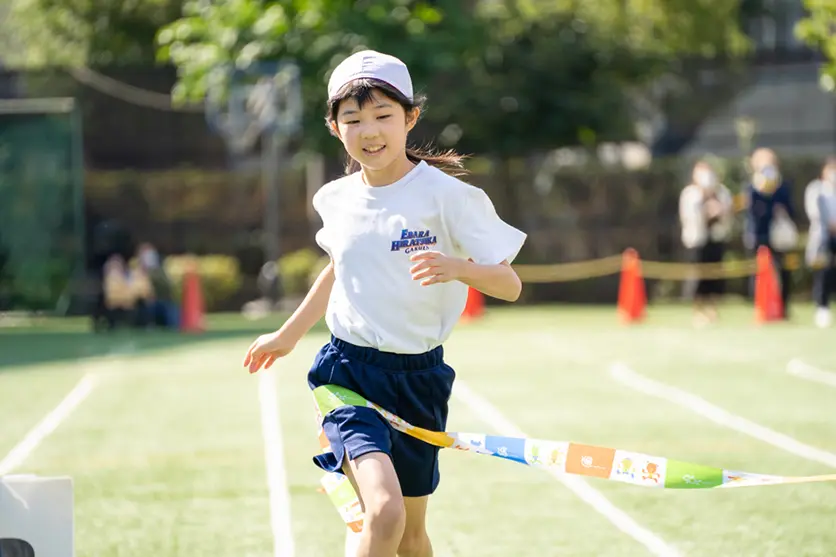
The finish line can be particularly useful.
As the child approaches, keep them in the frame and continue tracking them.
Use continuous autofocus and a fast shutter speed.
Then shoot a burst as they approach the important moment.
Photograph the Start
The starting moment can also make a strong photograph.
Instead of focusing only on the running itself, consider photographing:
- The starting stance
- The moment the race begins
- The first few steps
- Your child’s expression
- The reactions of the other children
A wider composition can sometimes communicate the atmosphere of the event better than a tight portrait.
Photograph the Finish
The finish line is another excellent location.
Children may be:
- Running at full speed
- Smiling
- Looking toward their parents
- Raising their arms
- Celebrating
- Catching their breath
These reactions can be just as meaningful as the race itself.
Don’t immediately stop photographing once the child crosses the line.
Often, the moments immediately afterward are more expressive.
Photographing Relays
Relay races offer several opportunities.
The handoff is an obvious choice.
Try to anticipate where the exchange will happen.
Keep your camera ready before the runner arrives.
Use continuous autofocus and burst shooting.
You can also photograph:
- The runner approaching
- The handoff
- The next runner starting
- The reaction afterward
A telephoto zoom allows you to adjust the framing quickly as the subjects move.
Photographing Dance and Performances
Sports day isn’t always about running.
Many schools include dance performances, cheering competitions, or other stage-like activities.
These events can actually be more challenging to photograph because the children may move in different directions.
Try to identify where your child will be positioned.
If possible, learn the routine beforehand.
Knowing where your child will move allows you to anticipate the moment instead of constantly searching for them through the viewfinder.
Focus on Your Child’s Expression
When photographing a group performance, it’s tempting to photograph the entire group.
Don’t forget the individual moments.
Use a telephoto lens to isolate your child.
Look for:
- Smiles
- Concentration
- Excitement
- Eye contact
- Hand gestures
- Expressions during important parts of the performance
A longer focal length can help you create a more intimate photograph even when you’re far away.
When You Can’t Get a Tight Shot
Sometimes your child may be too far away even with your longest focal length.
Don’t force the composition.
Instead, photograph the scene more widely.
Include:
- Your child
- The other participants
- The venue
- Decorations
- Spectators
You can also crop the photograph later if you have sufficient image resolution.
A wider photograph can sometimes tell a better story than an extremely tight crop.
Photographing Group Events
Events such as tug-of-war, ball tossing, and other team activities are full of movement.
Children may move:
- Left
- Right
- Up
- Down
This is another situation where burst shooting can be useful.
Instead of trying to capture one perfect frame, photograph a sequence.
Look for moments when:
- A child throws the ball
- Everyone pulls together
- A child jumps
- The team reacts
- Someone celebrates
Don’t Forget the Wide-Angle Perspective
While telephoto lenses are useful for individual photographs, don’t spend the entire event zoomed in.
Switch to the wide end of your zoom when you want to show the environment.
Photograph:
- The entire field
- The crowd
- The school
- Team formations
- Group activities
- Decorations
These photographs help preserve the atmosphere of the event.
When you look back at your photos years later, the wider photographs can help you remember where the event took place and what it felt like to be there.
Photograph the Moments Between Events
Some of the most meaningful photographs may happen when no competition is taking place.
Look for moments such as:
- Children waiting for their event
- Friends talking
- Your child preparing
- Excitement before a race
- Reactions after a performance
- Children resting
- Parents and children together
A telephoto lens can be particularly useful for candid moments because you can photograph from a distance without interrupting the scene.
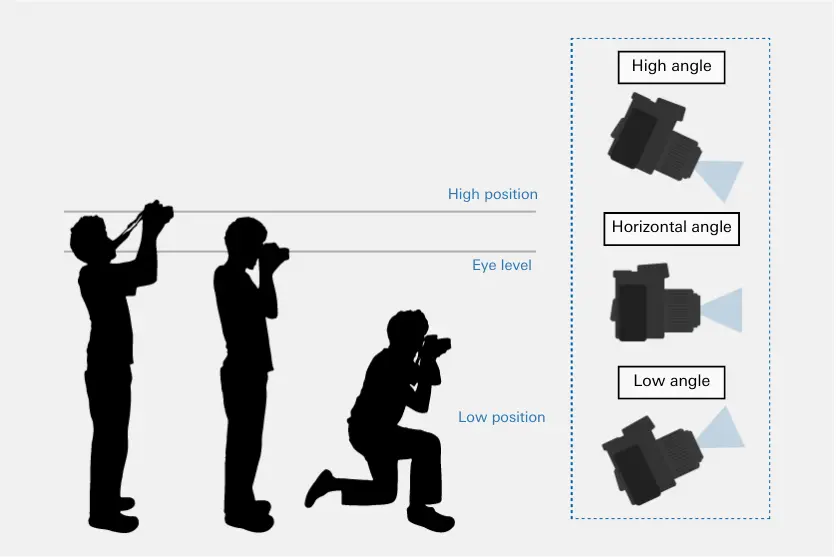
Photograph at Your Child’s Eye Level
Camera position can dramatically change the feeling of a photograph.
When photographing children, try lowering the camera toward their eye level.
This can create a more natural perspective.
It can also make the child feel more prominent in the frame.
You can experiment with:
Eye-level perspective
Natural and intimate.
Low-angle perspective
Makes the subject appear larger and more powerful.
High-angle perspective
Can provide a different view of the event and show more of the surrounding environment.
Don’t stay in one position for the entire event.
If you’re allowed to move, experiment with different viewpoints while respecting the designated photography areas.
Pay Attention to the Direction of Light
Light direction can change the appearance of a photograph dramatically.
Front Light
Light comes from behind the photographer and illuminates the child.
This can make it easier to capture facial expressions.
Side Light
Light comes from the side.
This can create stronger shadows and add dimension.
Backlight
Light comes from behind the subject.
Backlighting can create a beautiful atmosphere, but the child’s face may become darker.
If the face is too dark, consider adjusting exposure compensation or using your camera’s metering and exposure controls appropriately.
What If Sports Day Is Held Indoors?
Bad weather can force a school sports day indoors.
Gymnasiums and indoor halls often have less light than outdoor venues.
This can make sports day photography more challenging.
You may need to increase ISO.
You may also need to use a wider aperture.
Most importantly, avoid allowing your shutter speed to become so slow that the children become blurry.
For example, if your camera is currently using 1/250 sec and your subject is running, you may need to increase the shutter speed significantly and compensate with ISO or aperture.
Avoid Flash During School Events
Built-in flash or an external flash isn’t always appropriate for sports day photography.
Flash can:
- Distract children
- Distract performers
- Disturb other spectators
- Create harsh shadows
More importantly, some schools may have rules restricting flash photography.
Always follow the event’s instructions.
Instead, increase ISO and use the available light when appropriate.
Choosing a Sports Photography Lens
When choosing a lens for sports day photography, consider these five characteristics.
1. Focal Length
A lens reaching 200–300mm can be particularly useful when photographing children from a distance.
However, consider the venue and your camera’s sensor format.
An APS-C camera provides a narrower field of view than full-frame with the same focal length, which can be useful for distant subjects.
2. Zoom Range
A broad zoom range gives you greater flexibility.
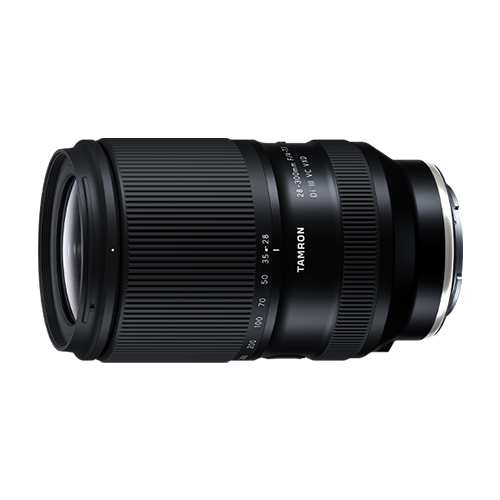
A lens such as a 28-300mm can move from relatively wide compositions to strong telephoto framing without changing lenses.
This is particularly useful at an event where the distance to your subject constantly changes.
3. Maximum Aperture
A wider maximum aperture allows more light into the camera.
This can be especially useful when:
- The weather is cloudy
- The event continues late in the afternoon
- You’re shooting indoors
- You want stronger background blur
However, a wider aperture can also reduce depth of field.
4. Autofocus Performance
Sports day involves moving subjects.
Look for a lens with autofocus that can keep up with your camera’s tracking system.
Fast, accurate autofocus can make it easier to follow your child during races and performances.
Quiet autofocus can also be useful if you plan to record video.
5. Image Stabilization
Telephoto shooting can amplify camera shake.
A lens with image stabilization can help you shoot handheld more comfortably.
This is especially useful when you’re carrying your equipment around all day.
Lightweight Lenses Can Make a Difference
Don’t underestimate the importance of size and weight.
A sports day can last several hours.
You may be carrying:
- Camera
- Lens
- Extra batteries
- Memory cards
- Water
- Food
- Personal belongings
A compact lens can make the experience much more comfortable.
This is one reason all-in-one zoom lenses can be attractive for family events.
You can carry one lens instead of several.
Which Lens Should You Choose?
Your choice depends largely on how you expect to photograph the event.
If you want one lens for the entire day
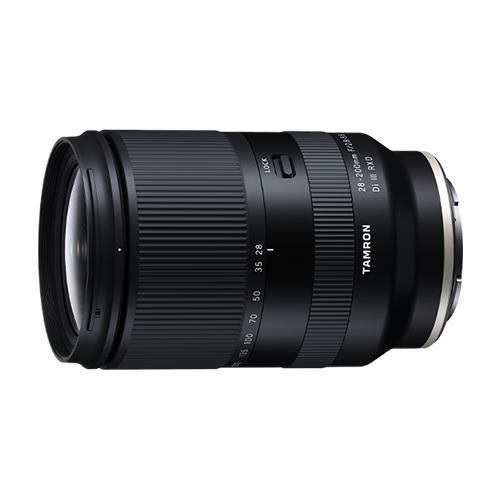
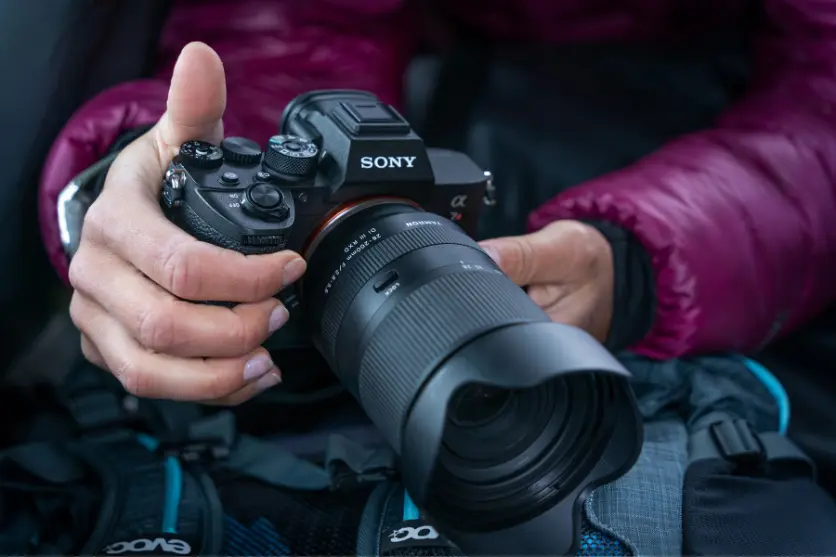
An all-in-one zoom such as the A071 or A074 provides a broad focal-length range.
This is useful when you want to photograph both the event and the surrounding moments.
If you need more telephoto reach
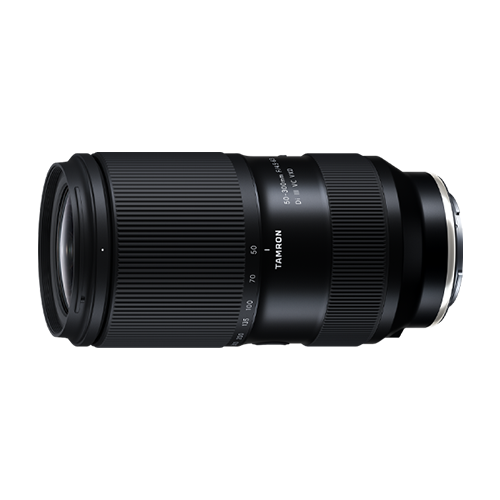
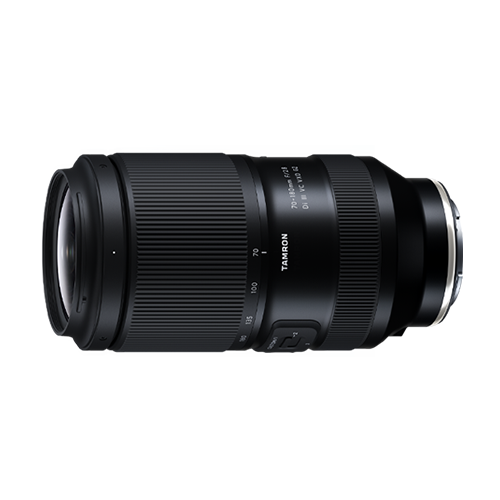
The A069 or A047 can provide up to 300mm.
This can be useful when you’re seated far from the field.
If you want to photograph both individual moments and group scenes
A lens starting around 28mm can provide more flexibility.
If your priority is races and performances
A telephoto zoom reaching 300mm can make it easier to fill the frame from a distance.
A Simple Sports Day Photography Checklist
Before leaving for the event, check:
Camera battery: Fully charged
Memory card: Enough free space
Lens: Clean and ready
Autofocus: Continuous AF enabled
Drive mode: Continuous/burst shooting
Shutter speed: Start around 1/1000 sec for fast action
ISO: Auto ISO can be useful when lighting changes
Image stabilization: Enabled when appropriate
Event schedule: Reviewed
Photography rules: Checked
Shooting position: Planned
And most importantly:
Don’t spend the entire event looking through the viewfinder.
Put the camera down sometimes.
Watch your child.
Enjoy the event.
The photographs are there to help you remember the experience, not replace it.
Don’t Only Photograph the Perfect Moment
It’s easy to think that the most important photograph is the one where your child wins a race or performs perfectly.
But years later, other photographs may become just as meaningful.
Photograph:
- Your child waiting for the race
- Their nervous expression
- Friends cheering
- Parents watching
- The team preparing
- Your child celebrating
- The moment after the event
- Family members together
- The school grounds
These photographs tell the story of the entire day.
Tell the Story With Different Focal Lengths
One useful way to organize your photographs is to think in three levels.
Wide
Show the environment.
The school, field, crowd, and event.
Medium
Show your child interacting with other children.
Telephoto
Show expressions and individual action.
A versatile zoom lens makes it much easier to move between these perspectives.
Instead of photographing every moment at 300mm, deliberately change your composition.
The result will be a much more complete visual record of the day.
Final Thoughts on Sports Day Photography
A school sports day gives you only one opportunity to capture the event as it happens.
Your child may run the race once.
The relay handoff may happen once.
The performance may only happen a few times.
That’s why preparation matters.
Check the event rules and schedule before you arrive.
Choose a lens that matches the distance between you and your child.
Use a fast shutter speed for moving subjects.
Set continuous autofocus.
Use burst shooting when appropriate.
Pay attention to your position, lighting, and composition.
And don’t forget the moments between the competitions.
A telephoto lens can help you capture your child’s expression from across the field, while an all-in-one zoom lens can give you the flexibility to move from wide environmental photographs to tighter telephoto images without changing lenses.
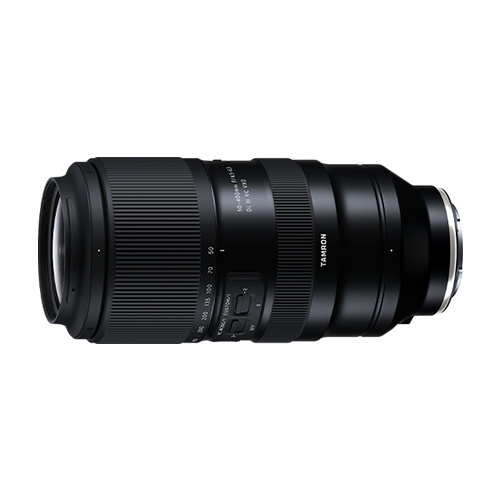
For photographers who want a versatile single-lens solution, the TAMRON 28-200mm F/2.8-5.6 Di III RXD (Model A071) and 28-300mm F/4-7.1 Di III VC VXD (Model A074) offer broad focal-length ranges. For photographers who want greater telephoto reach, the 50-300mm F/4.5-6.3 Di III VC VXD (Model A069) and 70-300mm F/4.5-6.3 Di III RXD (Model A047) provide up to 300mm.
Ultimately, the best sports day photograph isn’t necessarily the sharpest or most technically perfect image.
It’s the photograph that brings you back to that moment—the expression on your child’s face, the excitement of the race, the cheering crowd, or the smile after the event is over.
Prepare your equipment, know where you’ll be shooting, and be ready for the moment.
Then put the camera down occasionally and enjoy watching your child grow.
TAMRON products mentioned in this article