
Photography Composition: Easy Tips & Techniques for Beginners
Taking a good photograph is not only about having a capable camera or choosing the right lens. How you arrange your subject within the frame can have an even greater impact on the final image.
This is where composition in photography becomes important.
Photography composition refers to how different elements are positioned and arranged within a photograph. By understanding a few basic composition techniques and camera angles, beginners can make their photographs more balanced, visually interesting, and easier to understand.
In this guide, we’ll explain the basics of photography composition, common composition techniques, and different camera angles that you can use to improve your photographs.
What Is Composition in Photography?
Composition is the way you arrange visual elements inside the frame.
When taking a photograph, you decide what to include, where to place the main subject, how much space to leave around it, and how the background and foreground interact with the subject.
Even when photographing the same subject from the same location, changing your composition can produce a completely different image.
For example, you could place a person in the center of the frame, position them according to the rule of thirds, or photograph them from a lower angle. Each approach changes how the viewer experiences the photograph.
Good composition does not necessarily mean following strict rules. Instead, composition techniques provide useful guidelines that help you make intentional decisions when taking photographs.
Basic Elements of Photography Composition
Before exploring specific composition techniques, it is helpful to understand several fundamental elements that influence how an image looks.
1. Framing
Framing refers to how you position the subject and surrounding elements within the edges of the photograph.
The edges of the frame naturally determine what the viewer sees and what is excluded.
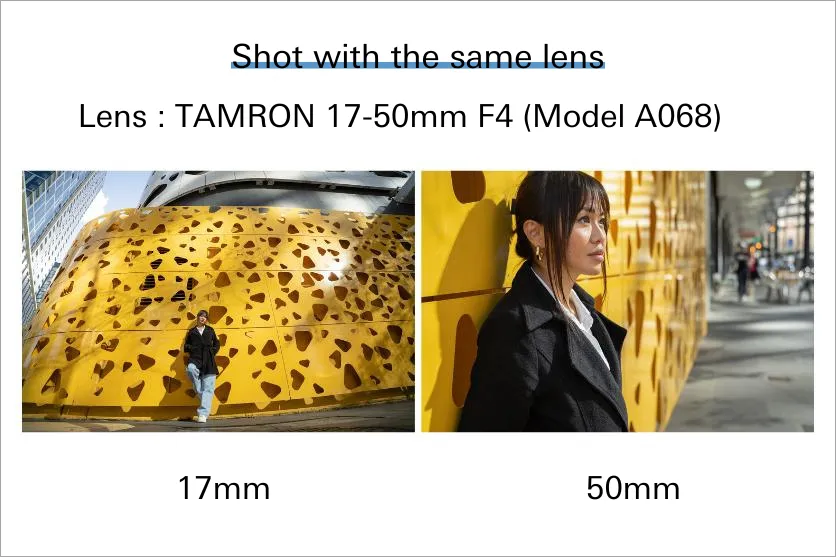
For example, when photographing a person, you can create a tighter composition by moving closer or using a longer focal length. Alternatively, you can include more of the surroundings to provide additional context.
Always check the edges of your frame before taking the photograph. Distracting objects near the edge can draw attention away from your main subject.
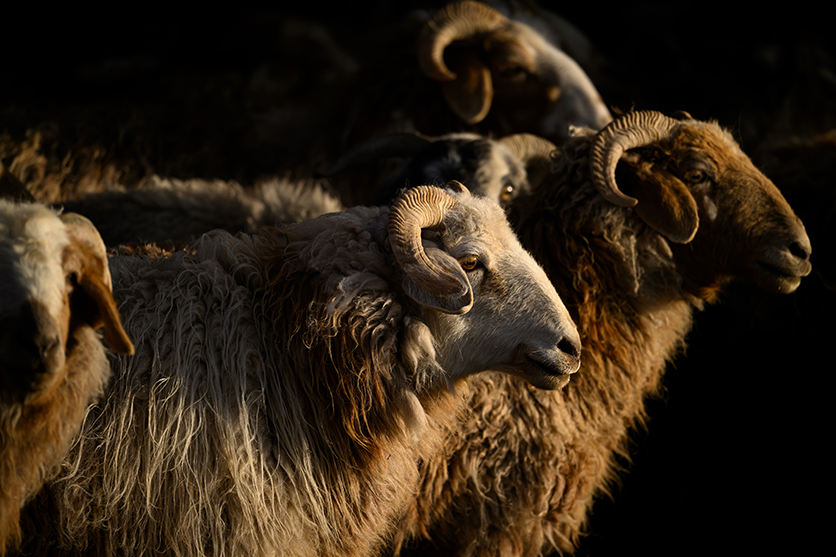
2. Horizontal and Vertical Composition
The orientation of your camera also affects composition.
A horizontal composition is often useful for landscapes, architecture, group photographs, and scenes where you want to emphasize width.
A vertical composition can work well for portraits, tall buildings, trees, waterfalls, and other subjects that extend upward.
There is no universal rule that says a particular subject must be photographed horizontally or vertically. Try both orientations and choose the one that best communicates the scene.
3. Leading Lines
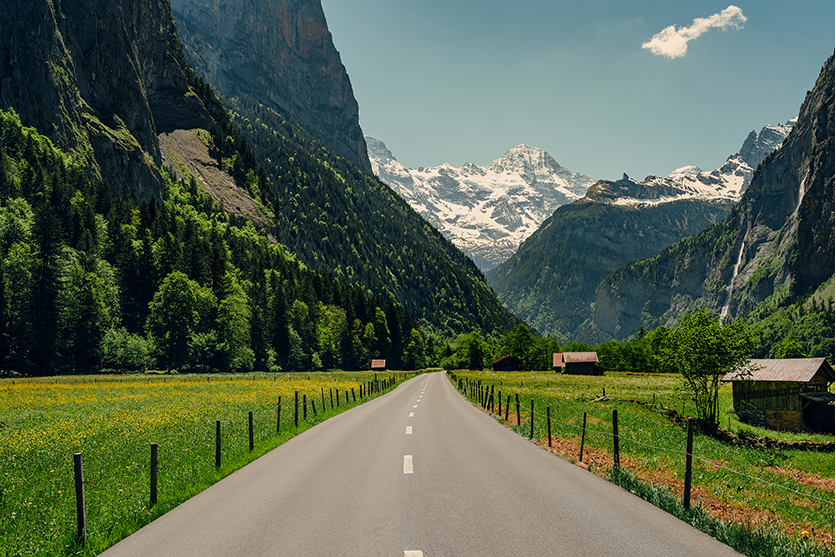
Leading lines are visual lines that guide the viewer’s attention through an image.
Roads, paths, fences, bridges, rivers, buildings, and rows of trees can all create leading lines.
For example, a path beginning in the foreground and extending toward a person or building can naturally direct the viewer’s eyes toward the main subject.
When photographing outdoors, look for naturally occurring lines and consider how you can position yourself to make them part of the composition.
4. Foreground, Midground, and Background
Photographs can become more visually interesting when they contain multiple layers.
The foreground is the area closest to the camera, the midground usually contains the main subject, and the background provides additional context behind it.
For example, when photographing a mountain landscape, flowers in the foreground, a person in the midground, and mountains in the background can create a stronger sense of depth.
Including these different layers can make a two-dimensional photograph feel more three-dimensional.
5. Background
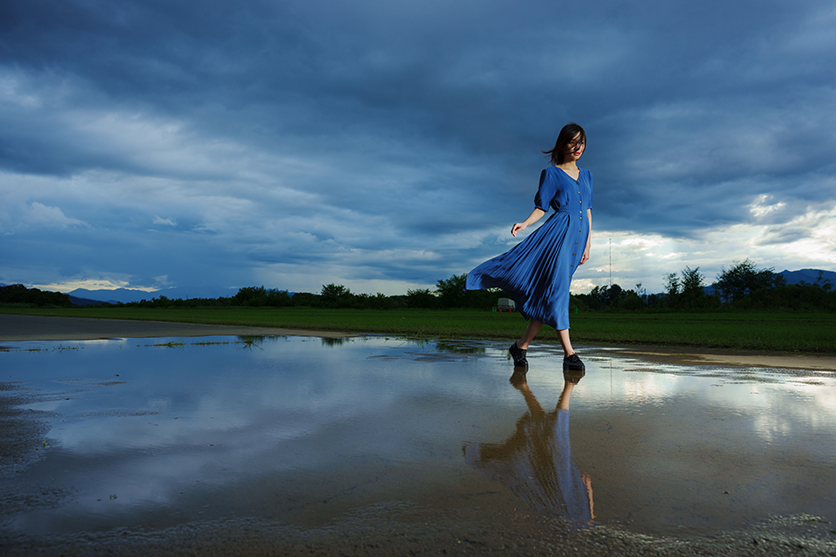
A good background should support the subject rather than compete with it.
Before taking a photograph, look for distracting objects such as poles, signs, bright highlights, or people that may overlap with your subject.
Sometimes the simplest solution is to move a few steps to the side or change your camera angle.
You can also use a wide aperture to create background blur when you want the main subject to stand out.

Common Photography Composition Techniques
There are many different composition techniques you can experiment with. You do not need to use all of them in every photograph.
Instead, use them as tools to help you decide how to arrange your subject.
Rule of Thirds
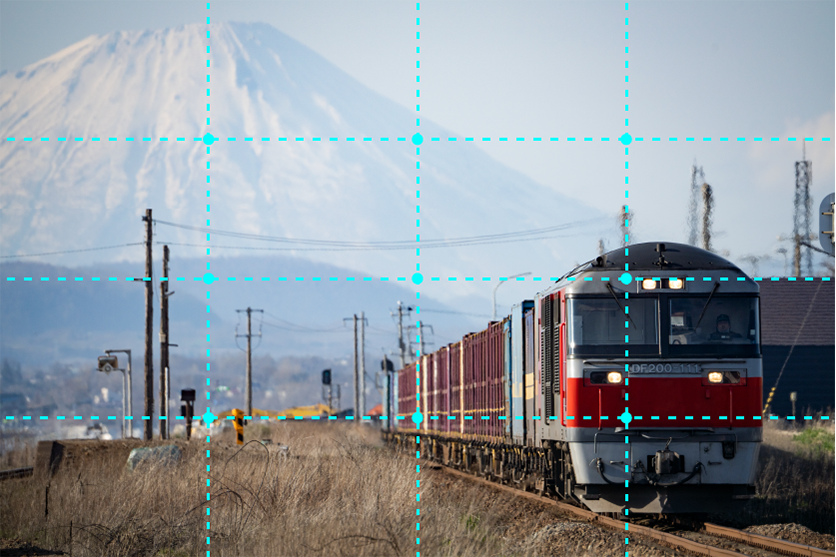
The rule of thirds is one of the most commonly used composition techniques.
Imagine dividing the frame into three equal sections horizontally and vertically. This creates a grid with four intersection points.
Placing your main subject near one of these intersections can create a balanced composition while leaving space for the surrounding environment.
For example, when photographing a person looking toward the side of the frame, placing them along one of the vertical thirds can leave space in front of their gaze.
Many cameras also provide a grid display that can help you practice this technique.
Center Composition
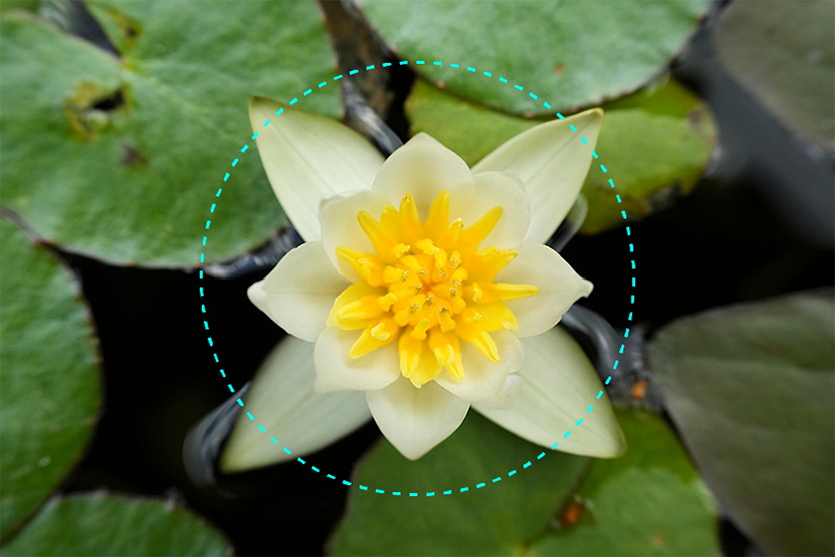
Center composition places the main subject near the middle of the frame.
While beginners are sometimes encouraged to avoid placing subjects in the center, centered compositions can be very effective when used intentionally.
A symmetrical building, a single flower, a person’s face, or a road extending directly toward the horizon can all work well with a centered composition.
The key is to make sure the subject and surrounding elements support the symmetrical or balanced appearance.
Diagonal Composition
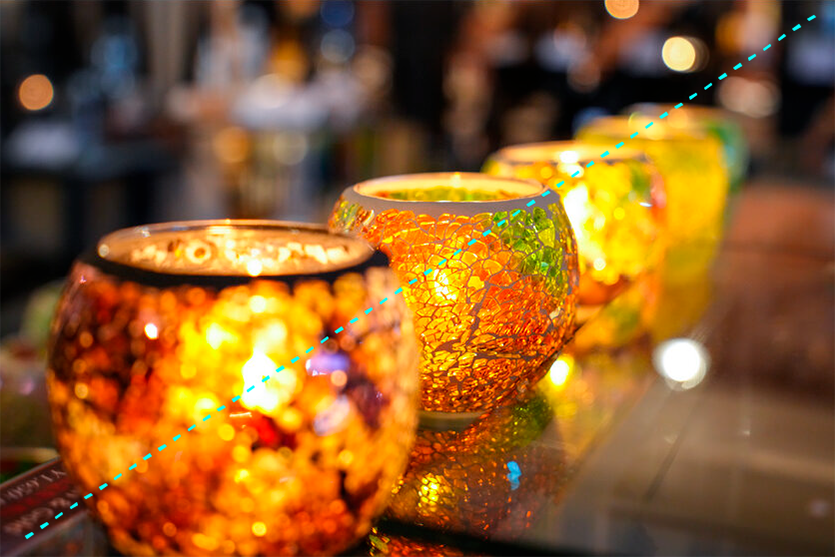
Diagonal composition uses diagonal lines or arrangements within the frame.
Diagonal lines can create a sense of movement and make a photograph feel more dynamic.
Look for roads, staircases, branches, shadows, architectural lines, or other elements that naturally form diagonals.
You can also change your camera position to turn an otherwise horizontal or vertical line into a diagonal.
Triangular Composition
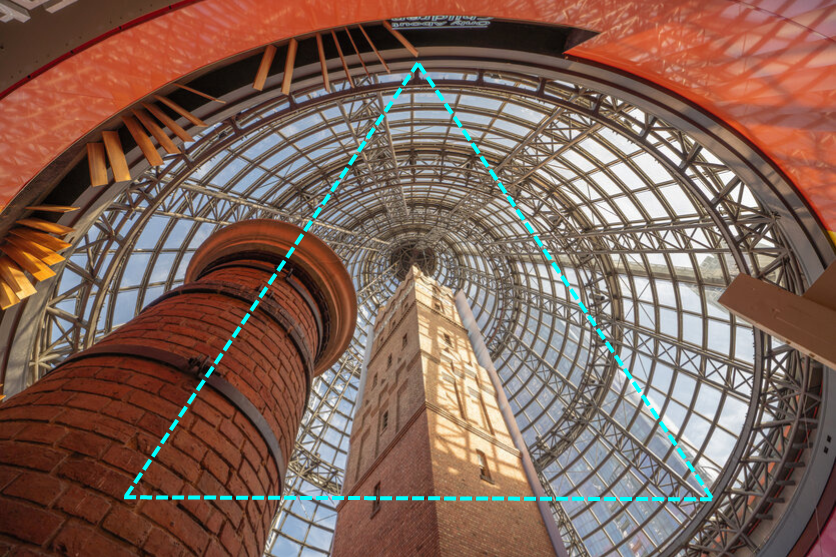
A triangular composition arranges three visual elements so that they form a triangle within the frame.
The three elements can be people, objects, buildings, or other subjects.
Triangles can help create a sense of stability while also connecting different parts of the photograph.
For example, three people positioned at different distances from the camera can naturally form a triangular arrangement.
Curved Composition
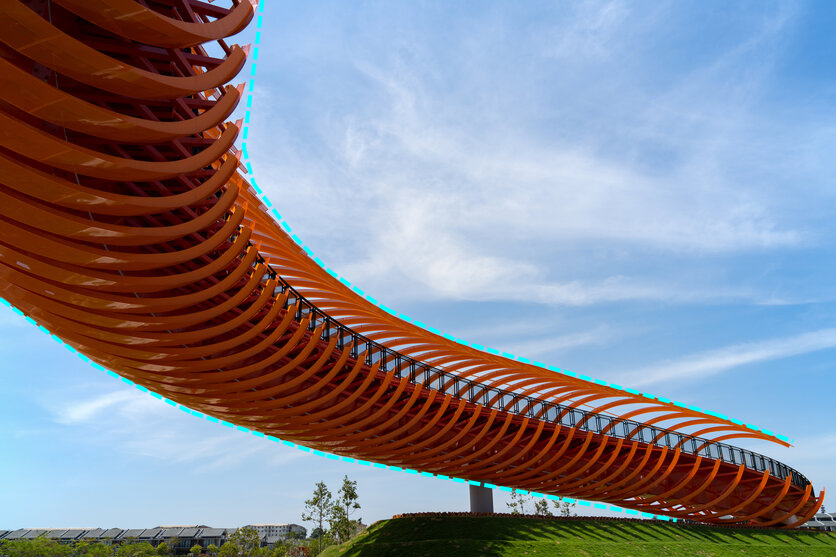
Curved lines can guide the viewer’s eyes smoothly through an image.
Rivers, roads, staircases, architectural structures, coastlines, and branches are examples of elements that can create curves.
Instead of photographing the entire scene from a straightforward position, look for a viewpoint where the curve leads toward the main subject.
Tunnel Composition
Tunnel composition uses surrounding elements to create a visual frame around the subject.
Rows of trees, arches, tunnels, doorways, branches, or buildings can naturally create this effect.
The darker or less prominent surrounding elements can help draw attention toward the brighter or more important subject in the center.
This technique is especially useful for landscapes, architecture, and travel photography.
Symmetrical Composition
Symmetry occurs when the two sides of an image contain similar or mirrored visual elements.
Buildings, reflections, roads, bridges, and architectural structures are often good subjects for symmetrical photography.
For the strongest effect, carefully align the camera with the central axis of the subject.
Even a small change in camera position can affect the symmetry, so take time to check your framing.
Contrast Composition
Contrast composition places visually different elements together.
The contrast can come from differences in:
- Brightness
- Color
- Size
- Shape
- Texture
- Subject matter
For example, a small person standing against a large building can create a strong contrast in scale.
Similarly, a brightly colored subject against a muted background can immediately attract attention.
Split Composition
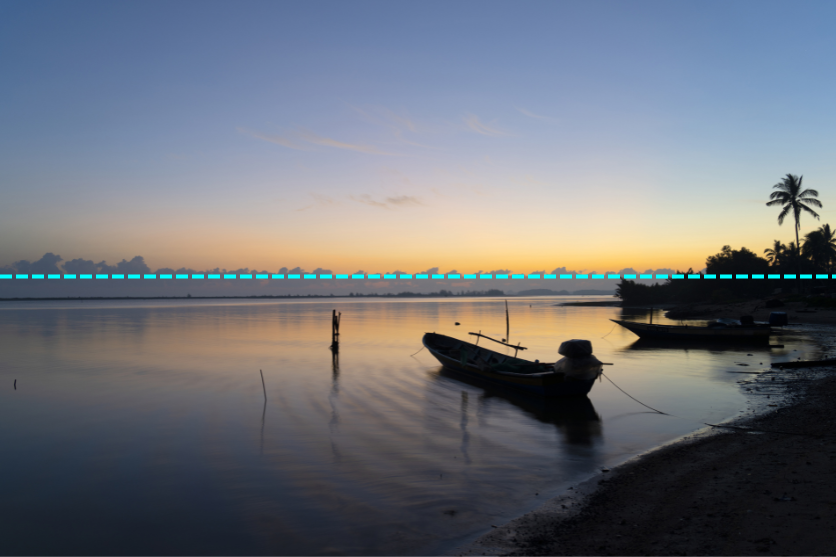
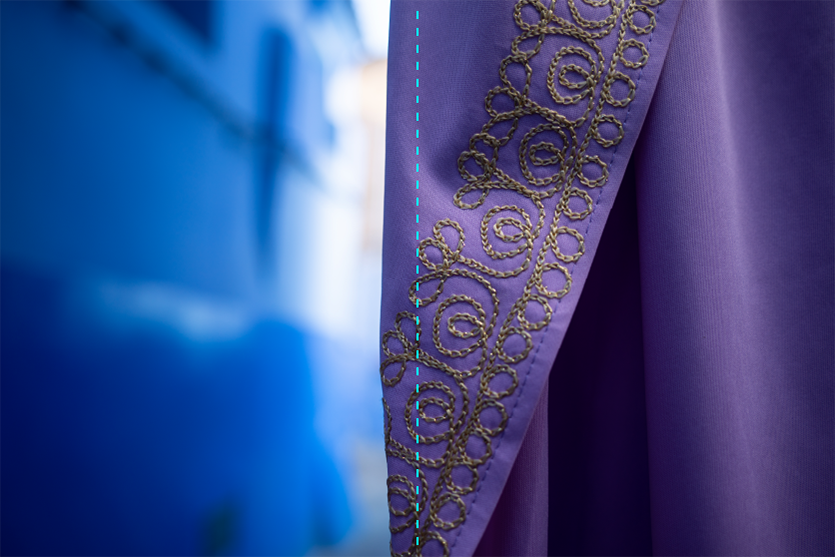
Split composition divides the frame into distinct areas.
For example, a photograph might contain a landscape in the lower half and sky in the upper half.
You can also use natural boundaries such as horizons, walls, roads, or architectural structures to divide the image.
Think about which part of the scene deserves more space and adjust your composition accordingly.
Four-Section Composition
The four-section approach divides the frame into four areas and considers how the main subjects are distributed between them.
This can be useful when a scene contains multiple important elements.
Rather than automatically placing one subject in the center, look at how the different objects interact across the entire frame.
This technique encourages you to consider the photograph as a complete composition rather than focusing only on the main subject.
Fibonacci Spiral
The Fibonacci spiral, sometimes called the golden spiral, is another way to think about visual composition.
The concept is based on a mathematical spiral that can be used as a guide for arranging elements within the frame.
You may find naturally occurring spiral or curved patterns in architecture, plants, shells, roads, and other subjects.
While it can be difficult to apply precisely while shooting, understanding the concept can help you recognize natural visual flow.
How Camera Angles Affect Your Photographs
Composition is not only about where you place the subject within the frame. Camera angle also changes the relationship between the camera, subject, and surroundings.
Simply changing your shooting height can dramatically alter the appearance of a photograph.
Eye-Level Angle
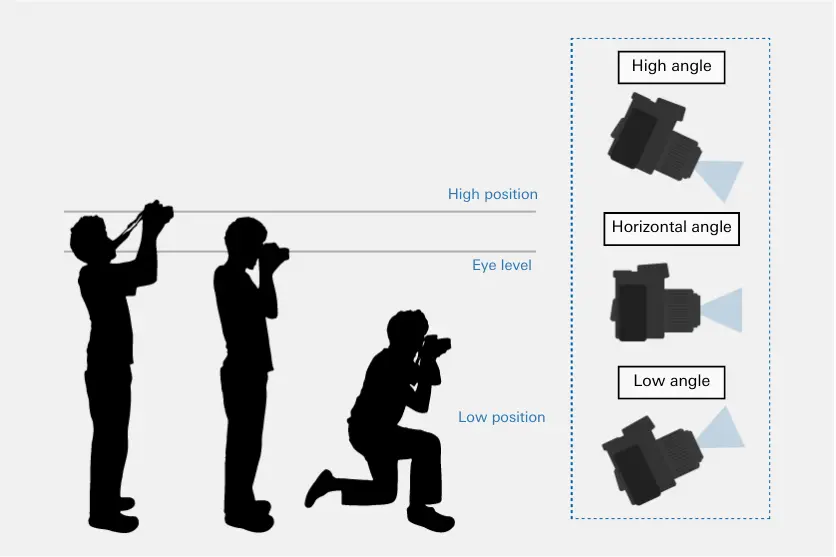
Eye-level photography is taken approximately from the same height as the subject.
This is one of the most natural-looking camera angles and is commonly used for portraits, street photography, and everyday scenes.
For portraits, shooting at approximately the subject’s eye level can produce a natural perspective and avoid unnecessary distortion.
High-Angle Photography
A high-angle photograph is taken from above the subject.
You can create this effect by raising the camera above your subject or finding an elevated position.
High angles can make the subject appear smaller and can reveal patterns or relationships that are difficult to see from eye level.
For example, photographing people from above can show the arrangement of the group, while photographing food from above can clearly show the shape and arrangement of the dishes.
Low-Angle Photography
A low-angle photograph is taken from below the subject.
This can make subjects such as buildings, trees, and people appear larger or more imposing.
For landscape photography, getting closer to the ground can also make foreground elements more prominent and create a stronger sense of depth.
Try lowering your camera rather than simply pointing it upward from standing height. Even a small change in camera position can significantly affect the composition.
Changing Your Camera Position
Before changing your camera settings, consider whether changing your position could improve the photograph.
Move closer to the subject.
Move farther away.
Try photographing from the left or right.
Raise or lower the camera.
Walk around the subject.
Look for reflections.
Photograph through foreground objects.
These simple changes can produce completely different compositions without requiring any additional equipment.
Use Different Focal Lengths to Change Composition
Your lens also plays an important role in composition.
Different focal lengths provide different fields of view and can change the relationship between subjects and their surroundings.
Wide-Angle Lenses
Wide-angle lenses are useful when you want to include a large area in the frame.
They work particularly well for:
- Landscapes
- Architecture
- Travel photography
- Interiors
- Environmental portraits
Because wide-angle lenses capture more of the scene, they can also emphasize the relationship between the foreground and background.
Try placing an interesting subject close to the camera to create a strong sense of depth.
Standard Zoom Lenses
Standard zoom lenses provide a flexible range for everyday photography.
They allow you to move between wider compositions and more natural perspectives without changing lenses.
This makes them useful for travel, street photography, portraits, and general-purpose shooting.
Telephoto Lenses
Telephoto lenses allow you to photograph distant subjects and isolate specific elements within a larger scene.
They are useful for:
- Wildlife
- Sports
- Portraits
- Flowers
- Landscapes
- Travel photography
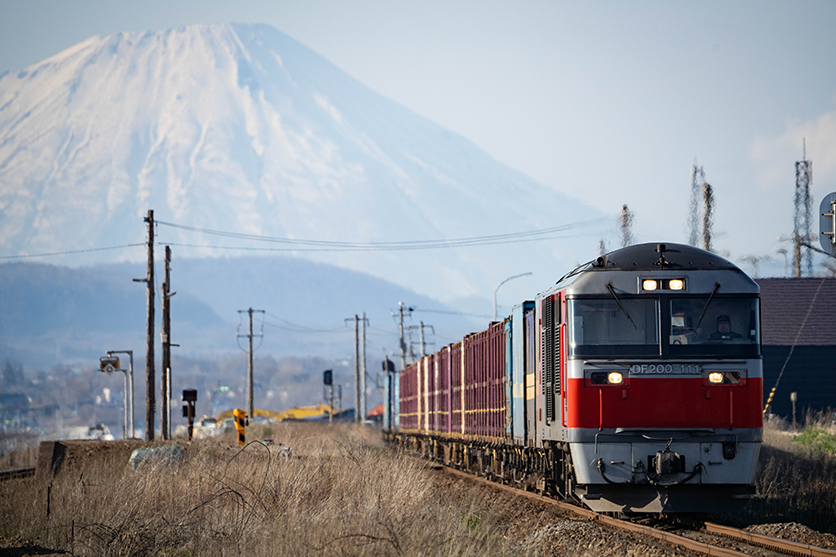
Telephoto lenses can also create a compressed appearance, making distant objects appear visually closer together.
This can be particularly effective when photographing layers of mountains, buildings, trees, or other repeating elements.
How Aperture Can Improve Composition
Aperture controls how much light enters the lens and affects depth of field.
A wider aperture, represented by a smaller F-number such as F2.8, can produce a shallow depth of field.
This allows you to keep your main subject sharp while making the background and foreground appear softer.
This technique is useful for portraits, flowers, food, and other subjects where you want to separate the subject from its surroundings.
A smaller aperture, such as F8 or F11, provides a greater depth of field and can help keep more of the scene in focus.
This can be useful for landscapes and architectural photography.
Recommended TAMRON Lenses for Practicing Composition
Different lenses provide different ways to experiment with composition. Choosing the right lens depends on the type of subject and perspective you want to create.
Wide-Angle Lenses
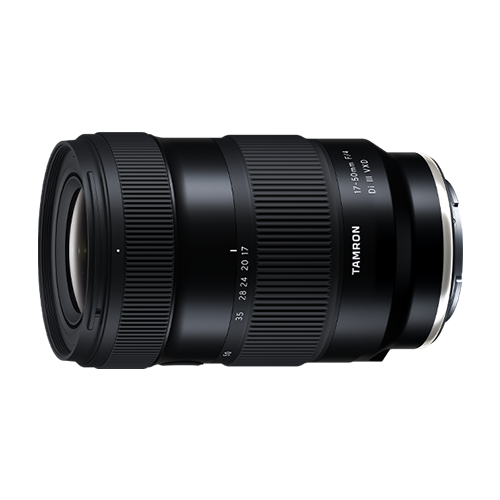
17-50mm F/4 Di III VXD (Model A068)
The 17-50mm F/4 Di III VXD covers a wide range from ultra-wide to standard focal lengths.
This makes it useful when you want to experiment with both expansive compositions and more natural perspectives.
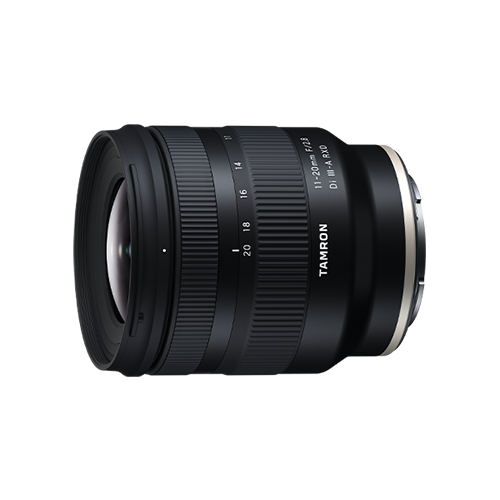
11-20mm F/2.8 Di III-A RXD (Model B060)
For APS-C mirrorless cameras, the 11-20mm F/2.8 Di III-A RXD provides an ultra-wide field of view.
It can be useful for landscapes, architecture, interiors, and compositions that emphasize the relationship between foreground and background.
Standard Zoom Lenses
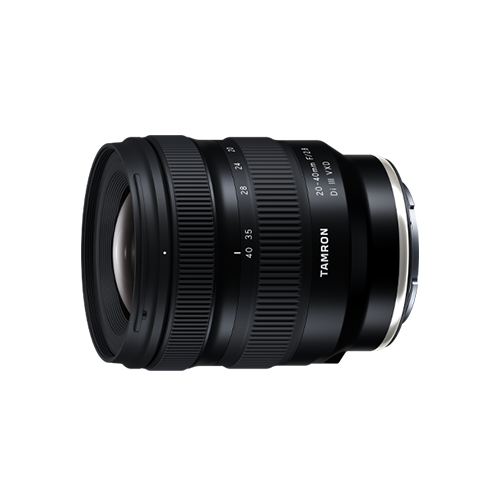
20-40mm F/2.8 Di III VXD (Model A062)
The 20-40mm F/2.8 Di III VXD combines ultra-wide and standard focal lengths in a compact zoom lens.
It provides flexibility for experimenting with perspective and framing while traveling or photographing everyday subjects.
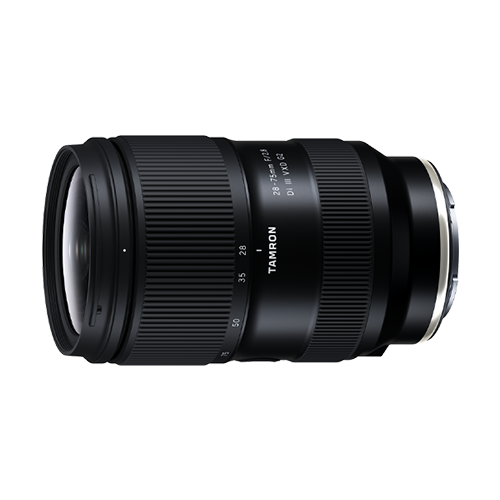
28-75mm F/2.8 Di III VXD G2 (Model A063)
The 28-75mm F/2.8 Di III VXD G2 provides a versatile focal-length range for landscapes, portraits, street photography, and everyday shooting.
Its F2.8 maximum aperture also gives you greater control over depth of field and background blur.
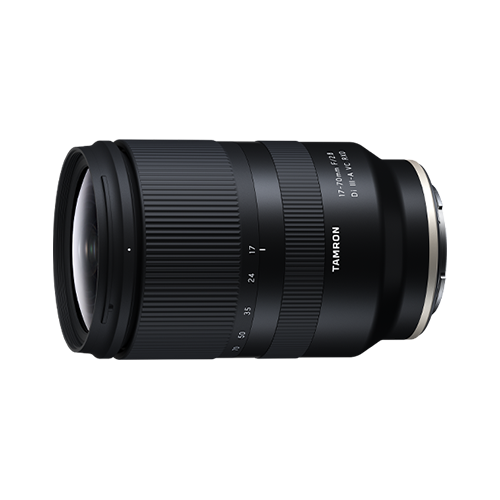
17-70mm F/2.8 Di III-A VC RXD (Model B070)
The 17-70mm F/2.8 Di III-A VC RXD is designed for APS-C mirrorless cameras and provides a versatile range from wide-angle to telephoto.
It is useful for beginners who want to experiment with different compositions without frequently changing lenses.
Telephoto Zoom Lenses
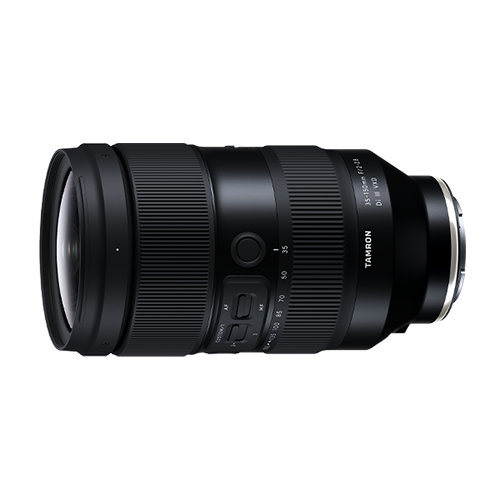
35-150mm F/2-2.8 Di III VXD (Model A058)
The 35-150mm F/2-2.8 Di III VXD combines wide-angle, standard, and telephoto perspectives.
Its versatile range makes it suitable for portraits, travel, events, and situations where you want to quickly change your composition.
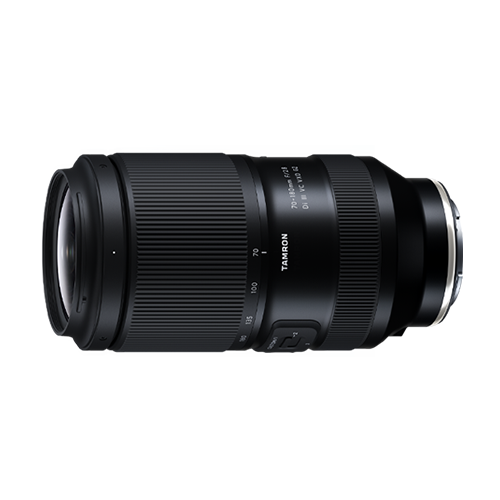
70-180mm F/2.8 Di III VC VXD G2 (Model A065)
The 70-180mm F/2.8 Di III VC VXD G2 provides a telephoto range that is useful for portraits, sports, events, and subject isolation.
The longer focal lengths can also help create compressed compositions and attractive background blur.
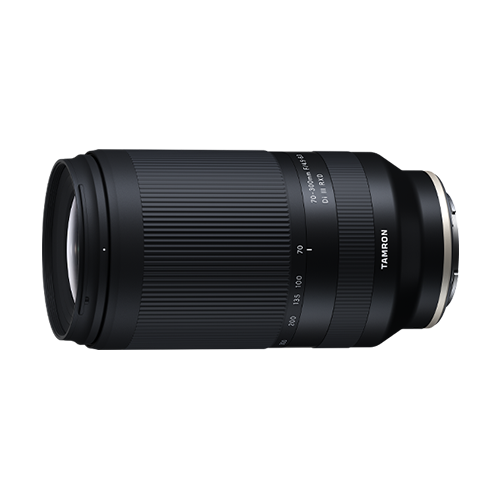
70-300mm F/4.5-6.3 Di III RXD (Model A047)
The 70-300mm F/4.5-6.3 Di III RXD provides extended telephoto reach in a relatively compact design.
It is useful when you want to isolate distant subjects or create compressed landscape compositions.
All-in-One Zoom Lenses
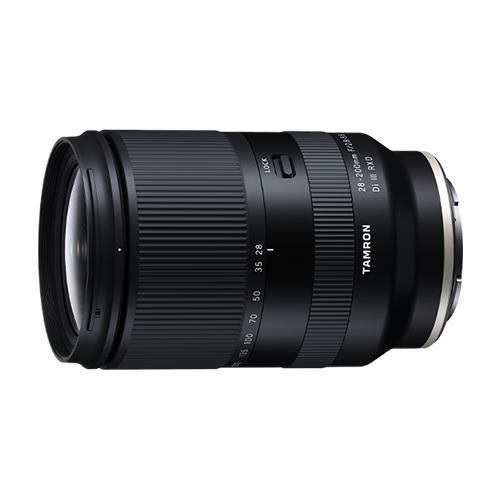
28-200mm F/2.8-5.6 Di III RXD (Model A071)
The 28-200mm F/2.8-5.6 Di III RXD covers a broad focal-length range from wide-angle to telephoto.
For beginners and travelers, this flexibility allows you to experiment with different compositions without carrying multiple lenses.
28-300mm F/4-7.1 Di III VC VXD (Model A074)
The 28-300mm F/4-7.1 Di III VC VXD provides an even broader zoom range, making it suitable for photographers who want to move quickly between wide environmental compositions and distant subjects.
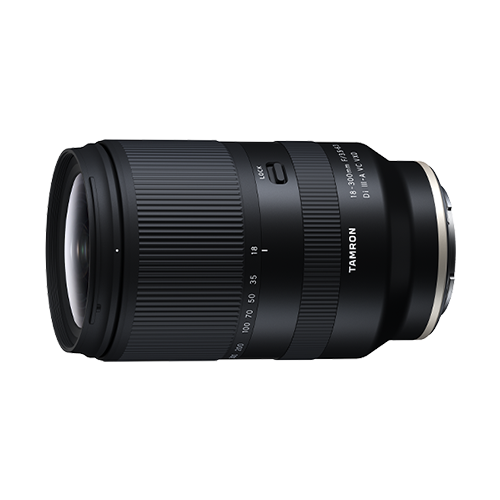
18-300mm F/3.5-6.3 Di III-A VC VXD (Model B061)
For APS-C mirrorless cameras, the 18-300mm F/3.5-6.3 Di III-A VC VXD offers an extensive zoom range from wide-angle to super-telephoto.
This makes it a versatile option for travel, landscapes, wildlife, and everyday photography.
Practical Exercises to Improve Your Composition
The best way to learn composition is to practice.
Try taking the same photograph several different ways.
Exercise 1: Change Your Position
Choose one subject and photograph it from:
- Standing height
- A low angle
- A high angle
- The left side
- The right side
- Very close
- Far away
Compare the photographs afterward and observe how the composition changes.
Exercise 2: Try Different Focal Lengths
If you have a zoom lens, photograph the same subject at different focal lengths.
Pay attention to how the background changes and how the relationship between foreground and background is affected.
Exercise 3: Look for Lines
During your next photo walk, deliberately look for:
- Roads
- Paths
- Bridges
- Railings
- Buildings
- Shadows
- Rivers
- Tree branches
Try using these elements as leading lines.
Exercise 4: Simplify the Frame
Take a photograph normally, then take another version where you remove distracting elements from the frame.
You can do this by moving closer, changing your camera position, using a longer focal length, or selecting a wider aperture.
Compare the two images and see how simplifying the composition affects the viewer’s attention.
Final Tips for Better Photography Composition
Learning composition takes practice. You don’t need to memorize every technique or apply a specific rule to every photograph.
Instead, start by asking yourself a few simple questions before pressing the shutter:
What is my main subject?
Is anything distracting from it?
Where should I place the subject within the frame?
Would a different camera angle improve the photograph?
Should I move closer or farther away?
Would a different focal length create a better composition?
Can I use lines, patterns, or surrounding elements to guide the viewer’s eye?
The more you practice asking these questions, the more naturally composition will become part of your photography.
Rules such as the rule of thirds, leading lines, symmetry, and framing are useful starting points, but they are not limitations. Experiment with different techniques and perspectives to discover what works best for your subject.
With practice, even simple scenes can become compelling photographs through thoughtful composition, camera angles, and lens selection.
TAMRON products mentioned in this article