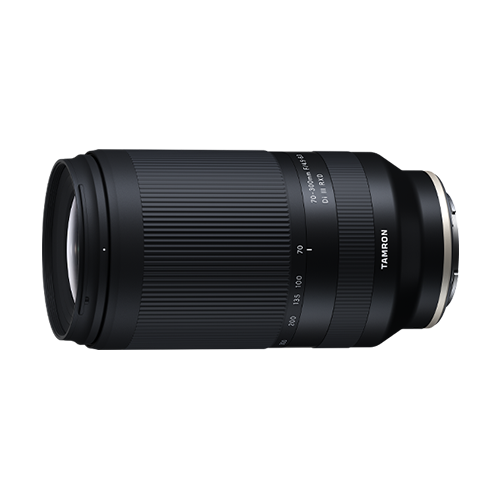

What Is a Telephoto Lens? A Beginner’s Guide
If you have ever tried photographing a distant bird, an athlete on a field, an airplane in the sky or a subject across a large open space, you may have found that a standard lens simply does not provide enough reach.
This is where a telephoto lens can make a significant difference.
Telephoto lenses are designed with longer focal lengths and narrower angles of view, allowing photographers to capture distant subjects at a larger size in the frame. They are commonly used for wildlife, sports, aviation, portraits, events and landscape photography.
But telephoto lenses are not only useful because they can “zoom in.”
Their longer focal lengths can also change the appearance of a photograph by narrowing the field of view, isolating subjects and creating a compression effect that makes distant elements appear closer together.
So, what exactly is a telephoto lens, and how do you choose the right one?
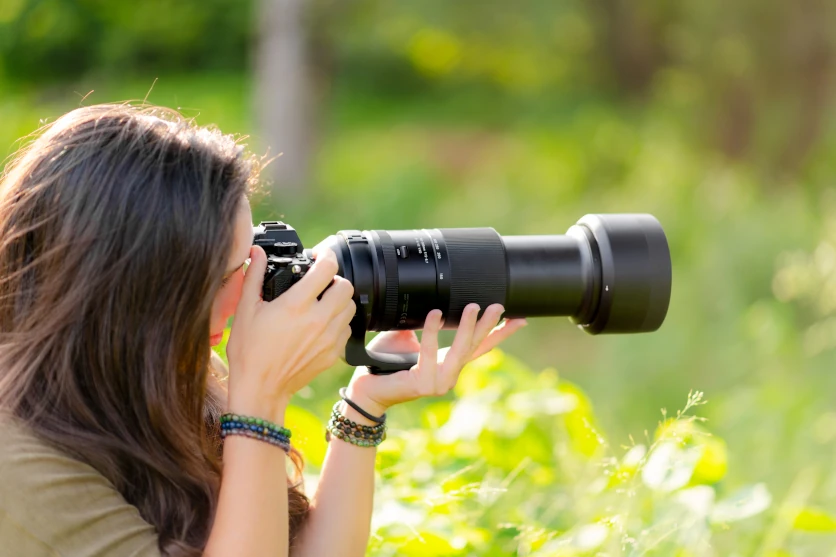
What Is a Telephoto Lens?
A telephoto lens is a lens with a relatively long focal length and a narrow angle of view.
For full-frame cameras, focal lengths of approximately 80mm or longer are commonly considered telephoto. Lenses around 300mm and above are often classified as ultra-telephoto.
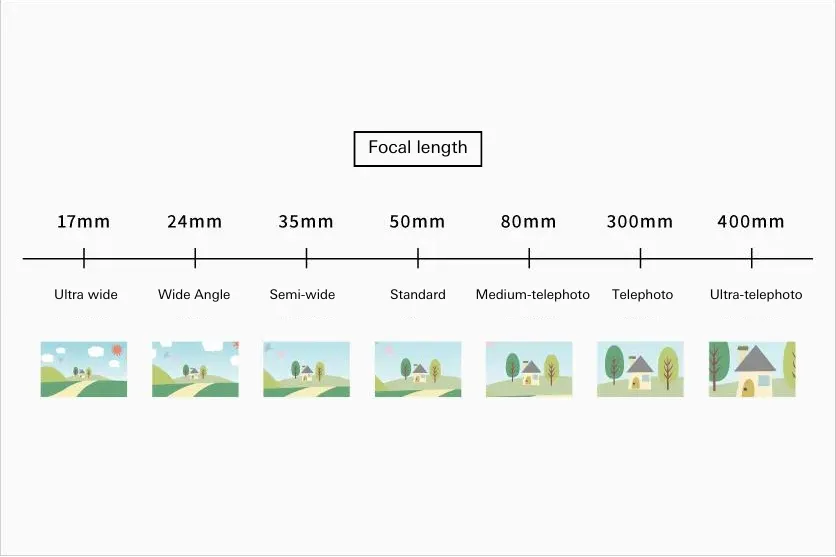
The longer the focal length, the narrower the field of view becomes.
For example:
- 24mm: Wide field of view
- 35mm: Wide-angle perspective
- 50mm: Standard perspective
- 85mm: Short telephoto
- 135mm: Telephoto
- 200mm: Telephoto
- 300mm: Long telephoto
- 400mm and beyond: Ultra-telephoto range
These are general guidelines rather than strict boundaries, and the effective field of view also depends on the camera’s sensor size.
The important concept is simple:
A longer focal length allows you to frame distant subjects more tightly.
How Does a Telephoto Lens Work?
Focal length affects the angle of view captured by the camera.
As the focal length increases, the angle of view becomes narrower. This means less of the surrounding scene is included in the photograph while the subject occupies more of the frame.
Imagine photographing a bird sitting on a distant branch.
With a wide-angle lens, the bird may occupy only a tiny portion of the image.
With a 300mm telephoto lens, the bird can occupy much more of the frame while you remain farther away.
This is one of the primary reasons telephoto lenses are useful for wildlife and sports photography.
TAMRON’s 50-300mm F/4.5-6.3 Di III VC VXD (Model A069) is an example of a telephoto zoom that starts at an unusual 50mm and extends to 300mm. TAMRON designed it to provide the reach associated with a 70-300mm lens while also allowing photographers to zoom out when 70mm is too narrow.
What Are Telephoto Lenses Used For?
A telephoto lens can be useful whenever you need to photograph a subject from a distance or want to create a tighter composition.
1. Wildlife Photography
Wildlife is one of the most obvious applications for a telephoto lens.
Getting physically close to an animal is often impossible or undesirable. A telephoto lens lets you maintain a safer and more practical distance while still capturing details.
Longer focal lengths can help you photograph:
- Birds
- Mammals
- Marine animals
- Insects
- Reptiles
- Animals in zoos and sanctuaries
A zoom lens can be particularly useful because wildlife does not always remain at the same distance.
For example, you might need 300mm when a bird is far away but 100mm when the animal suddenly moves closer.
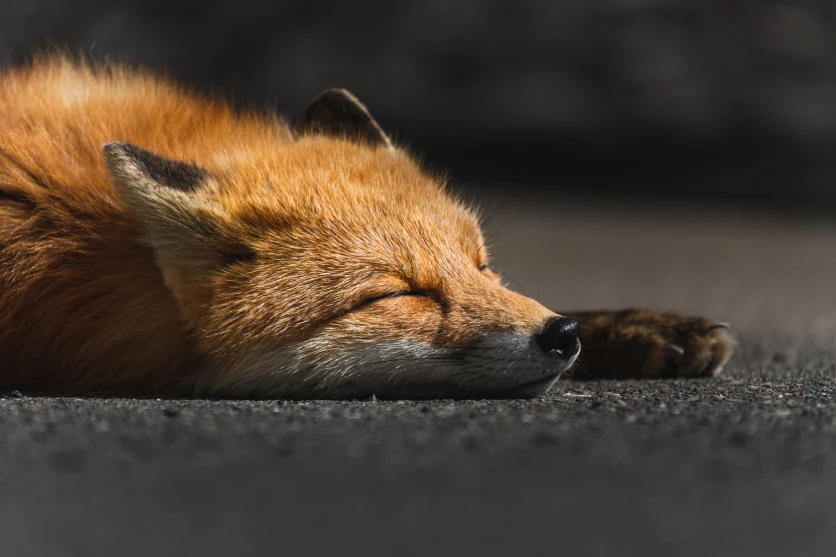
2. Sports Photography
Sports photographers often cannot stand directly beside the action.
A telephoto zoom allows you to frame athletes from the sidelines, stands or other designated shooting areas.
The longer focal length can help capture:
- Facial expressions
- Movement
- Individual players
- Key moments
- Details from across a field
For sports played indoors or under challenging lighting, a larger maximum aperture can also be valuable because it allows more light to reach the camera sensor.
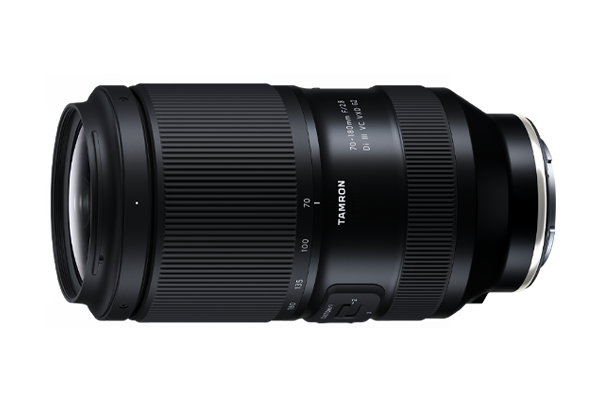
TAMRON’s 70-180mm F/2.8 Di III VC VXD G2 (Model A065) combines a telephoto range with a constant F2.8 aperture and VC image stabilization, making this type of lens useful for sports, events and portraits.

3. Portrait Photography
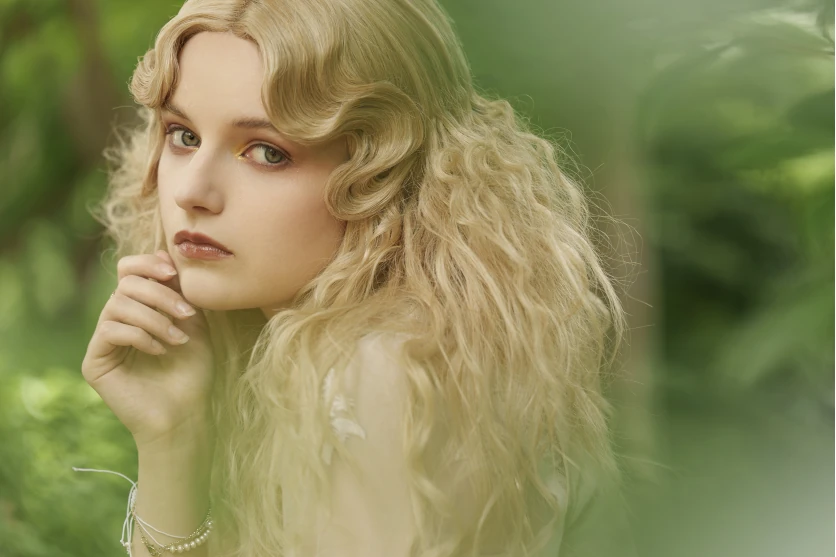
You may not immediately think of a telephoto lens when photographing people, but telephoto lenses can be very useful for portraits.
Longer focal lengths allow photographers to frame the subject more tightly while maintaining some distance.
They can also produce a shallower depth of field, depending on the aperture, subject distance and camera format.
This can help separate the subject from the background.
Telephoto lenses can also produce a compression effect that changes the relationship between the subject and background.
This can create a visually different portrait compared with a wide-angle lens.
4. Aviation Photography
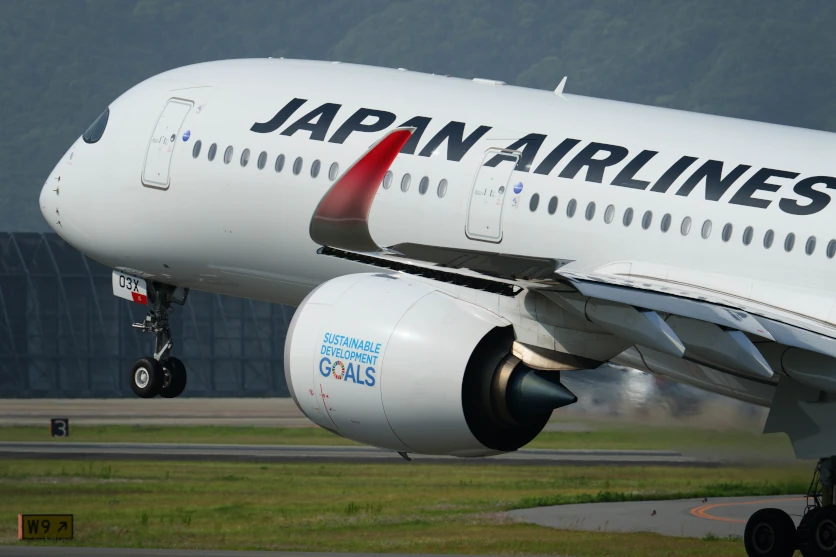
Airplanes are often photographed from significant distances, making telephoto lenses particularly useful.
A long focal length allows you to fill more of the frame with the aircraft while remaining safely away from the runway or flight path.
Zoom lenses can be particularly convenient because the distance between you and the aircraft can change quickly.
A lens reaching 300mm, 400mm or 500mm can provide substantial flexibility when photographing aircraft in the sky.
5. Landscape Photography
Telephoto lenses are not only for distant subjects.
They can also be used to create a different style of landscape photography.
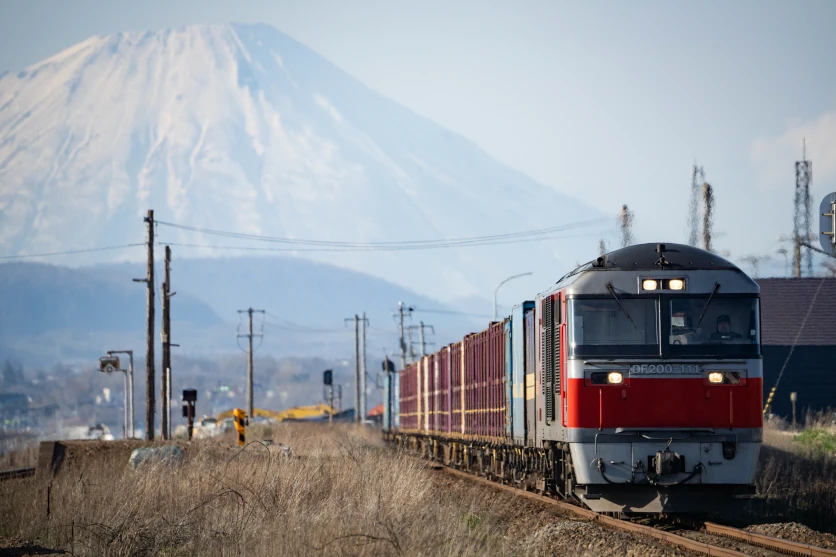
Instead of photographing an entire mountain range with a wide-angle lens, you can use a telephoto lens to isolate:
- A mountain peak
- A distant building
- Trees
- Layers of mountains
- People within a landscape
- Details in the environment
The narrower field of view allows you to simplify a busy landscape and concentrate on specific elements.
6. Events and Performances
At concerts, weddings, festivals and other events, photographers may not be able to move freely.
A telephoto zoom can help you photograph subjects from a distance without interrupting the event.
For example, you can photograph a speaker on stage, a performer or a candid moment from farther away.
This makes telephoto lenses useful when you want to capture natural expressions without physically standing close to your subject.

What Is the Compression Effect?
One of the most interesting characteristics of telephoto photography is the compression effect.
Compression refers to the visual appearance created when using longer focal lengths from a greater shooting distance.
Distant objects can appear visually closer together than they do when viewed with a wider lens.
For example, imagine a city street with several rows of buildings.
With a wide-angle lens, the distance between the foreground and background can appear exaggerated.
Using a telephoto lens from farther away can make the buildings appear to stack more closely together.
This effect can also be used in landscapes.
Multiple layers of mountains can appear to overlap, creating a more dramatic and dense composition.
Telephoto lenses can also make distant lights appear larger relative to the subject, which can be useful for creative night photography.
How Can You Use Compression Creatively?
Try looking for scenes with several layers at different distances.
For example:
- Find a distant subject.
- Look for objects behind it.
- Move farther away if necessary.
- Use a longer focal length.
- Zoom in until the elements begin to overlap visually.
This technique can be particularly effective for:
- Mountains
- City streets
- Buildings
- Crowds
- Trees
- Sunsets
- Night lights
The important thing to remember is that compression is closely related to shooting distance and framing, not simply a special effect produced by the lens.
Telephoto Lens and Background Blur
Another reason photographers enjoy telephoto lenses is their ability to produce strong background separation.
When combined with a wide aperture and appropriate subject distance, longer focal lengths can make the background appear soft and blurred.
This can help draw attention to the subject.
For example, when photographing a person with a 180mm lens, you can frame the subject tightly while keeping the background relatively soft.
The effect can be particularly useful for portraits, wildlife and sports photography.
However, the amount of background blur depends on several factors:
- Focal length
- Aperture
- Subject distance
- Background distance
- Camera sensor size
A longer focal length alone does not guarantee strong bokeh.
Telephoto Prime vs. Telephoto Zoom
Telephoto lenses are available in both prime and zoom designs.
A telephoto prime lens has one fixed focal length.
For example, a 300mm prime lens always operates at 300mm.
A telephoto zoom allows you to change the focal length.
For example, a 50-300mm lens can be used at 50mm, 100mm, 200mm, 300mm and the focal lengths in between.
Advantages of a Telephoto Prime
Prime lenses can offer:
- Large maximum apertures
- Strong subject isolation
- Potentially high optical performance
- A consistent shooting experience
They can be particularly useful when you know exactly what focal length you need.
Advantages of a Telephoto Zoom
Zoom lenses offer:
- Multiple focal lengths
- Flexible framing
- Easier subject tracking
- Less need to change lenses
- Greater versatility
For wildlife and sports, a zoom can be especially convenient because the subject may move toward or away from you.
What Is an Ultra-Telephoto Lens?
Ultra-telephoto lenses take the concept of telephoto photography even further.
TAMRON generally describes lenses around 300mm and longer as ultra-telephoto territory.
These longer focal lengths are useful when the subject is extremely far away.
Common applications include:
- Wildlife
- Birds
- Aviation
- Motorsports
- Outdoor sports
- Moon photography
- Distant landscape details
The trade-off is that longer focal lengths can make lenses larger, heavier and more difficult to stabilize.
This is why portability, image stabilization and handling become increasingly important as focal length increases.
What Should You Look for When Choosing a Telephoto Lens?
Choosing the right telephoto lens is not simply about selecting the lens with the longest focal length.
Consider how and where you plan to use it.
1. Focal Length
The first consideration is focal length.
Think about how far away your typical subjects are.
For example:
70-200mm:
Useful for portraits, events, sports and general telephoto photography.
70-300mm:
Provides additional reach for wildlife, sports and travel.
100-400mm:
Useful when you need substantial reach for wildlife, birds and outdoor sports.
150-500mm:
Provides even more reach for distant wildlife, birds and aviation.
400mm and beyond:
Useful when maximum reach is a priority.
There is no universally correct focal length.
The right choice depends on your subjects and shooting distance.
2. Maximum Aperture
The maximum aperture determines how much light can enter the lens.
A larger aperture such as F2.8 can be useful for:
- Indoor sports
- Events
- Portraits
- Low-light photography
- Faster shutter speeds
- Background separation
However, lenses with larger apertures are often larger, heavier and more expensive.
For outdoor wildlife and daytime photography, a slower telephoto zoom can offer a useful balance between reach and portability.
3. Image Stabilization
Camera shake becomes increasingly noticeable as focal length increases.
This is why image stabilization can be especially useful with telephoto lenses.
TAMRON calls its stabilization system Vibration Compensation (VC).
For example, the A069 50-300mm includes VC to help reduce camera shake when shooting at longer focal lengths.
Stabilization can be useful for handheld photography, especially when shooting at slower shutter speeds.
However, image stabilization does not freeze subject movement. If your subject is moving quickly, you may still need a sufficiently fast shutter speed.
4. Autofocus Performance
Fast and accurate autofocus becomes important when photographing moving subjects.
This is particularly true for:
- Birds
- Wildlife
- Sports
- Cars
- Airplanes
- Children
- Pets
A lens with responsive autofocus and effective subject tracking can make it easier to maintain focus as your subject moves through the frame.
TAMRON’s VXD autofocus system is used in several of its telephoto zooms, including the A069 and A067.
5. Weight and Portability
Telephoto lenses can become heavy quickly.
If you plan to hike with your camera or spend several hours photographing wildlife, weight is an important consideration.
A lighter lens may allow you to shoot handheld for longer periods.
For example, TAMRON’s 50-300mm F4.5-6.3 VC (A069) weighs approximately 665g, while still reaching 300mm.
This illustrates why it is useful to consider the entire lens design rather than focusing only on focal length.
6. Minimum Focusing Distance
Telephoto lenses can also be useful for close-up photography.
Some telephoto zooms provide surprisingly strong close-focusing capability.
The A069, for example, can achieve a maximum magnification ratio of 1:2 at 50mm, allowing half-macro-style photography while still providing a long 300mm reach at the other end.
This can be useful for photographing:
- Flowers
- Insects
- Small objects
- Food
- Details in nature
How to Use a Telephoto Lens
Simply attaching a telephoto lens does not automatically result in better photographs.
Here are several practical techniques that can help.
1. Use a Fast Enough Shutter Speed
Long focal lengths magnify camera shake.
As a general starting point, try using a shutter speed fast enough to reduce visible camera movement.
For moving subjects, you may need an even faster shutter speed.
For example:
- Static subject: Try a moderate shutter speed while monitoring camera shake.
- Walking subject: Use a faster shutter speed.
- Sports: Often require high shutter speeds.
- Birds in flight: May require very high shutter speeds.
The exact setting depends on focal length, subject movement, lighting and camera stabilization.
2. Use Image Stabilization When Appropriate
If your lens and camera provide stabilization, use it when shooting handheld in situations where it can help.
However, remember that stabilization primarily compensates for camera movement.
It does not stop your subject from moving.
If a bird is flying quickly, for example, you still need a fast enough shutter speed to freeze the bird.
3. Track Your Subject
Telephoto lenses have a narrow field of view.
This can make moving subjects more difficult to keep inside the frame.
When photographing sports or wildlife, try to anticipate where your subject is going rather than reacting only after it moves.
Start tracking the subject before pressing the shutter.
4. Look for a Clean Background
Because telephoto lenses can isolate subjects effectively, background selection becomes important.
Before taking the photograph, look beyond your subject.
Ask:
What will appear behind it?
A simple background can make the subject stand out more clearly.
5. Use Compression Intentionally
Look for scenes where distant elements line up behind your subject.
Mountains, buildings, trees and city lights can all create interesting layers.
Zoom in and adjust your shooting position to change how those elements overlap.
6. Don’t Always Shoot at Maximum Focal Length
One common mistake is assuming that a telephoto zoom should always be used at its longest focal length.
If you have a 50-300mm lens, for example, you do not always need to shoot at 300mm.
At 50mm or 100mm, you can include more of the surrounding environment.
This can be particularly useful for environmental portraits, wildlife in its habitat and storytelling photographs.
Telephoto Lens vs. All-in-One Zoom
An all-in-one zoom lens can also include telephoto focal lengths, but its purpose is somewhat different.
An all-in-one zoom is designed to cover a broad range from wide-angle through telephoto, allowing photographers to use one lens for many different subjects.
For example, the 28-300mm F/4-7.1 Di III VC VXD (Model A074) covers everything from 28mm wide-angle to 300mm telephoto. TAMRON describes it as a 10.7x all-in-one zoom designed for subjects ranging from landscapes and snapshots to portraits, sports and distant scenes.
This type of lens is useful when you want to avoid changing lenses.
A dedicated telephoto zoom, on the other hand, may offer greater reach or a more specialized design for distant subjects.
Think of the difference this way:
All-in-one zoom:
One lens for many different types of photography.
Telephoto zoom:
Greater emphasis on medium-to-long focal lengths and distant subjects.
TAMRON Telephoto Zoom Lenses to Consider
TAMRON offers several telephoto zoom lenses designed for different shooting needs.
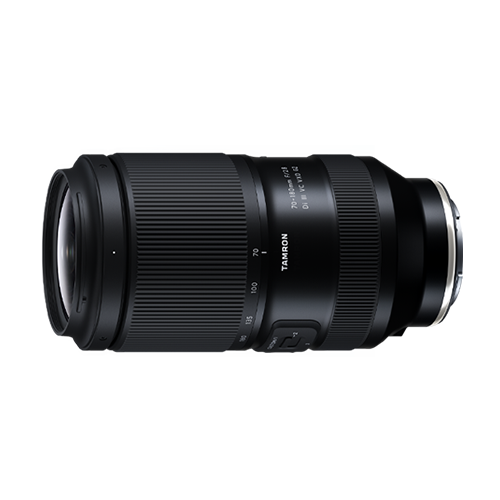
70-180mm F/2.8 Di III VC VXD G2 — Model A065
The 70-180mm F2.8 G2 is a full-frame telephoto zoom designed for Sony E and Nikon Z mirrorless cameras.
Its constant F2.8 aperture makes it particularly suitable for photographers who need a fast telephoto zoom for portraits, events, sports and low-light situations.
It also features TAMRON’s VC image stabilization.
It can be useful for:
- Portraits
- Sports
- Weddings
- Events
- Indoor photography
- Travel
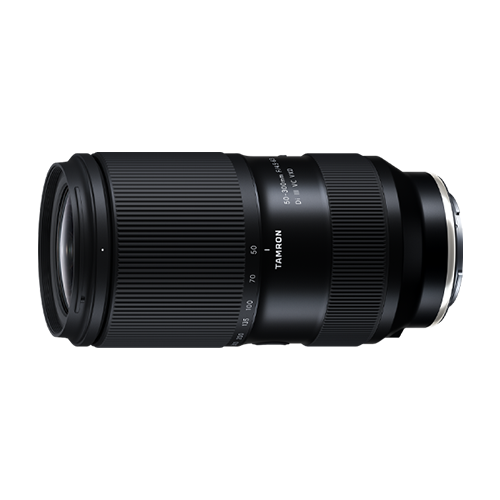
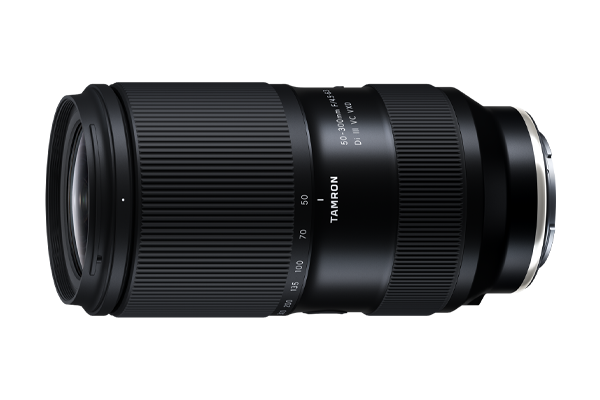
50-300mm F/4.5-6.3 Di III VC VXD — Model A069
The 50-300mm F4.5-6.3 VC (A069) provides an unusual combination of a 50mm starting point and 300mm telephoto reach.
This makes it useful when a conventional 70mm starting point feels too narrow.
Its 6x zoom range, 665g weight, VC stabilization and 1:2 maximum magnification at 50mm make it a particularly flexible telephoto zoom.
It can be useful for:
- Wildlife
- Sports
- Travel
- Landscapes
- Portraits
- Close-up photography
- Everyday telephoto shooting
50-400mm F/4.5-6.3 Di III VC VXD — Model A067
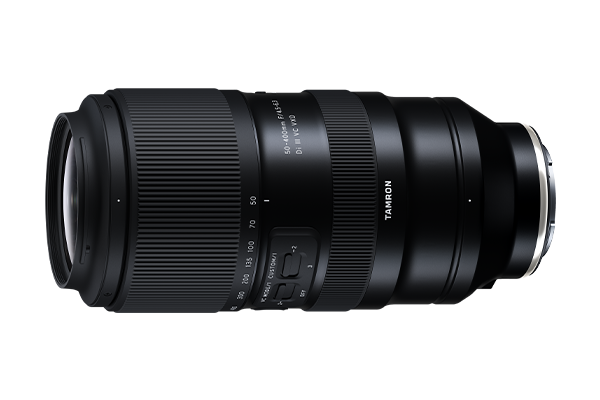
The 50-400mm F4.5-6.3 VC (A067) extends the telephoto range even further while starting at 50mm.
Its 8x zoom range provides substantial flexibility, while TAMRON designed the lens to maintain a relatively compact and lightweight form compared with traditional 100-400mm-class lenses.
It can be useful for:
- Wildlife
- Birds
- Sports
- Aviation
- Motorsports
- Travel
- Outdoor photography
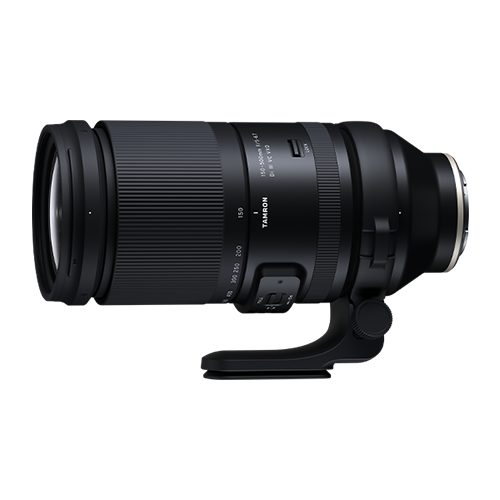
150-500mm F/5-6.7 Di III VC VXD — Model A057
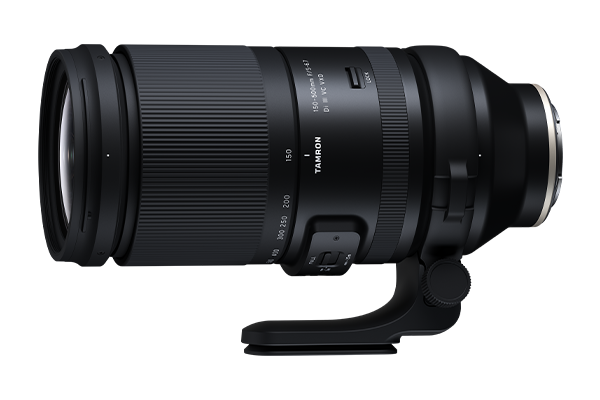
When maximum reach becomes more important, the 150-500mm F5-6.7 VC (A057) provides a focal-length range reaching 500mm.
It is designed for full-frame mirrorless cameras and combines long telephoto reach with VC stabilization and autofocus designed for moving subjects.
It can be particularly useful for:
- Wildlife
- Birds
- Aviation
- Sports
- Motorsports
- Distant subjects
- Moon photography
Which Telephoto Lens Should You Choose?
The right telephoto lens depends on your subject and how you normally shoot.
For portraits and events
A 70-180mm F2.8 can provide useful reach while maintaining a large maximum aperture.
For travel and everyday telephoto photography
A 50-300mm can provide a broad range while remaining relatively portable.
For wildlife and outdoor sports
A 50-400mm provides additional reach while retaining a useful 50mm starting point.
For birds and distant subjects
A 150-500mm provides significantly more reach for subjects that are difficult to approach.
For maximum versatility with one lens
An all-in-one zoom such as 28-300mm can cover wide-angle through telephoto perspectives without requiring a lens change.
The important thing is to match the lens to the subject rather than simply choosing the lens with the longest focal length.
Is a Telephoto Lens Necessary?
A telephoto lens is not necessary for every photographer.
If you primarily photograph landscapes, architecture or interiors, you may spend more time using wide-angle lenses.
If you photograph people, travel and everyday subjects, a standard zoom may cover most of your needs.
But if you regularly photograph wildlife, sports, aviation, events or distant subjects, a telephoto lens can open up creative possibilities that shorter lenses cannot easily provide.
Telephoto lenses are also useful when you want to create tighter compositions, isolate subjects or take advantage of compression.
The key is to consider the subjects you actually photograph.
Ask yourself:
How often do I need to photograph something that I cannot physically get close to?
If the answer is often, a telephoto lens may be one of the most useful additions to your camera bag.
Final Thoughts
A telephoto lens is much more than a lens that makes distant subjects appear closer.
Its longer focal length and narrow field of view give photographers a different way to see and compose a scene.
You can use a telephoto lens to photograph wildlife from a distance, capture athletes in action, create portraits with strong background separation, isolate details in a landscape or compress layers of a cityscape.
When choosing one, consider more than focal length. Think about maximum aperture, autofocus, image stabilization, weight, minimum focusing distance and the subjects you photograph most often.
A 70-180mm lens can be useful for portraits and events. A 50-300mm lens can provide a flexible combination of standard and telephoto perspectives. A 50-400mm or 150-500mm lens can provide more reach for wildlife, birds and distant subjects.
There is no single telephoto lens that is right for every photographer.
Start by identifying the subjects you want to photograph, the distance you normally work from and how much equipment you are comfortable carrying. From there, choose the focal-length range and features that best match your photography.
With the right telephoto lens, distant subjects can become much more accessible—and familiar scenes can take on an entirely different perspective.
TAMRON products mentioned in this article