
How to Choose a Sony E-Mount Lens: A Beginner’s Guide
Choosing a lens for a Sony mirrorless camera can be challenging.
There are many Sony E-mount lenses available, covering different focal lengths, apertures, sensor formats and shooting styles. A lens that works well for landscapes may not be the right choice for wildlife, while a lens designed for portraits may not be the most convenient option for travel.
The key is to start with how you use your camera.
Before choosing a lens, consider your camera’s sensor size, the subjects you photograph, the focal length you need, how much you value portability, and whether features such as a large aperture, image stabilization or fast autofocus are important to you.
This guide explains the main factors to consider when choosing a Sony E-mount lens and introduces several TAMRON lenses for different types of photography.
What Is a Sony E-Mount Lens?
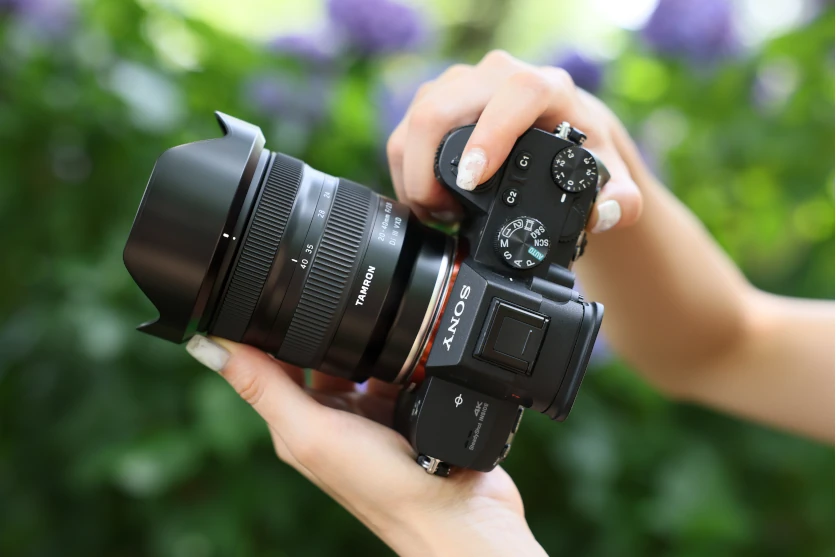
The Sony E-mount is the lens mount system used by Sony’s mirrorless interchangeable-lens cameras.
The mount is the physical connection between the camera body and lens. A lens must use a compatible mount to attach directly to the camera.
Sony also has a separate A-mount system that was used for Sony’s DSLR and SLT cameras. E-mount and A-mount are different systems, so they should not be treated as interchangeable without the appropriate adapter.
For Sony mirrorless cameras, the important thing to check is whether the lens is designed for Sony E-mount.
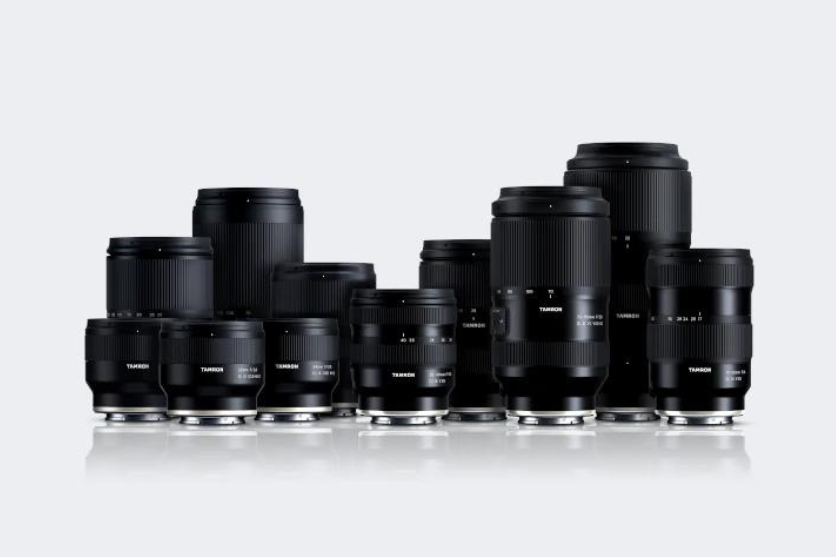
TAMRON offers a wide range of lenses for Sony E-mount cameras, including full-frame and APS-C-compatible models.
Full-Frame or APS-C: Which Sony E-Mount Lens Do You Need?
One of the first things you should determine is your camera’s sensor size.
Sony E-mount cameras are available with both:
- Full-frame sensors
- APS-C sensors
This distinction is important because lenses are also designed for different sensor formats.
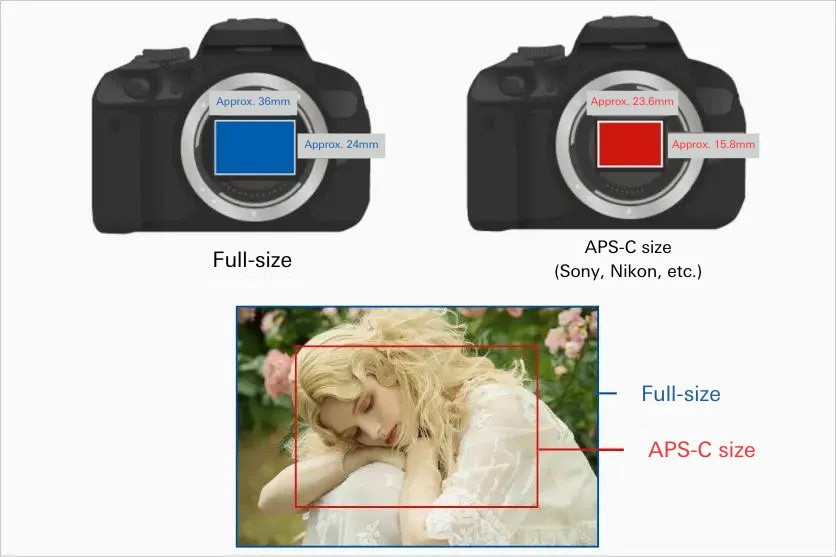
Full-Frame Sony Cameras
Full-frame cameras use a sensor approximately the same size as a 35mm film frame.
If you have a full-frame Sony camera, a full-frame-compatible lens is generally the straightforward choice.
Examples include TAMRON lenses such as:
- 28-75mm F2.8 Di III VXD G2 — A063
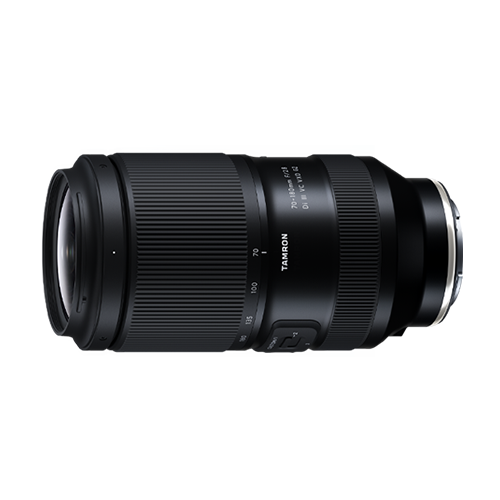
- 70-180mm F2.8 Di III VC VXD G2 — A065
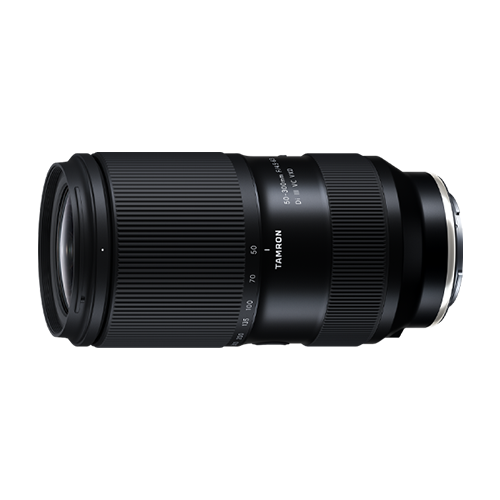
- 50-300mm F4.5-6.3 Di III VC VXD — A069
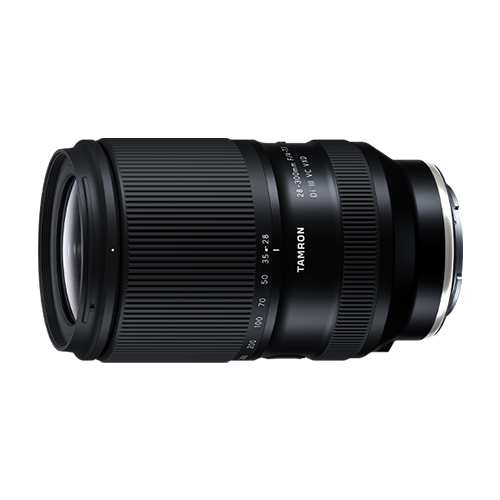
- 28-300mm F4-7.1 Di III VC VXD — A074
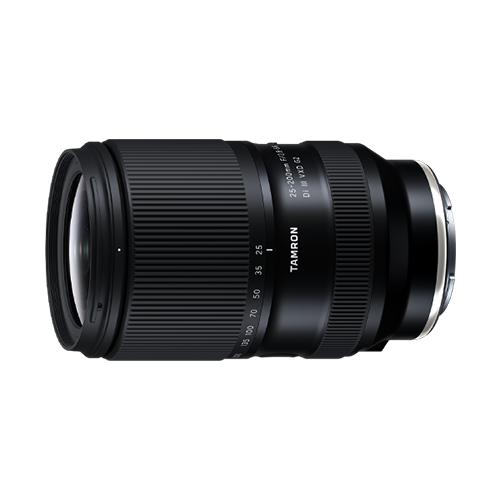
- 25-200mm F2.8-5.6 Di III VXD G2 — A075
APS-C Sony Cameras
APS-C cameras use a smaller sensor.
TAMRON offers lenses specifically designed for APS-C Sony E-mount cameras, including:
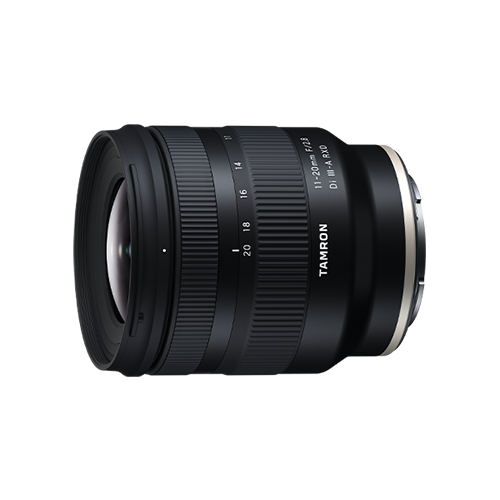
- 11-20mm F2.8 Di III-A RXD — B060
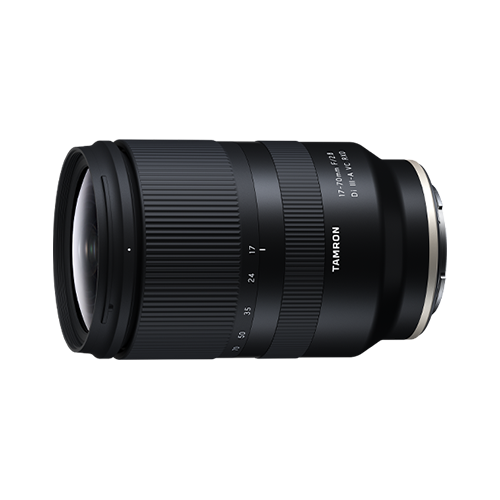
- 17-70mm F2.8 Di III-A VC RXD — B070
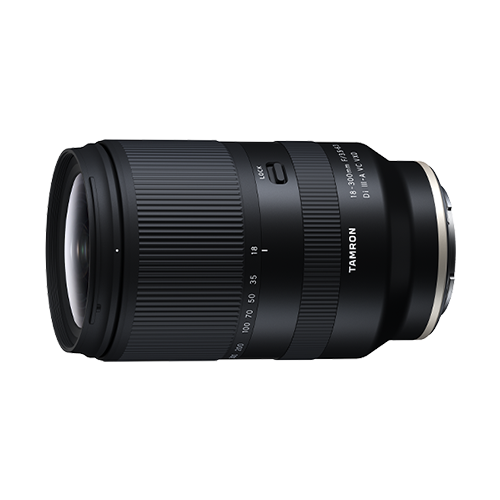
- 18-300mm F3.5-6.3 Di III-A VC VXD — B061
A full-frame-compatible lens can generally be used on an APS-C Sony E-mount body, although the field of view becomes narrower because of the smaller sensor.
An APS-C lens can also physically mount to some full-frame Sony E-mount bodies, but using an APS-C lens on a full-frame camera can result in vignetting unless the camera uses an appropriate crop mode.
Always check the compatibility information for your specific camera before purchasing a lens.
What Type of Sony E-Mount Lens Do You Need?
Once you know your sensor format, think about the type of lens that fits your photography.
Lenses can broadly be divided into:
- Wide-angle lenses
- Standard lenses
- Telephoto lenses
- Prime lenses
- Zoom lenses
- All-in-one zoom lenses
These categories overlap.
For example, a 28-300mm lens is an all-in-one zoom, but it also covers wide-angle, standard and telephoto focal lengths.
Understanding the differences can make choosing a lens much easier.
Wide-Angle Lenses
Wide-angle lenses have shorter focal lengths and a wider field of view.
They are useful when you want to include more of the surrounding environment in the frame.
Common applications include:
- Landscapes
- Architecture
- Interiors
- Travel
- Street photography
- Vlogging
- Astrophotography
For APS-C Sony cameras, the 11-20mm F2.8 Di III-A RXD (B060) provides an ultra-wide-angle range and a constant F2.8 maximum aperture.
For full-frame Sony cameras, the 17-50mm F4 Di III VXD (A068) starts at an ultra-wide 17mm and extends into the standard range at 50mm.
This makes it useful for photographers and video creators who want wide-angle coverage without carrying several lenses.
Standard Zoom Lenses
Standard zoom lenses cover focal lengths that are commonly used for everyday photography.
They can be useful for:
- Travel
- Street photography
- Portraits
- Family photography
- Events
- Everyday shooting
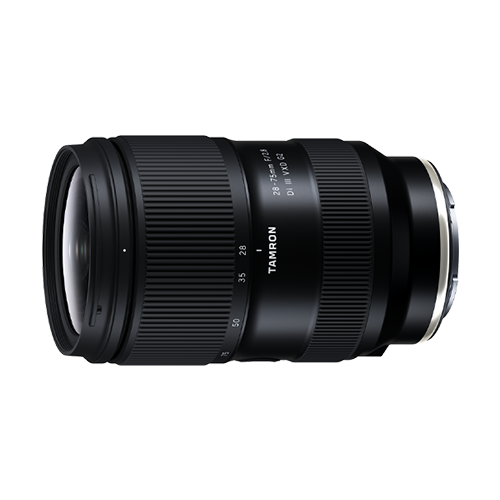
The 28-75mm F2.8 Di III VXD G2 (A063) is an example of a full-frame standard zoom for Sony E-mount.
Its 28-75mm range covers wide-angle through short telephoto perspectives, while the constant F2.8 aperture provides flexibility for low-light photography and depth-of-field control.
For APS-C Sony cameras, the 17-70mm F2.8 Di III-A VC RXD (B070) provides a broad everyday range equivalent to approximately 25.5-105mm in full-frame terms.
Telephoto Lenses
Telephoto lenses have longer focal lengths and narrower fields of view.
They are particularly useful when your subject is far away or when you want to isolate part of a scene.
Common applications include:
- Wildlife
- Birds
- Sports
- Aviation
- Events
- Portraits
- Distant landscapes
For example, the 70-180mm F2.8 Di III VC VXD G2 (A065) provides a telephoto range with a constant F2.8 aperture.
For photographers who need more reach, the 50-300mm F4.5-6.3 Di III VC VXD (A069) extends to 300mm while starting at 50mm.
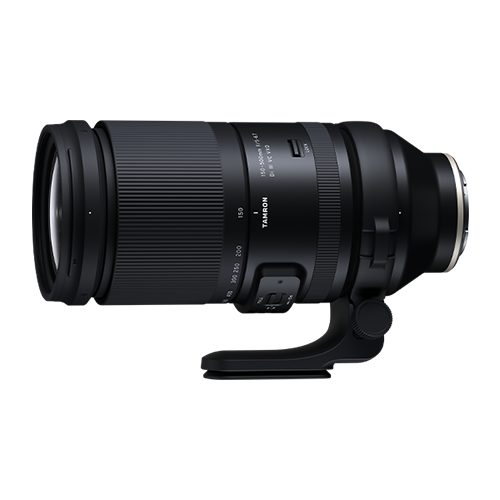
For even more distant subjects, the 150-500mm F5-6.7 Di III VC VXD (A057) reaches 500mm and is designed for applications such as wildlife, birds, sports and aviation. TAMRON describes the A057 as a compact, handheld-oriented 500mm ultra-telephoto zoom.
Prime Lens or Zoom Lens?
Another important decision is whether you want a prime lens or zoom lens.
Prime Lenses
A prime lens has one fixed focal length.
For example:
20mm
35mm
90mm
Prime lenses can be attractive when you want:
- A large maximum aperture
- Strong background separation
- Compact equipment
- A specific perspective
- A focused shooting experience
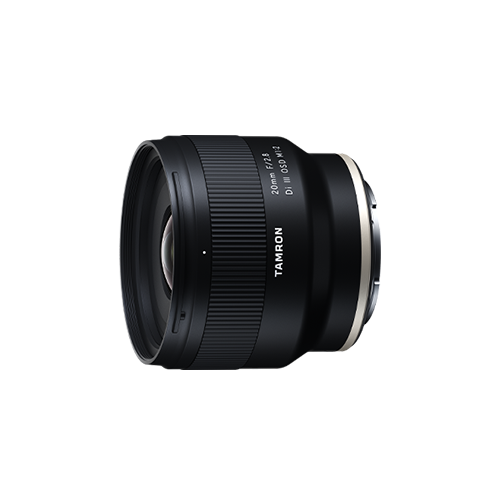
TAMRON’s 20mm F2.8 Di III OSD M1:2 (F050) is an example of a full-frame Sony E-mount prime lens.
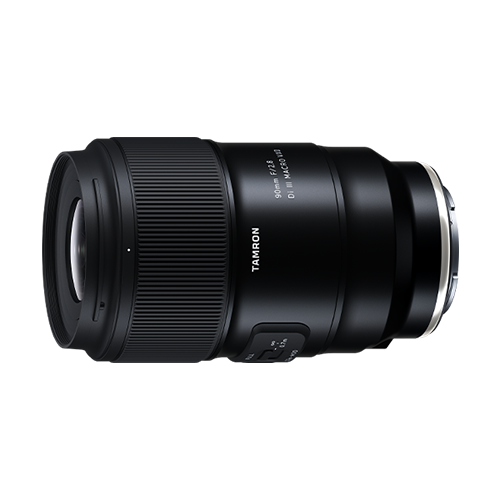
TAMRON also offers the 90mm F2.8 Di III Macro VXD (F072), which combines a fixed 90mm focal length with 1:1 macro capability.
Zoom Lenses
A zoom lens provides a range of focal lengths.
For example:
28-75mm
70-180mm
50-300mm
Zoom lenses can be useful when you need to change your composition quickly without changing your shooting position.
They are particularly convenient for:
- Travel
- Events
- Sports
- Wildlife
- Video
- Everyday photography
If you frequently photograph different subjects at different distances, a zoom can provide considerable flexibility.
What Focal Length Should You Choose?
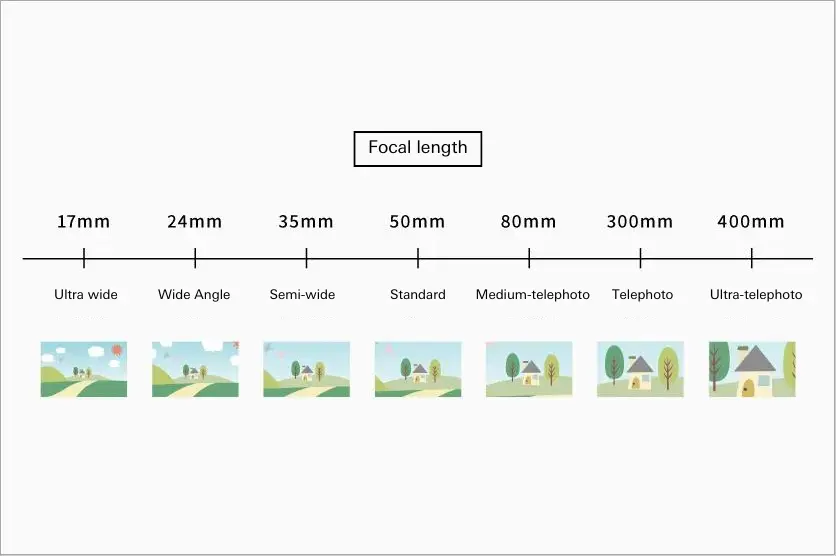
Focal length is one of the most important specifications to understand.
It affects the lens’s angle of view and therefore how much of the scene appears in the frame.
As a general guide on a full-frame camera:
Around 20-24mm
Useful for:
- Landscapes
- Architecture
- Interiors
- Astrophotography
- Creative wide-angle compositions
Around 28-35mm
Useful for:
- Travel
- Street photography
- Everyday photography
- Environmental portraits
Around 50mm
Useful for:
- Everyday photography
- Street photography
- Portraits
- Documentary-style photography
Around 70-100mm
Useful for:
- Portraits
- Events
- Details
- Short telephoto photography
100-200mm
Useful for:
- Portraits
- Sports
- Events
- Wildlife
- Distant details
300mm and beyond
Useful for:
- Birds
- Wildlife
- Aviation
- Motorsports
- Outdoor sports
- Distant subjects
These categories are only general guidelines. Your preferred perspective and shooting distance are ultimately more important than the category name.
Think About What You Photograph
Instead of starting with a lens specification, start with your subjects.
For Travel Photography
Travel photographers often need to photograph many different subjects during the same day.
You might photograph:
- Landscapes
- Buildings
- People
- Food
- Street scenes
- Details
An all-in-one zoom can be convenient because it reduces the need to change lenses.
The 28-300mm F4-7.1 Di III VC VXD (A074) covers everything from 28mm wide-angle to 300mm telephoto in a single lens. TAMRON describes it as a 10.7x all-in-one zoom designed to cover a wide variety of shooting situations.
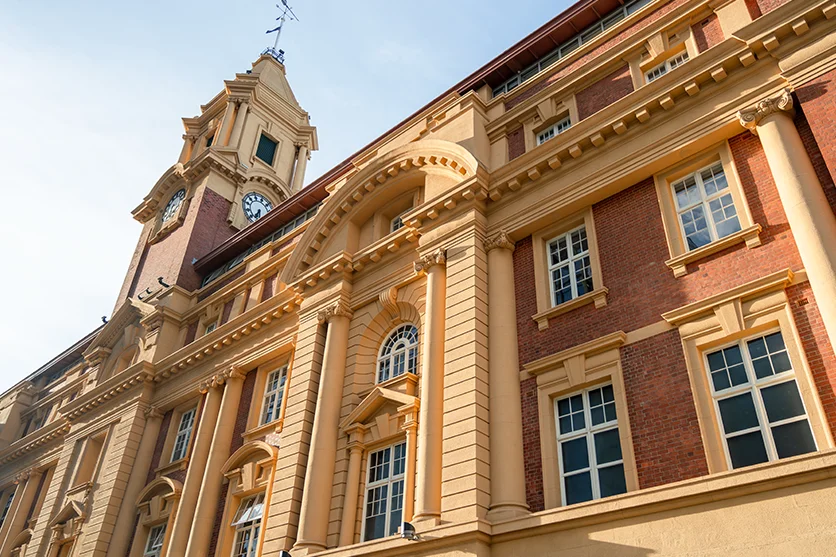
For Portrait Photography
Portrait photographers often look for focal lengths that provide a comfortable working distance and useful background separation.
A telephoto zoom such as the 70-180mm F2.8 G2 (A065) can provide framing flexibility while maintaining a constant F2.8 maximum aperture.
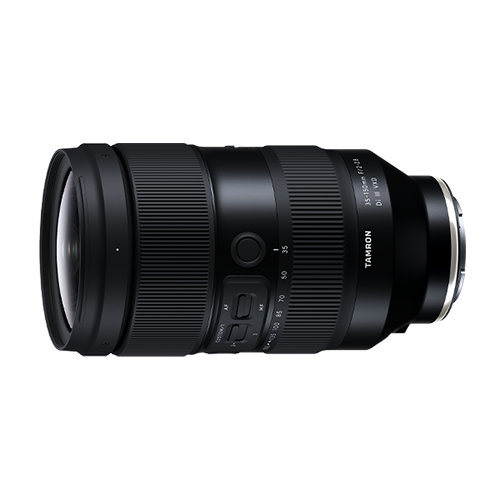
Another option is the 35-150mm F2-2.8 (A058), which combines a wide-to-telephoto range with a particularly large maximum aperture.
This can be useful for:
- Portraits
- Weddings
- Events
- Travel
- Lifestyle photography

For Wildlife Photography
Wildlife often requires longer focal lengths because approaching an animal may not be practical.
A lens reaching 300mm, 400mm or 500mm can provide considerably more framing flexibility than a standard zoom.
For example:
A069 — 50-300mm
A067 — 50-400mm
A057 — 150-500mm
The appropriate choice depends on how far away your subjects normally are and how much weight you are comfortable carrying.

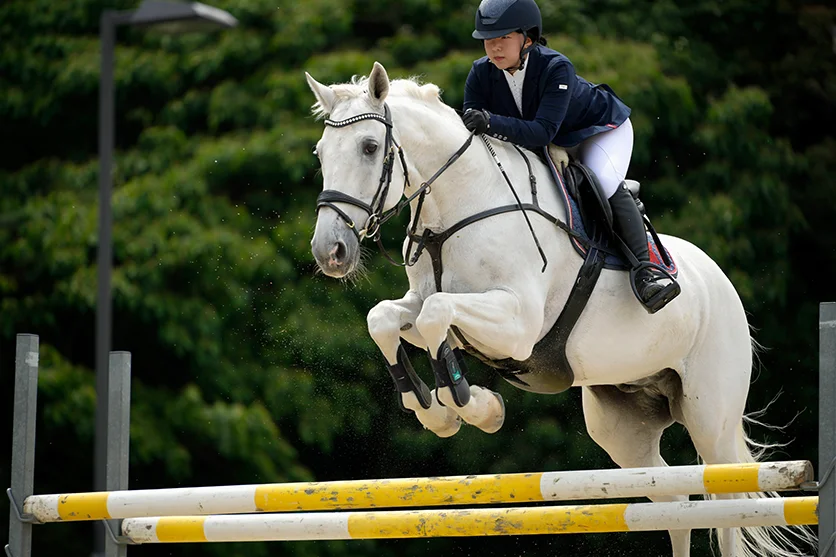
For Sports Photography
Sports photography often requires both reach and fast autofocus.
A telephoto zoom allows you to adjust framing as the action moves.
The 70-180mm F2.8 G2 (A065) combines telephoto coverage with a constant F2.8 aperture and VC image stabilization.
For outdoor sports where subjects are farther away, a longer zoom range can be more useful.
For Video and Vlogging
Video introduces additional considerations.
You may want to look for:
- Smooth and quiet autofocus
- A useful field of view
- Compact handling
- Stable handheld performance
- Convenient focal-length coverage
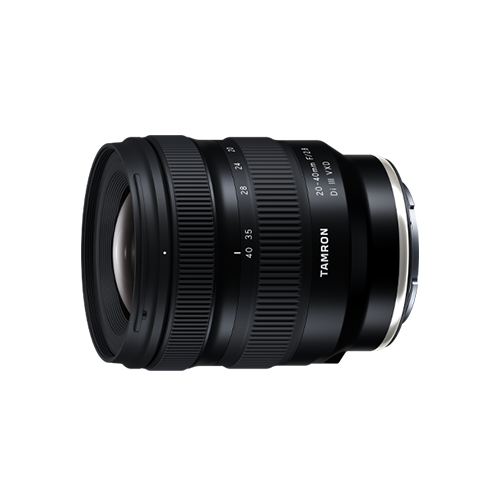
The 20-40mm F2.8 Di III VXD (A062) provides a 20-40mm range that covers ultra-wide to standard perspectives while maintaining a constant F2.8 aperture.
The 17-50mm F4 Di III VXD (A068) provides an even wider 17mm starting point and is designed for full-frame Sony E-mount cameras.
TAMRON has also highlighted the A068’s suitability for both still photography and video, including travel, landscape and content-creation applications.
How Important Is Aperture?
The aperture is represented by the F-number.
For example:
- F1.4
- F2
- F2.8
- F4
- F5.6
- F8
A smaller F-number represents a wider aperture.
A wider aperture can allow more light into the camera and provide greater control over depth of field.
This can be useful for:
- Low-light photography
- Portraits
- Events
- Sports
- Background separation
For example, the 35-150mm F2-2.8 (A058) has a maximum aperture ranging from F2 at 35mm to F2.8 at 150mm.
A lens with a smaller maximum aperture can still produce excellent photographs.
For landscape photography, for example, you may often stop down to F8 or F11 anyway.
The right aperture depends on what you want to photograph.
Does Image Stabilization Matter?
Image stabilization can help compensate for camera movement when shooting handheld.
TAMRON calls its stabilization system Vibration Compensation, or VC.
VC can be particularly useful with:
- Telephoto lenses
- Low-light photography
- Handheld video
- Travel photography
- Indoor photography
For example, the A069 50-300mm includes VC, which can help when shooting handheld at longer focal lengths.
However, stabilization does not freeze subject movement.
If you are photographing a running athlete or bird in flight, you still need a sufficiently fast shutter speed.
How Important Is Autofocus?
Autofocus performance can be important depending on your subject.
For static landscapes, autofocus speed may be less critical.
For wildlife, sports, children and video, responsive and accurate autofocus can make a greater difference.
TAMRON’s VXD and RXD autofocus systems are used across different lenses for Sony E-mount, depending on the model.
When comparing lenses, consider not only how quickly they focus but also how reliably they track your subject.
Consider the Size and Weight
A lens’s specifications do not tell the whole story.
Think about how much equipment you are realistically willing to carry.
A larger lens may offer:
- A larger maximum aperture
- Greater focal-length reach
- More specialized performance
A smaller lens may offer:
- Easier travel
- Better portability
- More comfortable everyday use
For example, the A069 50-300mm reaches 300mm while weighing approximately 665g, illustrating how lens design involves balancing reach, portability and optical performance.
For travel photographers, a lens that is easy to carry may ultimately be used more often than a larger lens with specifications that exceed their everyday needs.
Consider Close-Focusing Performance
Minimum focusing distance is another specification worth checking.
Some lenses can focus surprisingly close to their subjects.
This can expand the types of photography you can do with one lens.
For example, the A069 provides a 1:2 maximum magnification ratio at 50mm, allowing it to be used for half-macro-style close-up photography.
Close-focusing capability can be useful for:
- Flowers
- Food
- Small objects
- Details
- Travel photography
- Product photography
Think About Filters and Lens Compatibility
If you own several lenses, consider whether they share a common filter size.
A consistent filter diameter can make it easier to share:
- Circular polarizers
- ND filters
- Protective filters
Several TAMRON mirrorless lenses use a 67mm filter diameter, which can be convenient for photographers building a multi-lens kit. TAMRON specifically highlights the benefit of sharing filters and caps across compatible lenses.
Also check:
- Camera compatibility
- Sensor format
- Lens mount
- Filter diameter
- Lens hood
- Firmware compatibility
- Accessories
Which TAMRON Sony E-Mount Lens Should You Choose?
Rather than looking for one lens that is “best,” match the lens to your shooting needs.
For an Everyday Full-Frame Standard Zoom
28-75mm F2.8 Di III VXD G2 — A063
A versatile standard zoom for everyday photography, travel, portraits and events.
For a Compact Ultra-Wide-to-Standard Zoom
17-50mm F4 Di III VXD — A068
A full-frame zoom starting at 17mm and extending to 50mm, suitable for landscapes, travel, interiors, video and everyday wide-angle photography.
For a Compact F2.8 Wide-to-Standard Zoom
20-40mm F2.8 Di III VXD — A062
A portable option for photographers and video creators who want an ultra-wide 20mm starting point and a constant F2.8 aperture.
For Portraits and Events
35-150mm F2-2.8 Di III VXD — A058
A broad focal-length range from wide-angle through telephoto combined with a large maximum aperture.
For Sports and Portraits
70-180mm F2.8 Di III VC VXD G2 — A065
A telephoto zoom with a constant F2.8 aperture and VC stabilization.
For Travel With One Lens
28-300mm F4-7.1 Di III VC VXD — A074
A 10.7x all-in-one zoom covering wide-angle through telephoto perspectives.
For Wildlife and Distant Subjects
50-300mm F4.5-6.3 Di III VC VXD — A069
A flexible telephoto zoom starting at 50mm and reaching 300mm.
For greater reach:
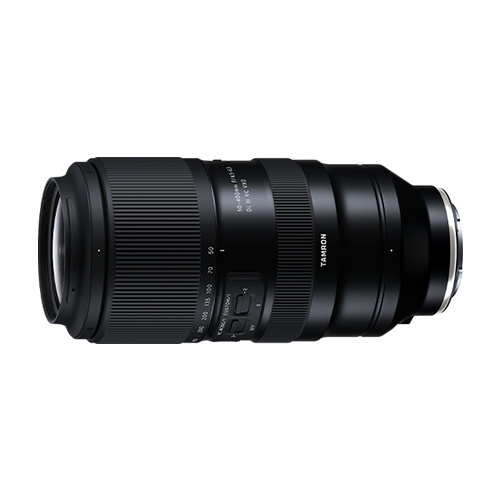
50-400mm F4.5-6.3 Di III VC VXD — A067
Or:
150-500mm F5-6.7 Di III VC VXD — A057
The choice between these lenses depends on the focal length you need, your typical shooting distance and how much equipment you want to carry.
For APS-C Wide-Angle Photography
11-20mm F2.8 Di III-A RXD — B060
An ultra-wide zoom for APS-C Sony E-mount cameras, useful for landscapes, architecture, interiors and video.
For APS-C Everyday Photography
17-70mm F2.8 Di III-A VC RXD — B070
A broad standard zoom equivalent to approximately 25.5-105mm on full frame, making it suitable for travel, portraits, street photography and everyday shooting.
Should You Buy One Lens or Several?
There is no requirement to own multiple lenses.
A single versatile zoom can be enough if you primarily want convenience.
For example, an all-in-one zoom such as the A074 can cover a broad range from 28mm to 300mm.
However, adding another lens can give you capabilities that your first lens does not provide.
For example:
Standard zoom + telephoto zoom
can provide everyday coverage plus additional reach.
Wide-angle zoom + standard zoom
can provide expansive views while retaining a more conventional everyday perspective.
Zoom + prime
can combine flexible focal lengths with the large aperture and fixed perspective of a prime lens.
The best combination depends on the subjects you photograph most often.
A Simple Way to Choose Your Sony E-Mount Lens
If you are still unsure which lens to choose, work through these questions:
1. What camera do you own?
Check whether it is:
- Full-frame
- APS-C
2. What do you photograph most?
Choose the lens category accordingly:
- Landscapes → wide-angle
- Travel → standard or all-in-one zoom
- Portraits → standard or telephoto
- Sports → telephoto
- Wildlife → long telephoto
- Architecture → wide-angle
- Vlogging → wide-angle to standard
- Everyday photography → standard zoom
3. Do you prefer convenience or specialization?
If you want one lens that covers many situations, consider a versatile zoom.
If you want a specific perspective or larger aperture, a specialized lens or prime may be more appropriate.
4. How important is portability?
Consider the lens’s:
- Weight
- Length
- Filter size
- Handling
5. Do you need a large aperture?
If you often shoot in low light or want strong background separation, pay attention to the maximum aperture.
6. Do you need stabilization?
For handheld telephoto or low-light photography, image stabilization can be particularly useful.
7. Do you photograph moving subjects?
If so, pay attention to autofocus performance and your ability to maintain an appropriate shutter speed.
Final Thoughts
Choosing a Sony E-mount lens does not have to mean finding one universally “best” lens.
The better approach is to identify what you actually need from your camera.
Start with your camera’s sensor size and mount compatibility.
Then think about your most common subjects and choose an appropriate focal-length range.
After that, consider the features that matter most to your shooting style:
- Maximum aperture
- Autofocus
- Image stabilization
- Minimum focusing distance
- Size
- Weight
- Zoom range
- Close-up capability
A travel photographer may value a compact all-in-one zoom.
A portrait photographer may prioritize a large aperture and telephoto focal length.
A wildlife photographer may need 300mm, 400mm or 500mm of reach.
A video creator may prioritize a wide field of view, quiet autofocus and manageable size.
There is no single lens that fulfills every need.
Instead, the goal is to find the Sony E-mount lens that fits the way you photograph.
TAMRON’s Sony E-mount lineup includes wide-angle, standard, telephoto, all-in-one and prime lenses, giving photographers the flexibility to build a system around their own subjects and shooting style.
TAMRON products mentioned in this article