
How to Choose a Fujifilm X-Mount Lens: A Complete Guide
Choosing the right Fujifilm X-mount lens can make a significant difference in how you photograph.
Fujifilm X Series cameras use the X-mount system and an APS-C-size sensor, giving photographers access to a wide range of compact mirrorless cameras and interchangeable lenses.
However, with different focal lengths, apertures, zoom ranges and features available, choosing a lens can sometimes feel complicated.
Should you choose a wide-angle lens for landscapes?
Would a standard zoom be more useful for everyday photography?
Do you need a telephoto lens for wildlife and sports?
Or would an all-in-one zoom be more convenient for travel?
The right answer depends on what you photograph and how you use your camera.
In this guide, we’ll explain the main factors to consider when choosing a lens for Fujifilm cameras, including focal length, aperture, portability, autofocus, image stabilization and shooting style.
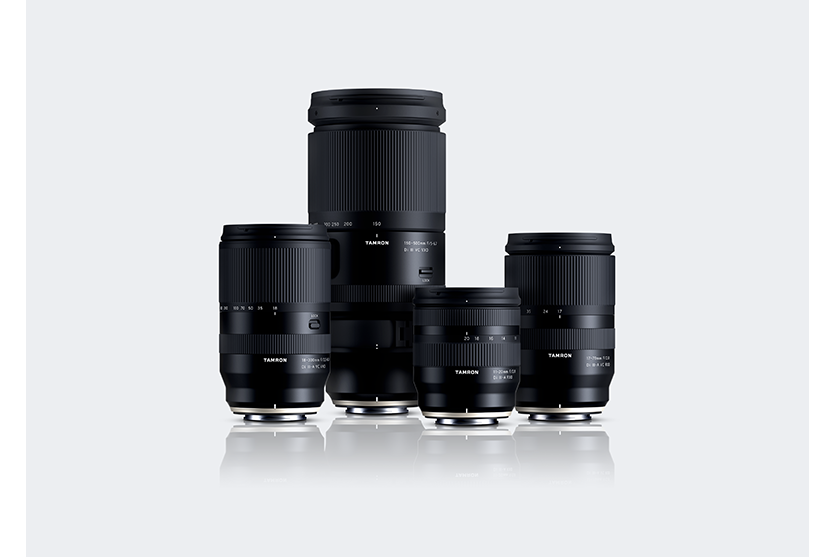
What Is a Fujifilm X-Mount Lens?
The Fujifilm X-mount is the lens mount system used by Fujifilm X Series mirrorless interchangeable-lens cameras.
X Series cameras use an APS-C-size sensor, which is smaller than a full-frame sensor.
The X-mount connects the lens to the camera body and allows communication between the camera and lens for functions such as autofocus and aperture control.
When choosing a lens, it is important to make sure that it is designed for the camera mount and sensor format you are using.
Fujifilm also has a separate G-mount system for its larger-format GFX cameras.
X-mount and G-mount are different systems and their lenses are not interchangeable.
Therefore, if you own a Fujifilm X Series camera, you should specifically look for a compatible Fujifilm X-mount lens.
Why Does Sensor Size Matter?
Fujifilm X Series cameras use APS-C sensors.
Because the sensor is smaller than full frame, the field of view produced by a lens is narrower than it would be on a full-frame camera.
For example, a 17mm lens on an APS-C camera provides a field of view approximately equivalent to a 25.5mm lens on full frame.
A 70mm lens corresponds to approximately 105mm in full-frame terms.
This is commonly referred to as the crop factor.
For Fujifilm’s APS-C system, the approximate conversion is:
Focal length × 1.5 = full-frame equivalent
This is useful when deciding what focal length you need.
Prime Lens or Zoom Lens?
One of the first decisions when choosing a Fujifilm lens is whether you want a prime lens or a zoom lens.
Prime Lenses
A prime lens has a fixed focal length.
For example:
- 23mm
- 35mm
- 50mm
- 90mm
Because the focal length does not change, you need to move yourself to change the composition.
Prime lenses can be attractive when you want:
- A large maximum aperture
- Strong background separation
- A compact design
- A specific perspective
- A simple shooting experience
They can also encourage photographers to think more carefully about composition and camera position.
Zoom Lenses
A zoom lens provides a range of focal lengths.
For example:
11-20mm
17-70mm
18-300mm
50-400mm
Zoom lenses allow you to change your angle of view without changing lenses or necessarily changing your position.
This makes them particularly useful for:
- Travel
- Landscapes
- Events
- Sports
- Wildlife
- Everyday photography
- Video
If you photograph many different subjects, a zoom can provide considerable flexibility.
Choosing a Fujifilm Lens by Focal Length
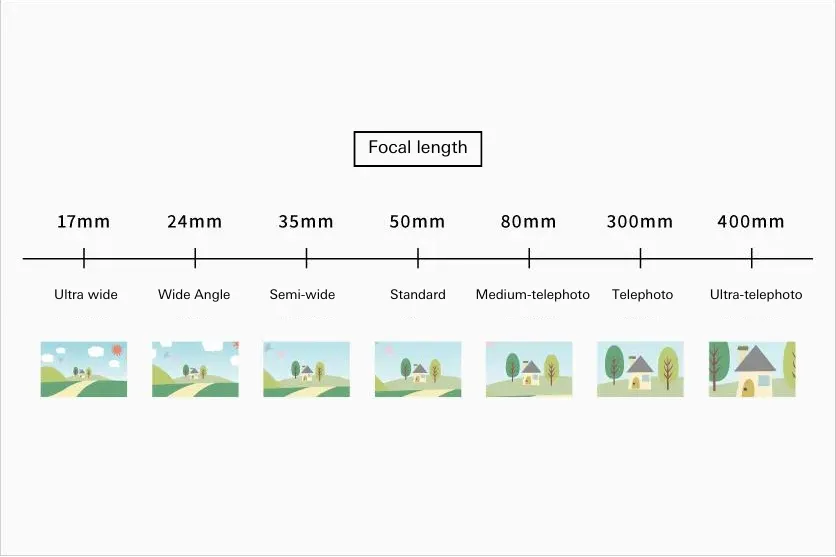
Focal length is one of the most important specifications to consider.
It determines the angle of view and affects how much of the scene appears in your photograph.
For Fujifilm APS-C cameras, it is useful to think about focal lengths in both their actual and full-frame-equivalent values.
Ultra-Wide and Wide-Angle Lenses
Focal lengths around 11-20mm provide a very wide field of view on an APS-C camera.
These lenses can be useful for:
- Landscapes
- Architecture
- Interiors
- Travel
- Vlogging
- Astrophotography
A wide-angle lens allows you to include a large amount of the surrounding environment.
It can also emphasize perspective, making foreground subjects appear particularly prominent.
Standard Lenses
Focal lengths around 17-35mm on APS-C cameras can provide perspectives suitable for everyday photography.
They can be useful for:
- Street photography
- Travel
- Family photography
- Everyday snapshots
- Environmental portraits
These focal lengths provide a balance between showing the subject and including its surroundings.
Telephoto Lenses
Longer focal lengths provide a narrower field of view and make distant subjects appear larger in the frame.
They can be useful for:
- Portraits
- Sports
- Wildlife
- Birds
- Trains
- Aviation
- Events
Telephoto lenses can also produce a compression effect, which changes the apparent relationship between the subject and background.
Ultra-Telephoto Lenses
Very long focal lengths are particularly useful when the subject is far away.
They can be used for:
- Wildlife
- Birds
- Aircraft
- Motorsports
- Trains
- Outdoor sports
A 300mm lens on an APS-C camera provides approximately a 450mm full-frame-equivalent field of view.
This can provide substantial reach without requiring an even longer physical focal length.
When Should You Use a Wide-Angle Fujifilm Lens?
Wide-angle lenses are useful when you want to capture a large area within the frame.
For example, when photographing a landscape, a wide-angle lens can help include the foreground, middle ground and background.
They are also useful when photographing in confined spaces.

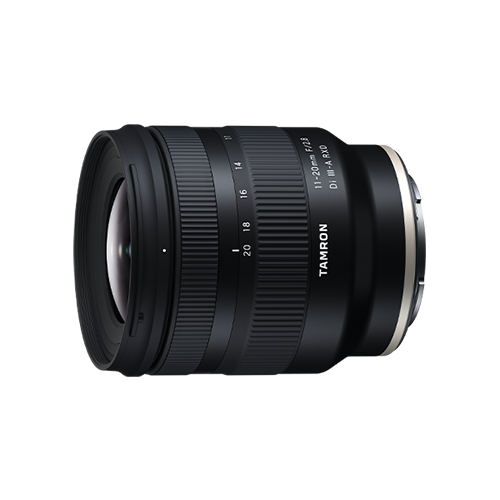
11-20mm F/2.8 Di III-A RXD — Model B060
The 11-20mm F2.8 Di III-A RXD (B060) is an ultra-wide zoom for APS-C mirrorless cameras.
For Fujifilm X-mount cameras, its 11-20mm range provides approximately a 16.5-30mm full-frame-equivalent field of view.
It can be useful for:
- Landscapes
- Architecture
- Interiors
- Travel
- Astrophotography
- Video
- Vlogging
The constant F2.8 aperture also provides flexibility when working in lower-light conditions.
TAMRON identifies the B060 as a compact, lightweight F2.8 ultra-wide-angle zoom and confirms its availability for Fujifilm X-mount.
When Should You Use a Standard Zoom?
A standard zoom is often one of the most versatile lenses in a camera system.
It can cover everyday subjects without requiring you to change lenses frequently.

A useful standard zoom can handle:
- Travel
- Street photography
- Family photography
- Portraits
- Landscapes
- Everyday shooting
- Video
When Should You Use an All-in-One Zoom?
An all-in-one zoom is designed to cover a particularly broad focal-length range.
This can be useful when convenience is more important than carrying several specialized lenses.
An all-in-one lens can allow you to photograph:
- Landscapes
- Street scenes
- Portraits
- Family activities
- Wildlife
- Sports
- Distant subjects
without changing lenses.
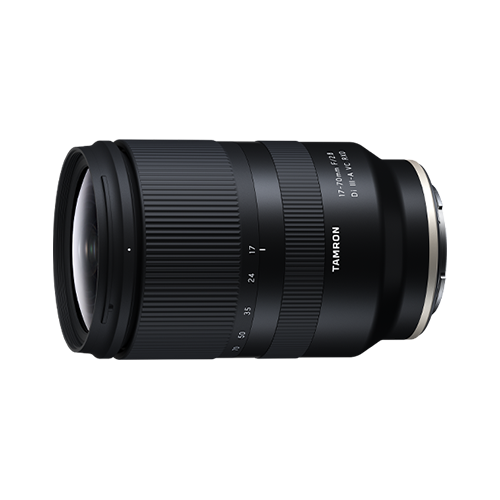
17-70mm F/2.8 Di III-A VC RXD — Model B070
The 17-70mm F2.8 Di III-A VC RXD (B070) is a standard zoom designed for APS-C mirrorless cameras.
On a Fujifilm X-mount camera, its 17-70mm range provides approximately a 25.5-105mm full-frame-equivalent field of view.
This gives you wide-angle coverage at 17mm and short-telephoto reach at 70mm.
It can be useful for:
- Travel
- Portraits
- Street photography
- Family photography
- Events
- Video
- Everyday photography
The constant F2.8 aperture provides a large maximum aperture throughout the zoom range, while VC image stabilization can help reduce the effects of camera shake when shooting handheld.
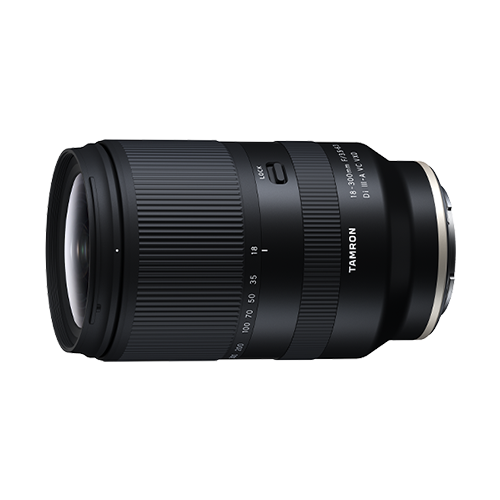
18-300mm F/3.5-6.3 Di III-A VC VXD — Model B061
The 18-300mm F3.5-6.3 Di III-A VC VXD (B061) provides a 16.6x zoom ratio for APS-C mirrorless cameras.
On a Fujifilm X-mount camera, its 18-300mm range corresponds to approximately 27-450mm in full-frame terms.
This means the lens covers wide-angle through standard and telephoto perspectives and reaches into the ultra-telephoto range.
It can be useful for:
- Travel
- Landscapes
- Family photography
- Street photography
- Portraits
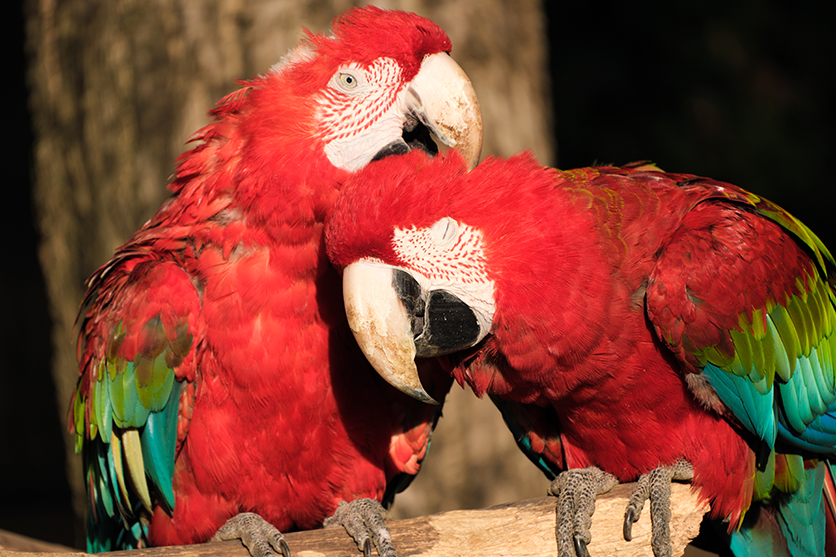
- Wildlife
- Sports
- Everyday photography
The B061 also provides a 1:2 maximum magnification ratio, allowing photographers to create close-up images at the wide end.
TAMRON describes it as an all-in-one lens for Fujifilm X-mount APS-C cameras, with VC stabilization and VXD autofocus.
When Should You Use a Telephoto Zoom?
Telephoto lenses are useful when your subject is farther away.
Instead of physically moving closer, you can use a longer focal length to fill more of the frame with your subject.
This makes telephoto lenses useful for:
- Wildlife
- Birds
- Sports
- Aviation
- Trains
- Motorsports
- Outdoor events
Long focal lengths can also create strong background compression and help isolate subjects.
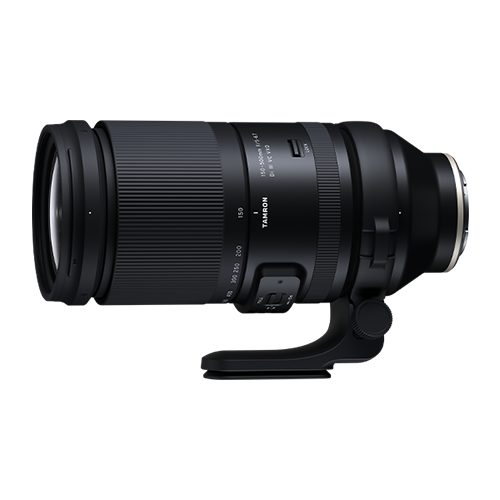
150-500mm F/5-6.7 Di III VC VXD — Model A057
The 150-500mm F5-6.7 Di III VC VXD (A057) is an ultra-telephoto zoom available for Fujifilm X-mount cameras.
On Fujifilm’s APS-C format, its 150-500mm range provides approximately a 225-750mm full-frame-equivalent field of view.
This substantial reach makes it particularly useful for:
- Wildlife
- Birds
- Aviation
- Sports
- Trains
- Distant subjects
Despite reaching 500mm, the lens is designed with handheld shooting in mind and includes TAMRON’s VC image stabilization.
The Fujifilm X-mount version also includes an MF SPEED switch, providing two manual-focus speeds for different focusing situations.
50-400mm F/4.5-6.3 Di III VC VXD — Model A067
The 50-400mm F4.5-6.3 Di III VC VXD (A067) takes a different approach to telephoto photography.
Instead of beginning at a traditional 100mm or 150mm telephoto focal length, it starts at 50mm.
On a Fujifilm X-mount camera, this corresponds to approximately 75-600mm in full-frame terms.
This gives the lens a particularly broad range.
At 50mm, you can photograph subjects that are relatively close.
At 400mm, you can reach distant subjects.
It can be useful for:
- Wildlife
- Birds
- Sports
- Travel
- Landscapes
- Outdoor events
- Distant details
The wide starting focal length can also reduce the need to switch lenses when your subject suddenly moves closer.
TAMRON describes the A067 as an ultra-telephoto zoom with an 8x zoom ratio, beginning at the standard focal length and extending to 400mm.
Consider Portability
The size and weight of a lens matter, especially if you carry your camera for long periods.
This is particularly important for:
- Travel
- Hiking
- Street photography
- Family activities
- Outdoor photography
A lens that is easier to carry may encourage you to bring your camera with you more often.
However, larger lenses can provide capabilities such as:
- Longer focal lengths
- Larger apertures
- Greater optical performance
- More specialized functionality
The goal is to find the right balance between performance, versatility and portability.
Consider the Maximum Aperture
The maximum aperture determines how much light a lens can gather at its widest setting.
It is represented by an F-number.
For example:
- F1.4
- F2
- F2.8
- F4
- F5.6
A smaller F-number represents a wider aperture.
A wide aperture can be useful for:
- Low-light photography
- Portraits
- Events
- Indoor photography
- Background separation
For example, the B060 and B070 both provide a constant F2.8 maximum aperture.
This means the maximum aperture remains F2.8 throughout their respective zoom ranges.
However, a smaller aperture does not make a lens unsuitable.
When photographing landscapes in bright conditions, for example, you may use F8 or F11 to obtain greater depth of field.
Does Image Stabilization Matter?
Image stabilization can help reduce the effects of camera shake.
TAMRON calls its stabilization system Vibration Compensation, or VC.
VC can be particularly useful when shooting:
- Handheld
- At longer focal lengths
- In low light
- With slower shutter speeds
- During video recording
For example, both the B061 and B070 feature VC.
The A057 and A067 also feature VC, which can be particularly useful because camera movement becomes more noticeable at longer focal lengths.
However, stabilization does not freeze a moving subject.
If you are photographing a flying bird or fast-moving athlete, you still need a sufficiently fast shutter speed.
Consider Autofocus Performance
Autofocus is another important feature when selecting a lens.
For static subjects such as landscapes, autofocus speed may not be a major concern.
For moving subjects, however, responsive autofocus can make it easier to keep your subject sharp.
Consider autofocus performance when photographing:
- Wildlife
- Birds
- Sports
- Children
- Vehicles
- Events
TAMRON uses different autofocus technologies across its lens lineup.
The B061, A057 and A067 use VXD autofocus, while the B060 and B070 use RXD.
The appropriate lens depends on your subject and shooting requirements.
Think About Close-Focusing Performance
A lens does not have to be a dedicated macro lens to photograph subjects at relatively close distances.
Some zoom lenses provide useful close-focusing capabilities.
The B061, for example, provides a 1:2 maximum magnification ratio at its wide end.
This can be useful for:
- Flowers
- Food
- Small objects
- Travel details
- Products
- Textures
This type of flexibility can make an all-in-one lens even more useful for everyday photography.
Consider the Type of Photography You Enjoy
Rather than choosing a lens based only on specifications, think about what you photograph most often.
For Landscape Photography
A wide-angle lens can help capture expansive scenes.
The 11-20mm F2.8 B060 is particularly suited to photographers who want a wide field of view.
You can use it for:
- Mountains
- Beaches
- Cityscapes
- Architecture
- Interiors
For Travel Photography
Travel often involves photographing many different subjects.
A lens with a broad focal-length range can reduce the need to carry multiple lenses.
The 18-300mm B061 covers approximately 27-450mm in full-frame terms and can therefore handle a wide variety of subjects.
For Everyday Photography
A standard zoom can provide a practical balance between wide-angle and telephoto perspectives.
The 17-70mm B070 provides approximately 25.5-105mm in full-frame-equivalent terms.
This makes it suitable for:
- Family photography
- Street photography
- Travel
- Portraits
- Everyday shooting
For Wildlife Photography
Wildlife often requires substantial focal-length reach.
The 150-500mm A057 and 50-400mm A067 can provide considerably more reach than a standard zoom.
The choice depends on whether you prioritize:
- A longer maximum focal length
- A wider starting focal length
- Portability
- The types of subjects you normally photograph
For Sports and Outdoor Events
Sports photography often benefits from a telephoto lens because subjects can move across a large area.
A zoom lens lets you adjust your framing as the subject approaches or moves away.
The A067’s 50-400mm range, for example, provides both relatively wide coverage and substantial telephoto reach.
Which TAMRON X-Mount Lens Fits Your Shooting Style?
Rather than choosing one lens as universally “best,” consider what you photograph most frequently.
For Ultra-Wide Photography
11-20mm F/2.8 Di III-A RXD — B060
A compact ultra-wide zoom for landscapes, architecture, interiors, travel and video.
For Everyday Photography
17-70mm F/2.8 Di III-A VC RXD — B070
A versatile standard zoom covering approximately 25.5-105mm in full-frame-equivalent terms.
For Travel With One Lens
18-300mm F/3.5-6.3 Di III-A VC VXD — B061
A broad all-in-one zoom covering approximately 27-450mm in full-frame terms.
For Long-Reach Wildlife Photography
150-500mm F/5-6.7 Di III VC VXD — A057
An ultra-telephoto zoom reaching approximately 750mm in full-frame-equivalent terms on Fujifilm X-mount.
For Flexible Standard-to-Ultra-Telephoto Coverage
50-400mm F/4.5-6.3 Di III VC VXD — A067
A wide-ranging telephoto zoom that provides approximately 75-600mm full-frame-equivalent coverage.
Should You Buy One Lens or Several?
You do not need a large collection of lenses to enjoy photography.
A single versatile zoom may be enough for your needs.
For example, the B061 can cover a huge range from wide-angle to ultra-telephoto, making it useful for travel and everyday photography.
On the other hand, a photographer with more specialized requirements may prefer several lenses.
For example:
B060 + B070
can provide wide-angle and standard coverage.
B070 + A067
can provide everyday coverage together with extended telephoto reach.
B061
can provide an extremely broad range in one lens when minimizing lens changes is a priority.
The best combination depends on the subjects you photograph and how much equipment you want to carry.
A Simple Checklist for Choosing a Fujifilm X-Mount Lens
If you are still unsure which Fujifilm X-mount lens to choose, start with these questions.
1. What do you photograph most?
- Landscapes → wide-angle
- Architecture → wide-angle
- Travel → standard or all-in-one zoom
- Street photography → wide-angle or standard
- Portraits → standard or telephoto
- Wildlife → telephoto
- Birds → ultra-telephoto
- Sports → telephoto
- Video → wide-angle or standard zoom
2. How much focal-length range do you need?
If you photograph different subjects at different distances, a zoom with a broad range may be useful.
If you prefer a specific perspective, a prime or more specialized zoom may be preferable.
3. How important is portability?
If you travel frequently, consider how much weight you are comfortable carrying.
4. Do you photograph in low light?
If so, consider a lens with a larger maximum aperture.
5. Do you photograph moving subjects?
If you photograph sports, wildlife or other moving subjects, consider autofocus performance and stabilization.
6. Do you want to change lenses frequently?
If you prefer to keep your setup simple, an all-in-one zoom can reduce the need to switch lenses.
7. Do you photograph distant subjects?
If wildlife, birds, sports or aviation are important to you, consider a longer telephoto focal length.
Final Thoughts
Choosing a Fujifilm X-mount lens starts with understanding your camera and your own photography.
There is no single lens that is ideal for every photographer or every situation.
Instead, think about:
- Focal length
- Maximum aperture
- Zoom range
- Portability
- Autofocus
- Image stabilization
- Close-focusing capability
- Your most common subjects
For wide-angle photography, a lens such as the 11-20mm F2.8 B060 can provide an expansive field of view.
For everyday photography, the 17-70mm F2.8 B070 provides a broad standard range.
For travel, the 18-300mm B061 offers a wide range from wide-angle through ultra-telephoto.
For wildlife and distant subjects, the 150-500mm A057 and 50-400mm A067 provide significantly greater reach.
The important thing is to match the lens to the way you actually photograph.
Once you understand what you need from your equipment, choosing a Fujifilm lens becomes much simpler.
Your lens should support the subjects you enjoy photographing, the environments you shoot in and the way you want to create your images.
TAMRON products mentioned in this article