
Autofocus (AF) Explained: Types, Modes & How to Use
Autofocus, commonly abbreviated as AF, is one of the most useful features on modern cameras. It allows the camera to automatically determine where to focus instead of requiring the photographer to manually adjust the focus ring.
For everyday photography, autofocus can make focusing quick and convenient. For sports, wildlife, children, and other moving subjects, advanced autofocus systems can also track movement and continuously adjust focus as the subject changes position.
However, autofocus is not simply a matter of turning AF on and pressing the shutter button. Modern cameras provide different AF modes, focus areas, and subject-tracking options, each designed for different situations.
Understanding how autofocus works and knowing when to use each setting can help you achieve more consistently focused photographs.
In this guide, we’ll explain what autofocus is, the difference between AF and manual focus, AF-S vs. AF-C vs. AF-A, different focus areas, autofocus technologies, and how to choose the right AF settings for different subjects.
What Is Autofocus (AF)?
Autofocus is a camera function that automatically adjusts the lens to bring a subject into focus.
Instead of manually turning the lens’s focus ring until the subject appears sharp, the camera analyzes information from the scene and controls the lens’s focusing mechanism.
Modern AF systems can do more than simply focus on a stationary subject. Many cameras can also detect and track moving subjects, making autofocus particularly useful for sports, wildlife, children, and other situations where the subject’s position changes quickly.
The exact autofocus capabilities vary depending on the camera and lens.
Some systems provide:
- Single-shot autofocus
- Continuous autofocus
- Automatic AF mode switching
- Wide-area focusing
- Zone focusing
- Spot focusing
- Subject tracking
- Eye or face detection
- Animal and bird detection
Because these functions are designed for different situations, understanding the basic AF settings can make your camera easier to use.
Autofocus vs. Manual Focus
There are two basic ways to focus a camera:
- Autofocus (AF)
- Manual focus (MF)
With autofocus, the camera determines the focus position and moves the lens accordingly.
With manual focus, the photographer turns the lens’s focus ring to determine the focus position.
Manual focus gives the photographer direct control over exactly where the lens focuses. However, it can require more experience and may take longer, particularly when the subject is moving.
Autofocus is generally convenient and effective, but it is not always the best choice.
There are situations where manual focus can be more appropriate, including:
- Very dark subjects
- Low-contrast subjects
- Complex compositions
- Subjects partially hidden behind objects
- Situations where the camera repeatedly focuses on the wrong element
- Certain macro and landscape compositions
The important point is not to think of AF and MF as competing systems.
Learning when to use each one gives you greater control over your photography.
The Three Basic AF Operation Modes
Many cameras provide three commonly used autofocus operation modes:
- AF-S — Single AF
- AF-C — Continuous AF
- AF-A — Automatic AF switching
The exact names and availability vary by camera manufacturer and model, but the basic concepts are similar.
Choosing the appropriate AF mode for the subject can make focusing more reliable.
AF-S: Single Autofocus
AF-S, or Single AF, is designed primarily for stationary subjects.
When you half-press the shutter button, the camera focuses on the selected subject and generally maintains that focus position rather than continuously tracking movement.
AF-S is useful for:
- Landscapes
- Portraits
- Architecture
- Still life
- Food photography
- Products
- Other relatively stationary subjects
For example, when photographing a landscape, there may be little or no subject movement. AF-S allows you to establish focus and then compose the photograph before taking the picture.
It can also be useful for portraits when the subject is relatively still.
When should you use AF-S?
Use AF-S when:
Your subject is stationary or moving very little.
If the subject suddenly begins moving, you may need to switch to a continuous AF mode.

AF-C: Continuous Autofocus
AF-C, or Continuous AF, is designed for moving subjects.
When you half-press the shutter button, the camera continuously adjusts focus as the subject moves.
This makes AF-C particularly useful for:
- Sports
- Wildlife
- Birds
- Children
- Vehicles
- Stage performances
- Action photography
For example, when photographing a bird flying across the frame, the distance between the camera and bird changes continuously.
AF-C allows the camera to continue adjusting focus instead of locking focus at the original position.
When should you use AF-C?
Use AF-C when:
Your subject is moving or you expect it to move.
For fast-moving subjects, combining AF-C with an appropriate focus area and sufficiently fast shutter speed can improve your chances of capturing a sharp image.

AF-A: Automatic AF Switching
AF-A, or Automatic AF, is designed to automatically determine whether the subject is stationary or moving and switch between single and continuous autofocus behavior.
This can be useful when the subject’s movement is unpredictable.
For example, children and pets may stand still one moment and suddenly run in another.
AF-A can provide a convenient middle ground when you don’t know whether the subject will remain stationary.

AF-A: Automatic AF Switching
AF-A, or Automatic AF, is designed to automatically determine whether the subject is stationary or moving and switch between single and continuous autofocus behavior.
This can be useful when the subject’s movement is unpredictable.
For example, children and pets may stand still one moment and suddenly run in another.
AF-A can provide a convenient middle ground when you don’t know whether the subject will remain stationary.
When should you use AF-A?
AF-A can be useful when:
- The subject may start or stop moving
- You’re photographing children or pets
- You don’t want to constantly change AF modes
- The subject’s movement is difficult to predict
However, when you know exactly what you’re photographing, deliberately choosing AF-S or AF-C can give you more predictable control.
Understanding Focus Areas
Selecting an AF operation mode is only part of the process.
You also need to decide where the camera should focus.
This is controlled through the camera’s focus area or AF area settings.
The exact names and options differ between camera manufacturers, but common focus-area types include:
- Wide
- Tracking
- Zone
- Center
- Spot or Flexible Spot
- Expanded Spot
Understanding the difference between these options is important because the camera cannot always know which object you want to prioritize.
Wide Focus Area
A wide focus area allows the camera to select a focus point across a large portion of the frame.
This can be useful when the subject is moving unpredictably.
For example, wildlife may move rapidly across different parts of the frame, making a wide focus area convenient.
The advantage is that you don’t have to move a small AF point precisely over the subject.
The disadvantage is that the camera may choose an unintended object.
For example, if an animal is surrounded by branches, the camera may focus on a branch instead of the animal.
Best for:
- Unpredictable movement
- Wildlife
- Birds
- Casual action photography

Tracking Focus
Tracking mode is generally used together with continuous autofocus.
The camera attempts to maintain focus on a selected subject as it moves through the frame.
This can be particularly useful for:
- Sports
- Running
- Birds in flight
- Wildlife
- Children
- Moving subjects
For example, when photographing an athlete, you can select the person and allow the camera to continue tracking that subject as they move.
TAMRON’s original article specifically describes tracking as useful for rapidly moving subjects such as athletes and wild birds.
Best for:
- Sports
- Wildlife
- Birds
- Subjects moving across the frame
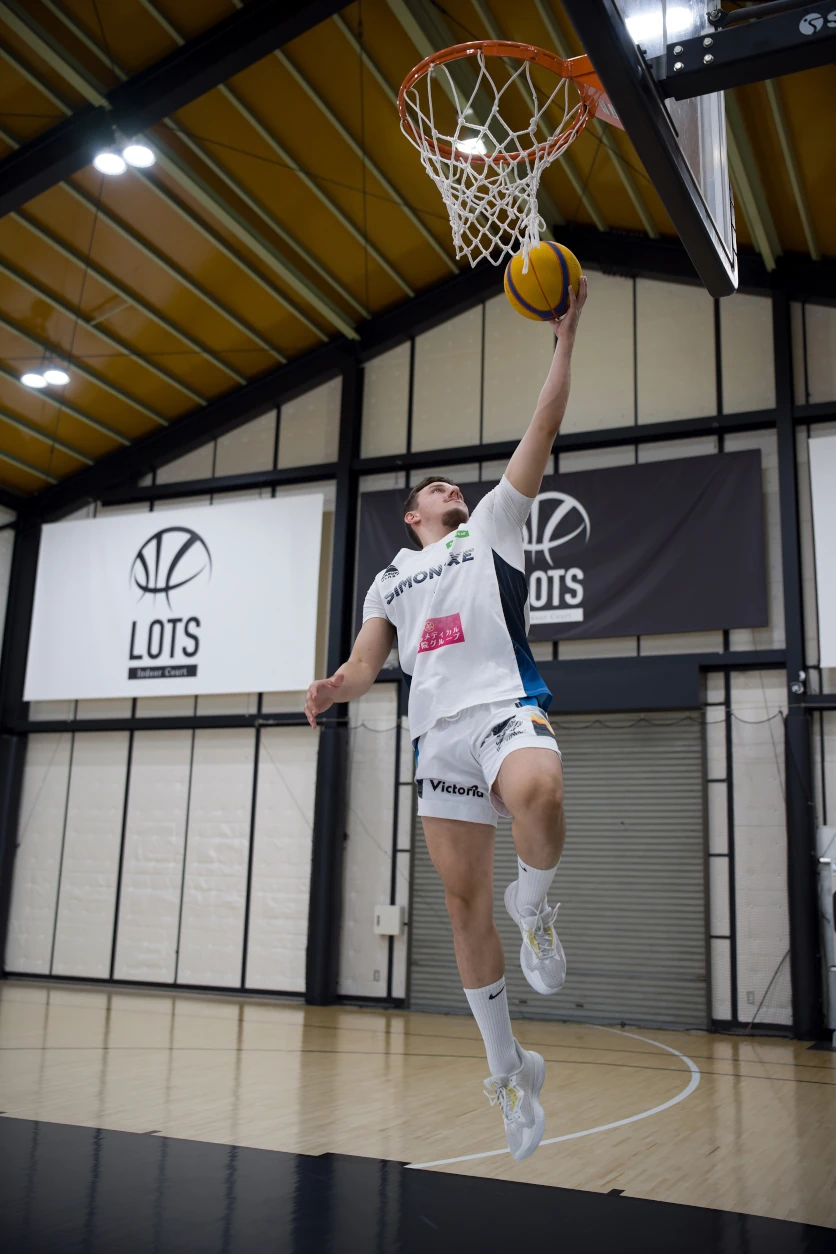
Zone Focus
Zone focus restricts autofocus to a defined area of the frame.
Instead of allowing the camera to use the entire frame, you specify a zone where the subject is expected to appear.
This can be useful when the subject moves within a predictable area.
For example, when photographing a football player moving through a particular section of the field, a zone can give the camera enough freedom to track the subject while reducing the chance of focusing on something outside the intended area.
Best for:
- Sports
- Birds
- Moving subjects within a predictable area

Center Focus
Center focus limits autofocus to an area near the center of the frame.
This is a straightforward option for subjects that you intend to place near the center.
It can be useful for:
- Portraits
- Simple compositions
- Centered subjects
- Stationary subjects
If your subject is not centered, you can focus on the subject first and then recompose, depending on your camera’s focus-lock behavior.
However, when shooting at very wide apertures with shallow depth of field, moving the camera after focusing can sometimes change the focus plane enough to affect sharpness. In those situations, selecting an appropriate AF point or using subject detection can be preferable.

Spot or Flexible Spot Focus
Spot focus allows you to select a relatively small area where the camera should focus.
This is useful when precision is more important than broad subject coverage.
For example, when photographing a small flower surrounded by leaves, a wide AF area may accidentally select a leaf.
A smaller AF area allows you to specify the part of the scene you want to focus on.
Spot focusing can be particularly useful for:
- Macro photography
- Detailed subjects
- Complex compositions
- Small objects
- Portrait details

Expanded Spot Focus
Expanded Spot builds on the idea of spot focusing.
The camera starts with a selected focus point but can use surrounding focus areas to assist when the primary point has difficulty acquiring focus.
This can make focusing more reliable when the subject is:
- Moving
- Low contrast
- Difficult to isolate
It provides more assistance than a very small single focus point while maintaining greater control than a wide-area mode.
What Is an AF Point?
You may also encounter the term AF point or distance measurement point.
These are the focus detection points used by the camera to determine where autofocus should operate.
They are typically displayed in the viewfinder or on the camera’s LCD screen.
The number and arrangement of AF points vary between camera models.
More AF points can provide greater flexibility, particularly when focusing on subjects away from the center of the frame. However, simply having more AF points does not automatically mean the camera will focus better in every situation.
The most important thing is to select an AF area that suits your subject.
How Autofocus Works
Autofocus systems use different technologies to determine whether a subject is in focus.
The three major approaches discussed in the original TAMRON guide are:
- Phase detection AF
- Image phase detection AF
- Contrast AF
Modern cameras can combine different technologies to achieve fast and accurate focusing.
Phase Detection AF
Phase detection autofocus works by comparing light information to determine how far the image is from the correct focus position.
One of its major advantages is speed.
Because the system can determine the direction and approximate amount of focus adjustment, it can focus quickly without needing to repeatedly search back and forth.
This makes phase detection particularly useful for:
- Sports
- Wildlife
- Fast-moving subjects
- Action photography
Traditional phase-detection systems were associated with dedicated autofocus sensors in DSLR cameras.
Image Phase Detection AF
Image phase detection performs a similar type of phase comparison but uses focus information incorporated into the image sensor.
This allows the system to work with mirrorless cameras and during live-view operation.
It can provide faster focusing than traditional contrast-based focusing and can also support autofocus during video recording.
This technology has become an important part of modern mirrorless autofocus systems.
Contrast AF
Contrast autofocus determines focus by analyzing image contrast.
The camera moves the lens and evaluates the image to find the position with the greatest contrast.
One advantage is that focusing is performed directly using image information from the sensor.
However, because the system may need to move the lens back and forth while determining the optimal focus position, it can be slower than phase-detection approaches in some situations.
Contrast AF can be useful for stationary subjects and can perform well in some low-contrast or low-light situations.
Why Do Cameras Combine AF Technologies?
Each autofocus technology has advantages and limitations.
Phase detection can provide fast focusing and is well suited to movement.
Contrast detection can provide accurate focus based directly on image contrast.
Modern systems can combine these approaches to achieve a balance of speed and accuracy.
This is one reason modern mirrorless cameras can provide sophisticated autofocus performance across photography and video applications.
How to Choose the Right AF Mode
There is no single autofocus setting that is ideal for every photograph.
Instead, consider the subject’s movement and how predictable that movement is.
For stationary subjects
Try:
AF-S + Spot/Center focus
Useful for:
- Landscapes
- Portraits
- Products
- Still life
- Architecture
For predictable moving subjects
Try:
AF-C + Zone focus
Useful for:
- Sports
- Birds
- Moving vehicles
- Children
For fast or unpredictable movement
Try:
AF-C + Tracking
Useful for:
- Wildlife
- Birds in flight
- Sports
- Running subjects
For unpredictable movement with changing behavior
Try:
AF-A
Useful for:
- Children
- Pets
- Casual action
For very precise subjects
Try:
AF-S + Spot focus
Useful for:
- Macro
- Small objects
- Detailed compositions
- Specific facial features
These are starting points rather than strict rules. Your camera model, subject, lens, lighting, and desired composition all influence which AF settings work best.
Autofocus for Portrait Photography
Portrait photography often benefits from accurate focus on the subject’s eyes.
If your camera supports face or eye detection, these features can simplify the focusing process.
However, the basic principles remain the same.
For a stationary portrait, AF-S can be useful.
For a subject who is walking, turning, or moving toward the camera, AF-C is generally more appropriate.
A lens with fast and accurate autofocus can also help maintain focus when shooting with a wide aperture and shallow depth of field.
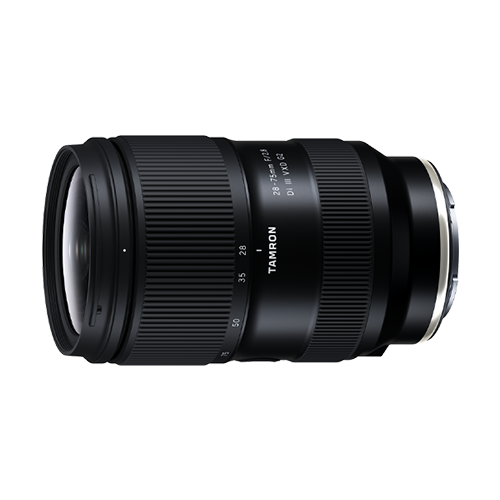
TAMRON’s VXD autofocus system, for example, is designed for high-speed and high-precision focusing and tracking.
Autofocus for Sports Photography
Sports photography presents a particularly demanding autofocus situation.
The subject can move quickly, change direction, and move closer to or farther from the camera.
A useful starting combination is:
AF-C + Tracking or Zone AF
A sufficiently fast shutter speed is also important because autofocus and shutter speed solve different problems.
AF-C helps maintain focus as the subject moves.
A fast shutter speed helps reduce motion blur.
You generally need both when your goal is to capture fast action sharply.
Autofocus for Wildlife Photography
Wildlife photography presents similar challenges, often with additional obstacles such as branches, grass, and uneven backgrounds.
For predictable subject movement, AF-C with tracking or zone focus can be useful.
For animals surrounded by vegetation, however, a wide AF area may sometimes select the foreground rather than the animal.
In these situations, a smaller focus area can give you more control.
For birds in flight, continuous autofocus combined with an appropriate tracking or wide-area mode can make it easier to keep the subject within the camera’s focusing range.
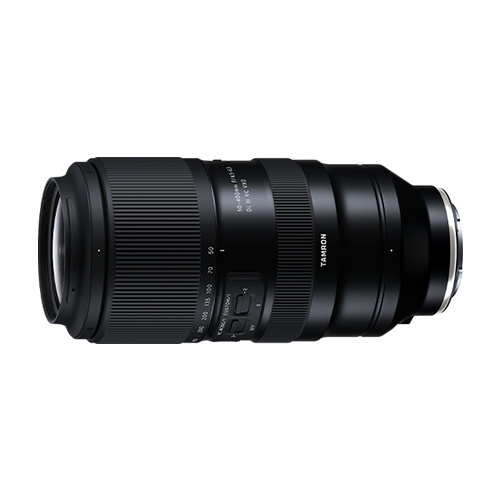
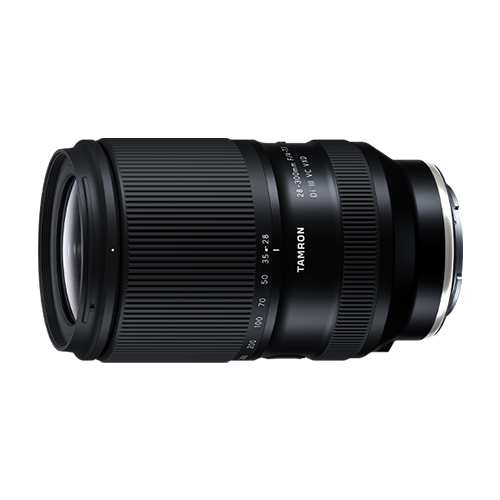
TAMRON’s original examples use the A067 50-400mm and A074 28-300mm for moving-subject applications.
Autofocus for Macro Photography
Macro photography presents a different autofocus challenge.
At close focusing distances, depth of field can become extremely shallow.
A very small change in focus can determine whether a specific part of the subject appears sharp.
For this reason, precise AF-area selection can be particularly useful.
A small AF point or flexible spot can help you choose exactly where you want focus.
However, manual focus can also be useful in macro photography, particularly when the subject is stationary and you need very precise control.
The 90mm F/2.8 Di III MACRO VXD (Model F072) featured in the original article combines macro capability with high-speed, high-precision autofocus.
Autofocus in Low Light
Autofocus can become more difficult when there is very little light or when the subject lacks contrast.
For example, a plain dark wall provides relatively little detail for an AF system to identify.
In these situations, try:
- Moving the AF point to an area with more contrast
- Using a smaller AF area
- Adding available light
- Using an appropriate focus-assist function if your camera provides one
- Switching to manual focus when necessary
The original TAMRON article notes that manual focus can be better suited to dark or low-contrast subjects and complicated compositions.
Autofocus and Video
Autofocus is also important for video.
During video recording, continuously adjusting focus can help keep a moving subject sharp.
This makes smooth AF performance particularly valuable for:
- Interviews
- Events
- Travel videos
- Sports
- Wildlife
- Vlogs
- Documentary footage
Noise and vibration during focusing can also be undesirable in video.
TAMRON’s VXD mechanism is designed to provide high-speed, high-precision autofocus while generating little vibration during AF operation, making it useful for applications where quiet operation matters, including video recording.
TAMRON VXD Autofocus Technology
TAMRON uses VXD (Voice-coil eXtreme-torque Drive) as an autofocus actuator in a number of its lenses.
According to TAMRON, VXD is designed to provide high-speed and high-precision focusing across the focusing range, from minimum focusing distance to infinity.
Its focus-tracking performance is also intended for moving subjects, making it useful for sports, wildlife, and portrait photography.
Another characteristic is low vibration during AF operation.
This can be beneficial when shooting in environments where quiet operation is important, such as:
- Ceremonies
- Concerts
- Events
- Video production
The actual autofocus performance of a lens also depends on the camera body, subject, lighting, settings, and shooting conditions.
Practical Tips for Better Autofocus
Understanding AF settings is only part of getting consistently sharp photographs.
Here are some practical habits that can help.
1. Choose the AF Mode Before You Shoot
Don’t wait until the action starts to think about your autofocus settings.
Before photographing sports or wildlife, select AF-C and an appropriate focus area.
For a landscape, AF-S may be more appropriate.
2. Choose the Focus Area Based on the Subject
A wide focus area isn’t automatically better.
Use a wide or tracking mode when the subject moves unpredictably.
Use a smaller focus area when you need precise control.
3. Give the AF System Something to Detect
Autofocus generally works more easily when there is sufficient detail and contrast.
If the selected area is plain or low contrast, try moving the AF point to a more identifiable part of the subject.
4. Watch the Background
A busy background can confuse autofocus.
If branches, fences, crowds, or other objects are between you and your subject, consider using a smaller AF area or tracking mode that better isolates the subject.
5. Don’t Forget About Manual Focus
Autofocus is powerful, but it isn’t infallible.
If the camera repeatedly focuses on the wrong object, switching to manual focus may be the simplest solution.
The goal isn’t to use AF all the time.
The goal is to use the focusing method that gives you the most control in the situation.
AF Settings Quick Reference
| Shooting situation | AF mode | Suggested focus area |
|---|---|---|
| Landscape | AF-S | Spot / Center |
| Portrait | AF-S | Spot / Eye AF |
| Moving portrait | AF-C | Tracking |
| Sports | AF-C | Tracking / Zone |
| Wildlife | AF-C | Tracking / Wide / Zone |
| Birds in flight | AF-C | Tracking / Wide |
| Children | AF-C / AF-A | Tracking / Zone |
| Macro | AF-S / MF | Spot |
| Still life | AF-S | Spot / Center |
| Video | AF-C | Tracking / Subject detection |
| Unpredictable movement | AF-A | Wide / Zone |
These are starting points rather than universal settings. Camera controls and AF capabilities vary between models.
Final Thoughts
Autofocus has evolved from a simple convenience feature into a sophisticated focusing system capable of tracking subjects and adapting to a wide range of photographic situations.
The key to getting the most from AF is understanding that different subjects require different approaches.
For stationary subjects, AF-S can provide straightforward and reliable focusing.
For moving subjects, AF-C allows the camera to continuously adjust focus.
When movement is unpredictable, AF-A can provide automatic switching between focusing behaviors.
Your choice of focus area is equally important. Wide-area focusing provides freedom for unpredictable movement, tracking helps maintain focus on selected subjects, zone focusing provides a balance between flexibility and control, and spot focusing gives you greater precision.
It is also useful to understand the basic technologies behind autofocus, including phase detection, image phase detection, and contrast AF.
Finally, remember that autofocus isn’t always the answer. There are situations where manual focus provides greater control, particularly with dark, low-contrast, or complex subjects.
Once you understand how AF modes, focus areas, and autofocus technologies work together, you can spend less time fighting your camera’s focusing system and more time concentrating on composition and the moment you want to capture.
TAMRON products mentioned in this article