
Canon RF Lens Guide: How to Choose the Right Lens
Choosing a lens for a Canon mirrorless camera can be challenging, especially with the growing number of options available for the Canon RF mount. Different lenses are designed for different sensor sizes, focal lengths, subjects, and shooting styles, so the right choice depends on what and how you want to photograph.
Before choosing a lens, it is important to understand the difference between Canon RF and RF-S lenses, the difference between full-frame and APS-C cameras, and how focal length affects your field of view.
You should also consider practical factors such as aperture, lens size and weight, autofocus performance, image stabilization, minimum object distance, and overall optical rendering.
In this guide, we’ll explain how to choose a Canon RF lens and what to look for when building a lens setup for everyday photography, travel, landscapes, portraits, wildlife, video, and other applications.
Understanding the Canon RF Mount
A lens mount is the connection between the camera body and lens. Different camera manufacturers use different mount standards, and lenses generally need to be designed for the appropriate mount to work correctly with a camera.
Canon’s mirrorless interchangeable-lens cameras use the RF mount system.
The RF mount was designed specifically for Canon’s mirrorless camera system. Its design provides a short flange-back distance—the distance between the lens mount and image sensor—which gives lens designers greater freedom when developing optical systems.
The RF system also supports communication between the camera and lens, allowing the two components to exchange information for functions such as autofocus and exposure control.
However, “RF” does not automatically mean that every RF lens is intended for every Canon RF camera.
Canon RF vs. RF-S Lenses
Canon’s RF system includes lenses designed for different sensor formats.
RF lenses are generally designed for Canon’s full-frame mirrorless cameras, while RF-S lenses are designed for Canon’s APS-C mirrorless cameras.
When choosing a Canon RF lens, first identify the sensor size of your camera.
This is one of the most important steps because the sensor size affects the lens’s effective field of view and how much of the image circle is used.
Full-Frame Canon RF Cameras
Full-frame cameras use a sensor approximately the same size as a traditional 35mm film frame.
A full-frame lens is designed to project an image circle large enough to cover this sensor.
APS-C Canon RF Cameras
APS-C cameras use a smaller sensor.
Lenses designed specifically for APS-C can be smaller and lighter because they do not need to project as large an image circle as a full-frame lens.
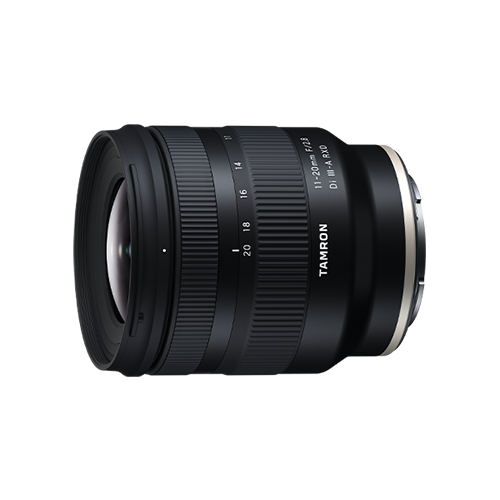
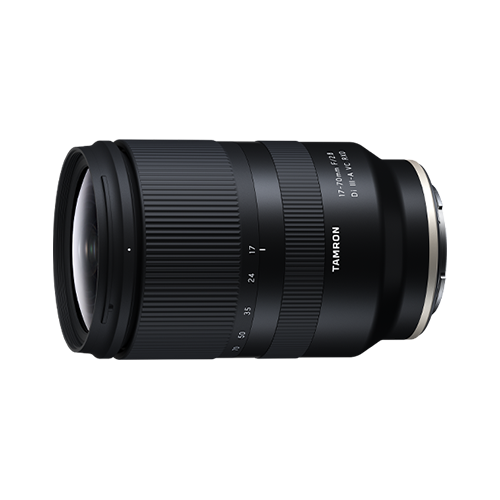
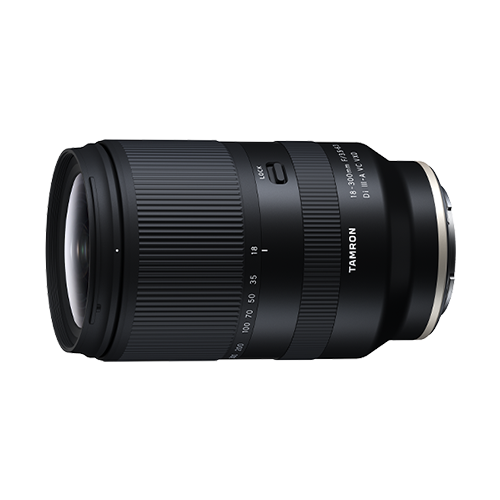
TAMRON’s current Canon RF lineup includes APS-C lenses such as the 11-20mm F2.8 Di III-A RXD (B060), 17-70mm F2.8 Di III-A VC RXD (B070), and 18-300mm F3.5-6.3 Di III-A VC VXD (B061).
Can You Use a Full-Frame RF Lens on an APS-C Camera?
A full-frame RF lens can be used on an APS-C Canon RF camera.
Because the APS-C sensor is smaller, however, the field of view becomes narrower compared with the same lens used on a full-frame camera.
Canon’s APS-C format has an approximately 1.6× crop factor relative to full frame. This means a full-frame lens can provide a field of view similar to a longer focal length when used on an APS-C body.
For example, a 100mm lens on an APS-C camera provides a field of view comparable to approximately 160mm on full frame.
This can be useful when photographing distant subjects such as wildlife, birds, or sports because the narrower field of view effectively gives you greater reach.
However, the actual focal length of the lens does not change—the sensor changes the portion of the lens’s image circle that is captured.
What to Consider When Choosing a Canon RF Lens
Once you know your camera’s mount and sensor size, you can start comparing lenses based on how you photograph.
Here are the most important factors to consider.
1. Match the Lens to Your Camera’s Sensor
The first consideration is compatibility.
Before purchasing a lens, confirm:
- Your camera uses the Canon RF mount.
- Your camera has a full-frame or APS-C sensor.
- The lens is designed to provide the desired coverage on your sensor.
- The lens supports the functions you need.
For Canon APS-C users, an APS-C-specific lens can offer a useful combination of size, weight, and field of view.
For photographers using full-frame cameras, a full-frame RF lens gives you access to the entire sensor area.
2. Zoom Lens or Prime Lens?
The next decision is whether you want a zoom lens or a prime lens.
Both have advantages.
Zoom Lenses
A zoom lens allows you to change focal length without changing lenses.
This makes zoom lenses particularly useful for:
- Travel photography
- Everyday photography
- Events
- Landscapes
- Street photography
- Wildlife
- Video
- Situations where changing lenses is inconvenient
For example, you can use a wide perspective to photograph a large scene and then zoom in to isolate a detail.
A zoom lens can therefore be a practical starting point for photographers who are still learning which focal lengths they prefer.
Prime Lenses
A prime lens has a fixed focal length.
Because you cannot zoom optically, you need to move closer to or farther from the subject to change the composition.
However, prime lenses can offer advantages such as a wide maximum aperture, compact designs, and distinctive optical rendering.
They can be particularly useful for photographers who want to specialize in a particular type of photography, such as portraits, street photography, or low-light shooting.
A practical approach for beginners is to start with a versatile zoom lens and add a prime lens later when you understand which focal length and style suit your photography.
Understanding Focal Length
Focal length is one of the most important characteristics of a lens because it affects the lens’s angle of view.
A shorter focal length generally provides a wider view, while a longer focal length provides a narrower view and greater subject magnification.
As a general guide:
- Ultra-wide-angle: approximately 20mm or less
- Wide-angle: approximately 35mm or less
- Standard: around 50mm
- Telephoto: approximately 80mm or longer
- Ultra-telephoto: approximately 300mm or longer
These categories are useful guidelines rather than strict boundaries.
Ultra-Wide-Angle Lenses
Ultra-wide-angle lenses can capture a very broad field of view.
They are particularly useful for:
- Landscapes
- Architecture
- Cityscapes
- Interiors
- Travel photography
- Large groups
- Environmental portraits
- Creative perspective
Wide-angle lenses also make it easier to photograph large subjects when you cannot physically move very far away.
For example, an ultra-wide-angle lens can help capture the full height of a building when you’re standing close to it.
The wide perspective can also emphasize the relationship between foreground and background, creating a strong sense of depth.
TAMRON B060 Example
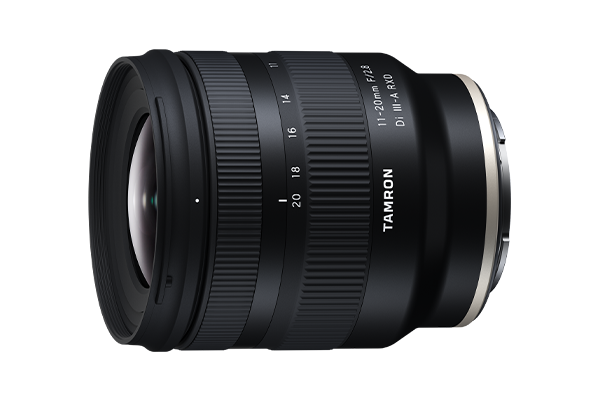
The 11-20mm F2.8 Di III-A RXD (Model B060) is an APS-C ultra-wide-angle zoom available for Canon RF mount.
For Canon RF APS-C cameras, its field of view corresponds to approximately 17.6-32mm in full-frame-equivalent terms. TAMRON lists a 101°44′ to 68°7′ diagonal angle of view for the Canon RF version.
This makes it suitable for landscapes, architecture, interiors, travel, and other subjects where a broad perspective is useful.
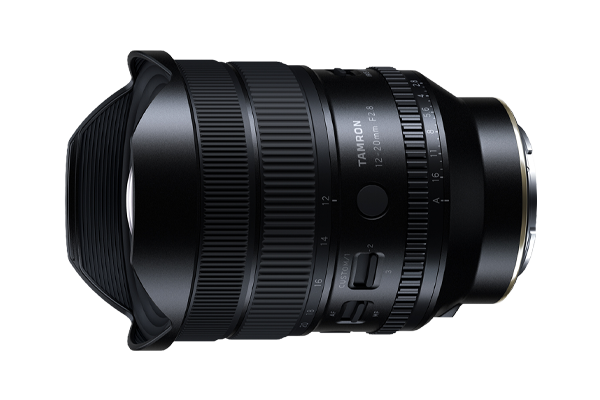
Wide-Angle Lenses
Wide-angle lenses provide a broad perspective while generally producing a more moderate view than ultra-wide-angle lenses.
They are useful for:
- Landscapes
- Architecture
- Street photography
- Travel
- Environmental portraits
- Everyday photography
They can also be useful indoors or in narrow streets where you have limited room to step backward.
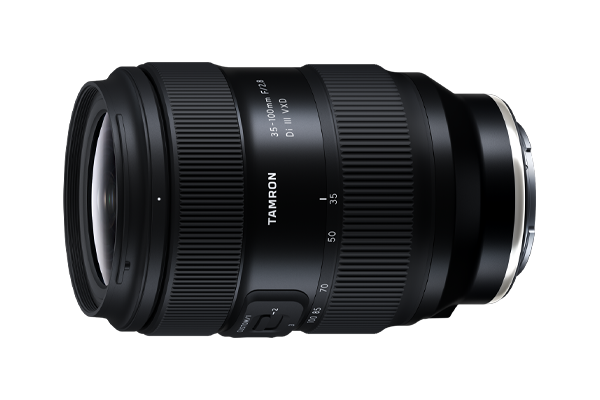
Standard Lenses
A standard focal length provides a relatively natural perspective.
Around 50mm on a full-frame camera is often considered a standard field of view.
Standard lenses are versatile and can be used for:
- Everyday photography
- Portraits
- Street photography
- Food photography
- Travel
- Snapshots
Their natural perspective makes them a useful general-purpose option.
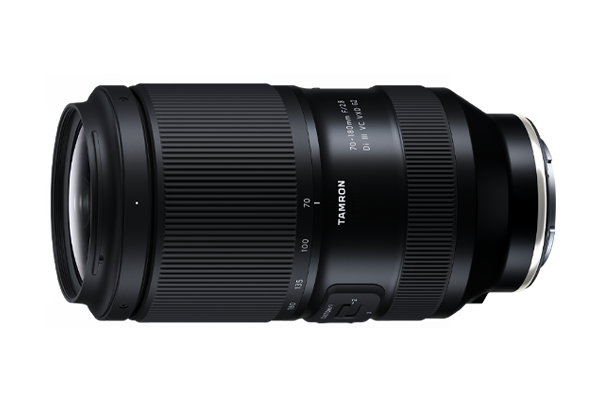
Telephoto Lenses
Telephoto lenses provide a narrower field of view and allow you to photograph distant subjects more closely.
They are useful for:
- Wildlife
- Sports
- Vehicles
- Events
- Portraits
- Distant landscapes
Telephoto lenses can also create a compression effect, making distant elements appear visually closer together.
This can be used creatively in portraits and landscapes.
For example, a distant mountain can appear larger relative to a foreground subject when photographed with a longer focal length.
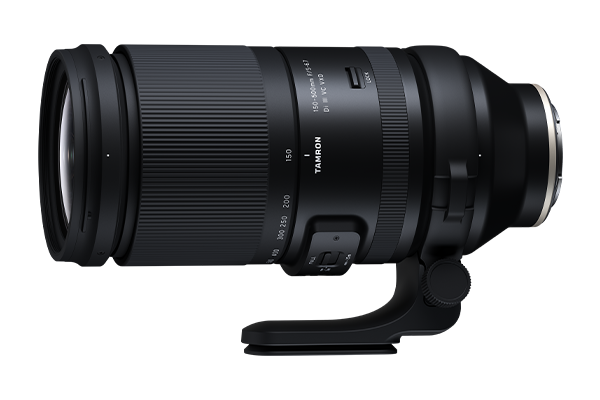
Ultra-Telephoto Lenses
Ultra-telephoto lenses generally start around 300mm and beyond.
They are useful when you need significant reach, such as when photographing:
- Birds
- Wildlife
- Sports
- Airplanes
- The moon
- Distant subjects
Because the field of view is very narrow, even small camera movements can become noticeable.
A tripod or other support may therefore be useful depending on the lens, shutter speed, and shooting conditions.
3. Consider Lens Weight and Size
Lens specifications aren’t only about optical performance.
The physical size and weight of a lens can have a significant impact on how often you actually use it.
A large, heavy lens may provide excellent performance but can become inconvenient if you’re walking for several hours.
A compact lens, on the other hand, is easier to carry and can make spontaneous photography more practical.
Consider:
- Your camera body’s weight
- The combined camera-and-lens size
- How long you’ll carry the setup
- Whether you’ll travel with it
- Whether you frequently shoot handheld
- Whether you use a tripod or gimbal
For travel and everyday photography, portability can be just as important as specifications.
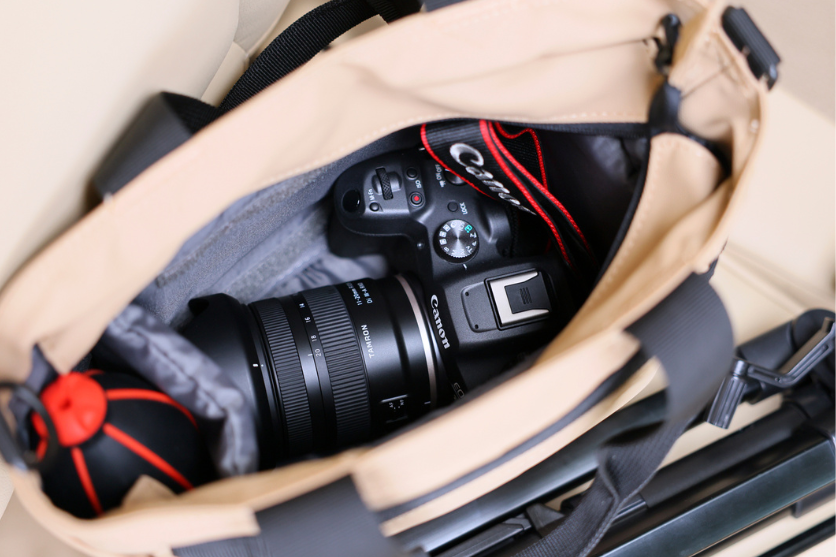
TAMRON’s Canon RF APS-C lineup is designed with compactness in mind. The B060, for example, weighs approximately 340g in Canon RF mount and measures about 84.2mm in length.
4. Consider the Maximum Aperture
The maximum aperture is another important consideration.
A lens with a smaller F-number has a wider maximum aperture.
For example, an F2.8 lens can allow more light to reach the sensor than an F5.6 lens at the same focal length and shutter speed.
A wide maximum aperture can provide several benefits.
Better Low-Light Performance
A wider aperture can help when photographing in darker environments.
It may allow you to maintain a faster shutter speed or use a lower ISO than you otherwise could.
This can be useful for:
- Night photography
- Indoor photography
- Events
- Concerts
- Street photography
Shallow Depth of Field
A wide aperture can also create a shallower depth of field.
This can help separate your subject from the background and produce attractive bokeh.
For portraits, for example, an aperture such as F1.4, F2, or F2.8 can help emphasize the subject while making background elements appear softer.
Consider Your Actual Shooting Style
A wide aperture isn’t automatically necessary for everyone.
Landscape photographers who frequently use a tripod may prefer stopping down to increase depth of field.
Likewise, photographers who primarily shoot outdoors during daylight may not need an extremely bright lens.
Choose the aperture based on the subjects and conditions you photograph most often.
5. Check the Focus Ring and Switches
A lens should not only produce good images—it should also be comfortable to operate.
Before choosing a lens, consider the feel and placement of:
- Focus ring
- Zoom ring
- AF/MF switch
- Focus limiter
- Custom controls
- Other physical switches
A smooth focus ring can be particularly important for manual focusing and video.
Switch placement can also affect how quickly you can change settings while shooting.
If possible, physically hold the lens before purchasing it.
The way a lens feels on your camera can tell you things that a specification sheet cannot.
6. Consider Autofocus Performance
Autofocus performance can make a major difference depending on what you photograph.
For static subjects such as landscapes and architecture, autofocus speed may be less critical.
For moving subjects such as:
- Children
- Pets
- Wildlife
- Birds
- Sports
- Vehicles
tracking performance becomes much more important.
For video, AF smoothness and noise can also matter.
A lens that focuses quickly and quietly can be more suitable for video recording, especially when the microphone is mounted close to the camera.
When comparing lenses, look beyond the basic statement that a lens has autofocus. Consider how the AF system behaves with the subjects you actually photograph.
7. Consider Image Stabilization
Image stabilization can help reduce the effects of camera shake.
This can be especially useful when:
- Shooting handheld
- Using telephoto lenses
- Photographing in low light
- Working indoors
- Traveling without a tripod
Some lenses incorporate optical stabilization, while some camera bodies provide stabilization through the camera itself.
The exact stabilization system and its effectiveness vary by camera and lens combination.
If you frequently shoot handheld, check whether the lens provides stabilization and how it interacts with your camera body.
TAMRON’s Canon RF APS-C lineup includes models with VC stabilization, such as the 17-70mm F2.8 Di III-A VC RXD (B070) and 18-300mm F3.5-6.3 Di III-A VC VXD (B061).
8. Check the Minimum Object Distance
Minimum Object Distance, or MOD, refers to how close you can focus on a subject.
A shorter minimum object distance allows you to get physically closer while maintaining focus.
This can be particularly useful for:
- Food
- Flowers
- Small objects
- Product photography
- Travel details
- Close-up compositions
You don’t necessarily need a dedicated macro lens to create close-up images.
A lens with a short minimum object distance can give you greater flexibility when photographing everyday subjects.

TAMRON B060 Close-Up Capability
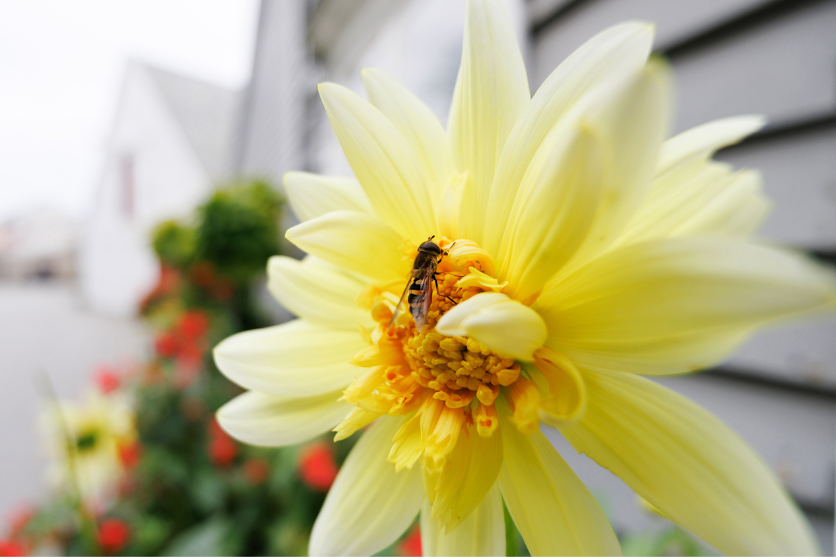
The TAMRON 11-20mm F2.8 Di III-A RXD (B060) can focus as close as 0.15m at the wide end and provides a maximum magnification ratio of 1:4.
This allows photographers to combine close-up subjects with an expansive background, creating a distinctive wide-angle perspective.
9. Look at Optical Rendering
Two lenses with the same focal length and maximum aperture can still produce noticeably different images.
This is because optical design affects characteristics such as:
- Sharpness
- Contrast
- Color reproduction
- Bokeh
- Distortion
- Flare resistance
- Rendering of fine details
Your personal preference also matters.
A lens that looks technically impressive on paper may not necessarily produce the type of image you want.
Before buying, look at sample photographs taken with the lens.
Ask yourself:
Does the lens produce the type of image I want to create?
This can be more useful than comparing specifications alone.
Choosing a Canon RF Lens for Different Types of Photography
Once you understand the basic specifications, you can narrow your choices according to your photography style.
For Travel Photography
Travel photographers often benefit from a lens that combines versatility and portability.
A zoom lens can reduce the need to change lenses while moving between different locations.
Consider:
- Compact size
- Moderate weight
- Useful focal-length coverage
- Autofocus performance
- Image stabilization
For APS-C Canon RF users, the TAMRON 17-70mm F2.8 Di III-A VC RXD (B070) provides a broad everyday zoom range and constant F2.8 aperture, while the 18-300mm F3.5-6.3 Di III-A VC VXD (B061) provides substantially more telephoto reach in an all-in-one design.
For Landscape Photography
Landscape photographers often benefit from wider lenses.
An ultra-wide-angle lens can capture large landscapes and emphasize foreground-to-background relationships.
Look for:
- Wide field of view
- Good optical performance
- Compactness if hiking
- Useful close-focus capability
- Weather resistance where appropriate
The B060 is designed specifically for APS-C mirrorless cameras and combines an ultra-wide field of view with an F2.8 maximum aperture.
For Architecture and Interiors
Architecture and interiors often require a broad field of view.
An ultra-wide-angle lens can help when you’re working in confined spaces.
It can also emphasize the scale and geometry of buildings.
However, pay attention to perspective distortion, especially when photographing tall buildings from close distances.
Try keeping the camera level when appropriate, and experiment with your viewpoint rather than relying entirely on an extremely wide focal length.
For Portrait Photography
Portrait photographers may prefer standard or telephoto focal lengths.
Longer focal lengths can help isolate the subject and create attractive background compression.
A wide-aperture lens can also provide shallow depth of field and background blur.
Consider:
- Maximum aperture
- Focal length
- Autofocus
- Bokeh
- Working distance
- Size and weight
The ideal choice depends on whether you prefer environmental portraits or tighter head-and-shoulder compositions.
For Wildlife Photography
Wildlife photography often requires longer focal lengths.
The ability to photograph animals from a distance can be critical, particularly when approaching the subject isn’t practical or safe.
For APS-C Canon RF users, an all-in-one zoom such as the B061 provides a broad range extending to 300mm, while its VC stabilization can help with handheld shooting.
A longer lens can also be useful for birds and other small or distant subjects.
For Video
Video creators should consider more than image quality.
Look for:
- Smooth autofocus
- Quiet AF operation
- Useful focal-length coverage
- Focus-ring operation
- Compactness
- Stabilization
- Compatibility with your support system
The B060’s compact design makes it suitable for handheld shooting as well as use with compact camera supports and gimbals.
TAMRON Lenses for Canon RF Mount
TAMRON’s Canon RF lineup has expanded beyond the B060 featured in the original article.
As of the current TAMRON lineup, the Canon RF options are APS-C lenses, including the B060, B070, and B061.
11-20mm F/2.8 Di III-A RXD — Model B060
The 11-20mm F2.8 Di III-A RXD (B060) is an ultra-wide-angle zoom designed for APS-C mirrorless cameras.
For Canon RF mount, it provides an approximately 17.6-32mm full-frame-equivalent field of view.
Key characteristics include:
- F2.8 maximum aperture
- Ultra-wide-angle perspective
- 0.15m minimum object distance at 11mm
- 1:4 maximum magnification at the wide end
- Approximately 340g in Canon RF mount
- Compact 84.2mm length
This combination makes it suitable for landscapes, architecture, interiors, travel, video, and creative close-up photography.
17-70mm F/2.8 Di III-A VC RXD — Model B070
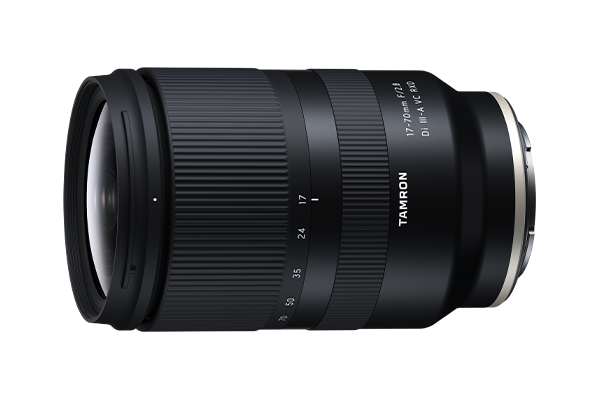
The 17-70mm F2.8 Di III-A VC RXD (B070) is a standard zoom designed for APS-C mirrorless cameras.
It combines a versatile zoom range with a constant F2.8 maximum aperture and VC image stabilization.
TAMRON lists the Canon RF version as part of its current APS-C Canon RF lineup, with a weight of approximately 530g and a length of approximately 117.3mm.
This makes it suitable for photographers looking for one lens for everyday photography, travel, portraits, and other general-purpose applications.
18-300mm F/3.5-6.3 Di III-A VC VXD — Model B061
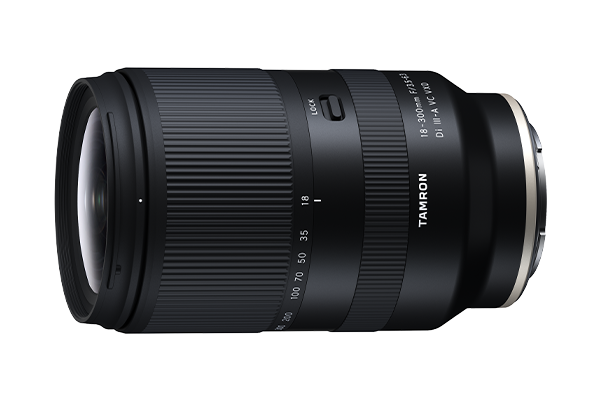
The 18-300mm F3.5-6.3 Di III-A VC VXD (B061) is an all-in-one zoom designed for APS-C mirrorless cameras.
Its 16.6× zoom ratio covers a broad range from wide-angle to telephoto.
It also includes TAMRON’s VC stabilization and VXD autofocus system.
For travel photographers, outdoor photographers, and people who prefer to carry one lens rather than several, its broad coverage can be useful. TAMRON lists the Canon RF version at approximately 625g and 123.6mm in length.
Which Canon RF Lens Should You Choose?
There is no single lens that is ideal for every Canon RF photographer.
Instead, start by identifying the type of photography you do most often.
Ask yourself:
- What sensor size does my camera use?
- Do I need a wide, standard, or telephoto perspective?
- Do I prefer a zoom or prime lens?
- Will I frequently travel with the lens?
- Do I shoot handheld?
- Do I photograph moving subjects?
- Do I need a wide maximum aperture?
- Is image stabilization important to me?
- How close do I want to get to my subjects?
- How important is autofocus performance?
- Do I also use the lens for video?
- What type of optical rendering do I prefer?
Answering these questions will help narrow the choices considerably.
For APS-C Canon RF users, the current TAMRON lineup offers three different approaches: an ultra-wide-angle zoom with the B060, a versatile standard zoom with the B070, and an all-in-one zoom with the B061.
Final Tips for Choosing a Canon RF Lens
Choosing a lens isn’t simply about finding the lens with the longest zoom range, widest aperture, or largest number of features.
The best lens for your photography is the one that fits your camera, shooting style, subjects, and everyday workflow.
Start with compatibility and sensor size.
Then consider focal length and decide whether you need a wide-angle, standard, or telephoto perspective.
From there, compare aperture, autofocus, stabilization, size, weight, minimum object distance, and optical rendering.
If possible, hold the lens before purchasing it and try it on your camera. Pay attention to how the controls feel and whether the combination is comfortable to carry.
Most importantly, look at real-world sample photographs.
Technical specifications tell you what a lens can do, but photographs show you how the lens actually renders a scene.
Whether you’re photographing landscapes, architecture, travel, portraits, wildlife, or everyday subjects, choosing a Canon RF lens should ultimately come down to the type of images you want to create and how you want to photograph them.
TAMRON products mentioned in this article