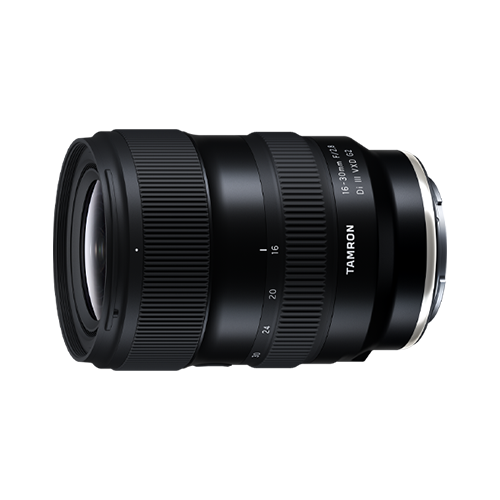

Fireworks Photography: Settings & Shooting Tips
Fireworks can transform the night sky into a spectacular display of color and light. Capturing that moment with a camera, however, can be more challenging than simply pointing your camera toward the sky and pressing the shutter.
Fireworks appear suddenly against a dark background, move quickly through the frame, and can vary significantly in brightness. Automatic exposure may struggle to produce the result you want, while camera shake can become noticeable when using the slower shutter speeds commonly used for fireworks photography.
With the right preparation, camera settings, lens, and composition, you can capture the shape, color, and movement of fireworks while also including the atmosphere of the event.
In this guide, we’ll explain how to photograph fireworks, including recommended settings, focusing techniques, composition ideas, long-exposure methods, and how to choose a lens for fireworks photography.
What You Need for Fireworks Photography
Before the fireworks begin, prepare your equipment.
A successful fireworks shoot is often determined before the first burst appears in the sky. Since you may need to work in darkness and use long exposures, having the right equipment ready can make the experience much easier.
Camera
An interchangeable-lens camera gives you greater control over exposure, aperture, focus, and lens selection.
Manual exposure is particularly useful because fireworks are bright against a dark sky, making automatic exposure more difficult to control.
Wide-Angle Lens
A wide-angle lens is useful when you want to capture the entire fireworks display together with the surrounding environment.
Including buildings, bridges, trees, the audience, or the landscape can make the photograph more recognizable and provide a stronger sense of scale.
The original TAMRON guide recommends a wide-angle lens of approximately 35mm or wider for capturing the overall scene.
Telephoto Lens
A telephoto lens provides a different approach.
Instead of photographing the entire event, you can isolate individual fireworks and emphasize their structure, colors, and light trails.
A telephoto perspective can also compress distant elements, creating a more concentrated composition.
A focal length of approximately 80mm or longer can be useful when you want to photograph distant fireworks in greater detail.
Tripod
A tripod is one of the most important accessories for fireworks photography.
Many fireworks photographs use shutter speeds of several seconds, making camera movement a significant concern.
A stable tripod keeps the camera stationary while the shutter is open, helping preserve sharpness and allowing you to capture the movement of the fireworks.
Choose a tripod that is stable enough for your camera and lens combination. Wind can cause even a seemingly stable setup to move, so position the tripod securely and avoid extending it more than necessary.
Remote Shutter Release
Pressing the camera’s shutter button can introduce vibration, particularly during a long exposure.
A remote shutter release or compatible remote-control function allows you to trigger the camera without touching it.
If you don’t have a remote shutter release, the camera’s self-timer can also help reduce vibration.
ND Filter
An ND filter can be useful when multiple fireworks are being launched and a long exposure would otherwise become too bright.
The original article specifically recommends experimenting with ND filters from approximately ND8 to ND64 for situations such as large simultaneous fireworks displays.
An ND filter reduces the amount of light entering the camera, giving you more control over exposure while maintaining a longer shutter speed.
Extra Batteries and Memory Cards
Fireworks photography can involve a large number of photographs and a long wait before the main display begins.
Bring extra batteries and memory cards so you don’t have to stop shooting at an important moment.
A small headlamp or flashlight can also make it easier to operate your equipment in darkness.
Prepare your equipment before the event begins so you can concentrate on the fireworks once the show starts.
Fireworks Photography Settings
Fireworks photography is generally easier when you take control of the camera’s exposure settings.
Because the fireworks are bright while the surrounding sky is dark, automatic exposure may not always produce the desired result.
Use the following settings as starting points and adjust them according to the brightness, distance, and type of fireworks display.
Use Manual Mode
Manual mode is generally the most practical starting point for fireworks photography.
It allows you to independently control:
- Aperture
- Shutter speed
- ISO
- Focus
This is especially useful because the brightness of the scene can change dramatically from one moment to the next.
Bulb mode can also be useful when you want to control the exact duration of a long exposure.
With Bulb mode, you can open the shutter when a firework launches and close it after the burst has finished, allowing you to record the movement from launch to bloom and fade.
The original TAMRON article specifically recommends Manual mode and explains the use of Bulb mode for capturing the full movement of a firework.
Shutter Speed
Shutter speed determines how the movement of the fireworks is recorded.
A shutter speed of approximately 2 to 4 seconds is a useful starting point for capturing light trails.
A longer exposure can record more of the firework’s movement, while a shorter exposure can isolate individual bursts.
For multiple-firework scenes, particularly displays where many fireworks appear simultaneously, exposures of around 8 seconds or longer can create a denser composition. However, longer exposures also increase the risk of overexposure when many bright fireworks overlap.
Using Bulb Mode
Bulb mode gives you even more control.
Listen for the sound of the firework being launched.
When you hear the launch, open the shutter and keep it open until the firework has completed its burst and faded.
This can allow you to capture the complete trajectory and bloom in a single exposure.
Timing takes practice, so make several test shots and adjust your timing throughout the display.
Aperture
For fireworks photography, an aperture around F8 to F11 is a useful starting point.
A smaller aperture helps maintain sufficient depth of field and can keep the fireworks and surrounding scenery relatively sharp.
The original TAMRON guide recommends F8 to F11 for clearly capturing the structure of fireworks at different distances.
You can also experiment with smaller apertures when photographing particularly bright displays.
However, avoid assuming that the smallest available aperture is always the best choice. Very small apertures can introduce diffraction, which may reduce overall fine detail.
ISO
Start with a relatively low ISO.
An ISO setting around 100 to 400 is a useful starting range when your camera is mounted on a tripod and you’re using a long exposure.
Keeping ISO low can help minimize noise and preserve the color and detail of the fireworks.
If the photograph is too dark, increase ISO gradually.
The original TAMRON article recommends starting around ISO 100 to ISO 400 and increasing sensitivity if necessary.
White Balance
White balance affects the color appearance of your fireworks.
Auto White Balance can work well when the display contains many different colors.
Daylight White Balance is another option if you want a more consistent rendering.
You can also choose a custom white balance according to your creative preference.
Shooting RAW provides additional flexibility for adjusting white balance during post-processing.
Because fireworks can contain several colors in a single frame, however, it’s still important to review your photographs during the event rather than relying entirely on adjustments later.
How to Focus When Photographing Fireworks
Focusing at night can be one of the more difficult aspects of fireworks photography.
Autofocus may struggle because the sky is dark and the fireworks appear only briefly.
For this reason, manual focus is often useful.
Pre-Focus Before the Fireworks Begin
Before the show starts, look toward the area where the fireworks will appear.
If there are buildings, streetlights, or other distant objects near the expected launch area, use them to establish focus.
Magnified live view can make this easier.
Focus on a distant object and carefully adjust the focus until it appears sharp.
Once you have established focus, switch to manual focus so the camera doesn’t attempt to refocus when the fireworks appear.
The original TAMRON article recommends estimating the distance to the launch site and manually setting focus, while also suggesting live-view magnification and test shots.
Don’t Automatically Set Focus to Infinity
A common assumption is that fireworks photography requires simply turning the focus ring all the way to infinity.
In practice, this isn’t always ideal.
The infinity position on a lens may not correspond to the exact sharpest focus for the scene.
Instead, use a distant object to establish focus and check the result with magnified live view.
This can give you more reliable sharpness.
When Should You Open the Shutter?
Timing is particularly important when photographing fireworks.
A useful technique is to listen for the sound of the launch.
When you hear the firework being launched, open the shutter.
Keep the shutter open until the firework has completed its burst and faded.
This can record the entire movement from the initial launch through the explosion and trailing light.
For displays with many simultaneous fireworks, you may need to observe several bursts first and anticipate when the next sequence will occur.
With practice, you can become more consistent at timing your exposures.
Composition Tips for Fireworks Photography
Technical settings are only part of the process.
Composition determines how the fireworks interact with the surrounding environment and can make your photograph much more distinctive.
Include the Surrounding Landscape
Instead of photographing only the sky, consider including the location where the fireworks are being held.
Buildings, bridges, trees, waterfronts, and silhouettes can provide context.
Including the audience can also communicate the scale and atmosphere of the event.
A wide-angle lens is particularly useful for this approach.
The original TAMRON example uses the 17-28mm F2.8 (Model A046) at 28mm, F8, 5 seconds, and ISO 100 to capture fireworks together with the surrounding scene.
Use the Rule of Thirds
The rule of thirds can help balance fireworks with the surrounding environment.
For example, you can place the fireworks toward one side of the frame while allowing a building, bridge, or landscape element to occupy the other.
This can create a stronger sense of scale than placing every firework directly in the center.
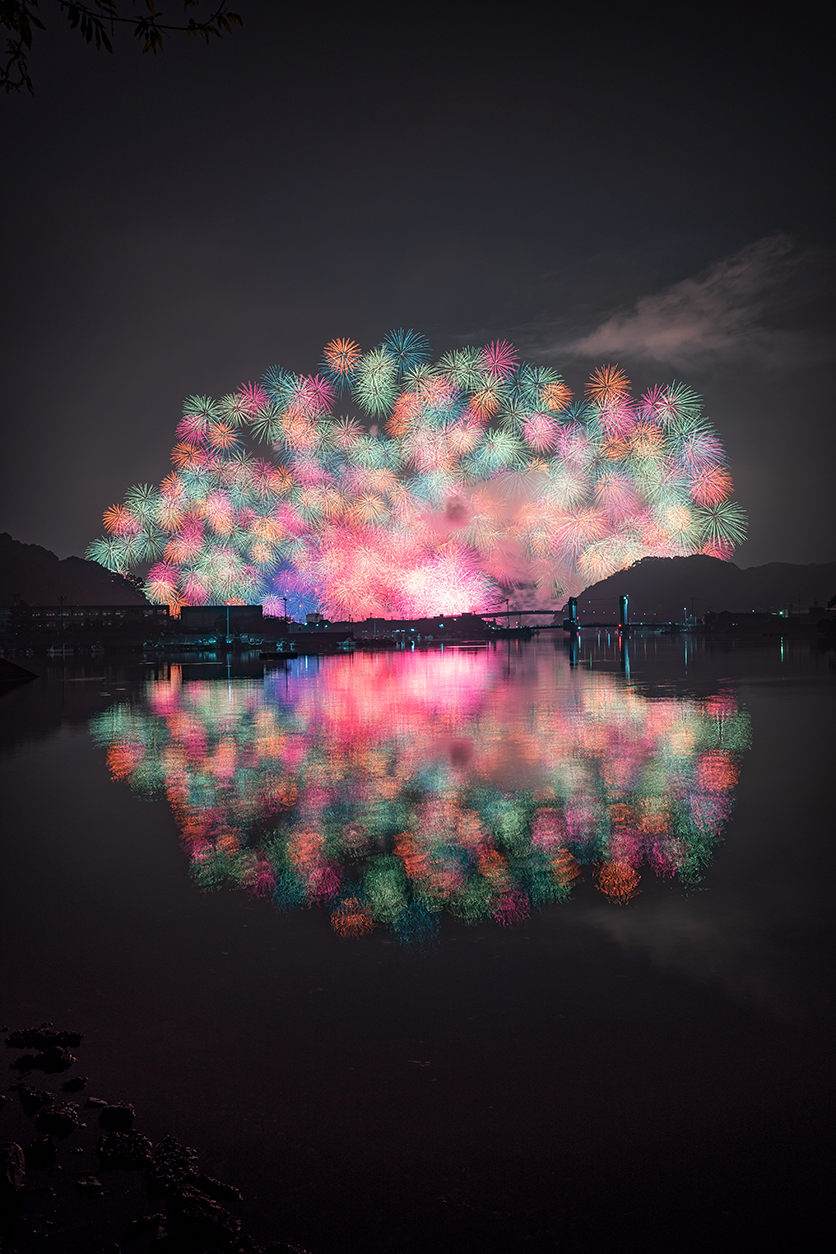
Try a Centered Composition
A centered composition can work particularly well when a single firework has a distinctive symmetrical shape.
Place the burst near the center of the frame and allow enough empty space around it.
This approach can emphasize the geometry and symmetry of the firework.
Use Reflections
If the fireworks are being displayed near a river, lake, harbor, or other body of water, look for reflections.
The reflection can create a second layer of light beneath the fireworks and introduce symmetry into the composition.
Try keeping both the fireworks and their reflections within the frame.
A tripod and longer exposure can make the reflection more prominent.
Shoot Horizontally or Vertically
The shape of the fireworks can help determine the orientation of your photograph.
A horizontal composition is useful when fireworks spread broadly across the sky or when you want to include the surrounding landscape.
A vertical composition can emphasize the height of a single burst or capture the relationship between the launch point and the explosion.
Don’t be afraid to change orientation throughout the display.
Multiple Exposure Techniques for Fireworks
Large fireworks displays can create a difficult exposure problem.
If you try to capture too many fireworks in a single long exposure, the overlapping bursts can make the photograph excessively bright.
One solution is to capture several shorter exposures and combine them during post-processing.
The original TAMRON guide describes shooting individual fireworks with shutter speeds of approximately 1/60 second to 1 second, then combining the photographs to create a denser final image.
This technique provides greater control over the final composition.
You can select the strongest fireworks from different frames and combine them while maintaining the darker background.
It also allows you to build a more dramatic image without relying on one extremely long exposure.
Multiple Exposure In-Camera
Some cameras also provide a multiple-exposure function.
If your camera supports it, you can experiment with combining several exposures directly in the camera.
This can be particularly interesting when multiple fireworks are launched from the same area.
However, always make sure you understand how your camera handles exposure compensation, image storage, and multiple-exposure settings before the event.
Using ND Filters for Fireworks
An ND filter can be particularly useful when you’re trying to capture multiple fireworks during a long exposure.
Because an ND filter reduces the amount of light entering the lens, it allows you to maintain a longer shutter speed without allowing the photograph to become excessively bright as quickly.
This can be helpful for large displays where many fireworks overlap.
The original TAMRON article recommends ND8 through ND64 as options to experiment with depending on the shooting conditions.
Start with a less dense filter and increase the strength if the scene remains too bright.
Keep in mind that an ND filter also reduces the amount of light available for focusing and composing, so establish your focus and framing before applying a very dark filter when necessary.
Scene-Specific Fireworks Photography Techniques
Different shooting locations can produce very different results.
Instead of using the same composition throughout the event, try photographing several types of scenes.
Capture the Entire Fireworks Landscape
A wide-angle lens allows you to include the fireworks, audience, trees, buildings, and surrounding landscape.
Try using silhouettes in the foreground to create depth.
For example, a distinctive building or group of trees can provide a dark foreground against the bright fireworks.
Pay attention to the balance between ground-level lights and the fireworks in the sky.
If the streetlights or buildings are too bright, adjust your exposure or composition to prevent them from dominating the photograph.
Capture a Close-Up of the Fireworks
A telephoto lens can isolate the fireworks and reveal details that may not be visible to the naked eye.
Instead of including the entire event, fill the frame with the burst.
This approach can emphasize:
- Fine light trails
- Color transitions
- Radial patterns
- Individual sparks
- The changing shape of the explosion
A longer focal length also allows you to photograph distant fireworks without physically moving closer.
Photograph Fireworks With Railroads
Combining fireworks with railway tracks can create strong leading lines.
The tracks can guide the viewer’s eye toward the fireworks while adding depth to the composition.
However, this type of photograph requires careful planning.
Research the fireworks schedule and train timetable in advance, and choose a safe and legal shooting location.
Never position yourself in a restricted area or on active railway tracks for the sake of a photograph.
The original TAMRON article specifically recommends planning the timing of both the train and fireworks when attempting this type of composition.
How to Choose a Lens for Fireworks Photography
The best lens for fireworks depends on the type of photograph you want to create.
There isn’t one focal length that is ideal for every fireworks situation.
Focal Length
A wide-angle lens is useful when you want to photograph the complete scene.
It allows you to include:
- The fireworks
- Buildings
- Bridges
- Trees
- Audience silhouettes
- Reflections
- The surrounding landscape
A telephoto lens provides a narrower field of view and allows you to isolate distant fireworks.
It is particularly useful when the shooting location is far from the launch area or when you want to emphasize the structure of individual bursts.
A versatile zoom lens can provide both approaches without requiring you to change lenses during the event.
Maximum Aperture
A lens with a wide maximum aperture, such as F2.8 or F4, allows more light to reach the sensor.
This can be useful for other nighttime scenes around the fireworks venue, including portraits, environmental photographs, and handheld snapshots.
For the actual fireworks, however, you may often stop down to around F8 to F11 because the fireworks themselves are bright and you want sufficient depth of field.
Therefore, a wide maximum aperture provides flexibility even if you don’t always shoot at the widest aperture during the fireworks display.
Lightweight and Compact Design
Fireworks events can involve long periods of walking, waiting, and standing in crowded areas.
A lightweight and compact lens can therefore make the experience more comfortable.
Compact equipment is also useful when shooting locations have limited space.
The original TAMRON article emphasizes weight and compactness because fireworks photography can involve extended travel and crowded shooting environments.
Autofocus Performance
Autofocus performance is another consideration.
Low-light environments can make focusing more difficult, especially before the fireworks begin.
Look for a lens with reliable autofocus performance in low-light conditions.
However, because manual focus is often useful for fireworks themselves, the quality and feel of the manual-focus operation should also be considered.
Image Stabilization
Image stabilization can be useful when shooting handheld.
This is particularly valuable with telephoto lenses, where camera movement is more noticeable.
Stabilization can also be useful for photographing the surrounding event before and after the fireworks.
Keep in mind that image stabilization doesn’t stop the movement of the fireworks themselves. For long exposures of the display, a tripod remains the better solution.
Final Fireworks Photography Tips
Fireworks photography becomes much easier when you prepare your equipment and settings before the first launch.
As a starting checklist:
- Use a tripod for long exposures.
- Bring a remote shutter release or use a self-timer.
- Start around ISO 100–400.
- Try F8–F11 for sharp fireworks.
- Start with a shutter speed of around 2–4 seconds.
- Use Bulb mode when you want to control the exposure from launch to fade.
- Use manual focus and establish focus before the display begins.
- Check your focus with magnified live view.
- Include buildings, trees, bridges, or reflections for additional context.
- Try both horizontal and vertical compositions.
- Use a telephoto lens to isolate individual fireworks.
- Use a wide-angle lens to capture the entire scene.
- Consider an ND filter when multiple fireworks cause overexposure.
- Bring extra batteries and memory cards.
- Review your photographs during the event and adjust settings as conditions change.
Most importantly, don’t be afraid to experiment.
Fireworks are unpredictable, and every burst can have a different shape, brightness, color, and trajectory. The best approach is to establish a reliable starting point, observe the display, and adjust your timing, framing, and exposure as you go.
With the right preparation and a little practice, you can capture more than just a snapshot of fireworks. You can photograph the movement, color, atmosphere, and sense of place that make the event memorable.
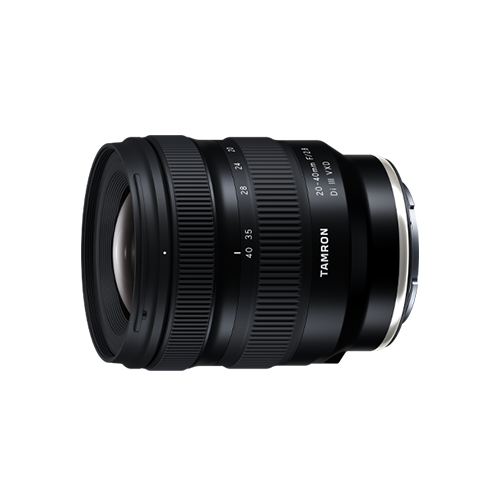
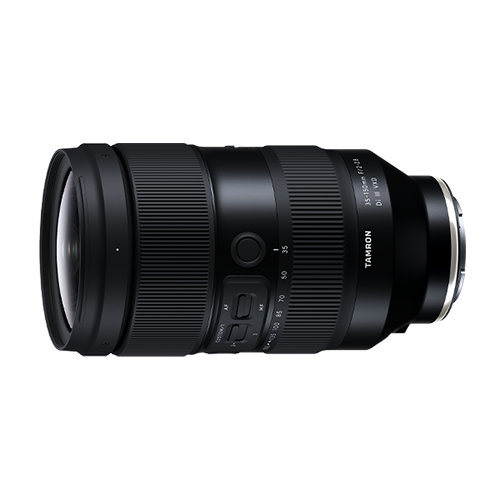
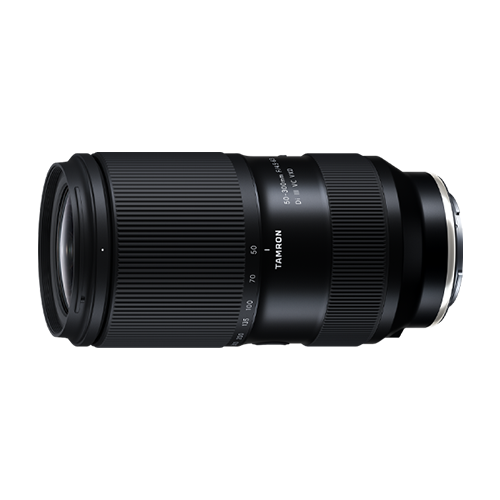
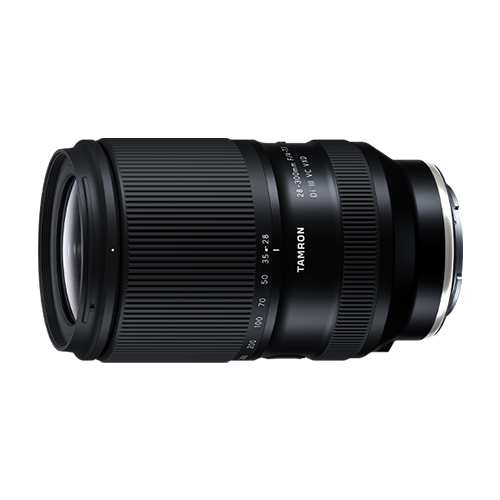
TAMRON products mentioned in this article