
How to Choose a Nikon Z Mount Lens: A Beginner’s Guide
Choosing a lens for your Nikon mirrorless camera can be challenging, especially when you are faced with different focal lengths, apertures, lens types and features.
A lens designed for landscapes may not be the most suitable choice for wildlife photography, while a compact standard zoom may be more practical for everyday photography and travel.
The first step is understanding what your camera and lens are designed to do.
In this guide, we’ll explain how to choose a Nikon Z mount lens, including the difference between FX and DX formats, prime and zoom lenses, focal length, aperture, autofocus, stabilization, size and optical performance.
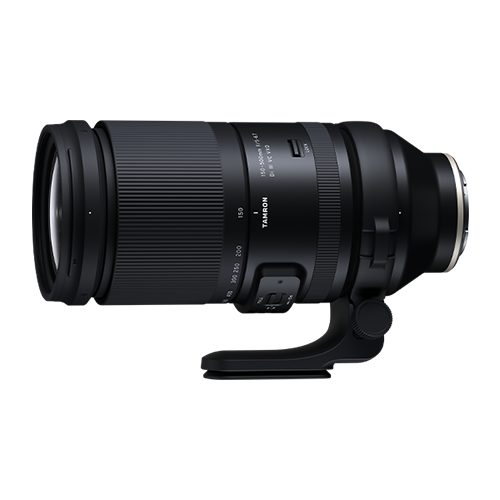
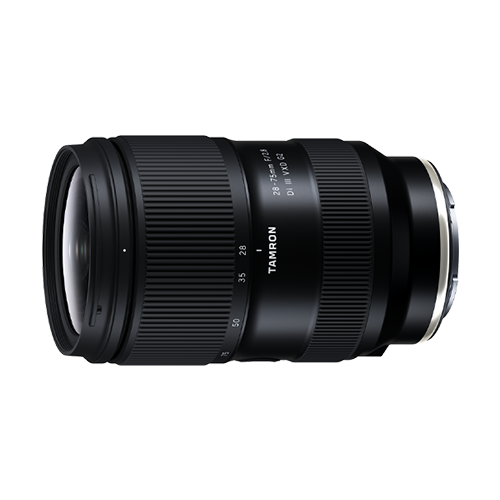
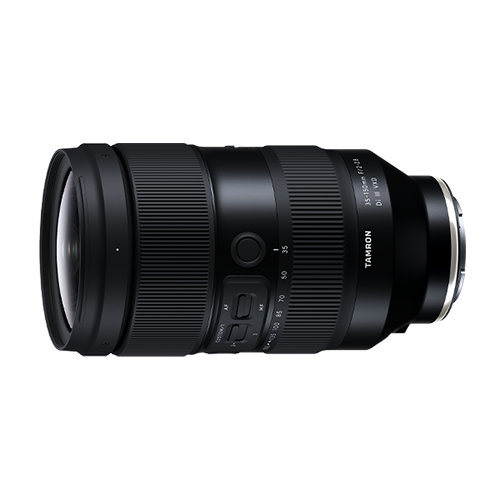
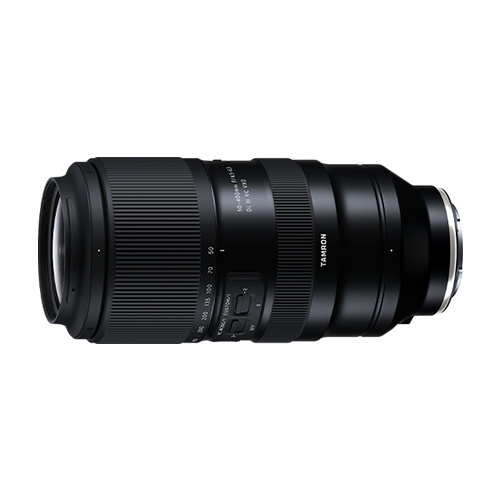
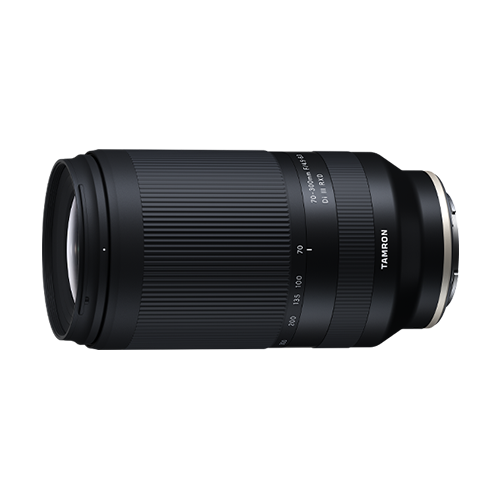
We’ll also introduce several TAMRON Nikon Z mount lenses and explain the types of photography they can be useful for.
What Is the Nikon Z Mount?
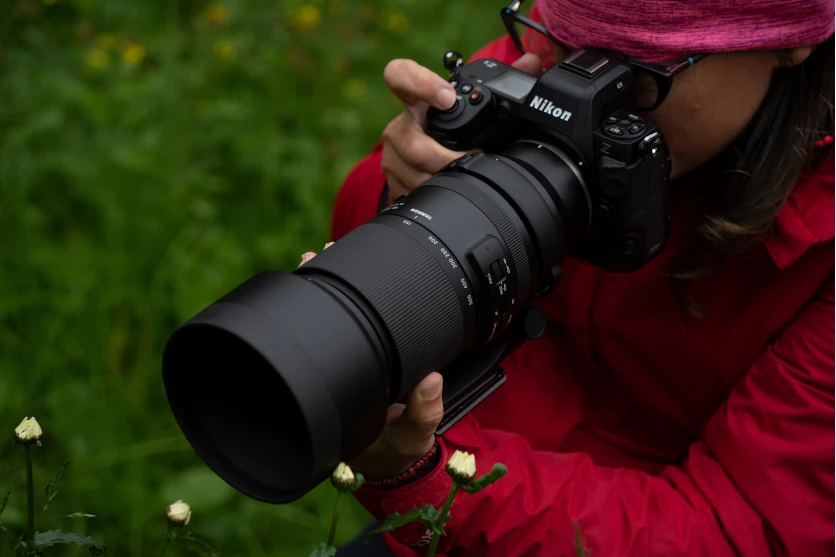
The Nikon Z mount is the lens mount system used by Nikon’s mirrorless interchangeable-lens cameras.
A camera mount is the interface that connects the lens to the camera body. Because different manufacturers use different mount standards, it is important to check lens compatibility before purchasing a lens.
Nikon also has another major mount system known as the F mount, which has been used on Nikon SLR and DSLR cameras for many years.
The Z mount and F mount are different systems.
Therefore, when choosing a lens for a Nikon Z-series mirrorless camera, look specifically for lenses that are compatible with the Nikon Z mount.
TAMRON’s current Nikon Z lineup includes full-frame and APS-C-compatible options, providing choices for different Nikon mirrorless cameras and shooting styles.
What Should You Consider When Choosing a Nikon Z Mount Lens?
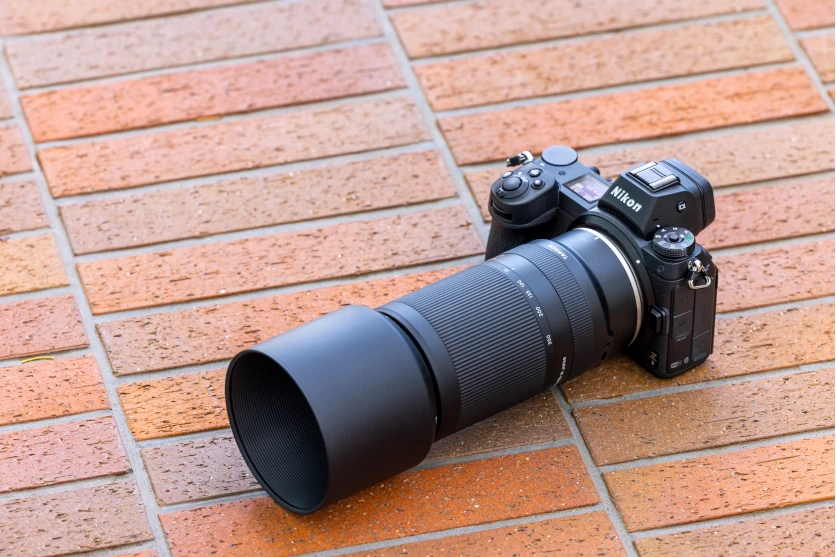
There are several important factors to consider.
Before choosing a lens, think about:
- Your camera’s sensor format
- The focal length you need
- Prime vs. zoom
- Maximum aperture
- Autofocus performance
- Image stabilization
- Lens size and weight
- Bokeh and rendering
- Optical resolution
- The type of photography you do
There is no single lens that is ideal for every photographer.
Instead, the goal is to find a lens whose characteristics match the way you shoot.
1. Check Whether Your Camera Uses FX or DX Format
Nikon uses the terms FX and DX to distinguish between its full-frame and APS-C sensor formats.
FX Format
FX corresponds to a full-frame sensor.
Full-frame cameras use a sensor approximately the same size as 35mm film.
A lens designed for a full-frame camera can provide its intended angle of view when used on an FX camera.
DX Format
DX corresponds to an APS-C sensor.
Because the sensor is smaller than full frame, the same focal length produces a narrower angle of view.
For example, a 50mm lens produces a different field of view on a DX camera compared with an FX camera.
This is important when choosing a lens for Nikon Z mount because the camera’s sensor format affects how the focal length appears in practice.
FX and DX Lenses: Can They Be Used Together?
Nikon Z cameras can have different sensor formats, and lens compatibility depends on the specific camera and lens.
In general, you should check whether the lens is designed for FX or DX and confirm compatibility with your particular Nikon camera.
TAMRON also offers lenses designed for APS-C Nikon Z cameras, including the 17-70mm F2.8 Di III-A VC RXD (B070) and 18-300mm F3.5-6.3 Di III-A VC VXD (B061).
2. Prime Lens or Zoom Lens?
Another important decision is whether you want a prime lens or zoom lens.
What Is a Prime Lens?
A prime lens has a fixed focal length.
For example, a 35mm prime lens always shoots at 35mm.
Because the focal length does not change, you need to physically move closer to or farther away from your subject to change your composition.
Prime lenses can offer advantages such as:
- Simple operation
- Large maximum apertures on many models
- Strong background blur
- Compact designs on some models
- Consistent image quality
They can be particularly enjoyable when you want to concentrate on composition and work with a specific perspective.
What Is a Zoom Lens?
A zoom lens allows you to change focal length.
For example, the TAMRON 35-150mm F2-2.8 Di III VXD (A058) covers focal lengths from 35mm through 150mm.
This allows you to move from relatively wide compositions to telephoto perspectives without changing lenses.
Zoom lenses can be particularly useful for:
- Travel
- Events
- Weddings
- Portraits
- Sports
- Everyday photography
If you frequently photograph different subjects, a zoom can provide considerable flexibility.
3. Choose the Focal Length Based on Your Subject
Focal length is one of the most important characteristics of a lens.
It determines the angle of view and strongly influences how much of a scene you can include.
As a general guide:
| Lens Type | Approximate Full-Frame Focal Length | Typical Use |
|---|---|---|
| Ultra-wide | 20mm and below | Landscapes, architecture, interiors |
| Wide-angle | Up to about 35mm | Travel, street, landscapes |
| Standard | Around 50mm | Everyday photography |
| Short telephoto | Around 70-100mm | Portraits, details |
| Telephoto | 100-300mm | Sports, wildlife, events |
| Super telephoto | 400mm and longer | Wildlife, birds, distant subjects |
These categories are not strict rules.
A photographer can use almost any focal length creatively.
The important thing is understanding how different focal lengths change the relationship between the subject and the surrounding environment.
Wide-Angle Lenses
Wide-angle lenses capture a broad field of view.
They are useful when you want to show the environment surrounding your subject.
Common uses include:
- Landscapes
- Architecture
- Travel
- Interiors
- Cityscapes
- Astrophotography
Wide-angle lenses can also exaggerate the apparent distance between foreground and background.
This makes them useful when you want a strong sense of depth.
Standard Lenses
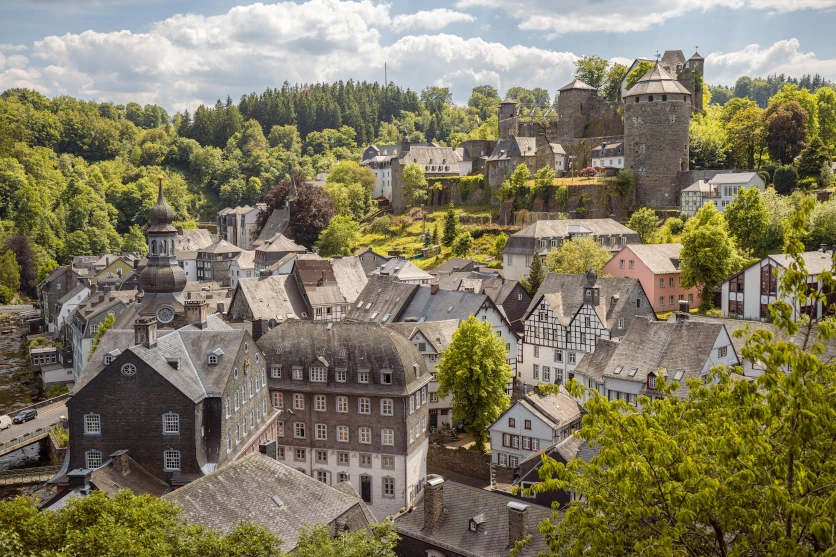
Standard focal lengths provide a perspective that can feel natural and versatile.
They are useful for:
- Everyday photography
- Travel
- Street photography
- Family photography
- Documentary photography
- Portraits
A standard zoom is particularly flexible because it allows you to adjust framing without changing lenses.

Telephoto Lenses
Telephoto lenses provide a narrower angle of view.
This makes it easier to isolate distant subjects or compress the appearance of a scene.
They can be useful for:
- Wildlife
- Birds
- Sports
- Events
- Portraits
- Landscapes
- Details
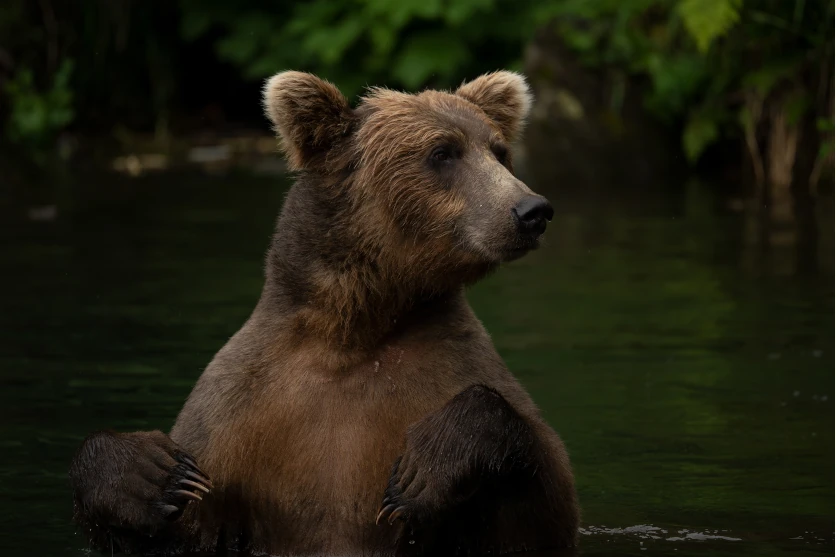
Longer focal lengths can also produce strong background blur when combined with a suitable aperture and subject distance.
4. Think About the Photography You Actually Do
Instead of asking which lens has the most features, start by asking:
What do I photograph most often?
Your answer can immediately narrow down the options.
For Travel
Consider a lens that covers a useful range without requiring frequent lens changes.
A standard zoom or all-in-one zoom can be particularly convenient.
For Landscapes
A wide-angle lens can help you include a large amount of scenery.
A standard zoom can also be useful when you want to isolate specific parts of the landscape.
For Portraits
Look for focal lengths that provide comfortable working distances and attractive background separation.
Short telephoto through telephoto focal lengths are often useful.
For Wildlife
Long focal lengths are important because wildlife often cannot be approached closely.
A 300mm, 400mm or 500mm lens can provide considerably more reach than a standard lens.
For Sports
Fast autofocus and appropriate focal length become especially important.
Depending on the sport and your shooting position, a medium telephoto or super-telephoto lens may be useful.
For Everyday Photography
A standard zoom can be one of the most practical choices.
It provides flexibility without requiring you to carry several lenses.
5. Consider the Lens’s Maximum Aperture
The aperture controls how much light enters the lens.
It is expressed using an F-number such as:
- F1.4
- F2
- F2.8
- F4
- F5.6
A smaller F-number represents a larger maximum aperture.
For example, an F2.8 lens has a larger maximum aperture than an F4 lens.
Why Is a Large Aperture Useful?
A large aperture can allow more light to reach the sensor.
This can be useful when shooting:
- Indoors
- At night
- In restaurants
- At events
- During concerts
- Under other low-light conditions
A large aperture can also help create shallow depth of field.
This can make the subject stand out against a blurred background.
F2.8 Zoom Lenses
An F2.8 zoom is particularly popular because it combines zoom flexibility with a relatively large maximum aperture.
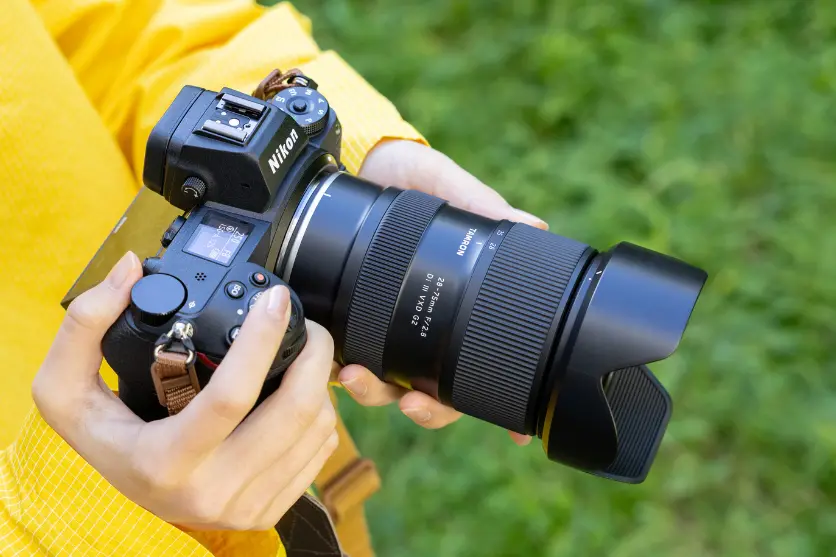
For example, the TAMRON 28-75mm F2.8 Di III VXD G2 (A063) provides a constant F2.8 maximum aperture throughout its zoom range. TAMRON describes it as a fast-aperture standard zoom for full-frame mirrorless cameras and offers it in Nikon Z mount.
This type of lens can be useful for:
- Travel
- Portraits
- Weddings
- Events
- Street photography
- Video
- Everyday shooting
6. Check Autofocus Performance
Autofocus performance is important when photographing moving subjects.
A lens with responsive autofocus can make it easier to keep up with:
- Children
- Pets
- Athletes
- Wildlife
- Vehicles
- Events
Autofocus is also useful for everyday photography because it allows you to concentrate more on composition.
For video, smooth and controlled focusing can be particularly important.
When choosing a Nikon Z lens, consider both the camera’s autofocus capabilities and the lens’s focusing system.
7. Consider Image Stabilization
Image stabilization can help reduce the effects of camera shake.
TAMRON refers to its optical stabilization system as VC, or Vibration Compensation.
Stabilization can be particularly useful when shooting handheld at slower shutter speeds.
It can help with subjects such as:
- Landscapes
- Travel scenes
- Architecture
- Indoor photography
- Night scenes
- Video
However, stabilization does not freeze subject movement.
If your subject is moving quickly, you may still need a sufficiently fast shutter speed.
8. Consider Lens Size and Weight
Specifications are not the only things to consider.
Think about how you will physically use the lens.
A large lens may provide excellent reach or a wide aperture, but carrying it for several hours can be tiring.
A smaller lens can make it easier to:
- Travel
- Walk around a city
- Hike
- Shoot street photography
- Photograph events for long periods
The best lens for your needs is one that you are comfortable carrying and using regularly.
A lens that stays at home because it is too large or heavy cannot help you capture the photographs you want.
9. Consider Bokeh and Background Blur
Bokeh describes the visual appearance of out-of-focus areas in a photograph.
A lens’s:
- Maximum aperture
- Focal length
- Optical design
- Aperture shape
- Subject distance
- Background distance
can all influence the appearance of background blur.
For portraits, a telephoto lens with a large aperture can help separate the subject from the background.
For example, a 70-180mm F2.8 lens provides both telephoto reach and a relatively large maximum aperture.

10. Consider Optical Resolution and Rendering
A lens should not be judged solely by focal length.
Optical performance can affect:
- Detail
- Contrast
- Edge sharpness
- Distortion
- Flare
- Ghosting
- Bokeh
Modern lenses often use specialized optical elements and coatings to improve image quality.
However, specifications alone do not always communicate how a lens actually renders photographs.
Looking at real-world sample images can be useful when deciding between lenses.
11. Think About the Lens’s Minimum Focusing Distance
Minimum focusing distance is another useful specification.
It determines how close you can get to a subject while still maintaining focus.
A lens with a short minimum focusing distance can be useful for:
- Food
- Flowers
- Small products
- Details
- Close-up travel photographs
Some zoom lenses can also provide surprisingly useful close-focus capabilities.
This can make one lens more versatile for everyday shooting.
Which Focal Length Should You Choose?
A simple way to narrow down your choices is to start with the subjects you photograph most.
| Photography Style | Useful Focal Lengths |
|---|---|
| Landscape | Ultra-wide to standard |
| Architecture | Ultra-wide to standard |
| Street | Wide to standard |
| Travel | Wide to telephoto |
| Portraits | Standard to telephoto |
| Events | Standard to telephoto |
| Sports | Telephoto |
| Wildlife | Telephoto to ultra-telephoto |
| Birds | Ultra-telephoto |
| Everyday photography | Standard zoom |
| All-in-one travel | Wide-to-telephoto zoom |
These are general guidelines rather than fixed rules.
A photographer may intentionally use a wide-angle lens for portraits or a telephoto lens for landscapes.
The important thing is understanding the effect of each focal length and choosing based on the image you want to create.
How to Choose Your First Nikon Z Mount Lens
If you are buying your first lens for a Nikon Z camera, start with your most common subjects.
Choose a standard zoom if:
- You photograph a variety of subjects.
- You travel frequently.
- You want one lens for everyday use.
- You do not want to change lenses often.
Choose a wide-angle zoom if:
- You photograph landscapes.
- You enjoy architecture.
- You shoot interiors.
- You want to emphasize perspective.
Choose a telephoto zoom if:
- You photograph sports.
- You photograph wildlife.
- You shoot events.
- You want stronger background separation.
Choose an ultra-telephoto zoom if:
- You photograph birds.
- You photograph distant wildlife.
- You shoot field sports.
- You need maximum reach.
Don’t Choose a Lens Based Only on Specifications
Lens specifications are useful, but they do not tell the entire story.
Two lenses with similar focal lengths can have very different:
- Sizes
- Weights
- Autofocus systems
- Minimum focusing distances
- Stabilization systems
- Optical designs
- Rendering characteristics
Before choosing a lens, look at sample photographs and consider how the lens performs in the situations where you actually plan to use it.
TAMRON provides sample images and articles for its different lens models to help photographers understand how they can be used in real-world situations.
Final Thoughts
Choosing a Nikon Z mount lens does not have to be complicated.
Start with your camera.
Determine whether you are using an FX or DX-format Nikon Z camera, then consider the subjects you photograph most often.
From there, look at:
- Focal length
- Prime vs. zoom
- Maximum aperture
- Autofocus
- Stabilization
- Size and weight
- Minimum focusing distance
- Bokeh
- Optical performance
If you want an everyday full-frame zoom, a lens such as the 28-75mm F2.8 G2 (A063) provides a versatile standard range.
If you want more telephoto reach while retaining a relatively bright aperture, the 35-150mm F2-2.8 (A058) offers a much broader range.
For portraits, events and telephoto subjects, the 70-180mm F2.8 G2 (A065) provides a useful telephoto range.
For wildlife and outdoor photography, the 50-400mm F4.5-6.3 (A067) and 150-500mm F5-6.7 (A057) provide substantially more reach.
And if you use an APS-C Nikon Z camera, lenses such as the 17-70mm F2.8 (B070) and 18-300mm F3.5-6.3 (B061) offer flexible everyday ranges.
Ultimately, the right Nikon Z lens is the one whose focal length, features and handling fit the way you actually photograph.
Understanding what you shoot, where you shoot and how you want your photographs to look will make choosing your next lens much easier.
TAMRON products mentioned in this article