
Is a Standard Zoom Lens Necessary? A Complete Guide
When choosing a lens for your camera, you may come across the term standard zoom lens. It is one of the most versatile types of interchangeable lenses and is often recommended as a practical choice for everyday photography.
But what exactly makes a lens a standard zoom lens? What can you photograph with one, and do you really need one in your camera bag?
A standard zoom lens typically covers focal lengths around the standard perspective, often including approximately 50mm on a full-frame camera. Because the zoom range can cover moderately wide views as well as more natural-looking perspectives, one lens can be used for many different subjects.
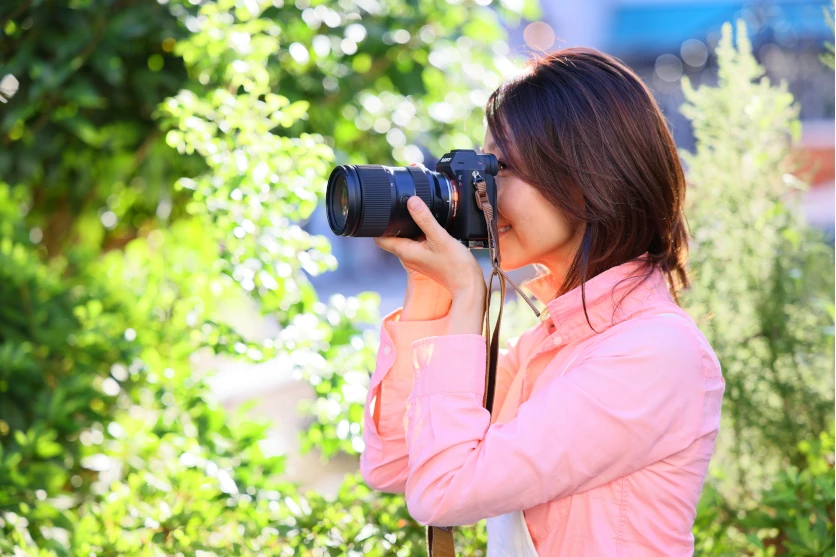
This makes a standard zoom lens useful for everything from travel photography and portraits to street photography, landscapes, food, pets and everyday snapshots.
However, that does not mean every photographer needs the same type of standard zoom.
Some photographers may prefer a fast F2.8 zoom lens for low-light photography and background blur. Others may prioritize a compact lens, a wider focal-length range, image stabilization or close-focusing capability.
Understanding how standard zoom lenses work can help you decide whether one belongs in your camera bag.
What Is a Standard Zoom Lens?
A standard zoom lens is a zoom lens that covers a range of focal lengths around the standard field of view.
On a full-frame camera, approximately 50mm is commonly associated with the standard perspective. Standard zoom lenses extend both wider and longer than this focal length, allowing photographers to change their composition without changing lenses.
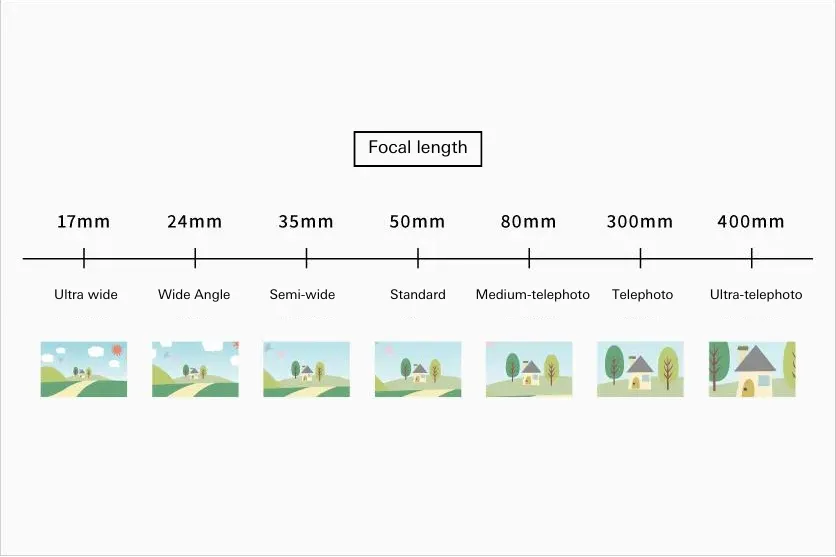
For example, a 28-75mm zoom lens includes a moderately wide 28mm perspective, standard focal lengths around 50mm and a short telephoto perspective at 75mm.
This range can cover many everyday situations.
At the wide end, you can include more of the surroundings in the frame. Around the middle of the range, you can create a natural-looking composition. At the telephoto end, you can tighten the composition and emphasize your subject.
The ability to change perspectives with a single lens is one of the biggest advantages of a standard zoom.
Why Is It Called a “Standard” Lens?
The word “standard” refers to the perspective produced by the lens rather than the quality or level of the lens.
A standard perspective generally provides a field of view that feels relatively natural and familiar.
This makes standard focal lengths useful when you want photographs to resemble the way a scene feels when viewed normally, without the exaggerated perspective of an ultra wide-angle lens or the compression associated with a longer telephoto lens.
However, there is no single focal length that defines every standard zoom.
The appropriate range depends on the camera’s sensor format and the design of the lens.
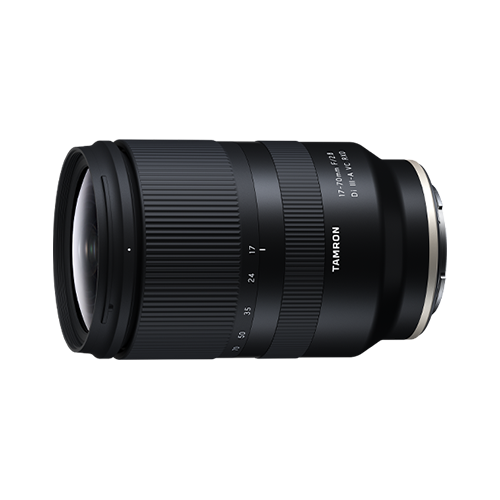
For example, the TAMRON 17-70mm F/2.8 Di III-A VC RXD (Model B070) is designed for APS-C mirrorless cameras and provides a full-frame-equivalent range of approximately 25.5-105mm. This gives APS-C users a versatile range extending from moderately wide-angle to short telephoto.
Standard Zoom Lens vs. Prime Lens
One of the easiest ways to understand the advantage of a standard zoom is to compare it with a prime lens.
A prime lens has a fixed focal length.
For example, a 50mm prime lens always provides a 50mm field of view. If you want your subject to appear larger or smaller in the frame, you generally need to physically change your position.
A zoom lens gives you another option.
With a 28-75mm zoom, for example, you can change the focal length simply by rotating the zoom ring.
Advantages of a Prime Lens
Prime lenses can offer:
- Large maximum apertures
- Strong background blur
- Compact designs
- Excellent image quality
- A distinctive shooting experience
They can be an excellent choice when you know the focal length you want to use.
Advantages of a Standard Zoom
A standard zoom offers:
- Multiple focal lengths in one lens
- Flexible composition
- Less need to change lenses
- Greater convenience when traveling
- Adaptability to changing subjects and distances
Neither approach is inherently better. The choice depends on how you prefer to photograph.
If you enjoy working with one specific focal length and moving yourself to create compositions, a prime lens may be appealing.
If you frequently encounter different subjects and need to change your framing quickly, a standard zoom can be more convenient.
Standard Zoom Lens vs. Wide-Angle Zoom
A wide-angle zoom lens is designed to provide a wider field of view than a standard zoom.
Wide-angle lenses are particularly useful when you need to fit a large scene into the frame.
They are commonly used for:
- Landscapes
- Architecture
- Interiors
- Cityscapes
- Travel
- Astrophotography
A wider focal length can also emphasize the relationship between objects at different distances. Objects close to the camera can appear significantly larger than objects farther away.
A standard zoom, by comparison, provides a more moderate perspective.
This makes it useful when you want to photograph the scene in a way that feels closer to how you naturally perceive it.
However, the distinction is not always absolute.
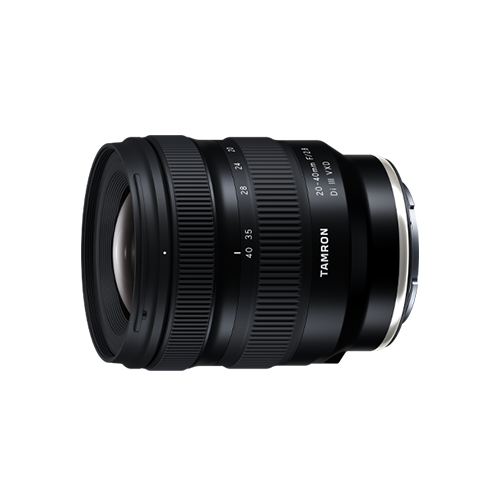
For example, the 20-40mm F/2.8 Di III VXD (Model A062) starts at 20mm and extends into the standard range at 40mm. TAMRON describes it as a large-aperture standard zoom designed with portability in mind.
This kind of lens demonstrates that zoom categories can overlap depending on the focal-length range and camera format.
Standard Zoom Lens vs. Telephoto Zoom
A telephoto zoom lens provides longer focal lengths and a narrower field of view.
Telephoto zooms are useful when you need to photograph subjects that are farther away or want a tighter composition.
Typical applications include:
- Sports photography
- Wildlife photography
- Birds
- Outdoor portraits
- Events
- Stage performances
A longer focal length can also produce stronger background compression and make it easier to isolate a subject from its surroundings.
A standard zoom is generally more flexible for everyday subjects because it covers wider perspectives as well as normal and short-telephoto focal lengths.
For photographers who frequently shoot distant subjects, however, a dedicated telephoto zoom may be a better addition to the camera bag.
What Can You Photograph With a Standard Zoom Lens?
One of the biggest strengths of a standard zoom lens is its versatility.
You don’t need to limit yourself to one particular type of photography.
1. Everyday Photography
A standard zoom is well suited to everyday photography because you can quickly adjust the framing as your surroundings change.
You might photograph a person, then turn toward a building, food on a table or an interesting street scene.
Instead of changing lenses for each subject, you can simply adjust the zoom.
This makes a standard zoom particularly useful for photographers who want one lens that can handle a variety of situations.

2. Travel Photography
Travel photography often involves constantly changing subjects.
During a single trip, you might photograph:
- Landscapes
- Architecture
- People
- Food
- Street scenes
- Local details
- Cultural events
A standard zoom can cover many of these situations without requiring you to carry multiple lenses.
This can make it easier to keep your camera ready while walking around a city or exploring a new destination.
Portability is particularly important here. A lens that is compact and lightweight can make a noticeable difference during a full day of travel.

3. Street Photography
Standard focal lengths are commonly useful for street photography because they allow you to photograph people and surroundings without the exaggerated perspective of an ultra wide-angle lens.
At the wider end of a standard zoom, you can include more of the environment.
At longer focal lengths, you can isolate specific details.
This flexibility can be helpful when you don’t know what subject you will encounter next.

4. Portrait Photography
Standard zoom lenses can also be useful for portraits.
At the wider end, you can include more of the environment around your subject.
Moving toward the longer end of the zoom range allows you to create tighter compositions.
A fast-aperture standard zoom, such as an F2.8 lens, can also provide greater control over depth of field and background blur.
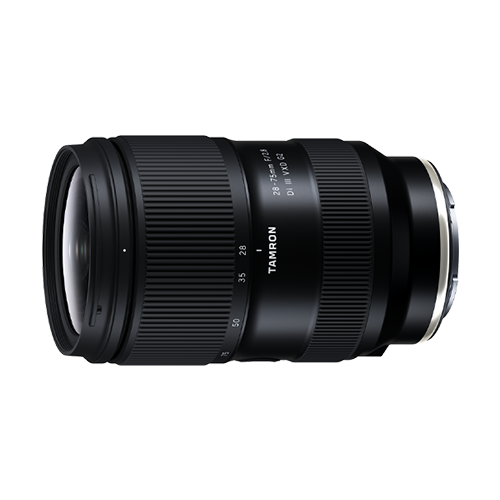
For example, the 28-75mm F/2.8 Di III VXD G2 (Model A063) combines a standard zoom range with a constant F2.8 maximum aperture. TAMRON positions it as a fast-aperture standard zoom for full-frame mirrorless cameras.

5. Food and Tabletop Photography
Standard zoom lenses can be particularly convenient when photographing food.
You can adjust your framing without having to move your chair or camera position significantly.
At a wider focal length, you can include the table and surrounding environment.
At a longer focal length, you can concentrate on a particular dish or detail.
A wider aperture can also help separate the main subject from objects in the background.

6. Pets and Family Photography
Pets and children rarely stay in one position for long.
A zoom lens allows you to adjust the framing as your subject moves.
Instead of constantly repositioning yourself or changing lenses, you can simply zoom in or out.
This can be especially useful indoors, where there may not be enough room to physically move farther away from your subject.

7. Landscapes
Although wide-angle lenses are commonly associated with landscape photography, a standard zoom can provide a different approach.
Instead of trying to include the entire landscape, you can use a longer focal length to isolate interesting details.
For example, you could photograph a mountain range at the wider end and then zoom in to emphasize a particular peak, tree or structure.
This allows you to explore different compositions without changing lenses.

What Are the Main Advantages of a Standard Zoom Lens?
The popularity of standard zoom lenses comes down to several practical advantages.
Versatility
The biggest advantage is the ability to photograph different subjects with one lens.
A standard zoom can cover multiple focal lengths, allowing you to adjust your composition quickly.
Convenience
Because you can change focal lengths without changing lenses, standard zooms can reduce the number of lens changes you need to make.
This is particularly useful when traveling or photographing fast-changing situations.
Composition Flexibility
A zoom lens gives you more options for framing.
You can go wider to include the environment or zoom in to emphasize your subject.
This can encourage experimentation with different compositions.
Reduced Camera-Bag Weight
Using one versatile zoom can also reduce the number of lenses you need to carry.
Instead of bringing several prime lenses, you may be able to cover similar shooting situations with one standard zoom.
Of course, the exact trade-off depends on the lens. Some fast-aperture zoom lenses are larger and heavier than compact prime lenses.
What Should You Look for When Choosing a Standard Zoom Lens?
Not all standard zoom lenses are designed for the same type of photographer.
Before choosing one, consider the following specifications.
1. Focal Length Range
The first thing to check is the focal-length range.
A lens such as a 28-75mm provides a different shooting experience from a 20-40mm or a 17-70mm.
Ask yourself:
Do I need more width or more reach?
If you frequently photograph landscapes, interiors and travel scenes, a wider starting focal length may be useful.
If you frequently photograph portraits, people or details, additional reach at the telephoto end may be more useful.
2. Maximum Aperture
The maximum aperture determines how much light the lens can collect at its widest aperture setting.
A lens with a maximum aperture of F2.8 can be particularly useful for:
- Low-light photography
- Indoor photography
- Portraits
- Background blur
- Faster shutter speeds
However, slower lenses can offer advantages in terms of size, weight and cost.
The right aperture depends on how you shoot.
3. Size and Weight
Portability is especially important for a lens designed for everyday use.
If you plan to use your standard zoom for travel or street photography, a smaller and lighter lens may be easier to carry all day.
For photographers who prioritize low-light performance and background blur, a larger F2.8 zoom may be worth considering.
4. Autofocus Performance
Autofocus performance is another important consideration.
A responsive autofocus system can help when photographing:
- Children
- Pets
- Events
- Street scenes
- Sports
- Video
TAMRON’s VXD autofocus system, for example, is used in the 28-75mm F2.8 G2 and is designed to provide fast, accurate and quiet focusing.
5. Minimum Object Distance
Minimum object distance determines how close you can get to a subject while maintaining focus.
A shorter minimum focusing distance can expand the types of subjects you can photograph.
This can be useful for:
- Food
- Flowers
- Product details
- Small objects
- Travel details
A standard zoom with good close-focusing capability can therefore become more versatile than its focal-length range alone might suggest.
6. Image Stabilization
Image stabilization can be useful when shooting handheld, particularly in low-light situations.
TAMRON refers to this technology as Vibration Compensation (VC) on compatible lenses.
For photographers who frequently work handheld, especially at longer focal lengths, stabilization can be an important specification to consider.
7. Weather Resistance and Durability
If you frequently photograph outdoors, consider how well the lens is designed for challenging environments.
Moisture-resistant construction and additional protective features can provide greater confidence when photographing during travel or changing weather conditions.
F2.8 Standard Zoom Lenses: Why Are They Popular?
One of the most popular categories of standard zoom is the F2.8 zoom lens.
The combination of a useful focal-length range and a constant F2.8 maximum aperture can provide a balance of versatility and low-light performance.
For example, the 28-75mm F2.8 G2 covers a range commonly used for everyday photography while maintaining F2.8 throughout the zoom range. TAMRON describes the lens as a fast-aperture standard zoom with improved optical and autofocus performance.
This can be useful when moving between different compositions without changing your exposure approach.
However, F2.8 is not automatically the right choice for everyone.
If you mostly photograph outdoors during daylight, a smaller and lighter lens may be more practical.
If you frequently photograph indoors, events or portraits, the larger aperture may be more valuable.
Standard Zoom Lenses for Full-Frame and APS-C Cameras
When choosing a standard zoom, make sure the lens is designed for your camera’s sensor format.
A focal length produces a different effective field of view depending on whether you use a full-frame or APS-C camera.
For example, the TAMRON 17-70mm F2.8 Di III-A VC RXD (B070) is designed for APS-C mirrorless cameras. Its 17-70mm range corresponds to approximately 25.5-105mm in full-frame equivalent terms, providing a versatile range from moderately wide-angle through short telephoto.
For full-frame mirrorless users, the 28-75mm F2.8 G2 (A063) provides a different standard zoom range.
This is why choosing a lens based solely on its numbers can be misleading.
Always consider the camera format the lens is designed for.
Do You Really Need a Standard Zoom Lens?
The short answer is: not necessarily.
A standard zoom lens can be extremely useful, but whether you need one depends on your photography.
If you frequently photograph different subjects and want a single flexible lens, a standard zoom can make your setup much more convenient.
If you primarily photograph landscapes, you may prefer an ultra wide-angle zoom.
If you photograph wildlife or sports, a telephoto zoom may be more important.
If you enjoy portraits and artistic depth-of-field effects, you may prefer one or more fast prime lenses.
And if you want maximum focal-length coverage while minimizing lens changes, an all-in-one zoom may be worth considering.
The important thing is to choose based on your actual shooting habits rather than simply buying a lens because it is considered a “must-have.”
Standard Zoom vs. All-in-One Zoom
It is also worth distinguishing a standard zoom from an all-in-one zoom lens.
A standard zoom generally concentrates on a useful range around the standard perspective.
An all-in-one zoom extends much farther into the telephoto range.
For example, TAMRON’s 25-200mm F/2.8-5.6 Di III VXD G2 (Model A075) covers a much broader focal-length range, allowing photographers to move from wide-angle views to substantial telephoto reach without changing lenses. Its recent firmware also expanded its close-focusing capability at several focal lengths.
An all-in-one lens can therefore be particularly appealing for travel photographers who want to minimize lens changes.
The trade-off is that an all-in-one zoom may not provide the same constant F2.8 aperture across its entire range.
This is where choosing a lens becomes a matter of priorities.
Do you value:
- A constant F2.8 aperture?
- A longer focal-length range?
- Smaller size?
- Lower weight?
- Better low-light capability?
- Fewer lens changes?
Your answers will help determine which type of lens is most appropriate for you.
TAMRON Standard Zoom Lenses to Consider
TAMRON offers several lenses that can fit different interpretations of the standard zoom category.
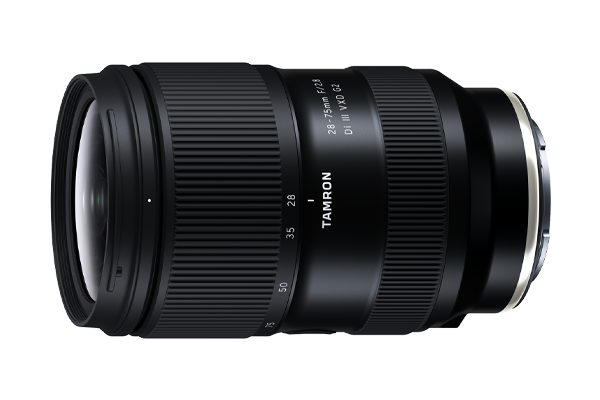
28-75mm F/2.8 Di III VXD G2 — Model A063
The 28-75mm F2.8 G2 is a full-frame standard zoom designed for Sony E and Nikon Z mirrorless systems.
Its 28-75mm range covers wide, standard and short-telephoto perspectives, while the constant F2.8 aperture provides flexibility for low-light shooting and depth-of-field control.
It can be useful for:
- Travel
- Portraits
- Street photography
- Events
- Everyday photography
- Video
20-40mm F/2.8 Di III VXD — Model A062
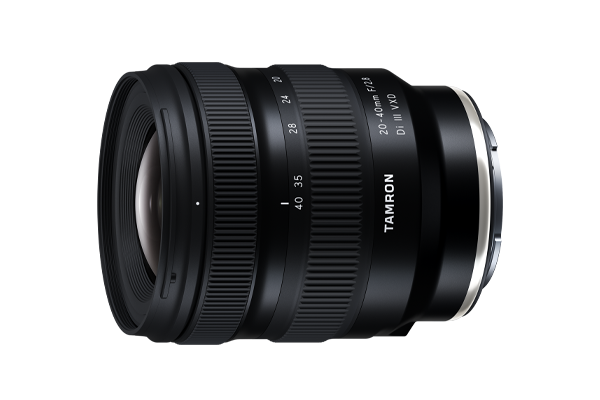
The 20-40mm F2.8 (A062) takes a different approach.
It begins at an ultra wide-angle 20mm and extends into the standard range at 40mm.
TAMRON designed this lens around portability, making it useful for photographers and video creators who want a compact F2.8 zoom that can cover wide-angle scenes as well as more natural perspectives.
It can be particularly useful for:
- Travel
- Street photography
- Vlogging
- Landscapes
- Architecture
- Everyday shooting
17-70mm F/2.8 Di III-A VC RXD — Model B070
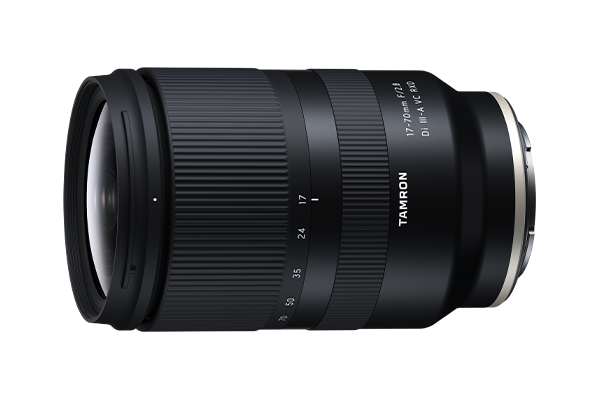
For APS-C mirrorless cameras, the 17-70mm F2.8 (B070) provides a broad everyday range equivalent to approximately 25.5-105mm on full frame.
Its constant F2.8 aperture, VC stabilization and broad zoom range make it a versatile option for still photography and video.
It can be useful for:
- Travel
- Portraits
- Street photography
- Family photography
- Video
- Everyday photography
How to Choose the Right Standard Zoom for Your Photography
Instead of looking for one universally “best” standard zoom, think about your own shooting habits.
If you travel frequently
Prioritize:
- Compact size
- Low weight
- Useful focal-length range
- Close focusing
- Reliable autofocus
If you photograph portraits
Prioritize:
- F2.8 or wider aperture
- Longer focal lengths
- Background separation
- Good autofocus
- Close-focusing capability
If you photograph events
Prioritize:
- Fast aperture
- Reliable autofocus
- Useful zoom range
- Low-light performance
- Comfortable handling
If you shoot video
Consider:
- Quiet autofocus
- Focus-breathing characteristics
- Smooth operation
- Compact size
- Stabilization
- Compatibility with your camera system
If you want one everyday lens
Look for a balance between:
- Focal-length range
- Size
- Weight
- Aperture
- Autofocus
- Close-focusing capability
Is a Standard Zoom Lens Worth Having?
A standard zoom lens can be one of the most versatile lenses in a photographer’s camera bag.
Its greatest advantage is not that it is designed for one particular type of photography. It is the opposite: it can adapt to many different situations.
You can photograph a person, then a building, then a meal, then a landscape, all with the same lens.
That flexibility makes standard zoom lenses particularly useful for beginners who are still discovering their preferred style, as well as experienced photographers who want a dependable everyday lens.
But a standard zoom is not automatically necessary.
Your ideal lens depends on what you photograph, where you photograph and how you prefer to work.
A landscape photographer may prioritize a wide-angle zoom. A wildlife photographer may need a telephoto lens. A portrait photographer may prefer a fast prime. A travel photographer may prioritize an all-in-one zoom.
The best approach is to start with your photography needs and work backward from there.
If you regularly photograph a wide variety of subjects and want the convenience of changing focal lengths without changing lenses, a standard zoom lens can be an extremely practical addition to your camera bag.
TAMRON products mentioned in this article