

What Is Texture in Photography? Learn How to Capture Texture and Detail
Photography is often about more than simply recording what a subject looks like. The way a surface feels, the patterns it creates, and the small details that make it unique can add depth and realism to an image.
This is where texture in photography becomes especially important.
From the rough bark of an old tree and the delicate surface of a flower petal to weathered buildings, fabric, metal, leather, and even the details of a person’s hands, texture can make an ordinary subject much more visually interesting.
By paying attention to lighting, composition, focus, camera settings, and lens selection, you can bring out details that might otherwise go unnoticed.
In this guide, we’ll explain what texture means in photography, different types of photographic textures, subjects that work well for texture photography, and practical tips for capturing fine details.

What Is Texture in Photography?
In photography, texture refers to the visible characteristics of a subject’s surface, such as its roughness, smoothness, patterns, wrinkles, grain, cracks, or fine details.
Although a photograph is a two-dimensional image, successfully capturing texture can create the impression that the viewer could almost feel the surface.
For example:
- Rough tree bark can communicate age and ruggedness.
- Soft flower petals can create a delicate and gentle impression.
- Weathered stone can suggest history and durability.
- Fabric can reveal the difference between silk, wool, cotton, and linen.
- Metal can appear smooth, polished, scratched, or worn depending on the lighting.
- Skin, hair, and hands can communicate character and individuality.
Texture can therefore become an important visual element for creating depth, dimension, realism, and atmosphere.
However, photographing texture is not simply about getting as close to a subject as possible. The direction of light, the angle from which you photograph, your choice of lens, and the part of the subject you choose to emphasize can completely change how the texture appears.
Different Types of Texture in Photography
Texture can be found almost everywhere. Once you start actively looking for it, everyday objects can become interesting photographic subjects.
Natural Textures
Nature offers countless opportunities for texture photography.
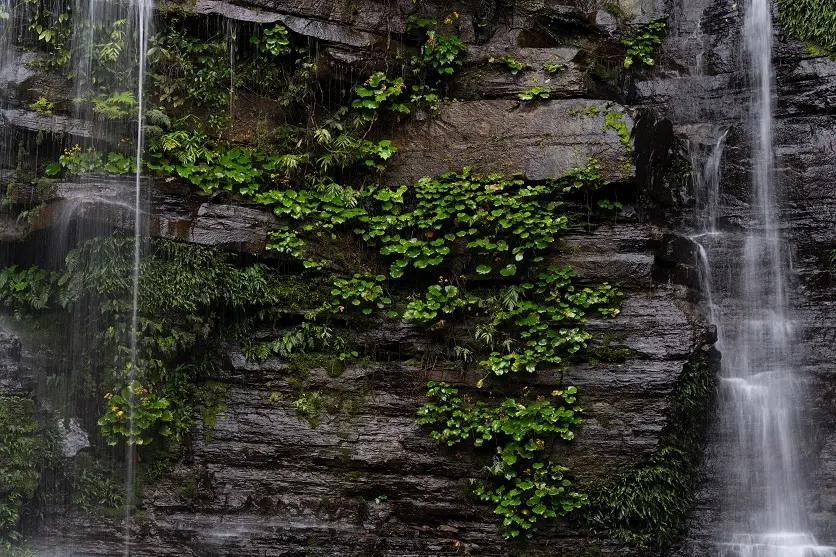
Tree bark, rocks, leaves, flowers, sand, water, and soil all have unique surface characteristics.
The cracks and uneven patterns in an old tree, for example, can communicate the effects of weather and time. Rocks can reveal layers, cracks, and geological patterns, while water can create constantly changing textures through ripples and reflections.
When photographing natural textures, take time to observe the subject from different angles.
Try photographing:
- Tree bark
- Leaves and plants
- Flower petals
- Rocks and stones
- Sand
- Water
- Wood grain
- Clouds
- Snow or frost
Changing your position or waiting for different lighting conditions can reveal details that are not immediately obvious.
Artificial and Man-Made Textures
Texture is just as common in objects created by people.
Buildings, furniture, clothing, tools, vehicles, ceramics, glass, metal, and leather can all provide interesting surfaces to photograph.
Different materials also react to light in different ways.
For example, the smooth surface of metal may produce strong reflections, while old wood may have a much softer and more irregular appearance. Fabric can reveal the fine patterns created by individual fibers.
Look for interesting combinations of:
- Smooth and rough surfaces
- Glossy and matte materials
- New and weathered surfaces
- Regular and irregular patterns
- Reflections and shadows
- Scratches and signs of use
These differences can give your photographs a stronger sense of depth and character.

Subjects That Work Well for Texture Photography
You don’t need to travel somewhere exotic to find interesting textures. Many excellent subjects can be found around you.
Flowers and Plants
Flowers are excellent subjects for close-up photography because their petals, leaves, stems, veins, and fine hairs contain intricate details.
A macro lens or a lens with strong close-up capabilities can help you capture these details.
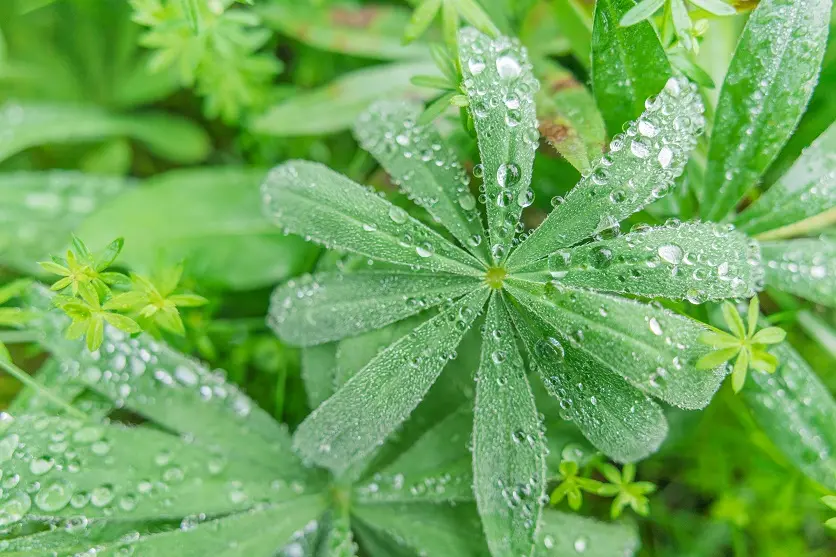
Try photographing flowers in soft morning or evening light. Water droplets can also add another layer of texture to petals and leaves.
Backlighting is particularly useful for translucent subjects. When light passes through a leaf or petal, it can reveal delicate veins and fine details that are difficult to see under direct front lighting.
Insects
Insects offer some of the most detailed textures in nature.
The surface of a beetle, the patterns on a butterfly’s wings, or the fine hairs and structures around an insect’s eyes can become fascinating photographic subjects.
A macro lens is especially useful when photographing small creatures because it allows you to fill more of the frame with the subject.
When photographing insects, pay close attention to your focus point. At close distances, even a small change in focus can determine which part of the subject appears sharp.
A slightly narrower aperture, such as F8 to F11, can also help increase the depth of field when you want more of the subject to remain in focus.

Small Objects and Everyday Items
You don’t need a special subject to practice texture photography.
Look around your home for objects such as:
- Watches
- Jewelry
- Ceramic objects
- Glass
- Leather
- Books
- Wooden furniture
- Fabric
- Handcrafted objects
- Antique items
Try photographing these objects from different angles and under different lighting conditions.
Side lighting can emphasize small bumps, scratches, grooves, and other surface details, while backlighting can reveal transparency and subtle patterns in materials such as glass.
Tools and Equipment
Everyday tools can also tell a story through their textures.
Scratches, worn handles, fingerprints, dents, and marks from repeated use can reveal how an object has been used over time.
Instead of photographing the entire object, try filling the frame with one interesting section.
For example, a close-up photograph of a worn tool handle may communicate more about its history than a photograph showing the entire tool.

Vehicles and Machinery
Cars, motorcycles, bicycles, industrial equipment, and machinery contain a combination of different textures.
Paint, metal, rubber, glass, leather, and mechanical components can all be photographed individually.
For larger subjects, try using softer light to emphasize curves and surface details without creating overly harsh reflections.
A telephoto or macro lens can also be useful for isolating smaller mechanical details.
Buildings and Architecture
Architecture provides a huge variety of textures.
Look for:
- Brick walls
- Concrete
- Stone
- Peeling paint
- Glass
- Metal
- Wood
- Tiles
- Weathered surfaces
Side lighting is particularly effective for walls because shadows created by uneven surfaces can make the texture appear more three-dimensional.
For older buildings, wide-angle lenses can help show the surrounding environment while emphasizing the contrast between the building’s texture and its surroundings.
Portraits and People
Texture can also play an important role in portrait photography.
Skin, hair, clothing, and hands all have their own characteristics.
Soft lighting can help reproduce skin texture naturally, while closer photographs of hands can reveal details that communicate a person’s lifestyle, occupation, or experience.
The key is to consider what type of texture you want to emphasize rather than simply trying to make every detail as sharp as possible.
How to Photograph Texture Beautifully
Once you’ve found an interesting subject, the next step is learning how to emphasize its texture.
Here are some practical photography tips.
1. Get Close to Your Subject
One of the simplest ways to emphasize texture is to get closer.
Filling more of the frame with your subject allows small details to become the main visual element of the photograph.
A macro lens is particularly useful for very small subjects, but you don’t always need a dedicated macro lens.
Many standard, wide-angle, and telephoto lenses can also produce impressive close-up photographs depending on their minimum focusing distance and magnification capability.
Before shooting, check how close your lens can focus and experiment with different focal lengths.
2. Use Side Lighting to Emphasize Texture
Lighting is one of the most important factors in texture photography.
Side lighting is especially effective because light coming from the side creates small shadows across an uneven surface.
Those shadows make bumps, grooves, cracks, and other details easier to see.
For example, side lighting can make the texture of:
- Tree bark
- Brick walls
- Stone
- Fabric
- Wood
- Leather
much more noticeable.
Natural light during the morning or late afternoon can produce softer and more directional lighting that works particularly well for texture.
3. Try Backlighting for Delicate Textures
Backlighting works differently from side lighting.
Instead of emphasizing surface depth through shadows, light coming from behind the subject can reveal translucent details.
This works particularly well with flowers and leaves.
For example, sunlight passing through a leaf can make its veins visible, while backlighting a flower petal can reveal its delicate structure.
Because bright backlighting can affect exposure, check your highlights carefully and use exposure compensation when necessary.
4. Use the Right Aperture
Your aperture controls both the amount of light entering the lens and the depth of field.
A wide aperture such as F2.8 can create a shallow depth of field and beautifully separate a textured subject from its background.
This can work well when you want to emphasize a small section of the subject.
However, if you want more of a three-dimensional subject to remain sharp, try stopping down to around F8 to F11 and adjust according to the situation.
This can be especially useful for macro photography, where depth of field can become extremely shallow at close focusing distances.
5. Choose a Shutter Speed That Matches the Subject
Your shutter speed should be appropriate for both the lighting conditions and subject movement.
For stationary subjects, you can use a slower shutter speed when necessary, particularly when the camera is mounted on a tripod.
For moving subjects, such as flowers moving in the wind or insects, a faster shutter speed can help prevent motion blur.
A shutter speed of around 1/125 second or faster can be a useful starting point for some handheld or moving-subject situations, but the appropriate setting will depend on the subject, focal length, and shooting conditions.
6. Keep ISO as Low as Practical
Texture photography often benefits from clean, detailed images.
Increasing ISO can introduce noise, which may reduce the appearance of fine textures.
When lighting allows, use a lower ISO setting.
If you’re photographing a stationary subject in low light, consider using a tripod and a slower shutter speed instead of increasing ISO excessively.
This can help preserve fine details in areas such as wood grain, fabric, stone, and small objects.
7. Use Exposure Compensation Carefully
Highly reflective subjects can make exposure challenging.
Metal, glass, water, and other shiny surfaces can produce bright highlights that may become overexposed.
If important details are being lost in bright areas, try negative exposure compensation.
For very dark subjects, positive exposure compensation may help prevent important shadow details from disappearing.
Always check your image and adjust according to the lighting and subject.
Focus Carefully When Photographing Texture
Focusing becomes particularly important when shooting close-up subjects.
The closer you get, the shallower the depth of field can become.
Instead of simply focusing on the center of the subject, decide which specific detail should be the main point of attention.
For example:
- With a flower, focus on the petal pattern or center.
- With wood, focus on an interesting section of the grain.
- With an insect, focus on the eyes or another defining feature.
- With fabric, focus on the weave or fibers.
- With a tool, focus on scratches or worn areas.
If you’re photographing a relatively flat surface, keeping the camera sensor as parallel to the subject as possible can also make it easier to keep the intended area within the focal plane.
Experiment With Composition
Texture photography doesn’t always mean filling the entire frame with a surface.
Try different compositions and perspectives.
You can:
- Fill the entire frame with texture.
- Photograph a small section of a larger object.
- Include the surrounding environment.
- Shoot from a low angle.
- Shoot directly from above.
- Use diagonal lines.
- Combine texture with patterns.
- Place the textured subject against a simple background.
Moving around your subject can reveal completely different compositions.
For example, the texture of a building may look ordinary when photographed straight on but become much more dramatic when photographed from a low angle with directional light.
How to Choose a Lens for Texture Photography
The best lens for texture photography depends on the size of your subject and the type of photograph you want to create.
Rather than choosing a lens based only on its focal length, consider several important characteristics.
Maximum Aperture
A lens with a wider maximum aperture, such as F2.8, can be useful when shooting in low-light conditions.
It can also produce a shallow depth of field, allowing you to isolate a specific textured area from the background.
This can be particularly effective for flowers, objects, portraits, and detail-oriented photography.
Focal Length
Different focal lengths create different perspectives.
A wide-angle lens is useful when you want to show texture as part of a larger environment, such as an architectural scene or landscape.
A standard or mid-range focal length can provide a natural perspective for everyday subjects.
A telephoto lens allows you to isolate details from farther away and can create attractive background compression and separation.
For wildlife or distant subjects, telephoto lenses can also allow you to capture surface details without physically getting close.
Minimum Focusing Distance
Minimum focusing distance is particularly important for close-up photography.
A shorter minimum focusing distance allows you to move closer to your subject while maintaining focus.
This can make it easier to fill the frame with fine details even when you’re not using a dedicated macro lens.
When comparing lenses for detail photography, don’t overlook this specification.
Autofocus Performance
Fast and accurate autofocus can be useful when photographing subjects that move, such as insects, flowers moving in the wind, or animals.
For extremely precise close-up photography, manual focus can also be helpful because it gives you direct control over exactly where the focus falls.
A lens that supports easy switching between autofocus and manual focus can therefore be useful for different types of texture photography.
Vibration Compensation
Camera shake can become more noticeable when using telephoto lenses or shooting close-up.
A lens equipped with a vibration compensation or image stabilization system can help produce sharper handheld images in situations where camera movement might otherwise cause blur.
This can be particularly useful when photographing details in low-light conditions.
Turn Everyday Details Into Interesting Photographs
Texture is everywhere.
You can find it in nature, architecture, clothing, tools, vehicles, food, furniture, and even the objects sitting around your home.
The key is to slow down and observe.
Instead of simply asking, “What should I photograph?”, try asking:
“What interesting texture can I find?”
Look for cracks, patterns, reflections, rough surfaces, smooth materials, fine details, and signs of age.
Then experiment with the direction of light, your shooting angle, aperture, focal length, and composition.
A familiar subject can look completely different when you move closer and make its texture the main focus.
By learning to recognize texture and understanding how light and lenses affect its appearance, you can add greater depth, realism, and visual interest to your photography.
So the next time you’re out with your camera, take a closer look at the world around you. You may find that some of the most interesting photographs are hidden in the smallest details.
TAMRON products mentioned in this article