
Wedding Photography Tips: Settings & Lens Guide
A wedding is filled with moments that happen only once. From the entrance of the bride and groom to the exchange of rings, the first kiss, the cake cutting, and the celebration that follows, each moment can become a lasting memory.
However, wedding photography can be challenging. The lighting can change from one scene to another, subjects may move quickly, and there may be little time to change lenses or adjust camera settings.
Whether you’re photographing a wedding as a guest, helping a friend or family member, or simply looking to improve your wedding photography, understanding the key scenes, camera settings, focusing techniques, and lens choices can help you capture more memorable photographs.
Here are practical wedding photography tips to help you prepare.
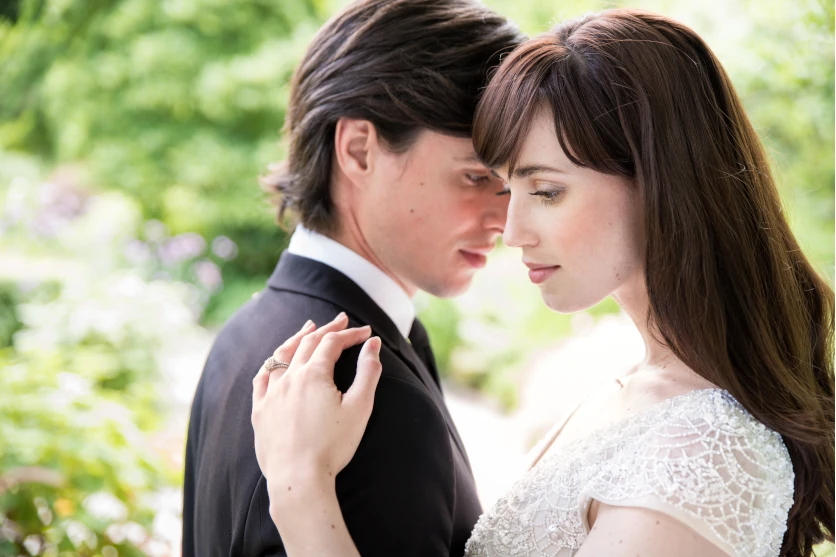
Important Wedding Photography Scenes to Capture
A wedding contains many different photographic opportunities. Instead of photographing only the bride and groom, look for moments involving family, friends, the venue, decorations, and other details that help tell the story of the day.
Wedding Entrance
The entrance is one of the first major moments of the wedding.
Rather than photographing the bride and groom only from the front, look for different angles and consider using backlighting to create a more dramatic image.
If the light is coming from behind the couple, you can experiment with a silhouette or use exposure compensation to retain detail in their faces.
A telephoto lens can also be useful when you cannot move close to the couple. It allows you to capture natural expressions from farther away while remaining less intrusive.
At the same time, watch the reactions of family and friends. Their expressions can add another layer to the story.
Ring Exchange and First Kiss
The exchange of rings and first kiss are among the most anticipated moments of the ceremony.
A lens with a wide maximum aperture can help create background separation while allowing more light into the camera. An aperture around F2.8 can produce a shallow depth of field and help emphasize the couple.
However, focusing becomes especially important when shooting at a wide aperture.
If you cannot photograph the couple directly from the front, try a side angle or another position that provides a clear view without interfering with the ceremony.
Always consider the venue’s rules and the position of the official wedding photographer before changing locations.
Bouquet Toss and Flower Shower
These moments can happen quickly, so preparation is important.
Use continuous shooting or burst mode to increase your chances of capturing the decisive moment. A shutter speed of around 1/250 second or faster can help freeze moving subjects and falling petals, depending on the available light and the speed of the action.
Don’t concentrate only on the bouquet.
The expressions of the guests, the reactions of the bride and groom, and the movement of the petals can all help communicate the atmosphere of the celebration.
Group Wedding Photos
Large group photographs require a different approach from portraits.
A wide-angle focal length can make it easier to fit everyone into the frame, particularly when space is limited.
Pay attention to the arrangement of people. If the group has several rows, position people so that faces are not hidden behind those in front.
The larger the group, the more difficult it becomes to capture everyone’s expression at the same time.
Take several photographs rather than relying on a single frame. Check the group carefully for closed eyes or distracted expressions before moving on.
Wedding Reception Entrance
The reception entrance provides an opportunity to photograph both the couple and the atmosphere of the venue.
Instead of filling the frame entirely with the bride and groom, consider including decorations, lighting, and guests welcoming them.
If a spotlight or strong backlight causes their faces to appear too dark, exposure compensation may help brighten the subjects. The original TAMRON guide suggests approximately +1 EV as a starting point in certain backlit or spotlight situations, but the appropriate value depends on the scene and camera.
Wedding Reception Speeches
Telephoto lenses are particularly useful during speeches.
They allow you to photograph the speaker’s expressions from a distance without interrupting the moment.
Also watch the bride and groom. Their reactions to the speech can sometimes be just as meaningful as the speaker’s expression.
Wedding reception venues can be relatively dark, so a shutter speed of around 1/125 second or faster can help reduce camera shake and subject movement. The original guide suggests ISO 800–1600 for darker reception environments, but the appropriate ISO should be adjusted according to the available light and camera.
Cake Cutting and First Bite
The cake-cutting ceremony is another fast-moving moment.
Use continuous shooting to capture the sequence rather than trying to predict a single frame. Be ready for the moment when the knife enters the cake, as well as the reactions immediately before and after.
For the first bite, pay attention to the couple’s expressions and the reactions of their friends and family.
A zoom lens can be especially convenient here because you can quickly change your composition as the distance between you and the couple changes.
Photographing Family and Friends
A wedding is about more than the couple.
Look for natural expressions among parents, relatives, and close friends. Conversations, laughter, emotional reactions, and candid interactions can become some of the most meaningful images from the day.
A standard focal length around 50mm to 80mm can provide a natural-looking perspective for these photographs, depending on the camera format and the composition you want.
Try to avoid interrupting these moments. Observing from a short distance can help you capture expressions naturally.
Food, Decorations, and Venue Details
Don’t overlook the details.
The reception venue, floral arrangements, table settings, wedding cake, invitations, rings, and food can all help complete the visual story of the wedding.
A wide-angle lens can be useful for photographing the entire reception space, while a wider aperture can help isolate smaller details such as flowers or table decorations.
For close-up details, consider your composition carefully. Diagonal lines, negative space, and background blur can help create more visually interesting photographs.
Wedding Photography Camera Settings
Wedding photography often involves changing lighting conditions and moving subjects. There is no single camera setting that works for every scene, but a few starting points can help.
Aperture
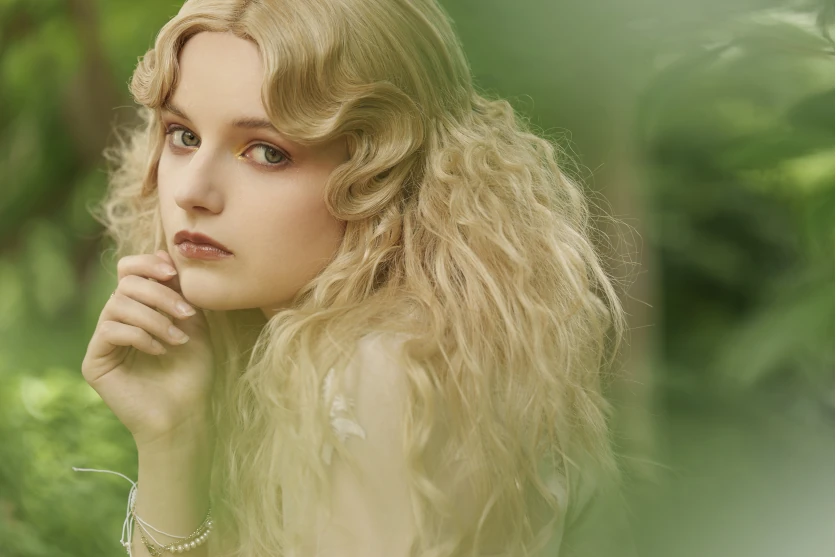
Aperture affects both exposure and depth of field.
For portraits and candid photographs, an aperture around F2.8 to F4 can help create background separation while allowing more light into the camera.
For large group photographs, a narrower aperture such as F8 to F11 can provide greater depth of field, helping keep people in different rows acceptably sharp.
These are starting points rather than fixed rules. Adjust the aperture according to the number of subjects, their distance from the camera, and the available light.
Shutter Speed
Shutter speed becomes particularly important when photographing movement.
For scenes such as bouquet tosses, flower showers, and cake cutting, around 1/125 to 1/250 second or faster can help reduce motion blur.
For a moving subject, a faster shutter speed may be necessary.
When photographing relatively stationary subjects in good conditions, you may be able to use a slower shutter speed. However, when shooting handheld, always consider the risk of camera shake.
ISO
Wedding venues can range from bright outdoor spaces to dim reception halls.
A useful starting point can be around ISO 400–800, increasing the ISO when the available light becomes weaker.
Don’t be afraid to raise ISO when necessary. A properly exposed photograph with some image noise is often more useful than a blurred photograph caused by an excessively slow shutter speed.
Modern cameras can also provide good results at higher ISO settings, although performance varies between camera models.
Exposure Compensation
Bright wedding dresses can sometimes make exposure more challenging, particularly when the bride is photographed against a darker background.
Backlighting and spotlights can also cause the camera’s automatic exposure system to produce an image that is darker than intended.
In these situations, exposure compensation can help adjust the brightness.
The original TAMRON guide recommends approximately +1 EV in some strong backlight or spotlight situations. Use this only as a starting point and check the image and histogram to determine the appropriate exposure.
Use Bounce Flash for Dark Reception Venues
A flash can be useful when ambient light is insufficient, but pointing a flash directly at your subject can produce harsh lighting.
Bounce flash is an alternative technique.
Instead of pointing the flash directly toward the subject, angle it toward a suitable ceiling or wall so the light reflects back onto the scene.
When the reflective surface is white or neutral, the resulting light can be softer and more natural-looking.
However, be careful with colored ceilings or walls. A strongly colored surface can introduce that color into the reflected light and affect skin tones.
Also check the venue’s rules before using flash. Some ceremonies and venues may prohibit or restrict flash photography.
Use Creative Composition
Good wedding photographs don’t always require complicated compositions.
Start with simple techniques and look for opportunities to change your viewpoint.
Rule of Thirds
The rule of thirds can help create balanced compositions.
Instead of placing the couple directly in the center of every photograph, position them according to the surrounding environment and the story you want to tell.
Leave Some Negative Space
Negative space can give the couple room within the frame and prevent an image from feeling crowded.
This can be particularly effective when photographing the bride and groom against an architectural feature, decorated venue, or open outdoor space.
Change Your Shooting Angle
Don’t photograph every scene from eye level.
A lower viewpoint can emphasize the shape and movement of a wedding dress, while a higher viewpoint can provide a different perspective of the couple and their surroundings.
Moving even a small distance can change the background significantly.
Focus Carefully on the Eyes
For portraits, the eyes are one of the most important areas to keep sharp.
When photographing one person, focus on the eye closest to the camera whenever practical.
This becomes especially important when using a wide aperture because the depth of field can be very shallow.
For moving subjects, continuous autofocus such as AF-C can help the camera track the subject as they move. This can be useful during entrances, bouquet tosses, and other active moments.
If your camera provides subject or eye-detection autofocus, it can also be useful for wedding photography, particularly when the subject is moving.
Choose the Right Lens for Wedding Photography
Choosing a lens for wedding photography requires balancing several factors.
Wedding photographers often need to move quickly between wide environmental photographs, portraits, candid moments, and distant subjects.
Changing lenses repeatedly isn’t always practical.
Focal Length
A versatile focal length can make it easier to respond to different situations.
A lens covering standard through medium-telephoto focal lengths can handle many wedding scenes without requiring an immediate lens change.
An all-in-one zoom can be especially useful for guests and photographers who need flexibility while moving around the venue.
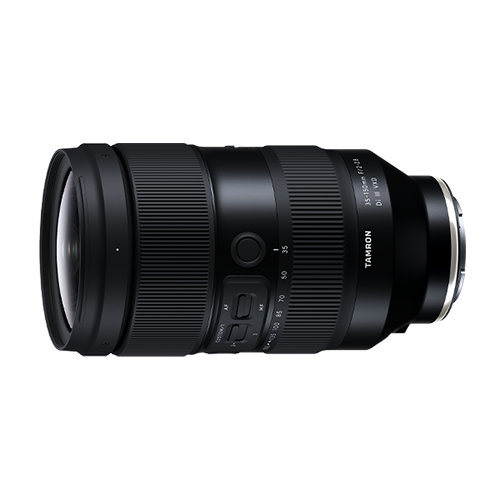
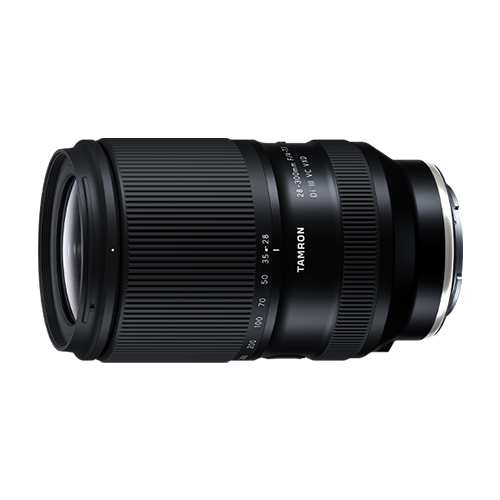
The original TAMRON article highlights the TAMRON 35-150mm F/2-2.8 Di III VXD (Model A058) as an all-in-one option. Its 35–150mm range covers semi-wide-angle through telephoto perspectives, while its bright F2–2.8 maximum aperture can be useful in available-light situations and for creating background separation.
Maximum Aperture
Wedding venues can be dim, so a lens with a wide maximum aperture can provide additional flexibility.
A lens with an F2.8 maximum aperture allows more light into the camera than a lens with a narrower maximum aperture at the same focal length.
A wide aperture can also help create shallow depth of field and background blur for portraits.
However, don’t automatically use the widest aperture for every photograph. Group shots may require a deeper depth of field, while venue photographs may benefit from having more of the scene sharp.
Lens Size and Weight
Wedding photography can involve several hours of shooting.
A lens that is too heavy or cumbersome can become tiring to carry throughout an event.
Consider how frequently you’ll be moving, whether you’ll be photographing handheld, and how much equipment you actually need.
A compact lens can be especially useful when working in crowded reception spaces.
Autofocus Performance
Autofocus performance is important when photographing fast-changing scenes.
Look for a lens that can focus accurately and smoothly, particularly in low-light environments.
Quiet autofocus can also be beneficial during ceremonies and other moments when minimizing distractions is important.
Image Stabilization
Image stabilization can be useful when photographing handheld, especially with telephoto lenses or in darker environments.
It can help compensate for camera movement when using slower shutter speeds, although it does not freeze movement from the subject itself.
When the bride, groom, or guests are moving, you may still need a sufficiently fast shutter speed.
Prepare Extra Batteries and Memory Cards
Wedding photography can involve hundreds or even thousands of photographs, so preparation is essential.
Bring spare batteries and memory cards before the event begins.
The original TAMRON guide recommends carrying at least two fully charged batteries and multiple memory cards, and notes that photographers shooting RAW should consider having sufficient storage capacity.
If your camera has dual card slots, simultaneous recording can provide an additional level of protection against card failure.
Before the wedding, check:
- Battery levels
- Memory-card capacity
- Camera settings
- Lens condition
- Autofocus settings
- Image stabilization
- Flash batteries
- Spare equipment
Preparation reduces the chance of missing an important moment because of an avoidable equipment problem.
Wedding Photography Etiquette
Taking good photographs is important, but so is respecting the wedding.
Before photographing the event, check the venue’s rules.
Find out whether flash photography is permitted and whether there are restricted areas.
If there is an official wedding photographer, avoid obstructing their position or moving into their shooting area unnecessarily.
Remember that the couple and their guests should be able to enjoy the ceremony without photographers becoming a distraction.
Social media also requires consideration.
Before posting photographs of the bride, groom, or guests, ask for permission and respect their privacy preferences.
Good wedding photography should preserve memories without interfering with the experience itself.
Final Tips for Better Wedding Photos
Wedding photography requires a combination of preparation, observation, technical control, and timing.
Before the event, familiarize yourself with your camera and lenses. During the wedding, pay attention to the light, movement, expressions, and relationships between people.
Keep these principles in mind:
- Use a fast shutter speed for important moving moments.
- Use a wide aperture when you want subject separation.
- Stop down when you need more depth of field for groups or scenes.
- Focus carefully on the eyes for portraits.
- Use burst shooting for fast-moving moments.
- Increase ISO when necessary rather than accepting excessive motion blur.
- Consider bounce flash when the venue and rules allow it.
- Carry spare batteries and memory cards.
- Choose a versatile lens when you need to respond quickly.
- Respect the venue, official photographer, couple, and guests.
Most importantly, don’t focus exclusively on the obvious moments.
The laughter of a parent, the reaction of a friend, the details of the venue, a quiet glance between the couple, or an unexpected expression can become some of the most memorable photographs from the entire day.
With the right preparation and an understanding of your camera settings and lenses, you can capture a wedding as more than a collection of posed portraits—you can create a visual record of the atmosphere, people, and moments that made the day special.
TAMRON products mentioned in this article