
What Is an All-in-One Zoom Lens? Features, Advantages, and Recommended Shooting Scenes
Imagine heading out for a day of photography with just one lens attached to your camera.
You start the morning photographing a wide landscape. A few minutes later, you notice an interesting building in the distance and zoom in to capture its details. Later, you photograph a friend, a flower, a passing vehicle, or a distant subject without needing to change lenses.
This is where an all-in-one zoom lens can be particularly useful.
An all-in-one zoom lens covers a broad range of focal lengths, from wide-angle through telephoto and, depending on the lens, even into the ultra-telephoto range. Instead of carrying separate wide-angle, standard, and telephoto lenses, you can use one lens for a wide variety of subjects and situations.
This makes all-in-one zoom lenses particularly appealing for travel, outdoor photography, family events, everyday snapshots, and situations where you want to travel light.
But versatility isn’t the only consideration.
An all-in-one zoom lens has its own characteristics and trade-offs, including size, maximum aperture, and optical performance. Understanding these characteristics can help you determine whether this type of lens is right for your photography.
In this guide, we’ll explain what an all-in-one zoom lens is, its advantages, recommended shooting situations, important points to consider when choosing one, and several TAMRON lenses that demonstrate the versatility of this lens category.
What Is an All-in-One Zoom Lens?
An all-in-one zoom lens is a zoom lens that covers a particularly broad range of focal lengths.
Unlike a standard zoom lens that may cover a more limited range, such as wide-angle to standard or standard to telephoto, an all-in-one zoom lens can extend across several categories.
For example, a lens with a focal-length range of 28-200mm can cover:
- Wide-angle
- Standard
- Short telephoto
- Telephoto
A lens with a range of 28-300mm extends even further into the telephoto range.
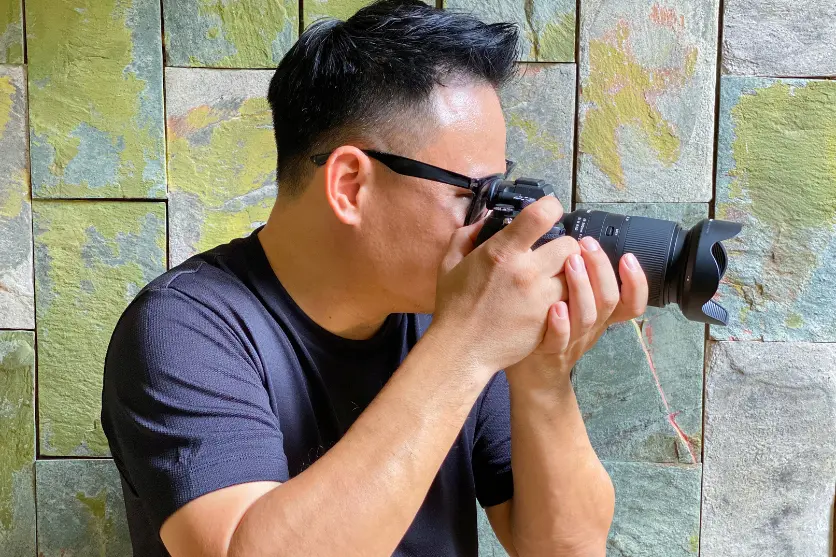
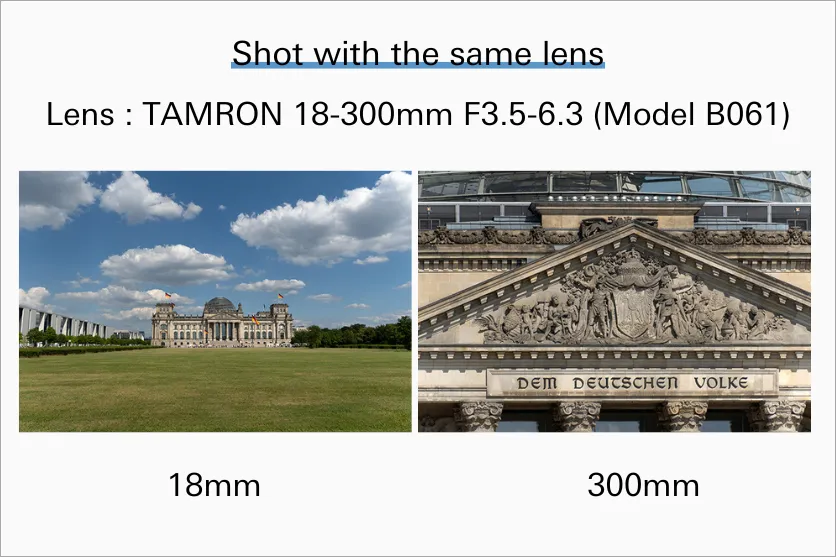
This broad coverage means you can change your field of view simply by rotating the zoom ring.
You don’t have to physically change your position or replace the lens every time your subject moves farther away.
What Does Zoom Ratio Mean?
One way to describe the range of a zoom lens is its zoom ratio.
The zoom ratio is calculated by dividing the longest focal length by the shortest focal length.
For example:
200mm ÷ 28mm = approximately 7.1x
So, a 28-200mm lens has approximately a 7.1x zoom ratio.
For a 28-300mm lens:
300mm ÷ 28mm = approximately 10.7x
The larger the zoom ratio, the greater the range of focal lengths covered by the lens.
However, a larger zoom ratio doesn’t automatically mean that a lens is better for every photographer.
The important question is whether the focal-length range matches the subjects and situations you photograph.
Why Are All-in-One Zoom Lenses So Versatile?
The biggest appeal of an all-in-one zoom lens is its ability to cover many different shooting situations with one lens.
A wide focal length can be used for landscapes and group photographs.
A standard focal length can be used for everyday snapshots and portraits.
A telephoto focal length can be used for distant subjects, sports, wildlife, and details within a landscape.
Instead of carrying several lenses, you can keep one lens attached to your camera and simply adjust the zoom.
This makes an all-in-one zoom lens particularly useful when you don’t know exactly what you will encounter during a day of photography.
Advantage 1: Wide-Angle to Telephoto Coverage
The first major advantage is the broad range of focal lengths.
Consider a day of travel photography.
You might start by photographing an entire city street using a wide-angle focal length.
Then you notice an interesting architectural detail several meters away.
Instead of changing lenses, you can simply zoom in.
Later, you might photograph a friend.
Then you see a bird in a distant tree.
Again, you can change the focal length without changing lenses.
This ability to move between wide-angle and telephoto perspectives is what makes an all-in-one zoom lens so convenient.
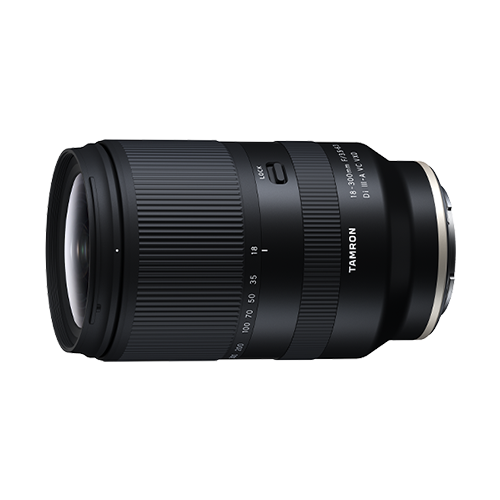
TAMRON’s 18-300mm F/3.5-6.3 Di III-A VC VXD (Model B061), for example, covers an extremely broad 18-300mm range and provides a 16.6x zoom ratio. On APS-C cameras, its angle of view is equivalent to approximately 27-450mm in the 35mm format.
Advantage 2: Flexibility When Your Subject Changes
Photography rarely happens exactly as planned.
You may begin photographing a landscape and suddenly notice something interesting in the distance.
Or you may be photographing a person and then want to capture the environment around them.
An all-in-one zoom lens lets you respond quickly.
For example:
Wide angle: Capture the entire scene.
Standard: Photograph people naturally.
Telephoto: Isolate a distant subject.
Long telephoto: Capture distant details.
You don’t have to stop shooting to change lenses.
Simply adjust the zoom.
This can be especially helpful when the scene is changing quickly.
Advantage 3: Carry Fewer Lenses
One of the most practical advantages of an all-in-one zoom lens is reduced equipment.
Instead of carrying:
- A wide-angle lens
- A standard zoom
- A telephoto lens
you may be able to use one all-in-one zoom lens for most of the day.
This can make your camera bag lighter and simpler.
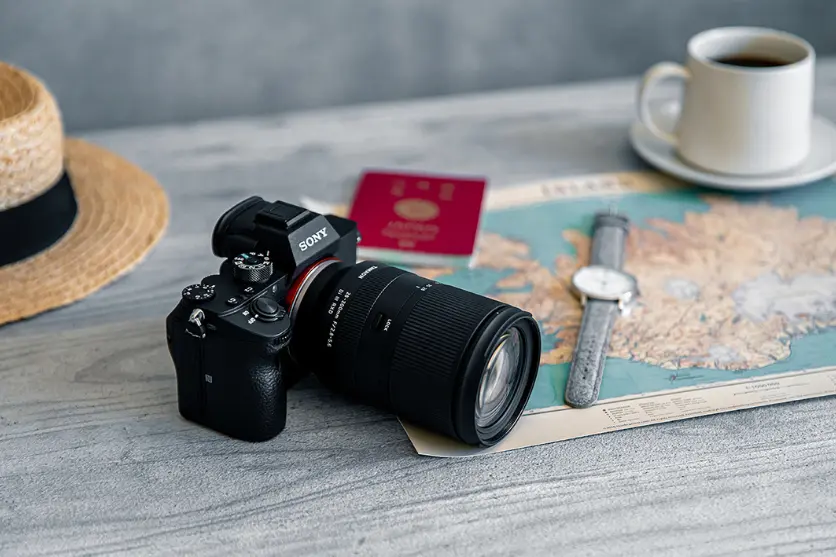
It’s especially useful for travel.
When you’re walking through a city for several hours, climbing a mountain, exploring a tourist attraction, or hiking through a nature trail, every additional piece of equipment adds weight.
An all-in-one lens lets you concentrate more on the experience and less on managing your equipment.
Advantage 4: Less Lens Changing
Changing lenses isn’t difficult, but it can take time.
You need to:
- Stop shooting.
- Remove the current lens.
- Store it safely.
- Take out another lens.
- Attach the new lens.
- Resume shooting.
During that time, your subject may have moved.
This is particularly important when photographing:
- Wildlife
- Sports
- Children
- Street scenes
- Travel moments
- Events
With an all-in-one zoom lens, you can simply turn the zoom ring.
This reduces the chance of missing an unexpected photographic opportunity.
Advantage 5: Beginner-Friendly
An all-in-one zoom lens can also be a practical choice for photographers who are still learning about lenses.
Beginners often face a difficult decision:
Which lens should I bring?
A wide-angle lens?
A standard zoom?
A telephoto?
A portrait lens?
Instead of immediately building a large lens collection, an all-in-one zoom can provide an opportunity to explore different focal lengths with one lens.
As you use the lens, you can learn which focal lengths you naturally prefer.
You may eventually discover that you frequently shoot at 24mm, 50mm, or 200mm.
That information can then help you decide whether you want to add specialized lenses later.
Recommended Shooting Scene 1: Sports and School Events
An all-in-one zoom lens can be particularly useful at school sports days and athletic events.
At one moment, you may want a wide photograph showing the entire venue.
Then your child starts running.
You need a telephoto focal length to photograph them from a distance.
After the race, you want a photograph of your child with their friends.
You may need to zoom back out.
An all-in-one zoom lens lets you do all of this without changing lenses.
This is one reason TAMRON recommends all-in-one zoom lenses for athletic events, where photographers may need both wide-angle and telephoto perspectives during the same event.
Recommended Shooting Scene 2: Travel Photography
Travel is perhaps one of the most obvious uses for an all-in-one zoom lens.
When you’re traveling, you never know what you’ll encounter.
You might photograph:
- Landscapes
- Buildings
- Food
- Family
- Friends
- Street scenes
- Wildlife
- Vehicles
- Local details
Carrying a separate lens for every possibility can become inconvenient.
An all-in-one zoom lens simplifies your setup.
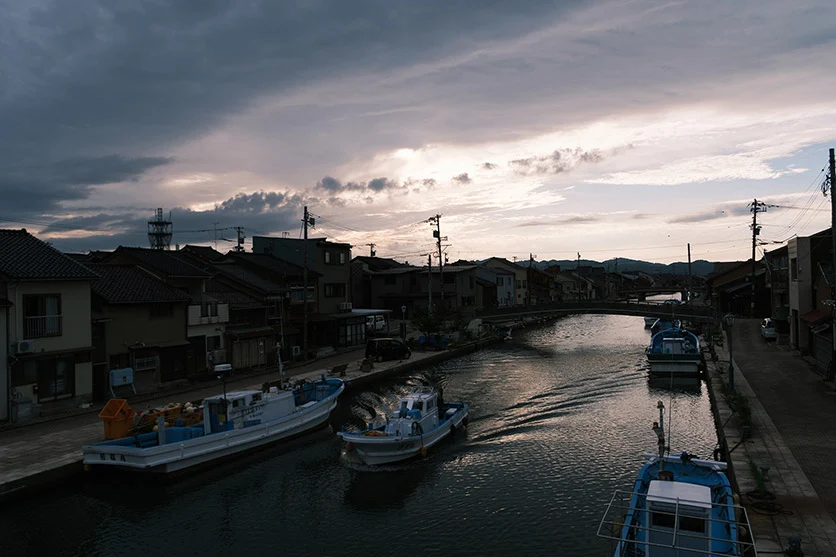
At the wide end, you can photograph a large architectural structure or expansive landscape.
At the telephoto end, you can isolate details that are too far away to approach.
This flexibility makes an all-in-one lens a useful travel zoom lens for photographers who want to keep their equipment compact.
Recommended Shooting Scene 3: Nature and Landscape Photography
Landscape photography may seem like something that requires a dedicated wide-angle lens.
A wide-angle focal length is certainly useful for expansive scenes.
But landscapes aren’t always about showing everything.
Sometimes the most interesting part of a landscape is a small detail in the distance.
For example:
- A tree on a mountain
- A distant building
- A person walking along a trail
- A rock formation
- A flower
- A bird
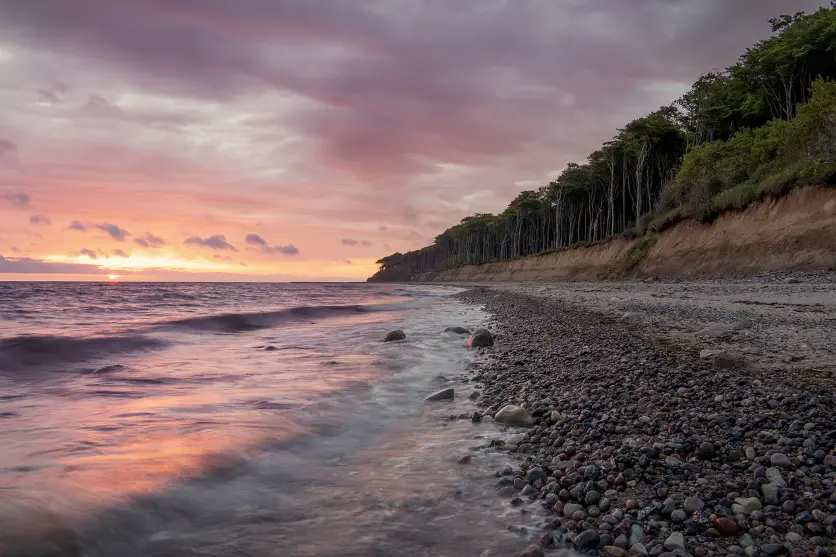
- A section of coastline
A telephoto focal length lets you isolate these details.
This creates a different style of landscape photograph.
Instead of showing the entire environment, you’re asking the viewer to focus on one particular part of it.

Using Telephoto Compression in Landscapes
Telephoto focal lengths can also change the appearance of a landscape.
When you photograph distant subjects using a longer focal length, objects at different distances can appear visually closer together.
This is often referred to as telephoto compression.
For example, a mountain in the background can appear larger relative to a foreground subject.
You can use this effect creatively to create layered landscape compositions.
Try photographing:
- Mountains
- Buildings
- Trees
- Roads
- People
- Boats
at longer focal lengths.
You may discover compositions that aren’t possible with a wide-angle lens.
Recommended Shooting Scene 4: Wildlife
Wildlife photography often requires a long focal length because you can’t always approach animals safely or without disturbing them.
An all-in-one zoom lens with a long telephoto end can give you additional reach while still allowing you to zoom out when the animal comes closer.
For example, the TAMRON 18-300mm on an APS-C camera reaches an equivalent field of view of approximately 450mm at the telephoto end.
This can make it useful for casual wildlife photography, birds, and animals encountered during travel or outdoor activities.
For serious wildlife work, however, a dedicated longer telephoto lens may still be preferable when maximum reach, aperture, or specialized performance is the priority.
Recommended Shooting Scene 5: Everyday Snapshots
You don’t need to travel to benefit from an all-in-one zoom lens.
It can be an excellent everyday lens.
Take it with you when:
- Walking around the city
- Going to a park
- Meeting friends
- Attending family gatherings
- Exploring a new neighborhood
- Spending time outdoors
You don’t necessarily know what you’ll photograph.
That’s exactly where a versatile lens can be useful.
You can photograph a wide scene one moment and a distant detail the next.
Recommended Shooting Scene 6: Portraits
Although a dedicated portrait lens can provide specialized results, an all-in-one zoom can also be used for portraits.
At longer focal lengths, you can create a narrower field of view and separate the subject from the background.
For example, instead of photographing someone at 35mm, try moving farther away and using 100mm or 200mm.
The resulting perspective can look quite different.
Longer focal lengths can also make it easier to simplify a distracting background.
Recommended Shooting Scene 7: Close-Up Photography
Some all-in-one zoom lenses also provide surprisingly strong close-focusing capabilities.
This is an important feature to look for if you want to photograph:
- Flowers
- Food
- Small objects
- Details
- Insects
A lens that can focus closely at the wide end can produce an interesting perspective.
Instead of using a dedicated macro lens, you can use the all-in-one zoom for both everyday photography and occasional close-up work.
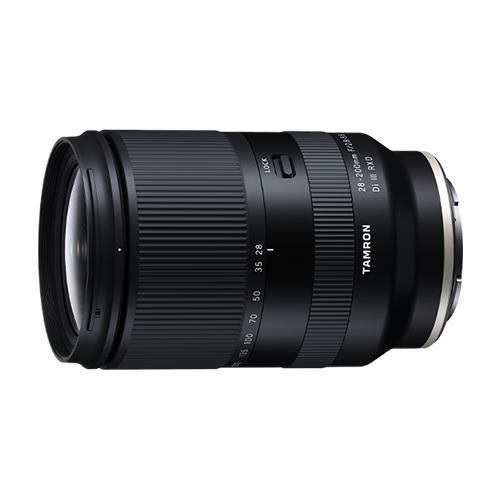
For example, the TAMRON 28-200mm F/2.8-5.6 Di III RXD (Model A071) can focus as close as 0.19m at its 28mm wide-angle end and provides a maximum magnification ratio of 1:3.1.
That gives photographers additional creative flexibility.
Recommended Shooting Scene 8: Video
An all-in-one zoom lens isn’t limited to still photography.
It can also be useful for video.
When recording video, changing your framing without changing your physical position can help create visual variety.
You can:
Zoom out: Establish the location.
Zoom in: Focus on the subject.
Return to a wider view: Show the relationship between the subject and environment.
This can be useful for:
- Vlogging
- Travel videos
- Family videos
- Sports events
- School activities
- Outdoor videos
When choosing a lens for video, however, consider autofocus smoothness, operating noise, stabilization, and how smoothly the zoom ring operates.
All-in-One Zoom Lenses for Travel Video
Travel videos often benefit from changing perspectives.
You might begin with a wide shot of a city.
Then move closer to a person.
Then capture a distant landmark.
An all-in-one zoom allows you to make these changes while remaining in roughly the same position.
This can also be useful when you are traveling alone and have limited equipment.
One camera and one versatile lens can provide a surprisingly broad range of visual options.
Are All-in-One Zoom Lenses Perfect?
No lens is designed for every situation.
All-in-one zoom lenses offer exceptional flexibility, but that flexibility comes with trade-offs.
Understanding these limitations will help you decide whether an all-in-one lens is appropriate for your photography.
Limitation 1: They Can Be Larger Than Other Lenses
A lens covering a very broad focal-length range requires a more complex optical design.
Depending on the lens, this can result in a larger or heavier lens compared with a simple standard zoom or prime lens.
However, lens design technology has continued to improve.
TAMRON has specifically focused on developing all-in-one lenses that balance broad zoom ranges with compact dimensions and manageable weight.
Before buying, consider the camera and lens together.
A lens that feels comfortable in a store may feel different after carrying it for eight hours during a trip.
Limitation 2: Maximum Aperture Can Be Smaller
Another common characteristic of all-in-one zoom lenses is a relatively smaller maximum aperture, particularly toward the telephoto end.
For example, a lens may start at F2.8 at the wide end but become F5.6 or F6.3 when zoomed in.
This means less light reaches the sensor at longer focal lengths.
In bright outdoor conditions, this may not be a problem.
But in darker environments, you may need to compensate with:
- Higher ISO
- Slower shutter speed
- Additional lighting
- A lens with a wider maximum aperture
If low-light performance and strong background blur are your top priorities, a specialized fast-aperture lens may be more suitable.
Limitation 3: Specialized Lenses Can Offer More Specific Performance
An all-in-one lens is designed to do many things.
A specialized lens is designed to concentrate on a narrower purpose.
For example:
A wide-angle prime can prioritize wide-angle optical performance.
A fast portrait lens can prioritize a wide aperture and bokeh.
A professional telephoto lens can prioritize reach, aperture, autofocus, and subject isolation.
A macro lens can prioritize close focusing and high magnification.
Therefore, photographers creating commercial work, large prints, or highly specialized images may prefer dedicated lenses.
For everyday photography and travel, however, the versatility of an all-in-one lens can be more valuable than having the absolute maximum performance in one specific area.
What Should You Look for When Choosing an All-in-One Zoom Lens?
Not all all-in-one lenses are the same.
Here are several specifications worth considering.
1. Focal-Length Range
This is the first thing to check.
Ask yourself:
How wide do I need to go?
A 28mm starting point can be useful for travel, people, and general photography.
An 18mm starting point on APS-C provides a wider perspective and can be useful for landscapes and architecture.
Then consider the telephoto end.
200mm?
300mm?
400mm equivalent?
The longer the telephoto end, the more distant subjects you can isolate.
2. Camera Sensor Format
Your camera’s sensor size matters.
An APS-C lens and a full-frame lens may have very different intended fields of view.
For example, the TAMRON 18-300mm F/3.5-6.3 Di III-A VC VXD is designed for APS-C mirrorless cameras. Its 18-300mm focal-length range corresponds to approximately 27-450mm in 35mm-format equivalent field of view.
Make sure the lens is compatible with your camera and understand how its focal length behaves on your sensor format.
3. Maximum Aperture
If you frequently shoot indoors or in low light, pay close attention to the maximum aperture.
A smaller F-number means a wider maximum aperture.
For example:
F2.8 → wider aperture
F4 → smaller
F5.6 → smaller
F6.3 → smaller
A wider aperture can provide more light and greater background blur.
However, an all-in-one zoom with a smaller maximum aperture may still be perfectly suitable for outdoor photography.
4. Autofocus Performance
Autofocus is important when you want to photograph moving subjects.
This is especially true for:
- Children
- Sports
- Wildlife
- Birds
- Vehicles
- Events
TAMRON uses high-performance AF systems such as VXD and RXD in its lenses, depending on the model. The company’s all-in-one zoom lineup is designed to provide fast and accurate focusing while maintaining broad focal-length coverage.
5. Image Stabilization
If you’re using a long focal length handheld, image stabilization can be extremely useful.
Camera shake becomes more noticeable as focal length increases.
A lens equipped with optical stabilization can help reduce the effects of camera movement.
TAMRON refers to its stabilization system as VC, or Vibration Compensation.
The B061, A069, and A074 are examples of TAMRON lenses that incorporate VC.
Remember:
Stabilization helps reduce camera shake.
It does not freeze a moving subject.
For sports and wildlife, you may still need a fast shutter speed.
6. Close-Focusing Performance
Don’t overlook minimum object distance.
If the lens can focus closely, you can use it for a wider range of subjects.
A lens that can photograph both a distant landscape and a nearby flower is much more versatile than one that is limited to distant subjects.
For an everyday lens, strong close-focusing capability can add another dimension to your photography.
7. Size and Weight
If your goal is to simplify your camera bag, size and weight matter.
One reason to choose an all-in-one zoom is to avoid carrying several lenses.
But if the lens itself is extremely large or heavy, you may lose some of that convenience.
Think about how you’ll actually use the lens.
Will you carry it during:
- Travel?
- Hiking?
- City walks?
- Family trips?
- Long events?
A lens that you are comfortable carrying is a lens you’re more likely to use.
TAMRON All-in-One Zoom Lenses
TAMRON has developed several all-in-one zoom lenses with different focal-length ranges and camera-system compatibility.
Each one has a slightly different purpose.
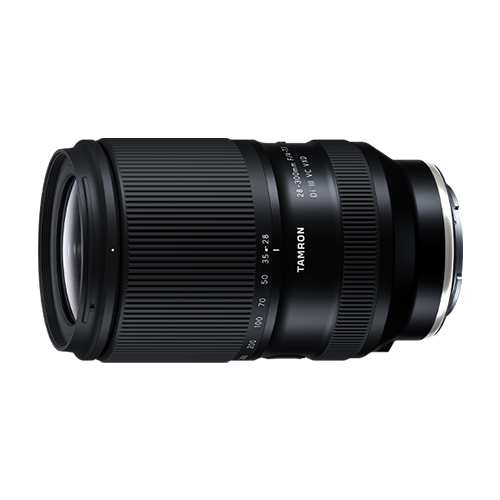
28-300mm F/4-7.1 Di III VC VXD — Model A074
The TAMRON 28-300mm F/4-7.1 Di III VC VXD (Model A074) is designed for Sony E-mount full-frame mirrorless cameras.
Its 28-300mm range provides a 10.7x zoom ratio.
This gives you a broad field of view ranging from wide-angle to long telephoto.
At 28mm, you can photograph:
- Landscapes
- Architecture
- Groups
- Travel scenes
At 300mm, you can photograph:
- Distant details
- Sports
- Wildlife
- Performances
- Subjects that are difficult to approach
The lens also features VXD autofocus and VC image stabilization, providing additional flexibility for handheld shooting.
Its broad range makes the A074 a strong example of the convenience offered by an all-in-one lens.
28-200mm F/2.8-5.6 Di III RXD — Model A071
The TAMRON 28-200mm F/2.8-5.6 Di III RXD (Model A071) is another full-frame Sony E-mount all-in-one zoom lens.
One of its distinctive characteristics is its F2.8 maximum aperture at the 28mm wide end.
The 28-200mm range covers a broad selection of common shooting situations.
It can be used for:
- Travel
- Landscapes
- Portraits
- Street photography
- Everyday snapshots
- Nature
- Close-up subjects
Its close-focusing capability also adds versatility, with a minimum object distance of 0.19m at 28mm and a maximum magnification ratio of 1:3.1.
This makes it an interesting option for photographers who want an all-in-one lens but also value a relatively bright wide-angle end.
18-300mm F/3.5-6.3 Di III-A VC VXD — Model B061
The TAMRON 18-300mm F/3.5-6.3 Di III-A VC VXD (Model B061) is designed for APS-C mirrorless cameras.
Its 18-300mm range provides an impressive 16.6x zoom ratio.
In 35mm-format equivalent terms, this corresponds to approximately 27-450mm.
This means the lens covers everything from wide-angle to ultra-telephoto in a single package.
This broad range makes it particularly useful for:
- Travel
- Wildlife
- Sports
- Hiking
- Landscapes
- Everyday photography
The B061 also features VXD autofocus and VC image stabilization.
How These Lenses Compare
The three lenses have different strengths.
| Lens | Camera Format | Range | Approx. Zoom Ratio | Useful For |
|---|---|---|---|---|
| A071 | Full-frame | 28-200mm | 7.1x | Travel, everyday photography, portraits |
| A074 | Full-frame | 28-300mm | 10.7x | Travel, events, sports, distant subjects |
| B061 | APS-C | 18-300mm | 16.6x | Travel, wildlife, landscapes, sports |
The right choice depends on your camera and the subjects you photograph most often.
Full-Frame vs APS-C All-in-One Zoom Lenses
If you’re deciding between a full-frame and APS-C lens, start with your camera body.
If you’re using a full-frame Sony mirrorless camera, lenses such as the A071 and A074 are designed for that system.
If you’re using an APS-C mirrorless camera, the B061 is designed specifically for APS-C systems.
APS-C can also provide a narrower field of view for the same physical focal length, which can be advantageous when you want additional reach.
However, the most important consideration is compatibility.
Always check that the lens is designed for your camera’s mount and sensor format.
Is an All-in-One Zoom Lens Good for Beginners?
Yes, an all-in-one zoom lens can be an excellent starting point for photographers who want to explore different types of photography.
Instead of immediately purchasing several lenses, you can learn how different focal lengths affect your photographs using one lens.
Try photographing the same subject at:
18mm
35mm
50mm
100mm
200mm
300mm
Look at how the perspective, framing, background, and subject isolation change.
This is a great practical way to understand focal length.
Learn What Focal Length You Actually Use
One advantage of starting with an all-in-one zoom lens is that you can discover your own shooting habits.
After taking hundreds or thousands of photographs, you may notice patterns.
Perhaps most of your photographs are taken around 24-35mm.
Maybe you frequently use 85-135mm.
Or perhaps you’re constantly shooting at the maximum telephoto end.
This information can help you decide whether you eventually need a specialized lens.
For example:
Mostly wide: Consider a wide-angle lens.
Mostly portraits: Consider a fast portrait lens.
Mostly wildlife: Consider a dedicated telephoto lens.
Mostly close-ups: Consider a macro lens.
The all-in-one lens can therefore also be a useful learning tool.
All-in-One Zoom Lens vs Multiple Lenses
There is no universal answer to which approach is better.
It depends on your priorities.
One all-in-one lens
Advantages:
- Convenient
- Fewer lens changes
- Lighter equipment setup
- Broad focal-length range
- Good for travel
- Beginner-friendly
Considerations:
- Maximum aperture may be smaller
- Specialized lenses may provide more specialized performance
- The lens can still be relatively large depending on the range
Multiple specialized lenses
Advantages:
- Wider aperture options
- Specialized optical performance
- Greater control for specific types of photography
- Potentially better suited to professional applications
Considerations:
- More equipment
- More weight
- More lens changes
- Higher total cost
- More decisions about which lens to bring
The choice ultimately depends on whether you value versatility and convenience or specialized performance for a particular type of photography.
Tips for Getting the Most Out of an All-in-One Zoom Lens
Having a broad focal-length range doesn’t automatically make every photograph better.
The key is learning how to use that flexibility.
Try the Same Scene at Different Focal Lengths
Don’t simply zoom until your subject fills the frame.
Take several photographs at different focal lengths.
Compare them.
At a wide focal length, the environment becomes an important part of the photograph.
At a longer focal length, the subject becomes more dominant.
This simple exercise can dramatically improve your understanding of composition.
Use the Telephoto End for Details
When photographing a landscape, don’t stop after taking the wide shot.
Zoom in.
Look for smaller compositions.
You may discover:
- A distant tree
- A building
- A person
- A boat
- A mountain ridge
- A flower
Telephoto photography can reveal compositions hidden within a larger scene.
Use the Wide End for Context
The opposite is also true.
If you’ve been photographing a subject with a long focal length, zoom out.
Show the surroundings.
This gives the viewer context.
For travel photography, this can be particularly effective.
Instead of only photographing your friend, show your friend within the location you’re visiting.
Use Longer Focal Lengths to Simplify Busy Scenes
Busy environments can sometimes make photographs difficult to read.
A longer focal length narrows your field of view.
This allows you to exclude distracting elements from the edges of the frame.
Instead of physically moving closer, simply zoom in.
This can be particularly useful in:
- Crowded streets
- Markets
- Events
- Tourist attractions
- Festivals
Don’t Forget Composition
An all-in-one lens gives you many focal lengths, but composition still matters.
Try:
- Rule of thirds
- Leading lines
- Symmetry
- Framing
- Negative space
- Layering
- Foreground interest
Changing focal length can help you change how these compositional techniques appear.
For example, a wide-angle lens can emphasize leading lines.
A telephoto lens can simplify layers and emphasize patterns.
Use the Lens for Storytelling
One of the biggest advantages of an all-in-one zoom lens is that you can create a varied collection of images without changing your equipment.
Imagine photographing a family trip.
Start with:
Wide shot: The destination.
Medium shot: Your family exploring.
Telephoto shot: A distant detail.
Close-up: Food or a small object.
Portrait: A family member.
Environmental portrait: Your family within the landscape.
All of these photographs can be created using one versatile lens.
Together, they tell a much richer story.
An All-in-One Lens Can Make Travel Easier
Travel photography isn’t always about having the largest or most specialized camera setup.
Sometimes convenience matters more.
If you’re walking all day, taking public transportation, hiking, or exploring unfamiliar streets, a simple setup can be extremely useful.
One camera.
One lens.
A few spare batteries.
Enough memory.
That’s it.
You can spend less time deciding what equipment to carry and more time looking for photographs.
Final Thoughts: Is an All-in-One Zoom Lens Right for You?
An all-in-one zoom lens is designed around one central idea:
Versatility.
Instead of limiting you to one focal-length category, it gives you the freedom to move from wide-angle to telephoto with a single lens.
That makes it useful for an enormous range of situations.
Travel.
Landscapes.
Sports.
Family events.
Wildlife.
Everyday snapshots.
Portraits.
Close-ups.
Even video.
The biggest advantage is convenience.
You don’t have to carry several lenses, and you don’t have to constantly stop to change lenses when your subject changes.
At the same time, it’s important to understand the trade-offs.
An all-in-one lens may not provide the same maximum aperture or specialized performance as a dedicated prime or professional zoom lens. If your photography demands the highest possible low-light performance, extreme background blur, maximum telephoto reach, or specialized macro capability, a dedicated lens may be more appropriate.
But for photographers who want a flexible setup that can handle a wide range of subjects, an all-in-one zoom lens can be an extremely practical choice.
TAMRON’s all-in-one lineup demonstrates several approaches to this concept.
The 28-200mm F/2.8-5.6 Di III RXD (Model A071) combines a broad range with a bright F2.8 maximum aperture at the wide end and strong close-focusing capability.
The 28-300mm F/4-7.1 Di III VC VXD (Model A074) extends the range to 300mm while maintaining a compact, versatile full-frame setup.
For APS-C users, the 18-300mm F/3.5-6.3 Di III-A VC VXD (Model B061) provides an exceptionally broad 16.6x zoom range, equivalent to approximately 27-450mm in 35mm-format terms.
Ultimately, choosing a lens is about understanding how you photograph.
If you often travel, attend events, explore outdoors, or simply want to carry less equipment, an all-in-one zoom lens can give you the flexibility to photograph whatever catches your attention.
You don’t have to know exactly what you’ll photograph before you leave home.
Just take your camera, attach one versatile lens, and be ready for whatever comes into view.
TAMRON products mentioned in this article