
What Is Aperture? Understanding F-Number in Photography
When learning photography, you will often hear terms such as aperture, F-number, shutter speed and ISO.
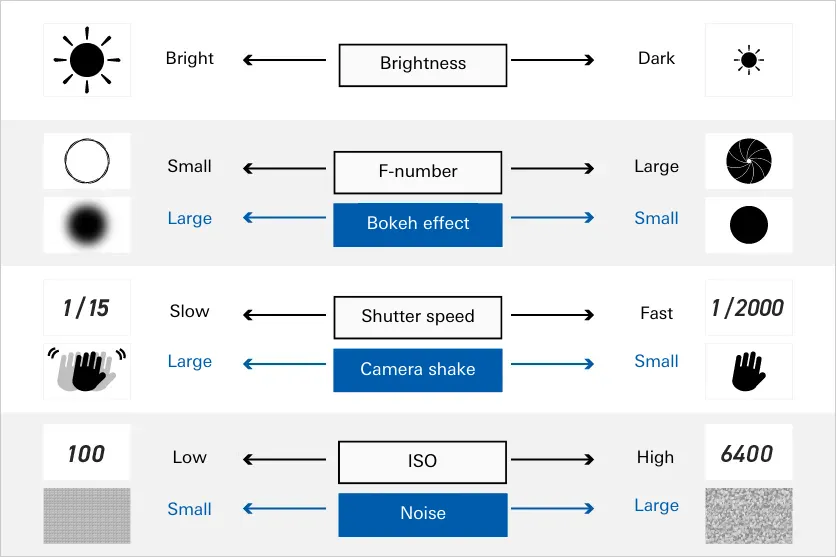
These settings work together to determine how bright your photograph will be, but they also affect the appearance of the image.
Aperture, in particular, can change much more than exposure. It can influence depth of field, background blur, subject separation and the overall look of a photograph.
Understanding how aperture works can help you decide when to use a wide aperture such as F2.8 and when to stop down to F8 or F11.
So, what exactly is aperture, what does the F-number mean, and how should you choose an aperture for different types of photography?
What Is Aperture?
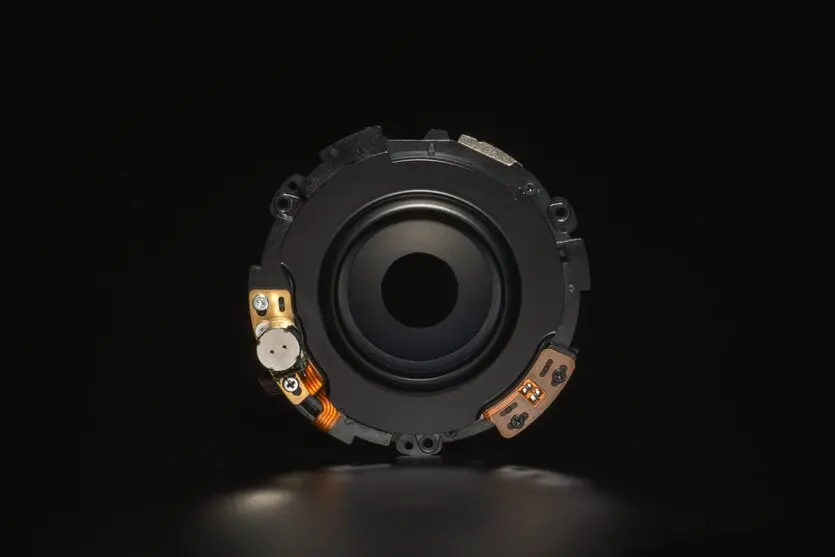
Aperture is the opening inside a lens that controls how much light passes through the lens and reaches the camera’s image sensor.
The size of this opening is represented by an F-number, also called an aperture value.
Common F-numbers include:
- F1.4
- F2
- F2.8
- F4
- F5.6
- F8
- F11
- F16
- F22
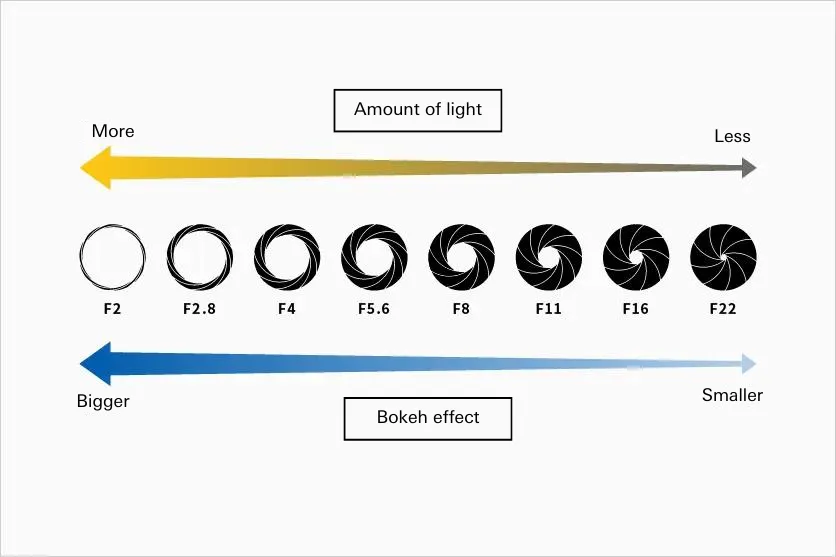
One of the most important things to remember is that a smaller F-number represents a wider aperture, while a larger F-number represents a narrower aperture.
For example:
F2.8 → wider aperture → more light
F8 → narrower aperture → less light
This can seem confusing at first because the smaller number represents the larger opening.
Technically, the F-number is calculated by dividing the lens’s focal length by the effective aperture diameter:
F-number = focal length ÷ effective aperture diameter
This is why the F-number is a ratio rather than a simple measurement of the physical opening.
What Does F-Number Mean?
The F-number tells you how wide the lens aperture is relative to the lens’s focal length.
As the F-number becomes smaller, the aperture becomes wider and more light reaches the sensor.
As the F-number becomes larger, the aperture becomes narrower and less light reaches the sensor.
For example:
| Aperture | Opening | Light | Typical effect |
|---|---|---|---|
| F1.4 | Very wide | More | Strong background blur |
| F2.8 | Wide | More | Subject separation |
| F4 | Moderately wide | Moderate | Balanced exposure and depth |
| F8 | Narrower | Less | Greater depth of field |
| F11 | Narrow | Less | More of the scene in focus |
| F16 | Very narrow | Less | Large depth of field |
These are general characteristics. The final appearance of a photograph also depends on focal length, subject distance, background distance, lighting and camera format.
Why Is Aperture Important?
Aperture affects two major aspects of photography:
- The amount of light entering the camera
- The depth of field
Because of this, changing the aperture can affect both exposure and the visual appearance of the photograph.
A wide aperture can allow you to use a faster shutter speed or lower ISO in low-light conditions.
It can also produce a shallower depth of field, making the background appear more blurred.
A narrower aperture reduces the amount of light entering the camera but can increase the depth of field, keeping more of the scene within the acceptable focus range.
This makes aperture one of the most important creative controls on a camera.
Wide Aperture vs. Narrow Aperture
The terms wide aperture and narrow aperture are important to understand.
Wide Aperture
A wide aperture uses a small F-number such as:
- F1.4
- F1.8
- F2
- F2.8
A wide aperture allows more light to enter the camera.
It can be useful for:
- Portraits
- Low-light photography
- Indoor photography
- Night photography
- Sports
- Subject isolation
A wide aperture can also create a shallow depth of field, helping separate the subject from the background.
Narrow Aperture
A narrow aperture uses a larger F-number such as:
- F8
- F11
- F16
A narrow aperture allows less light to reach the sensor.
It can be useful when you want a greater depth of field, such as when photographing:
- Landscapes
- Architecture
- Cityscapes
- Group photographs
- Product photography
However, using an extremely narrow aperture is not always better. Very small apertures can introduce diffraction, which can reduce fine detail.
What Is Maximum Aperture?
The maximum aperture is the widest aperture available from a lens.
It is represented by the lens’s smallest available F-number.
For example, if a lens is labeled 50mm F1.8, F1.8 is its maximum aperture.
If a zoom lens is labeled 24-70mm F2.8, F2.8 is the maximum aperture throughout its zoom range.
A lens with a larger maximum aperture can provide several advantages.
It can allow:
- More light in low-light conditions
- Faster shutter speeds
- Lower ISO settings
- Greater control over depth of field
- Stronger subject-background separation
This is one reason lenses with large maximum apertures are often useful for portraits, events, sports and low-light photography.
What Is a Constant-Aperture Zoom Lens?
Not every zoom lens maintains the same maximum aperture throughout its focal-length range.
For example, a zoom lens may be labeled:
70-300mm F4.5-6.3
This means its maximum aperture changes as you zoom through the range.
A constant-aperture zoom lens, on the other hand, maintains the same maximum aperture throughout its zoom range.
For example:
17-70mm F2.8
The lens can maintain an F2.8 maximum aperture from 17mm through 70mm.
This can make exposure easier to manage when changing focal lengths, particularly when shooting video or working in changing conditions.
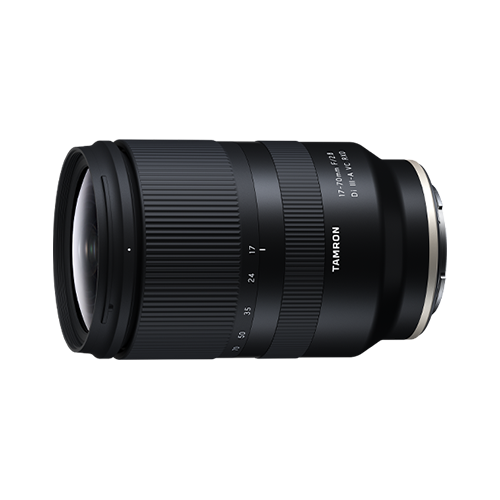
TAMRON’s 17-70mm F/2.8 Di III-A VC RXD (Model B070) is an example of a constant-F2.8 zoom designed for APS-C mirrorless cameras.
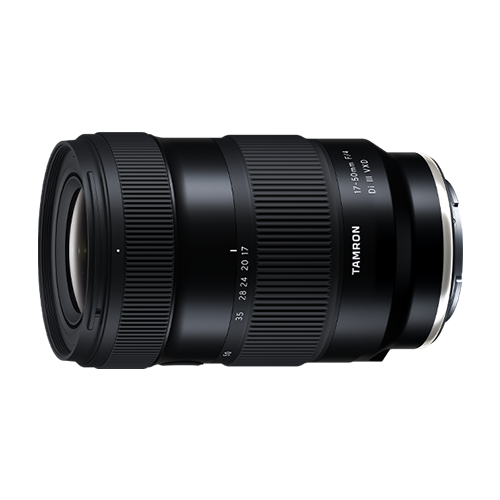
Another example is the 17-50mm F/4 Di III VXD (Model A068), which maintains an F4 maximum aperture throughout its ultra-wide-angle-to-standard zoom range.
How Does Aperture Affect Background Blur?
One of the most visible effects of aperture is its influence on depth of field.
Depth of field refers to the range of the scene that appears acceptably sharp.
A wide aperture can create a shallower depth of field.
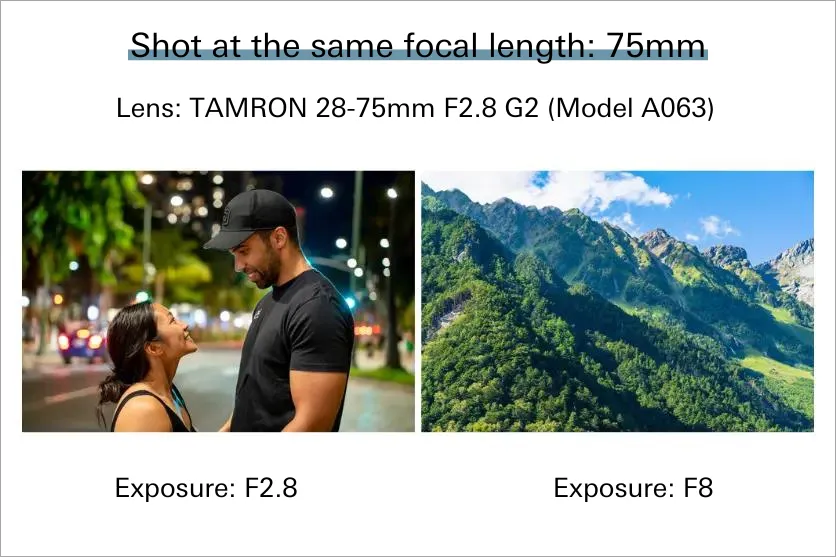
For example, photographing a person at F2.8 can help make the subject stand out while the background becomes soft and blurred.
Stopping down to F8 increases the depth of field, potentially bringing more of the scene into focus.
However, aperture is only one factor.
Background blur is also influenced by:
- Focal length
- Subject distance
- Background distance
- Sensor size
- Aperture
For example, moving closer to your subject can also change the appearance of the background and the amount of blur.
What Is Bokeh?
Bokeh refers to the visual appearance of out-of-focus areas in a photograph.
It is often associated with the soft, blurred backgrounds produced when shooting with a wide aperture.
However, bokeh is more than simply “background blur.”
The shape, smoothness and appearance of out-of-focus highlights can affect the character of the photograph.
Lens design can influence the appearance of bokeh, including the shape of the aperture diaphragm.
TAMRON uses multiple-blade diaphragms in its lenses to help produce rounded out-of-focus highlights.
If you want to create more noticeable background blur, try:
- Using a wider aperture.
- Moving closer to your subject.
- Increasing the distance between your subject and the background.
- Using a longer focal length when appropriate.
Aperture, Shutter Speed and ISO
Aperture does not work independently.
It is one of the three main exposure settings:
- Aperture
- Shutter speed
- ISO
Together, these settings are commonly referred to as the exposure triangle.
Changing one setting often means adjusting another to maintain the desired exposure.
Aperture
Aperture controls:
- The amount of light entering the camera
- Depth of field
- Background blur
Shutter Speed
Shutter speed controls:
- How long the sensor is exposed to light
- Motion blur
- The ability to freeze or intentionally blur movement
ISO
ISO controls the camera sensor’s sensitivity to the available light.
Increasing ISO can help produce a brighter exposure in darker conditions, but very high ISO settings can introduce more visible image noise.
How Do Aperture, Shutter Speed and ISO Work Together?
Imagine you are photographing a person outdoors.
You choose F2.8 because you want to separate the subject from the background.
Because F2.8 allows a relatively large amount of light into the camera, you may be able to use a faster shutter speed while keeping ISO relatively low.
Now imagine photographing a landscape.
You decide to use F8 because you want greater depth of field.
Because F8 allows less light through the lens, you may need to compensate with:
- A slower shutter speed
- A higher ISO
- More available light
- Or a combination of these
The important point is that there is no single “correct” combination.
The appropriate settings depend on the lighting, subject movement and creative effect you want.
Aperture and Shutter Speed Example
Consider two photographs taken in the same lighting conditions.
Example 1: F2.8
You select:
F2.8 → 1/500 sec → ISO 100
The wide aperture allows more light into the camera, making a relatively fast shutter speed possible.
This can be useful for portraits or moving subjects.
Example 2: F8
You change the aperture to:
F8 → 1/60 sec → ISO 100
Because F8 allows less light through the lens, the shutter speed needs to become slower to maintain a similar exposure.
This may provide greater depth of field, but the slower shutter speed also increases the possibility of camera shake.
If your subject is moving, you may instead increase ISO to maintain a faster shutter speed.
These are examples rather than fixed rules. Your camera’s metering, available light and desired exposure will determine the actual settings.
What Is Aperture Priority Mode?
If you are still learning manual exposure, Aperture Priority can be a useful way to practice.
Depending on the camera manufacturer, this mode may be labeled A or Av.
You select the aperture, and the camera automatically chooses an appropriate shutter speed based on the available light and metering.
This allows you to concentrate on one of the most visually important settings.
For example:
Portrait → choose F2.8
Landscape → choose F8
Macro → choose an aperture based on the desired depth of field
The camera then handles the corresponding shutter speed.
However, always check the resulting shutter speed. If it becomes too slow for handheld photography, you may need to open the aperture, increase ISO or use a tripod.
Recommended Aperture Settings for Different Subjects
There is no single aperture that is correct for every situation.
Instead, choose an aperture based on what you want the photograph to look like.
Portrait Photography
For portraits, a wide aperture can help separate the subject from the background.
Try starting around:
F1.8–F4
The exact setting depends on the lens, focal length, distance and how much of the subject you want in focus.
A TAMRON lens such as the 35-150mm F/2-2.8 Di III VXD (Model A058) provides a particularly broad range while offering a maximum aperture of F2 at the wide end and F2.8 at the telephoto end.
It can be useful for:
- Portraits
- Events
- Travel
- Weddings
- Everyday photography

Landscape Photography
For landscapes, photographers often use a narrower aperture to increase depth of field.
A useful starting point is:
F8–F11
This can help keep foreground and background elements within the depth of field.
However, you should not automatically use the smallest available aperture.
Very small apertures can introduce diffraction and reduce fine detail.

Street Photography
Street photography can require quick reactions.
A moderate aperture such as:
F4–F8
can provide a useful balance between depth of field and available light.
In bright conditions, you may be able to use F8 for greater depth of field.
In darker environments, opening the aperture can allow a faster shutter speed.
Sports Photography
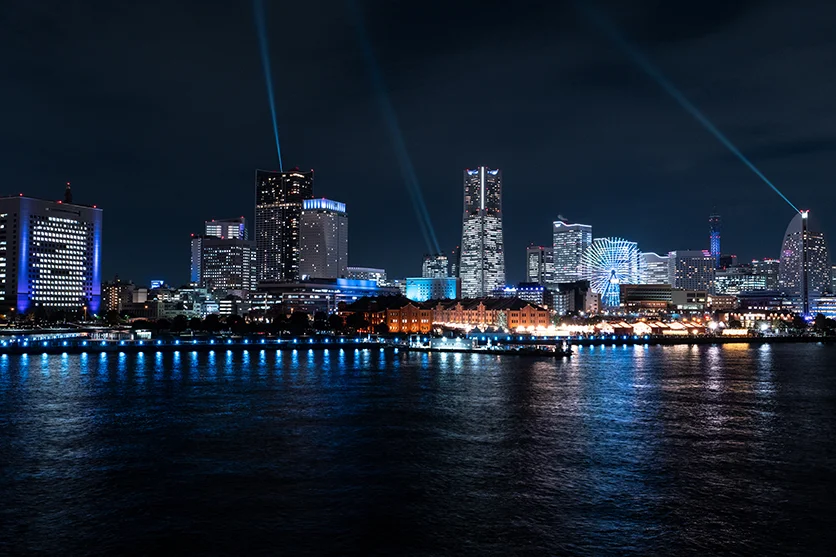
Sports photography often prioritizes shutter speed because the subject is moving.
A wide aperture such as:
F2.8–F4
can allow more light into the camera, helping maintain a fast shutter speed.
This can be particularly useful for indoor sports or events where available light is limited.
The 70-180mm F/2.8 Di III VC VXD G2 (Model A065) is an example of a telephoto zoom with a constant F2.8 aperture that can be useful for sports, events and portraits.
Night Photography
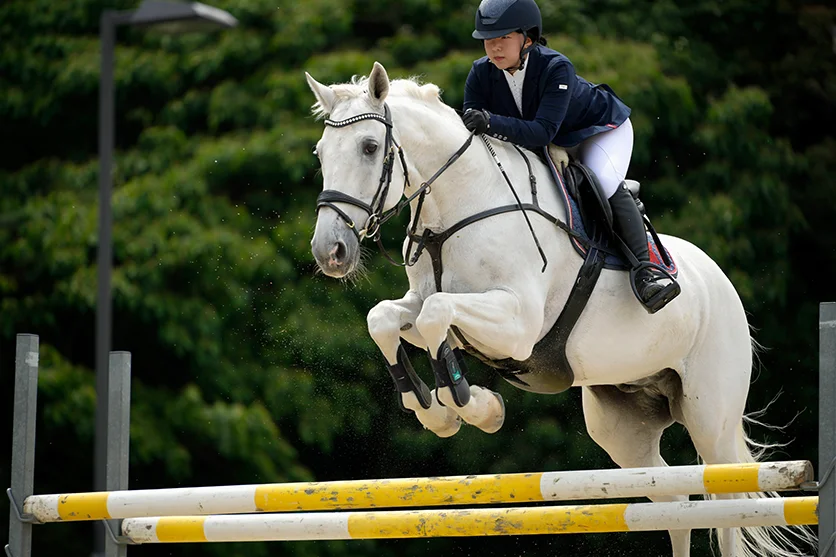
Night photography requires balancing aperture, shutter speed and ISO.
For handheld night photography, a wider aperture can allow more light to reach the sensor and help maintain a faster shutter speed.
For a tripod-mounted night landscape, however, you may choose a narrower aperture such as:
F8–F11
and compensate with a longer shutter speed.
The correct choice depends on whether your priority is freezing movement, controlling depth of field or capturing maximum detail.
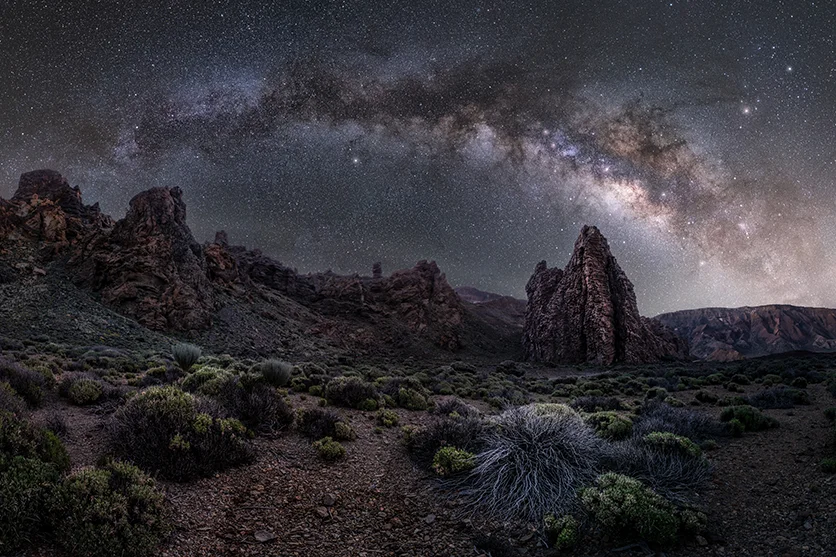
Astrophotography
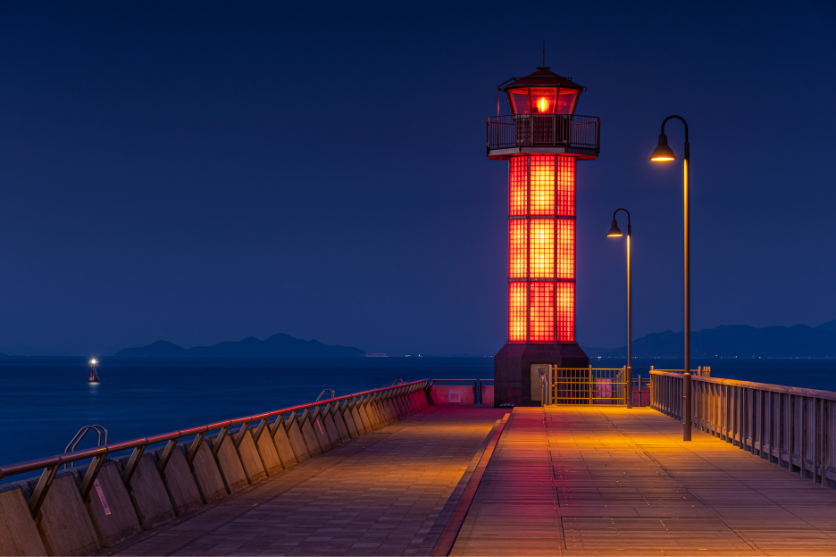
For photographing stars and the night sky, a wide aperture is often useful because it allows more light to reach the sensor.
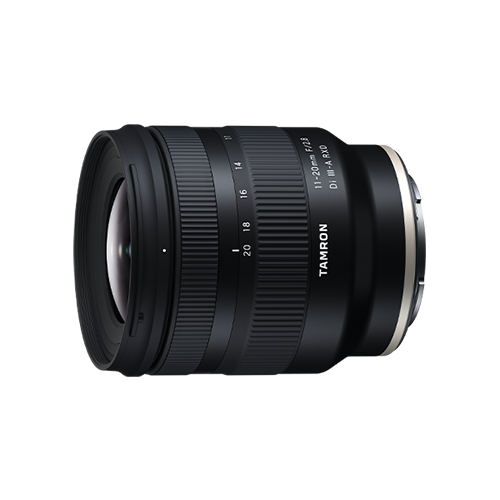
A lens such as the 11-20mm F/2.8 Di III-A RXD (Model B060) combines an ultra-wide field of view with a constant F2.8 aperture, making this type of lens useful for astrophotography and expansive night scenes.
A typical starting point might be:
F2.8 → 10–20 sec → ISO adjusted to the scene
The exact settings depend on the focal length, camera, lighting conditions and whether you want to minimize star movement.
Aperture for Close-Up and Macro Photography
Macro photography presents a special challenge.
When focusing very close to a subject, depth of field becomes extremely shallow.
Even when using F2.8, only a small portion of a close-up subject may appear sharp.
Because of this, macro photographers often stop down to increase depth of field.
For example:
F5.6–F11
may provide more of the subject in focus than shooting wide open.
However, stopping down reduces the amount of light reaching the sensor.
You may therefore need to compensate with shutter speed, ISO or additional lighting.
A dedicated macro lens such as TAMRON’s 90mm F/2.8 Di III Macro VXD (Model F072) can provide 1:1 magnification while giving photographers control over aperture and depth of field for close-up work.
How to Choose the Right Aperture
Instead of memorizing a single aperture for every type of photography, start by asking what you want to achieve.
Want more background blur?
Use a smaller F-number such as F1.8, F2 or F2.8.
Want more of the scene in focus?
Use a larger F-number such as F8 or F11.
Need a fast shutter speed?
A wider aperture can allow more light into the camera.
Shooting a landscape?
Start around F8–F11 and adjust according to the scene.
Shooting a portrait?
Try a wide aperture and adjust based on how much of your subject needs to be sharp.
Shooting sports?
Prioritize a fast shutter speed, then choose an aperture that provides enough light.
Shooting at night?
Balance aperture, shutter speed and ISO according to whether you are shooting handheld or using a tripod.
Does a Larger Aperture Always Mean a Better Photograph?
Not necessarily.
A wide aperture can be useful when you want shallow depth of field or need more light.
But sometimes you need more of the scene in focus.
For example, a landscape photographed at F2.8 may have foreground and background elements outside the desired depth of field.
Stopping down to F8 can provide a more suitable result.
Similarly, a portrait does not always need to be photographed at the lens’s widest aperture.
If you want both eyes and more of the face to remain within the depth of field, stopping down slightly may produce a more practical result.
The goal is not to use the widest aperture available.
The goal is to choose the aperture that best matches the photograph you want to create.
Understanding F-Number on Zoom Lenses
When looking at a zoom lens, pay attention to how its aperture is written.
For example:
28-75mm F2.8
means the lens has a constant maximum aperture of F2.8 throughout the zoom range.
On the other hand:
50-300mm F4.5-6.3
means the maximum aperture changes as you zoom.
This difference can matter when shooting video or working in changing light because a constant-aperture lens can maintain a consistent maximum aperture throughout the zoom range.
F-Number and Lens Selection
Aperture is one factor to consider when choosing a lens, but it should not be the only one.
Think about:
- Focal length
- Maximum aperture
- Zoom range
- Minimum focusing distance
- Image stabilization
- Autofocus
- Size and weight
- Camera compatibility
- Your usual subjects
For example, a photographer who mainly shoots landscapes may prioritize focal length and portability over an extremely large maximum aperture.
A portrait photographer may place greater importance on maximum aperture and subject separation.
A sports photographer may prioritize a combination of aperture, autofocus, focal length and shutter-speed capability.
Final Thoughts
Understanding aperture and F-number gives you greater control over both exposure and the visual appearance of your photographs.
Remember the basic relationship:
Small F-number = wide aperture = more light
Large F-number = narrow aperture = less light
A wide aperture can help you shoot in low light and create a shallow depth of field.
A narrower aperture can help you increase depth of field and keep more of a scene in focus.
But aperture does not work alone.
Aperture, shutter speed and ISO work together to determine exposure, while aperture and the other factors affecting depth of field help determine how the photograph looks.
Instead of trying to memorize one “best” aperture, think about what you want the photograph to communicate.
Want your subject to stand out?
Try a wider aperture.
Want an expansive landscape to remain sharp?
Try stopping down.
Want to freeze motion in low light?
A wider aperture can help you maintain a faster shutter speed.
The more you experiment with different F-numbers, the easier it becomes to understand how aperture can shape both the technical and creative aspects of your photography.
TAMRON products mentioned in this article