
What Is Focal Length? A Beginner’s Guide to Camera Lenses
When you start using an interchangeable-lens camera, you’ll quickly encounter numbers such as 16mm, 24mm, 35mm, 50mm, 85mm, 200mm, and 500mm.
These numbers describe the focal length of a lens.
But what exactly does focal length mean, and why does it matter?
In simple terms, focal length affects how much of a scene you can capture and how large your subject appears in the frame. It is one of the most important characteristics to understand when choosing a camera lens.
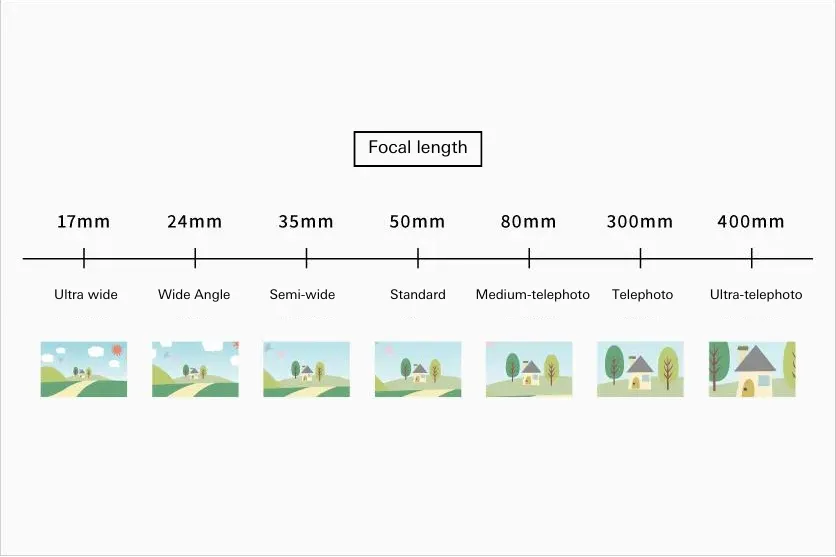
A shorter focal length generally gives you a wider angle of view, while a longer focal length gives you a narrower angle of view and makes distant subjects appear larger.
Understanding focal length can help you choose the right lens for landscapes, portraits, travel, sports, wildlife, and everyday photography.
In this guide, we’ll explain what focal length is, how it affects angle of view, how different focal lengths change the look of a photograph, and how to choose the right focal length for your subject.
What Is Focal Length?
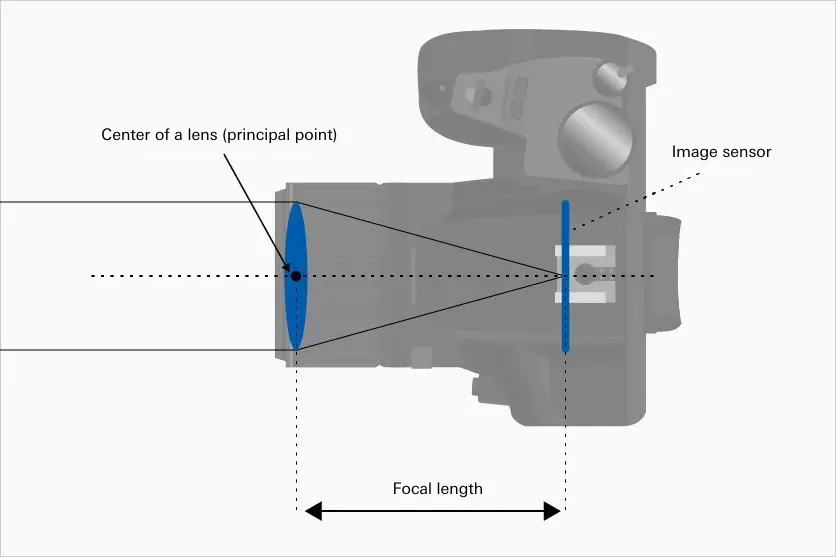
Focal length is a measurement, expressed in millimeters (mm), that describes an important optical characteristic of a lens.
You will usually see the focal length written directly in the lens name.
For example:
28-75mm F/2.8 Di III VXD G2
The 28-75mm indicates the focal-length range of the lens.
Because it covers a range of focal lengths, this is a zoom lens.
A lens such as:
20mm F/2.8
has a single focal length, so it is a prime lens.
The focal length is related to the distance between the lens’s optical principal point and the camera’s image sensor when the lens is focused at infinity. For beginners, however, the most useful thing to remember is simpler:
Focal length determines the lens’s angle of view and strongly influences how a scene is framed.
What Does Focal Length Do to a Photo?
The easiest way to understand focal length is to compare a wide-angle lens with a telephoto lens.
Short focal length
A shorter focal length gives you a wider angle of view.
You can capture more of the scene, making short focal lengths useful for:
- Landscapes
- Architecture
- Interiors
- Travel
- Group photos
- Environmental portraits
Long focal length
A longer focal length gives you a narrower angle of view.
Distant subjects appear larger, making longer focal lengths useful for:
- Wildlife
- Birds
- Sports
- Events
- Portraits
- Distant details
So, as a general rule:
Short focal length → wider view
Long focal length → narrower view
This relationship between focal length and angle of view is one of the most important concepts to understand when choosing a lens.
What Is Angle of View?
Angle of view refers to the amount of a scene that the camera can capture through the lens.
A wider angle of view allows you to capture more of the surroundings.
A narrower angle of view captures a smaller portion of the scene.
For example, imagine standing in front of a mountain.
With a wide-angle lens, you might be able to capture the entire mountain, the surrounding landscape, and the sky.
Switch to a telephoto lens, and you might instead capture only a small section of the mountain.
The scene hasn’t changed.
The lens has changed how much of the scene you can see.
How Focal Length Changes the Look of a Photo
Changing focal length doesn’t simply make your subject “bigger.”
It also changes how much of the surrounding environment appears in the photograph and can influence the relationship between the subject and background.
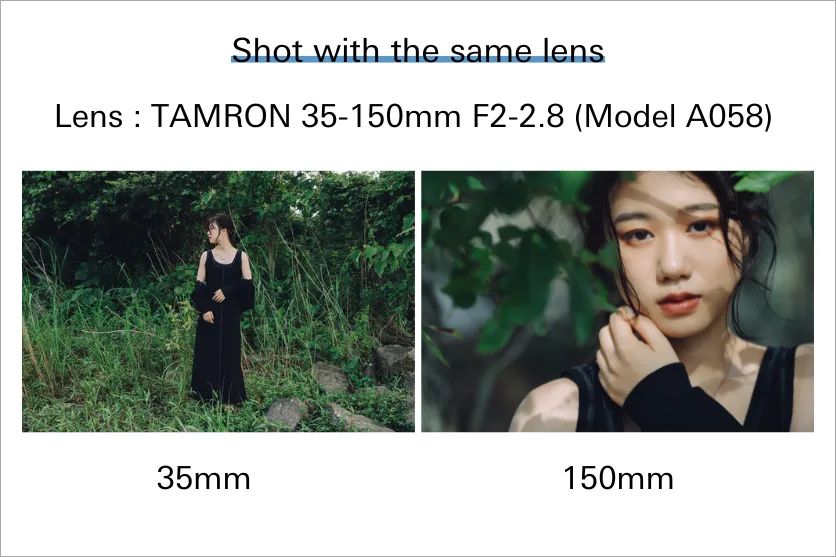
For example, imagine photographing a person using a zoom lens.
At 35mm, you might include the person and much of the environment.
At 85mm, you can fill more of the frame with the person’s face and body.
At 150mm, you can create a much tighter portrait with a narrower background view.
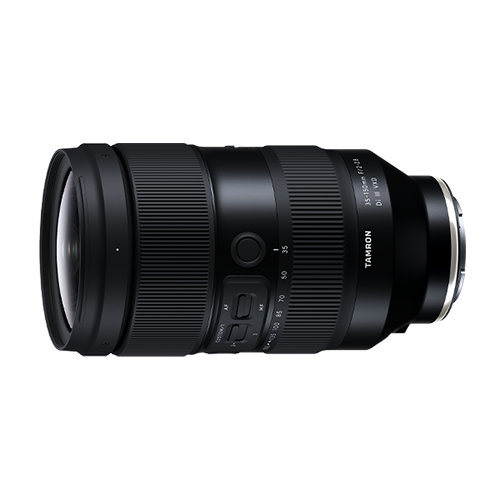
TAMRON demonstrates this effect with the 35-150mm F/2-2.8 Di III VXD (Model A058). At 35mm, the wider view includes more of the surroundings, while at 150mm the tighter view emphasizes the person’s expression and background blur.
This is one reason a versatile zoom lens can be useful: you can change the composition simply by changing focal length.
Wide-Angle, Standard and Telephoto Focal Lengths
For full-frame photography, focal lengths are commonly grouped into three broad categories.
| Lens type | Approximate focal length | Typical characteristics |
|---|---|---|
| Wide-angle | 35mm or shorter | Broad view, strong sense of space |
| Standard | Around 50mm | Natural-looking perspective |
| Telephoto | Around 80mm or longer | Narrow view, distant subjects appear larger |
These aren’t strict boundaries. There is some overlap between categories, and different photographers may use slightly different definitions.
For beginners, however, this is a useful way to understand how focal lengths relate to different types of lenses.
What Are Wide-Angle Lenses Good For?
Wide-angle lenses are particularly useful when you want to show the relationship between your subject and its surroundings.
They’re commonly used for:
- Landscape photography
- Architecture
- City photography
- Travel
- Interior photography
- Group photos
- Environmental portraits
- Astrophotography
- Vlogging
Wide-angle lenses can also create a strong sense of depth.
Objects close to the camera can appear relatively large, while distant objects appear farther away.
This can create dynamic and immersive photographs.
How to Use a Wide-Angle Lens
One of the biggest advantages of a wide-angle lens is that it allows you to get close to your subject while still including a large amount of the surrounding environment.
Try photographing:
- A person in a large landscape
- A building from close range
- A child playing in a park
- A pet in its environment
- A city street
- A dramatic foreground with mountains in the background
The closer you get to the foreground subject, the stronger the perspective effect becomes.
This can be used creatively, but be careful with people near the edges of the frame because wide-angle lenses can make them appear stretched.
What Is a Standard Lens?
A standard lens has an angle of view that is relatively close to the way we naturally perceive a scene.
On a full-frame camera, around 50mm is commonly considered a standard focal length.
Standard focal lengths are useful for:
- Everyday photography
- Street photography
- Portraits
- Food
- Family photography
- Travel
- Snapshots
Because the perspective feels natural, standard lenses can be a great way to learn composition.
What Is a Telephoto Lens?
A telephoto lens has a longer focal length and a narrower angle of view.
On a full-frame camera, focal lengths of approximately 80mm and above are commonly considered telephoto.
Examples include:
- 85mm
- 100mm
- 135mm
- 200mm
- 300mm
- 400mm
- 500mm
The longer the focal length, the narrower the field of view generally becomes.
This allows you to fill the frame with subjects that are far away.
What Are Telephoto Lenses Good For?
Telephoto lenses are commonly used for:
- Wildlife
- Birds
- Sports
- Motorsports
- Events
- Concerts
- Portraits
- Travel details
- School sports days
They’re particularly useful when you cannot physically get close to the subject.
For example, a 500mm lens can make a distant bird appear much larger in the frame than a 50mm lens.
Telephoto Lenses and Background Blur
Telephoto lenses are also popular for portraits because they can make it easier to separate a subject from the background.
Combined with a large aperture, a longer focal length can produce strong background blur.
This helps draw attention to the subject while reducing distracting details behind them.
Telephoto lenses can also create a compression effect, making distant elements in the background appear visually closer together. This can be used creatively in portraits, landscapes, and other situations.
How Focal Length Affects Depth of Field
Focal length is also related to the way depth of field is perceived.
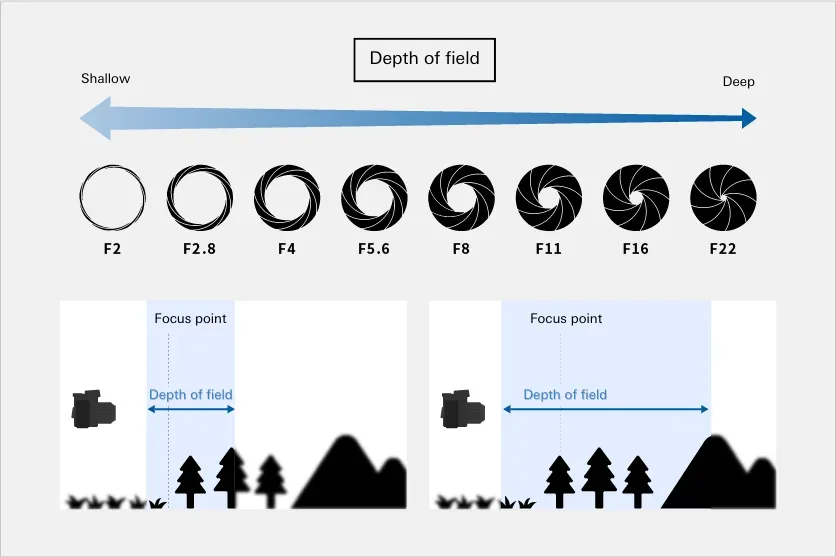
Depth of field refers to the range of an image that appears acceptably sharp.
A shallow depth of field can leave the subject sharp while creating a soft, blurred background.
A deeper depth of field keeps more of the scene in focus.
A lens’s focal length isn’t the only factor involved. Aperture, subject distance, and sensor size also affect depth of field.
In general, wide-angle lenses make it easier to keep a larger portion of a scene in focus, while longer focal lengths can make background blur more noticeable, particularly when combined with a large aperture and close subject distance.
Focal Length and Aperture Work Together
When choosing a lens, don’t look at focal length alone.
The maximum aperture is another important specification.
For example:
28-75mm F/2.8
tells you two things:
- 28-75mm: focal-length range
- F2.8: maximum aperture
A lens with a large maximum aperture can allow more light into the camera and provide stronger background separation.
This can be useful for:
- Portraits
- Indoor photography
- Night photography
- Events
- Low-light shooting
- Creative bokeh
TAMRON’s current focal-length guide also emphasizes considering the lens’s maximum aperture alongside focal length when choosing a lens.
Prime Lens vs. Zoom Lens
Focal length also determines whether a lens is a prime lens or zoom lens.
Prime Lens
A prime lens has one fixed focal length.
For example:
35mm F/1.8
You cannot change the focal length.
If you want a wider or tighter composition, you generally need to change your position.
The advantage is that prime lenses can often be compact and offer large maximum apertures.
Zoom Lens
A zoom lens has a range of focal lengths.
For example:
28-75mm F/2.8
You can change the focal length anywhere within that range.
Zoom lenses are convenient when:
- Your shooting distance changes
- You photograph different subjects
- You’re traveling
- You want to carry fewer lenses
- You need to react quickly to changing situations
For beginners, a versatile zoom lens can be a particularly useful way to explore different focal lengths.
Full-Frame vs. APS-C: Why Focal Length Can Look Different
One important detail beginners often encounter is sensor size.
The same focal length can produce different angles of view depending on the camera’s sensor size.
For example, a 35mm lens on a full-frame camera and a 35mm lens on an APS-C camera do not produce exactly the same field of view.
This is why photographers sometimes talk about 35mm-equivalent focal length.
For APS-C cameras, the approximate conversion is:
- Sony/Nikon APS-C: focal length × 1.5
- Canon APS-C: focal length × 1.6
So a 20mm lens on a Sony APS-C camera gives a field of view roughly comparable to a 30mm lens on full frame.
The exact relationship depends on the camera’s sensor dimensions, so these figures are best treated as practical approximations. TAMRON’s own guide uses these crop factors when explaining 35mm-equivalent focal length.
Full-Frame and APS-C Focal Length Examples
| Full-frame equivalent | Approx. Sony/Nikon APS-C | General category |
|---|---|---|
| 24mm | 16mm | Wide-angle |
| 35mm | 23mm | Wide-angle |
| 50mm | 33mm | Standard |
| 85mm | 57mm | Short telephoto |
| 180mm | 120mm | Telephoto |
| 300mm | 200mm | Telephoto |
| 400mm | 267mm | Ultra-telephoto |
This can be useful when comparing lenses designed for different sensor formats.
However, remember that crop factor changes the angle of view, not the physical focal length of the lens.
A 20mm lens remains a 20mm lens.
How to Choose a Focal Length for Different Types of Photography
Instead of memorizing every focal length, start by thinking about what you want to photograph.
Landscapes
For expansive landscapes, consider a wide-angle lens.
Around 16-35mm can give you plenty of room to include:
- Mountains
- Beaches
- Forests
- Architecture
- Cityscapes
- Sky
A wide-angle lens can also emphasize foreground details and create a strong sense of depth.
Portraits
For portraits, standard to short-telephoto focal lengths can provide natural-looking results.
Common choices include:
- 50mm
- 75mm
- 85mm
- 105mm
- 135mm
Longer focal lengths can give you more working distance and help produce stronger background separation.
However, wider lenses can also work well when you want to show the person’s surroundings.
There is no single “correct” portrait focal length.
Travel Photography
Travel often involves many different subjects.
You might photograph a landscape in the morning, architecture in the afternoon, and people or food in the evening.
A standard zoom or all-in-one zoom can therefore be very convenient.
Instead of carrying several lenses, you can cover multiple focal lengths with one lens.
Wildlife and Bird Photography
Wildlife and bird photography often requires long focal lengths because you cannot safely or practically get close to the subject.
Consider lenses in ranges such as:
- 100-400mm
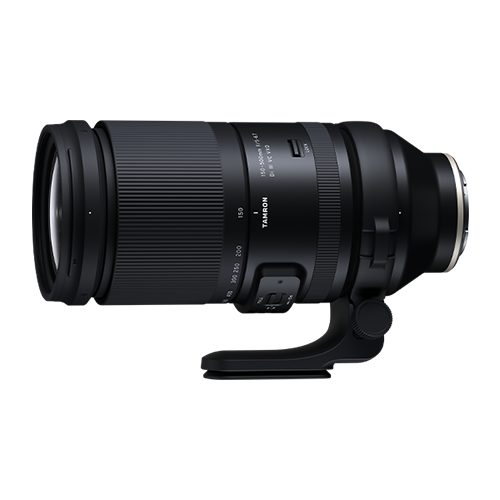
- 150-500mm
- 200-600mm
The appropriate range depends on the subject, shooting location, and camera system.
A longer focal length gives you more reach, while image stabilization and autofocus become increasingly important as focal length increases.
Sports Photography
Sports photographers often use telephoto zoom lenses because the action can take place far away.
A lens such as a 70-180mm can be useful for closer action and portraits, while longer zooms can provide additional reach when shooting from the sidelines or stands.
Street Photography
For street photography, standard and moderate wide-angle focal lengths can work well.
Common choices include:
- 24mm
- 28mm
- 35mm
- 50mm
The choice largely depends on how much of the environment you want to include and how close you prefer to work to your subjects.
A Simple Focal Length Guide
If you’re just starting out, this table can help:
| Focal length | General type | Common uses |
|---|---|---|
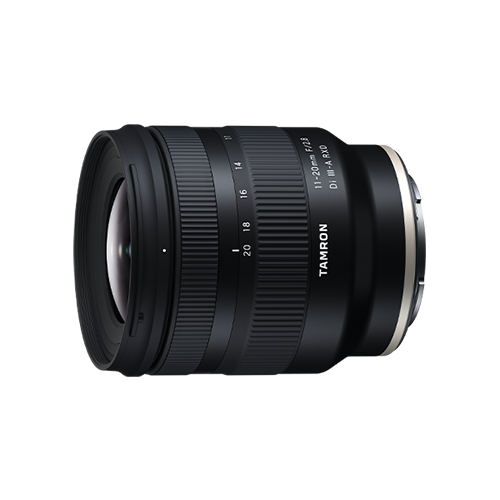
| 11-20mm | Ultra-wide | Architecture, interiors, landscapes, astrophotography |
| 16-24mm | Wide-angle | Landscapes, travel, architecture |
| 24-35mm | Wide-angle | Travel, street, environmental portraits |
| 35-50mm | Standard / wide | Everyday, street, family, travel |
| 50-75mm | Standard | Everyday, portraits, food |
| 85-135mm | Short telephoto | Portraits, events, details |
| 150-300mm | Telephoto | Sports, wildlife, outdoor subjects |
| 400-500mm+ | Ultra-telephoto | Birds, wildlife, distant action |
These are general guidelines rather than strict rules. Creative photography often involves deliberately using an unexpected focal length.
Does a Longer Focal Length Always Mean Better Background Blur?
Not necessarily.
Focal length is only one factor that affects background blur.
Background appearance also depends on:
- Aperture
- Subject distance
- Background distance
- Sensor size
- Camera-to-subject distance
For example, a 50mm lens at F1.8 can create significant background blur, while a 200mm lens at a smaller aperture can produce a different result.
The important thing is to consider focal length and aperture together.
Can You Change Perspective Just by Zooming?
This is an important distinction.
Changing focal length changes the angle of view, but simply zooming does not change perspective in the same way that physically moving the camera does.
Perspective is primarily determined by camera position relative to the subject.
For example, if you photograph a person from the same position and zoom from 35mm to 100mm, you’re capturing a narrower portion of the scene.
If instead you physically move closer with the 35mm lens, the relationship between the foreground subject and background changes.
This is why focal length and camera position should be considered separately.
How to Choose the Right Focal Length
Rather than asking which focal length is the “best,” think about what you want your photograph to communicate.
Want to show the environment?
Try a wide-angle focal length.
Want a natural everyday perspective?
Try a standard focal length.
Want to emphasize your subject?
Try a telephoto focal length.
Want to photograph distant subjects?
Use a long telephoto or ultra-telephoto focal length.
Want maximum flexibility?
Consider a zoom lens covering multiple focal lengths.
Once you understand these differences, choosing a lens becomes much easier.
Start Exploring Focal Length
Focal length is one of the most important concepts to understand when using an interchangeable-lens camera.
The basic relationship is simple:
Short focal length = wider angle of view
Long focal length = narrower angle of view
But focal length can also influence how you compose an image, how much of the environment you include, how you photograph distant subjects, and how you use background blur.
You don’t need to memorize every focal length.
Instead, experiment.
If you have a zoom lens, photograph the same subject at several different focal lengths. Try 24mm, 35mm, 50mm, 85mm, and 100mm if your lens allows it.
Look at how the composition changes.
Then try moving closer or farther away and compare the results.
This hands-on experimentation is one of the best ways to understand what focal length actually does.
Once you understand how focal length affects your photographs, you’ll have a much better idea of which lens to choose for the way you want to photograph.
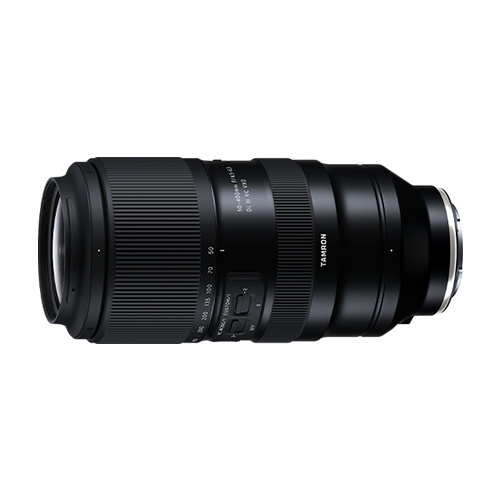
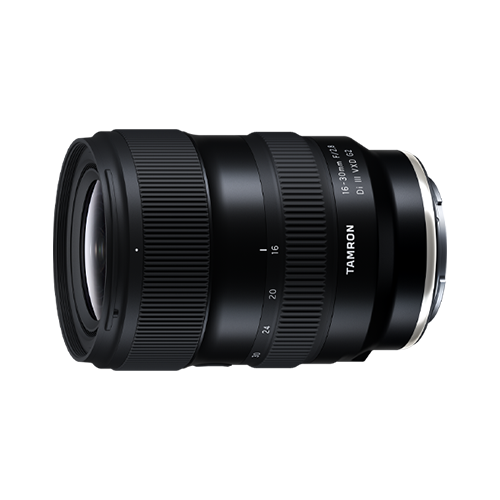
TAMRON products mentioned in this article