
- How to create beautiful bokeh effects: Using bokeh to capture stunning photos
- February 26, 2025
How to create beautiful bokeh effects: Using bokeh to capture stunning photos
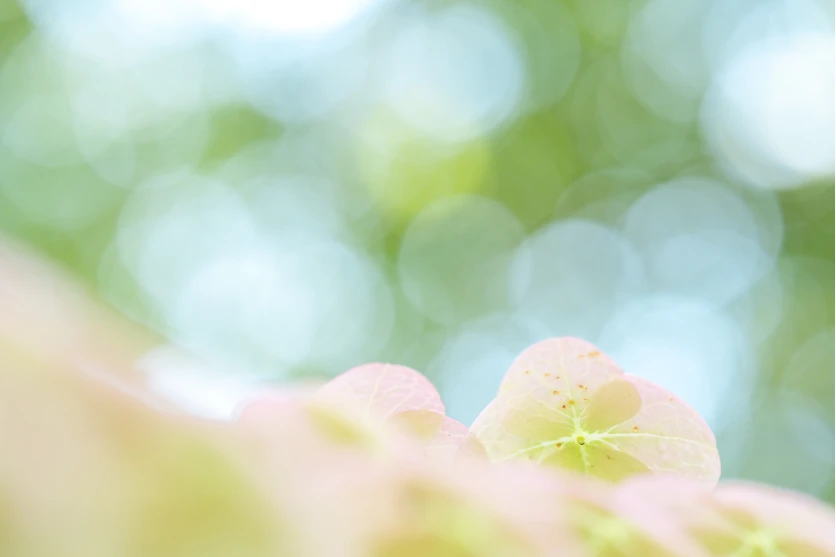
In photography, “bokeh” is one of the key expressions that helps bring the main subject into focus. However, bokeh is a deep expression, and the impression it creates can greatly change depending on its intensity and where it’s placed in the composition. In this article, we will discuss how to create bokeh, practical applications for different scenes, and share useful tips for incorporating bokeh into your shots.
The effect and impression of bokeh
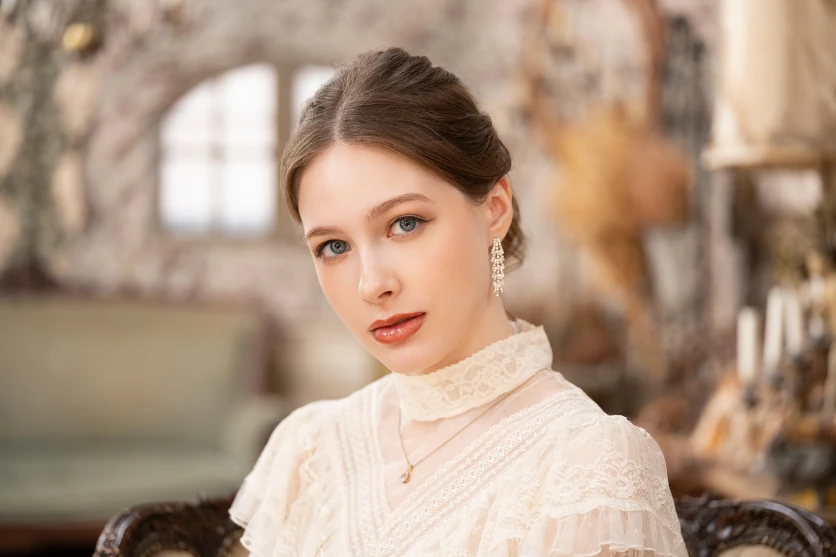
TAMRON 90mm F2.8 MACRO (Model F072) Focal length: 90mm Exposure: F3 Shutter Speed: 1/80sec ISO: 500
In photography, “bokeh” is more than just the blur of a background; it’s a critical element that influences the overall impression of a photo. Background bokeh naturally draws attention to the subject, making the photo more impactful. For example, in portrait photography, the soft background bokeh that overlaps with a person’s expression and gestures enhances the mood of the subject.
Bokeh also serves to organize the information in the photo. By blurring complex backgrounds and unnecessary elements, the focus is directed more clearly to the subject, creating a sharper contrast between the important and unimportant parts of the image.
Furthermore, the strength and softness of bokeh can alter the overall impression of the photo. Soft bokeh can create a gentle and calm atmosphere, while larger bokeh can produce a powerful and dramatic effect.Using a lens with a short minimum object distance allows you to get closer to the subject, enabling you to capture the intricate beauty of details that might be missed by the naked eye. The charm of macro photography lies in the ability to discover unexpected shapes and uncover new aspects of the subject.
Elements that create bokeh
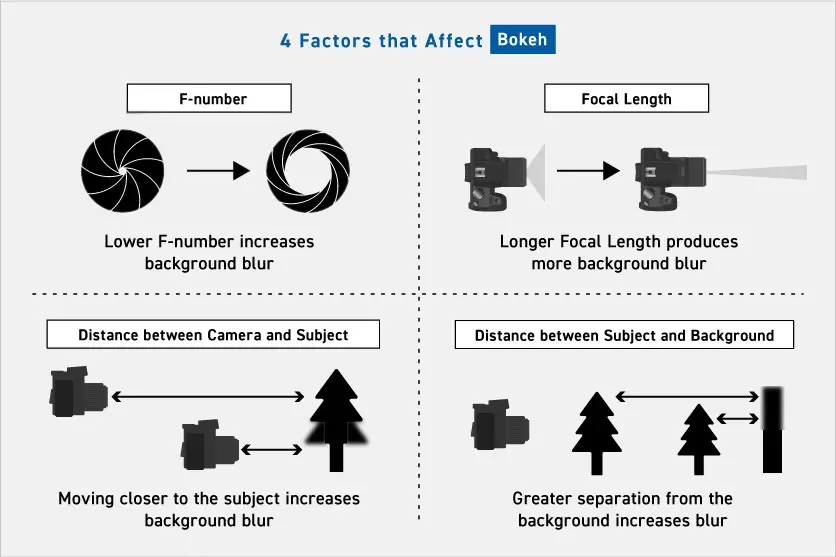
To create beautiful bokeh, the aperture (F-number), focal length, distance from the subject, and the distance between the subject and the background all play crucial roles. Below, we explain the four main elements that contribute to creating bokeh.
F-number (Aperture value)
The smaller the F-number (larger aperture), the shallower the depth of field, and the more pronounced the bokeh will appear. For example, using a lens with a wide aperture (like F2.8) will produce a photo with a large background blur when shooting with the aperture wide open.
On the other hand, for landscapes or snapshots, using a slightly smaller F-number (e.g., F4 or F5.6) allows you to maintain a moderate amount of bokeh while keeping the details of the subject sharp.
When shooting, using the camera’s aperture priority mode helps adjust the bokeh effect while ensuring proper exposure.
Focal length
The longer the focal length of the lens, the narrower the angle of view, and the larger the bokeh will be. For instance, in portrait photography, using a wide-angle lens captures the person within a broad landscape, while using a telephoto lens frames the person more prominently within a narrower field.
With telephoto lenses, the compression effect makes the subject and the background appear closer together. When photographing distant cityscapes or natural scenery as a background, the large bokeh will emphasize the subject, adding a sense of power and grandeur.
Conversely, a standard lens provides a more natural perspective and balanced bokeh, making it suitable for snapshots or portraits that aim to capture a realistic impression of the scene.
Distance between the camera and the subject
The distance between the camera and the subject also affects the size of the bokeh. As you move closer to the subject while maintaining focus, the background bokeh becomes more pronounced.
For example, when capturing close-up shots of flowers, bringing the camera closer to the flower allows you to capture the fine details of the petals while blurring the background to create a dreamy atmosphere. However, the closer you get to the subject, the shallower the depth of field becomes, so macro shots require experience and familiarity with focusing techniques.
Distance between the subject and the background
The distance between the subject and the background also determines the size of the background bokeh. The further apart the subject and the background are, the larger the bokeh will be, while keeping the camera in a fixed position.
For example, in portrait photography, having the model stand further from the background will allow the background to melt into a beautiful gradient of bokeh. Additionally, if the background has light sources like dappled sunlight or street lamps, these can be captured as bokeh, creating soft, magical light effects.
Types of bokeh
There are various types of bokeh in photographic expression. Here, we introduce three representative types: foreground bokeh, background bokeh, and bokeh circles.
Foreground bokeh

TAMRON 17-70mm F2.8 (Model B070) Focal length: 17mm Exposure: F3.2 Shutter Speed: 1/400sec ISO: 400
Foreground bokeh is created by blurring elements in front of the main subject. This effect adds depth to the image, creating a more three-dimensional photograph. Soft foreground bokeh can also create a dreamy atmosphere.
For example, in portraits, incorporating plants or decorations as foreground bokeh enhances the subject’s expression and can give the impression of looking through something.
Background bokeh
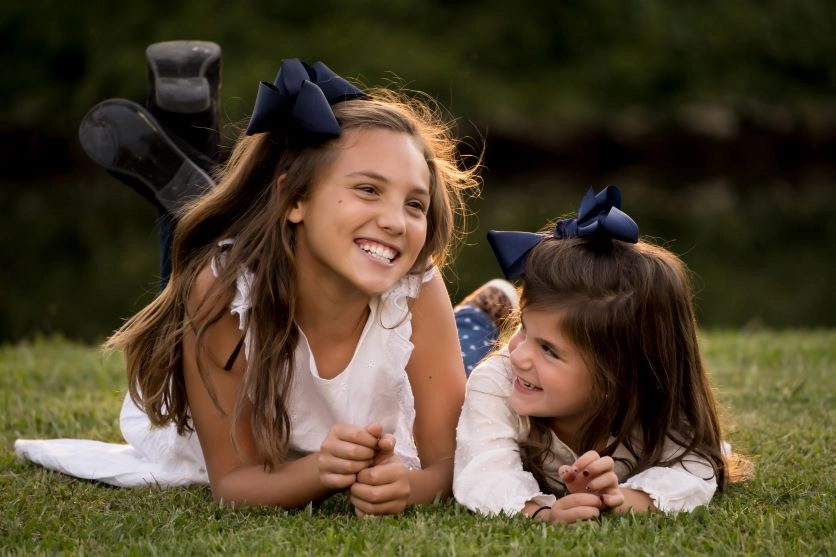
TAMRON 70-300mm F4.5-6.3 (Model A047) Focal length: 300mm Exposure: F6.3 Shutter Speed: 1/640sec ISO: 1250
Background bokeh refers to the blur of elements behind the subject. This effect makes the subject stand out more and can create a photo with a beautiful atmosphere by utilizing the background’s colors and light.
For example, when background bokeh is large, the background details fade, naturally drawing the viewer’s attention to the subject. When background bokeh is weak, the elements in the background become more noticeable, revealing the relationship between the subject and the surroundings. Additionally, combining foreground bokeh, the subject, and background bokeh can create a greater sense of depth in the photo.
Bokeh circles (Bokeh balls)
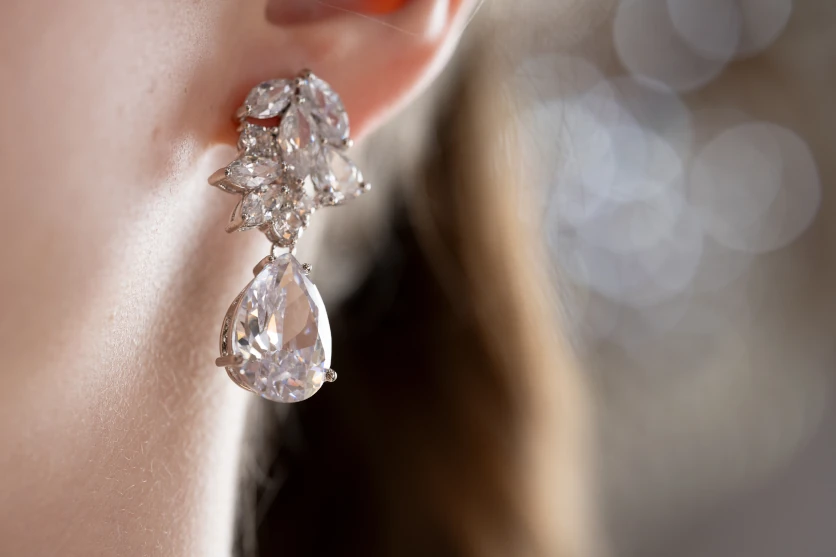
TAMRON 70-300mm F4.5-6.3 (Model A047) Focal length: 136mm Exposure: F5.6 Shutter Speed: 1/60sec ISO: 1000
Bokeh circles occur when point light sources or reflected light become blurred into circular shapes. Various light sources, such as street lamps, illuminations, and reflections on water, can be captured as bokeh balls. In nightscape photography, the city lights create beautiful round bokeh, contributing to a dreamy atmosphere.
To create bokeh balls, shoot with a wide aperture and ensure there is enough distance between the subject and the background light sources. By adjusting the distance between the subject and the background, you can easily create this effect.
[Scene-specific] How to utilize bokeh in your shots
Effective use of bokeh depends on the subject and the scene. Here, we introduce different approaches to using bokeh for representative scenes.
Portraits
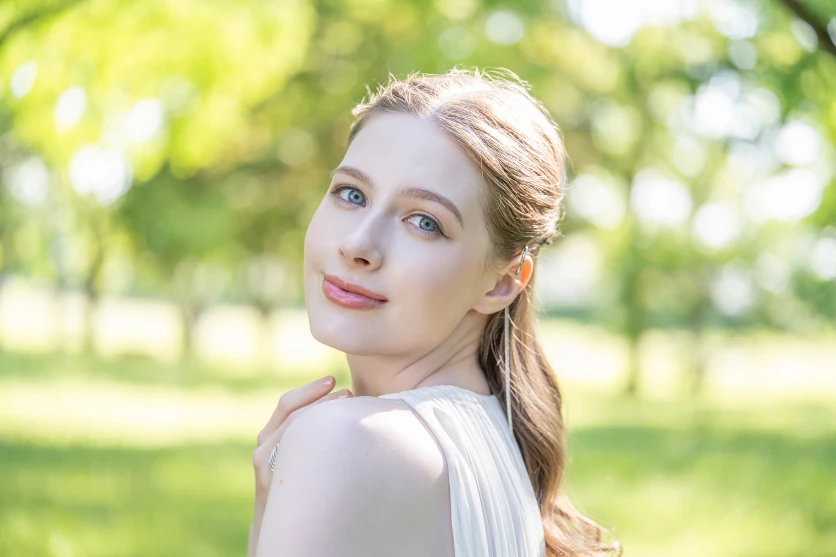
TAMRON 90mm F2.8 MACRO (Model F072) Focal length: 90mm Exposure: F3 Shutter Speed: 1/160sec ISO: 160
In portrait photography, it’s important to accurately capture the subject’s expression and atmosphere. Using a standard or medium telephoto lens with a wide-open aperture allows you to capture detailed portraits while creating beautiful background bokeh. Be mindful of the distances between the camera, the subject, and the background.
Also, using Eye Autofocus (AF) helps ensure that the subject’s eyes are in sharp focus, capturing even the smallest details of their expression. If there are light sources in the background, such as dappled sunlight or street lamps, you can use those as bokeh for a more ethereal effect.
Landscapes
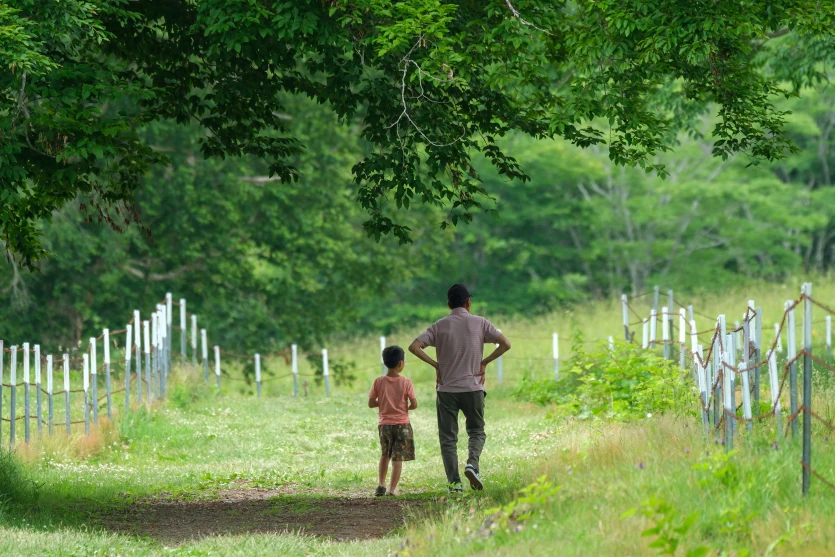
TAMRON 150-500mm F5-6.7 (Model A057) Focal length: 500mm Exposure: F8 Shutter Speed: 1/240sec ISO: 800
In landscape photography, use bokeh to emphasize depth. If the subject is close to the camera, use it as foreground bokeh to create a sense of depth. For subjects further away, use background bokeh to guide the viewer’s gaze toward the subject.
For example, in flower photography, using an aperture that’s slightly wide open for the flowers in the foreground and blurring distant mountains or cityscapes creates a seasonal feel. During twilight, incorporating the color of the sky as background bokeh adds a dramatic atmosphere.
Street photography
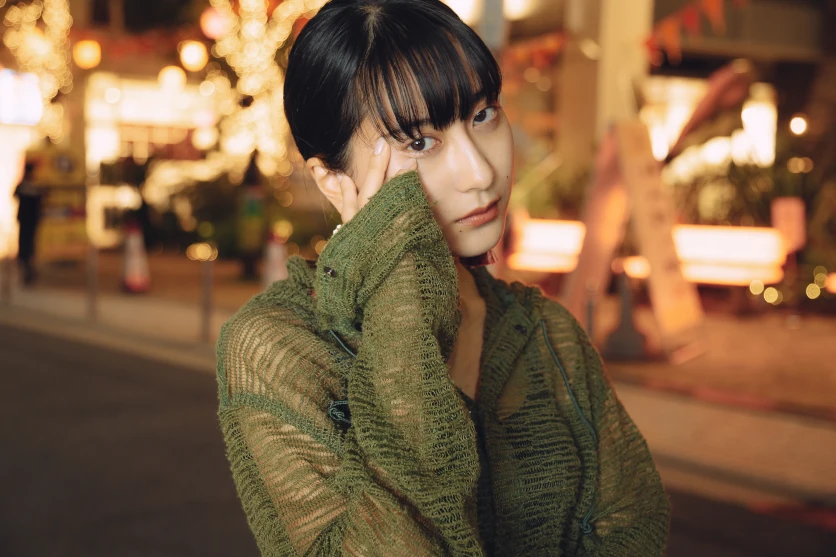
TAMRON 17-70mm F2.8 (Model B070) Focal length: 36mm Exposure: F2.8 Shutter Speed: 1/30sec ISO: 400
In street photography, blurring the background, such as crowds or cityscapes, naturally directs the viewer’s attention to the main subject. Use a standard lens with a slightly open aperture and focus on the subject’s expression and details.
If there are light sources in the background, such as street lamps or neon signs, include them as background bokeh. In nighttime photography, intentionally incorporating these light sources creates an urban atmosphere. Reflections on wet streets or glass surfaces can also be used creatively as bokeh.
Tabletop photography

TAMRON 150-500mm F5-6.7 (Model A057) Focal length: 500mm Exposure: F8 Shutter Speed: 1/240sec ISO: 800
In tabletop photography, particularly for food photography, using bokeh to emphasize three-dimensionality is key. By taking close-up shots of the food and using surrounding plates and decorations as background bokeh, you can create a balanced and impactful photo.
Light management is also crucial. Using side light or backlight creates a sense of depth and makes the photo more engaging. Using diagonal or triangular compositions can also help maintain balance.
Macro photography
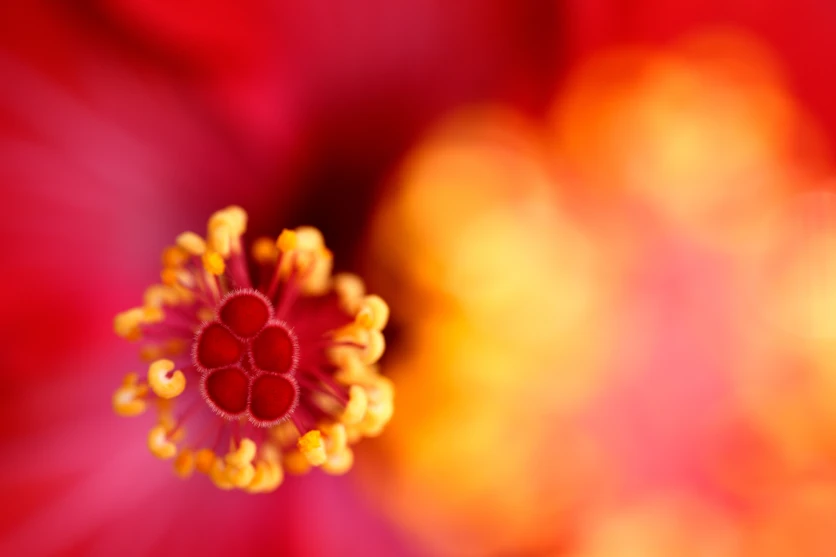
TAMRON 90mm F2.8 MACRO (Model F072) Focal length: 90mm Exposure: F5.6 Shutter Speed: 1/160sec ISO: 800
In macro photography, focusing is a crucial aspect. Select the specific element you want to emphasize and focus precisely on it. This will make the foreground and background beautifully blurred, helping to create an impactful subject.
Choosing the right foreground and background is equally important. For flowers, incorporating a background of similar-colored flowers creates a dreamy, ethereal effect. Alternatively, choosing contrasting colors like leaves or the sky enhances the colors and gives the photo a painterly quality.
Lens selection for bokeh effects
To capture the desired bokeh effect in your photos, selecting the right lens is crucial. Here, we explain key factors to consider when choosing a lens that suits your needs.
Wide aperture
Choosing a large aperture lens (such as F2.8) allows for rich, smooth bokeh. This is particularly effective in portrait photography, where you can capture the subject against a beautifully blurred background.
A lens with a small aperture is also helpful for shooting in low-light environments. By capturing more light, you can more easily shoot bright photos in cloudy, nighttime, or indoor settings.
Focal length
As mentioned earlier, focal length changes the angle of view and bokeh. To capture sharp landscapes, use a wide-angle lens. For emphasizing distant subjects, such as animals or buildings, a telephoto lens is more appropriate.
For portraits and snapshots, a standard lens with a focal length of around 50mm provides a natural perspective and balanced bokeh, making it ideal for capturing a realistic impression of the scene.
Weight and compactness
Lightweight, compact lenses are easy to carry and convenient for handheld shooting, making them ideal for travel or outdoor photography. When hiking for landscape photography or walking for extended periods, lightweight lenses reduce the burden.
Minimum object distance
Lenses with shorter minimum object distances allow you to get closer to the subject. High-magnification lenses that are close to macro lenses expand your ability to shoot with different bokeh expressions. Macro photography can significantly enhance background bokeh.
Autofocus (AF) performance
In bokeh-based photography, accurately focusing on the subject is essential. Ensure that the autofocus is precise and fast enough. If you’re photographing moving subjects, check for tracking performance. Also, for shooting in quiet environments or recording videos, consider checking the noise of the AF motor.
Image stabilization
Image stabilization in lenses is beneficial for handheld shooting, especially in low light or with telephoto lenses. It reduces camera shake, even with slower shutter speeds, providing smoother results. If you can adjust the amount of stabilization, it’s even more flexible for various creative techniques.
Enhance the subject’s impact with beautiful bokeh
Incorporating beautiful bokeh into your photos is a technique that adds depth and atmosphere. Be mindful of the elements that affect bokeh, such as F-number, focal length, and distance to the subject. By applying bokeh appropriately for each shooting scene, you can achieve even more striking and memorable photos.

Lens Featured in this Impression
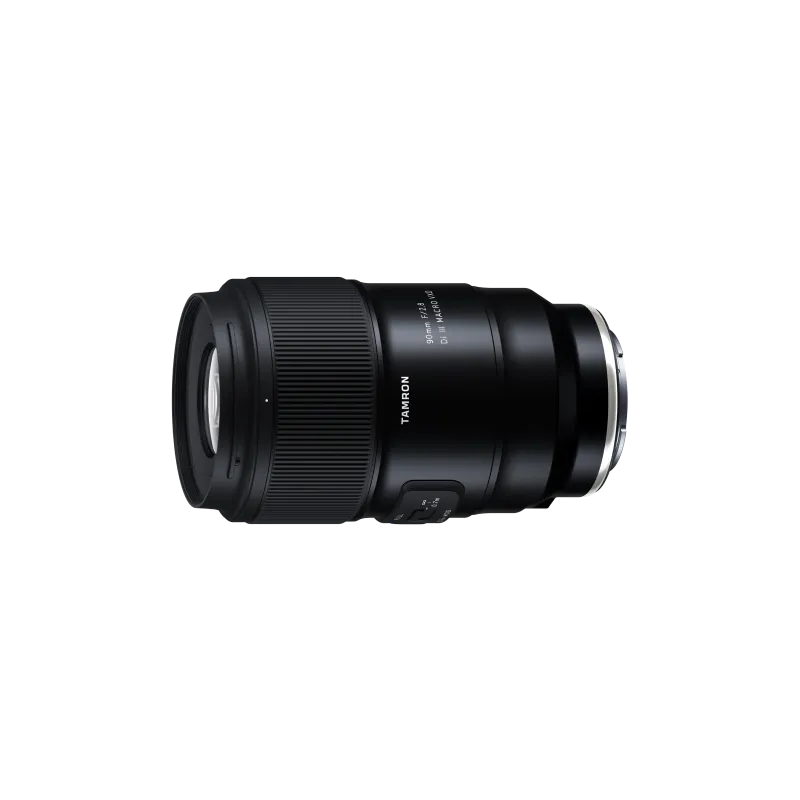
90mm F/2.8 Di III MACRO VXD (Model F072)
The 90mm F/2.8 Di III MACRO VXD (Model F072) is the mirrorless version of the TAMRON 90mm macro lens, beloved for many years. It offers outstanding resolution and optical performance, featuring TAMRON’s first 12-blade circular aperture for stunning bokeh and starburst effects. Its lightweight, compact design ensures easy portability, and the new hood with sliding window simplifies filter use. The lens is also compatible with TAMRON Lens Utility™ and has high-speed, high-precision AF, expanding possibilities for photography and videography. This lens blends TAMRON's legacy of brilliance with advanced technology, marking a new chapter in the 90mm macro lens history.
Learn more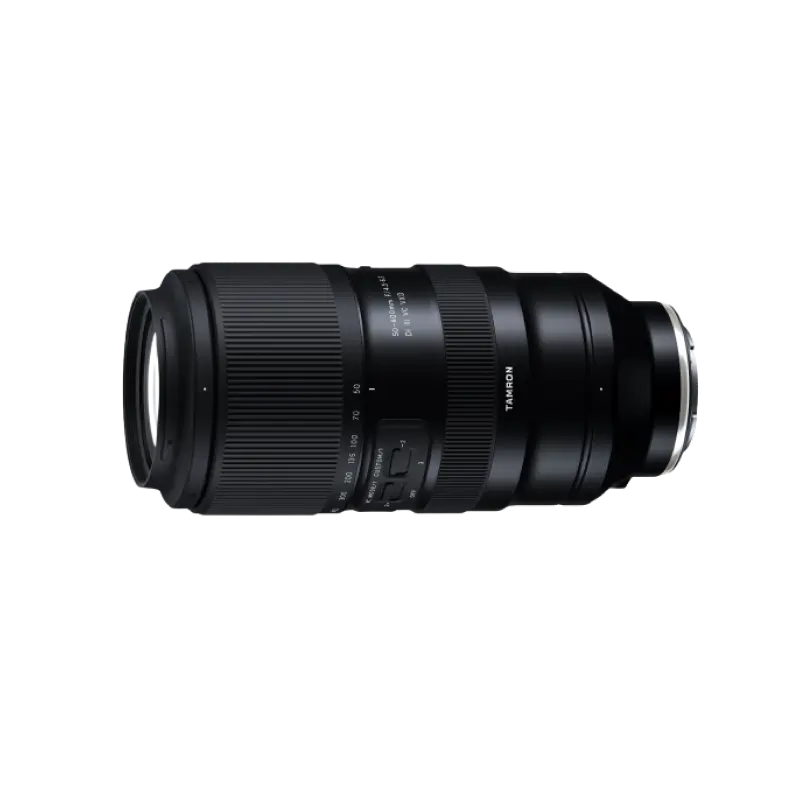
50-400mm F/4.5-6.3 Di III VC VXD (Model A067)
The 50-400mm F/4.5-6.3 Di III VC VXD (Model A067) is an ultra-telephoto zoom lens with an 8x zoom starting at 50mm at the wide-angle end and compatible with full-frame mirrorless cameras. The lens delivers uncompromised high image quality over the entire 50-400mm focal length range, yet is as compact and lightweight as a 100-400mm class lens. Equipped with the VXD mechanism and the VC mechanism, the lens can quickly focus on the subject's movement when shooting sports and wild birds. The 50-400mm F4.5-6.3 VC is a new ultra-telephoto zoom lens that combines unparalleled image quality and mobility.
Learn more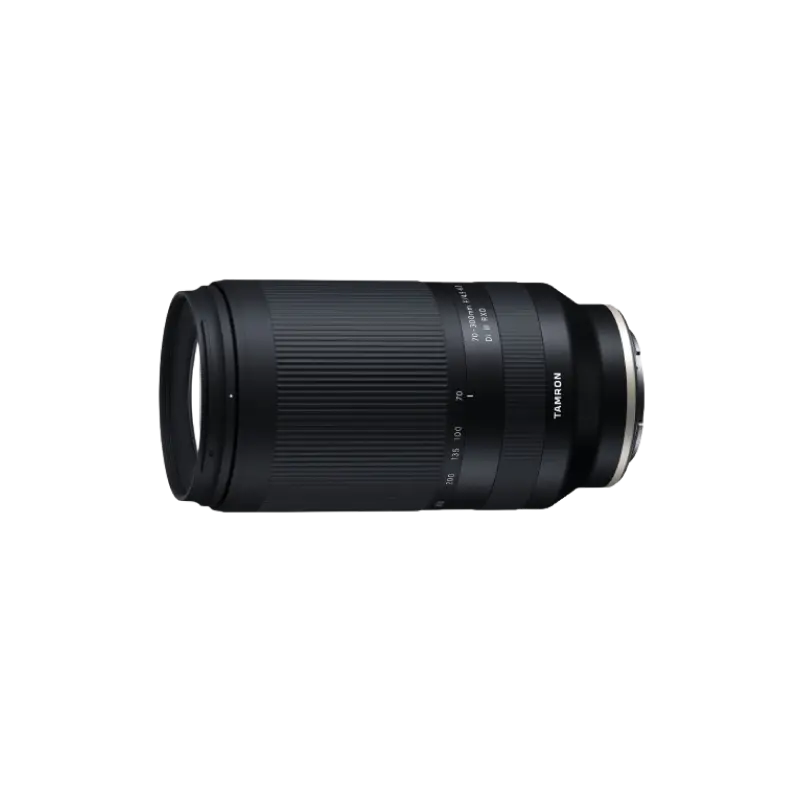
70-300mm F/4.5-6.3 Di III RXD (Model A047)
The 70-300mm F/4.5-6.3 Di III RXD (Model A047) for full-frame mirrorless cameras is a telephoto zoom lens designed and created so photographers of all skill levels can enjoy high quality images comfortably. The 70-300mm F4.5-6.3 covers a broad telephoto zoom range yet is the small and lightest weight. With special emphasis on resolving power, TAMRON has deployed special lens elements appropriately arranged to correct chromatic aberration, generally very strong in a telephoto lens, as well as other aberrations. Users can enjoy high-resolution images combined with stunning bokeh qualities that are achievable only with a telephoto lens. The lens also incorporates the RXD, a high-speed precision AF drive system that is remarkably quiet. The 70-300mm F4.5-6.3 is a versatile lens for photographing landscapes, sports and other action, pets, wildlife, and more. The lens also demonstrates its potential for portrait shooting, casual snapshots, and scenarios that require you to be mobile and shoot handheld, like sporting events.
Learn more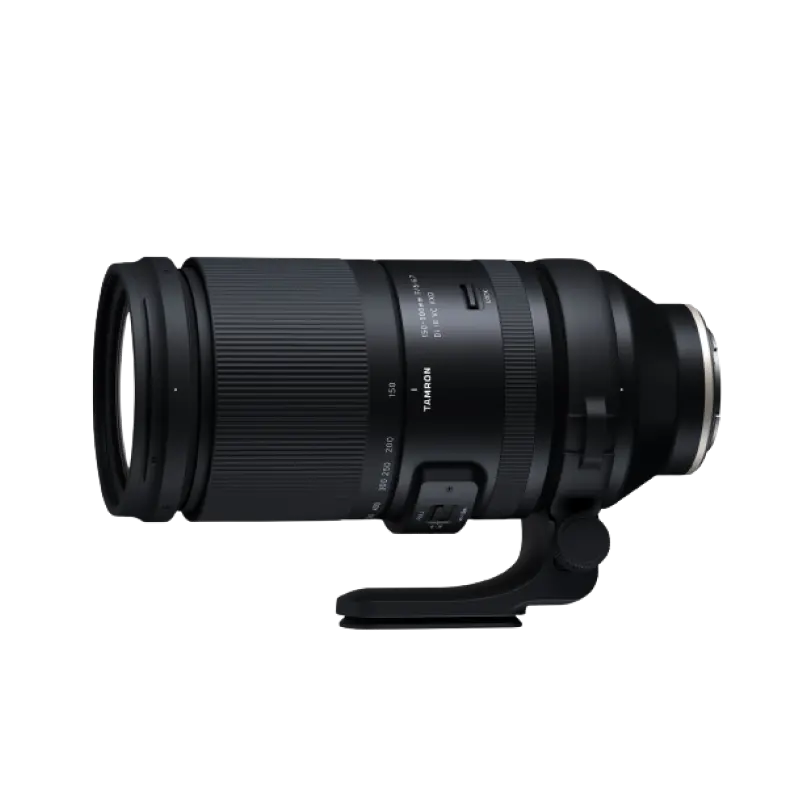
150-500mm F/5-6.7 Di III VC VXD (Model A057)
The 150-500mm F/5-6.7 Di III VC VXD (Model A057) is compact enough to be handheld while maintaining a focal length of 500mm on the telephoto end. It allows users to easily enjoy the world of the 500mm ultra-telephoto lens while maintaining its high image quality. The high-speed, high-precision AF with excellent tracking performance and the VC mechanism support handheld shooting in the ultra-telephoto range.
Learn more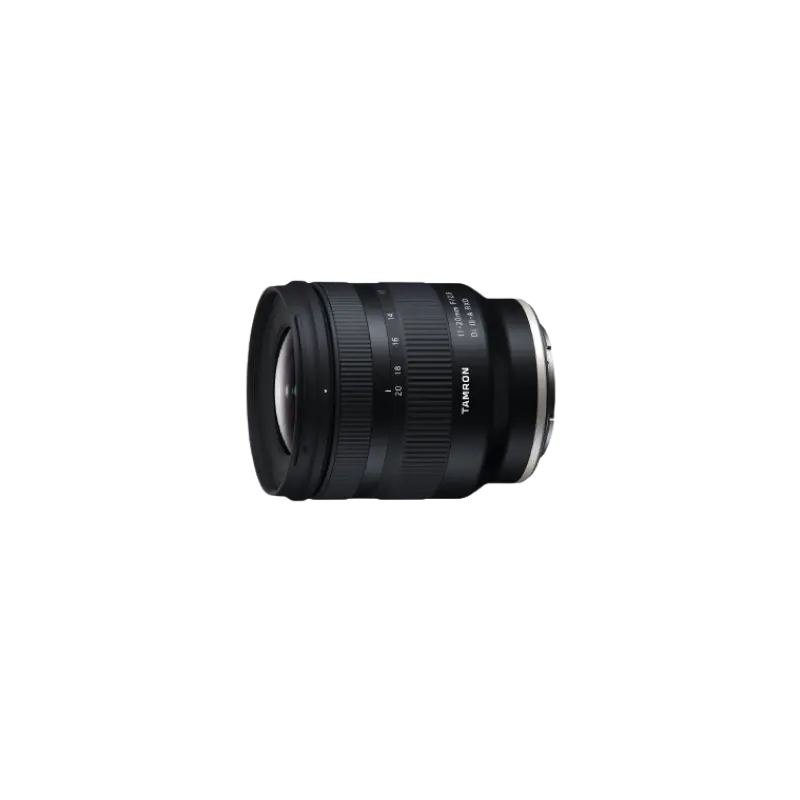
11-20mm F/2.8 Di III-A RXD (Model B060)
11-20mm F/2.8 Di III-A RXD (Model B060) is the world's first compact, lightweight F2.8 ultra wide-angle zoom lens for Sony E-mount APS-C mirrorless cameras. Can be a great choice for video shooting.
Learn more