
- What is half macro? Explaining the differences and how to use it
- January 31, 2025
What is half macro? Explaining the differences and how to use it
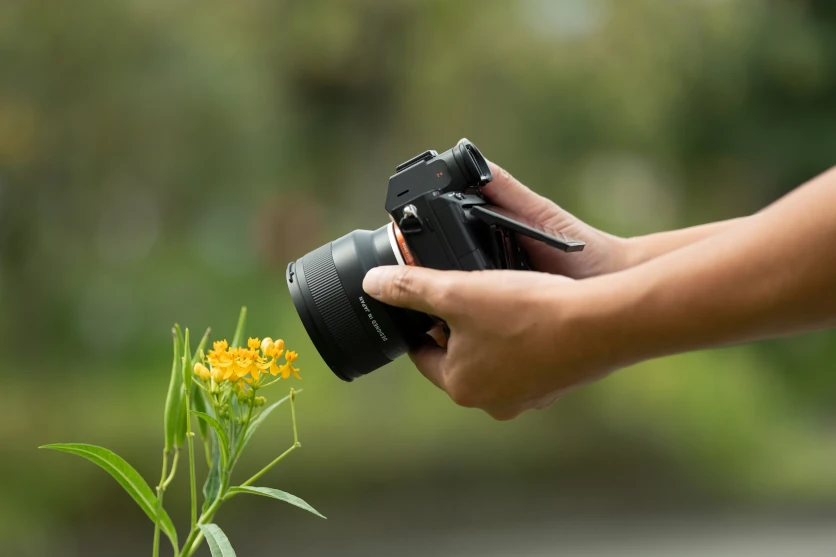
Macro lenses come in two types: equal magnification macro and half macro. Half macro lenses, with a maximum magnification of 1:2, combine ease of use and expressive power, allowing for macro shots that include the background. These lenses are also popular as entry-level tools for macro photography. In this article, we introduce the features and uses of the half macro lens, which highlights the beauty of familiar subjects, from flowers and insects to small objects.
What is a macro lens?
Macro lenses, which capture small subjects in large detail, are unique lenses that expand the possibilities of photographic expression. Two important concepts in understanding macro lenses are “maximum magnification” and “minimum object distance.” Maximum magnification refers to the ratio between the size of the subject and the size of its image on the camera’s sensor. Minimum object distance refers to the closest distance between the subject and the sensor at which the subject is in focus.
Lenses with a maximum magnification of 1/2 (1:2) to 1x (1:1) are called macro lenses. These lenses allow you to get closer to the subject and capture fine details. Lenses with a 1:1 magnification are called “equal magnification macro,” and those with a 1:2 magnification are called “half macro.” Using these lenses, you can capture small worlds such as the delicate texture of flower petals or the compound eyes of insects, which are often hard to see with the naked eye.
Differences Between Equal Magnification Macro (1:1) and Half Macro (1:2)
Equal magnification macro and half macro lenses each have distinct characteristics. Equal magnification macro allows you to capture the subject at nearly its actual size on the sensor, enabling the capture of even the smallest details.
On the other hand, half macro captures the subject at approximately half its actual size. However, it still allows you to capture enough detail while balancing the surrounding environment and background.
Additionally, in terms of difficulty, equal magnification macro has a shallow depth of field, requiring some skill and experience for accurate focusing. In contrast, half macro is relatively easier to use, making it a great option for beginners who want to capture the intended shot without difficulty.
Example Photos with Half Macro Lenses
Half macro lenses can be used with various subjects to bring out the beauty of details. Below are some representative shooting scenarios.
Flowers and Plants
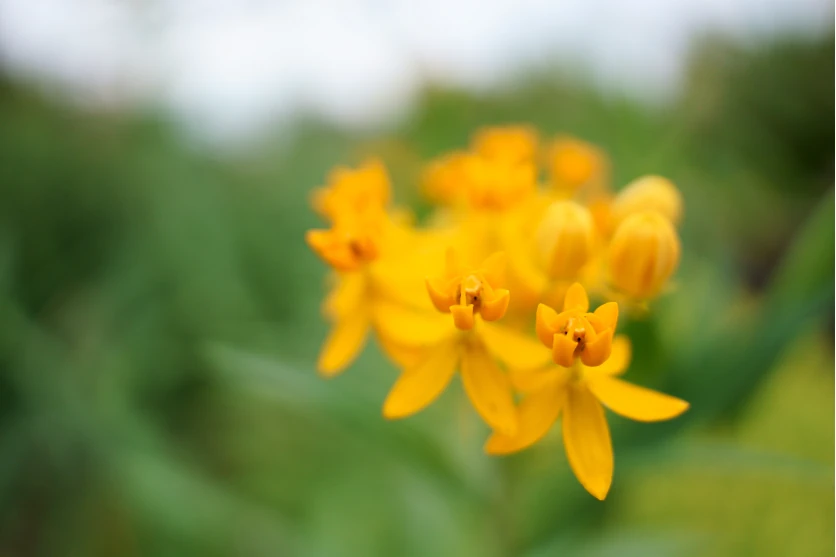
TAMRON 24mm F2.8 (Model F051) Focal length: 24mm Exposure: F2.8 Shutter Speed: 1/4000sec ISO: 640
Flowers and plants are representative subjects that can fully utilize the features of a half macro lens. You can vividly capture the delicate texture of flower petals wet with morning dew or the intricate patterns of leaf veins, showcasing the fine beauty of nature.
Moreover, because you can maintain an appropriate shooting distance, you can effectively express the relationship between the main subject and a beautifully blurred background. By including surrounding flowers in the frame, you can also convey the unique atmosphere and scene of the season.
Insects
Insect photography also takes full advantage of the benefits of half macro. Although half macro doesn’t allow you to get as close to the subject as equal magnification macro, it enables you to observe insects without startling them, capturing their appearance and behavior.
For example, you can clearly capture the scales on a butterfly’s wings, the shine of a dragonfly’s compound eyes, or the distinctive shape of a praying mantis’s forelegs. Additionally, you can capture moments when insects land on flowers or walk on leaves, creating a story that includes the relationship between the insects and their environment.
Small Objects

TAMRON 35mm F2.8 (Model F053) Focal length: 35mm Exposure: F2.8 Shutter Speed: 1/200sec ISO: 800
Even for small objects around you, half macro offers unique expressive capabilities. For example, you can clearly capture the delicate decoration of jewelry or accessories, the texture of ceramics, or the fine embossing patterns on leather items—details that are often overlooked in everyday life.
You can also express the stories that objects tell, such as the deep, aged patina of tools that have been used for many years or the intricate patterns created by the artisan’s handwork.
Tabletop Photography

TAMRON 50-300mm F4.5-6.3 (Model A069) Focal length: 50mm Exposure: F4.5 Shutter Speed: 1/80sec ISO: 250
In food photography, you can express the appealing, mouth-watering qualities of your subject. For example, by focusing on the surface sheen, gloss, or juiciness, you can highlight the charm of your subject.
Moreover, by leveraging the shallow depth of field, you can create beautiful bokeh, further enhancing the main dish. For example, by gently blurring the tableware or decorations in the background, you can create a sense of depth in the scene.
Street Photography
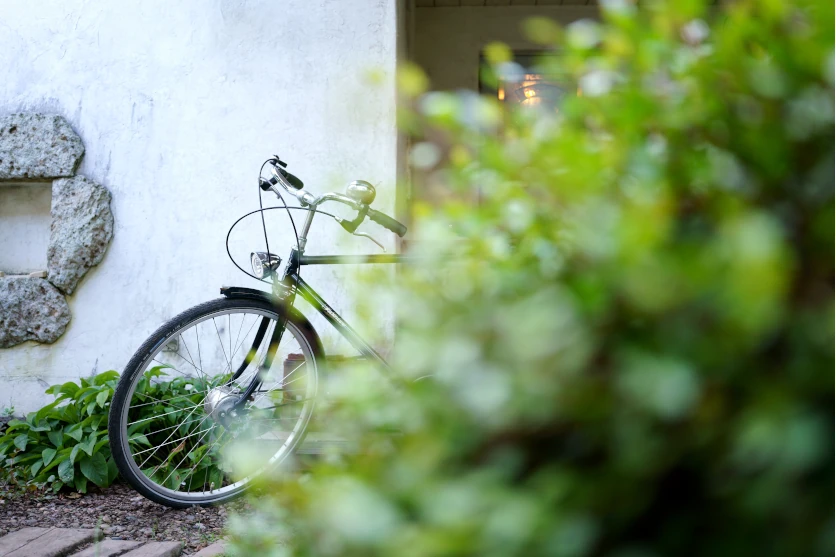
TAMRON 35mm F2.8 (Model F053) Focal length: 35mm Exposure: F2.8 Shutter Speed: 1/200sec ISO: 400
Half macro also performs excellently in street photography. For example, you can capture the details of street corners or the everyday moments of life from a fresh perspective, using the unique rendering power of the macro lens and its beautiful bokeh. In portraits, you can capture expressions and gestures dramatically within the smooth background bokeh.
How to Use a Half Macro Lens
To fully unlock the charm of half macro, there are several important techniques. Below, we share practical shooting tips.
Tips for Focusing
When shooting with a half macro lens, it is essential to focus precisely on the subject. Make sure to focus accurately on the part of the subject you want to express most dramatically (e.g., droplets on flower petals or patterns on an insect). Using aperture priority mode allows you to adjust the aperture to control the amount of blur while also ensuring proper exposure.
In the case of small subjects, autofocus (AF) may struggle, so manual focus is recommended for more precise results.
Simple Yet Contrasting Composition
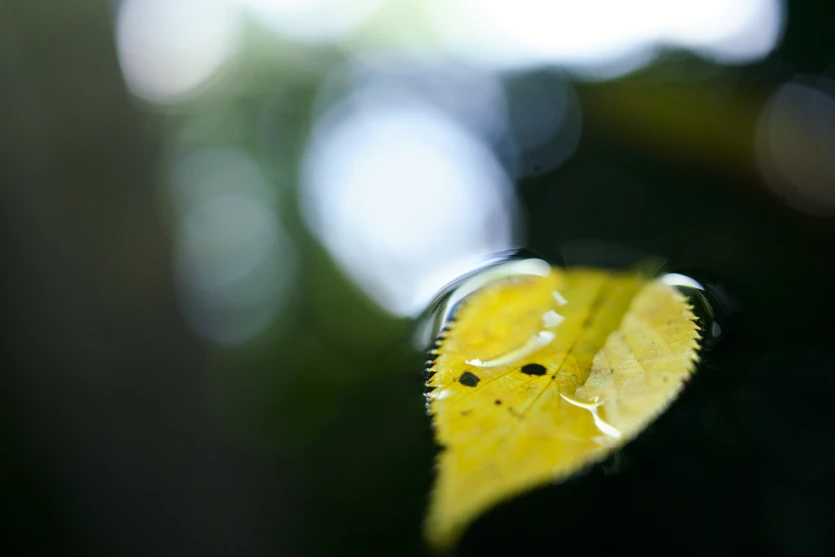
TAMRON 35mm F2.8 (Model F053) Focal length: 35mm Exposure: F2.8 Shutter Speed: 1/160sec ISO: 1600
Macro photography often creates beautiful bokeh in the background, so it’s important to aim for a simple and impactful composition. Choose background colors or lighting that enhance the subject and remove unnecessary elements. For example, when photographing flowers, try to ensure the background colors harmonize with the color of the flower. Additionally, shooting from a diagonal or low angle can add depth and dimensionality to the photo.
Adding Color and Context with the Background
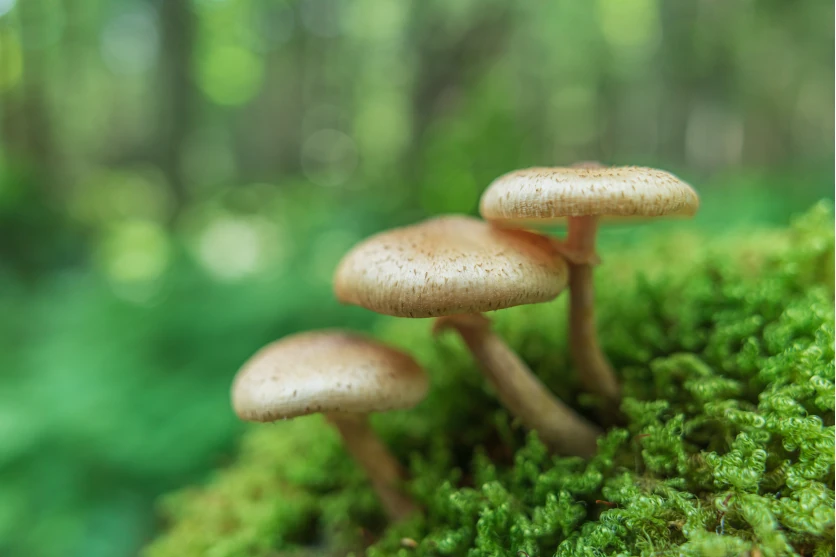
TAMRON 20mm F2.8 (Model F050) Focal length: 20mm Exposure: F3.2 Shutter Speed: 1/100sec ISO: 200
The background should not simply be blurred, but used to add to the overall mood of the photograph. For instance, when photographing flowers, placing plants of similar hues in the background can create a cohesive color palette.
When photographing insects, including elements from their habitat, such as branches or flowers, in the background can add a sense of presence and a richer expression of the subject’s environment.
Minimizing Camera Shake
In macro photography, even slight camera shake can significantly affect the result, so stabilizing the camera is essential. For handheld shooting, set the shutter speed to 1/125 to 1/200 seconds or faster to reduce shake. Using a tripod is also effective for more stable shots. A tripod is especially useful when photographing extremely fine details or in low-light conditions.
Pay Attention to Lighting
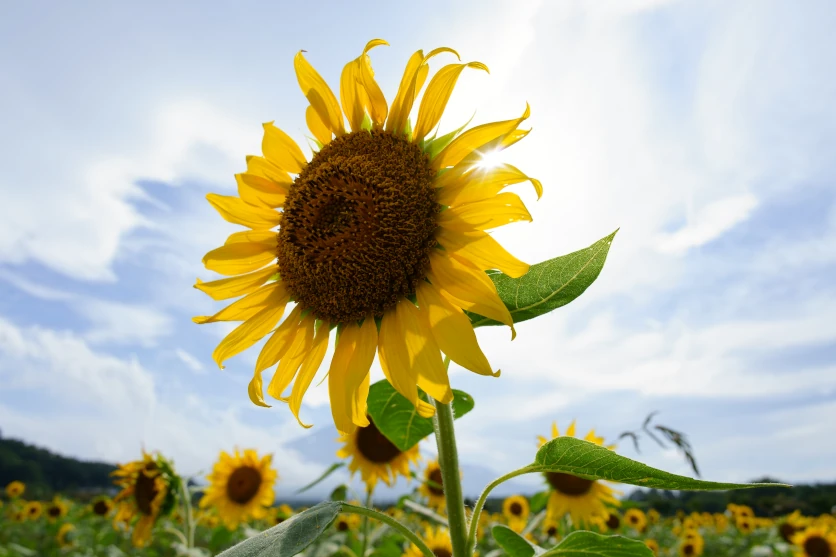
TAMRON 20mm F2.8 (Model F050) Focal length: 20mm Exposure: F8 Shutter Speed: 1/320sec ISO: 100
The direction of light can drastically change the impression of your subject. By utilizing backlight or side light, you can highlight the contours of the subject, resulting in a more dramatic, three-dimensional effect. In contrast, front lighting captures the colors and textures of the subject but can lead to a flat appearance. Adjust the light direction based on the characteristics of your subject and the intended outcome.
Using as a Prime Lens Beyond Macro Photography
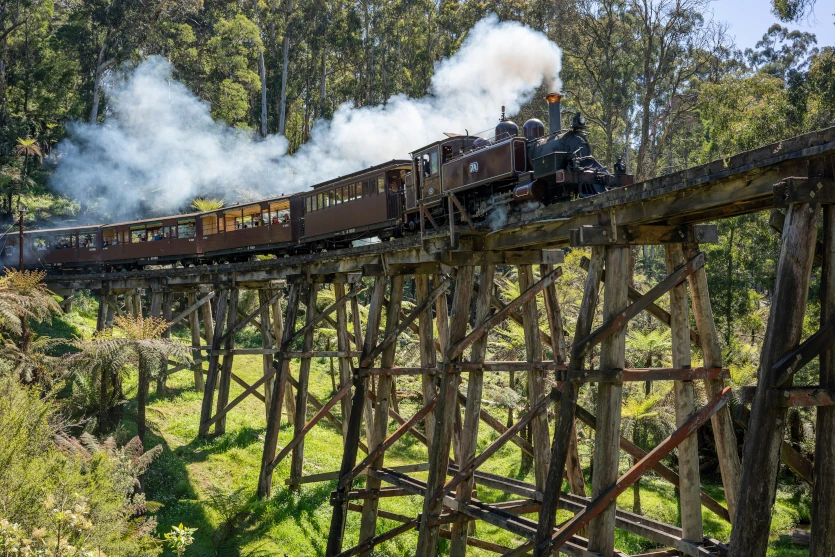
TAMRON 35mm F2.8 (Model F053) Focal length: 35mm Exposure: F9 Shutter Speed: 1/160sec ISO: 100
A prime half macro lens performs excellently as a regular prime lens as well. For example, in portraits, its smooth bokeh and excellent resolution help capture expressive and impactful facial features. In landscape photography, its sharpness allows you to capture detailed scenes from distant to close perspectives. By using the lens for more than just macro shots, you can fully explore its potential in various situations.
Choosing a Half Macro Lens
Half macro lenses come in various types, each with its own characteristics. To select the lens that best suits your style and purpose, check the following points.
Maximum Magnification
As mentioned earlier, lenses with a 1:1 maximum magnification are considered “equal magnification macro,” while lenses with a 1:2 magnification are “half macro,” offering different expressive possibilities. Look at sample photos to determine which type of lens best suits the photographic expression you want to achieve. For example, if you want to capture fine details in greater magnification, an equal magnification macro lens would be ideal. If you want to capture a wider angle that includes more of the scene, consider a half macro lens.
Minimum object distance
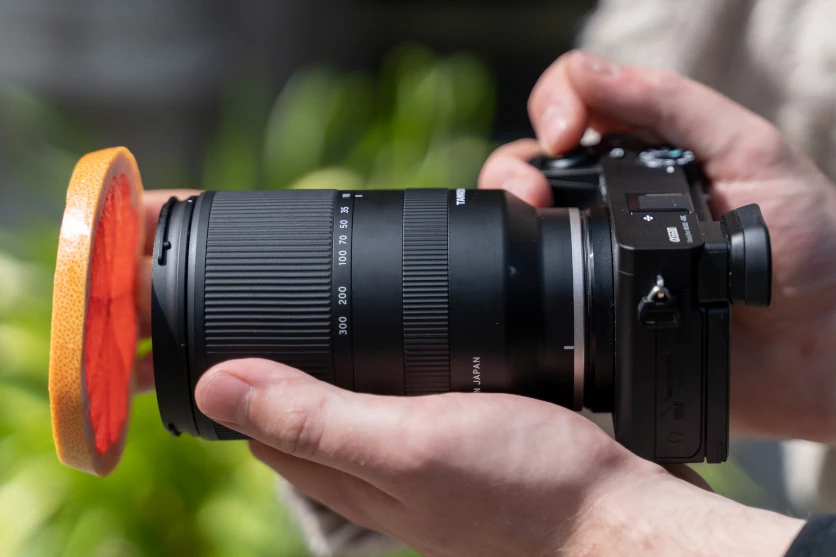
Lenses with a shorter minimum object distance allow you to get closer to the subject, enabling bolder expressions. For example, you can capture close-up shots of a flower’s pistil and stamen or the shine of an insect’s compound eyes. Shorter focusing distances also make it easier to adjust the composition, even in tight spaces.
Focal Length
The focal length determines the field of view and the amount of blur. Wide Angle lenses (35mm or less) can capture the subject and background with a broader field of view, creating dynamic perspective effects. Standard focal lengths (around 50mm) allow for balanced framing of both the subject and the background. Telephoto lenses (80mm and above) can make the subject appear larger and blur the background more dramatically. Consider the focal length that best suits the photographic expression you envision by referring to sample photos.
Maximum Aperture (F-number)
Lenses with a wide maximum aperture (such as f/2.8) are advantageous for handheld shooting in low light conditions. They allow you to set a faster shutter speed, reducing camera shake. Lenses with a smaller F-number also create more dramatic bokeh, making them particularly ideal for portraits or artistic expression.
Weight and Compactness
Lightweight lenses are easier to handle for long shooting sessions and offer better stability during handheld shots, resulting in less blur. Compact lenses are easier to carry, whether for travel or casual outings. Additionally, they are useful for discreet shots in confined spaces, such as in indoor environments or restaurants.
Autofocus (AF) Performance
Check the lens for smooth and accurate autofocus. If you frequently photograph moving subjects like flying butterflies or insects, look for a lens with fast and precise AF. If you photograph subjects with strong wariness, such as birds or insects, make sure the lens is also quiet.
Image Stabilization
In macro photography, even slight movements can cause blur, so lenses with image stabilization are useful. Additionally, being able to adjust the level of stabilization can extend the lens’s versatility beyond macro photography to various other scenes.

Lens Featured in this Impression
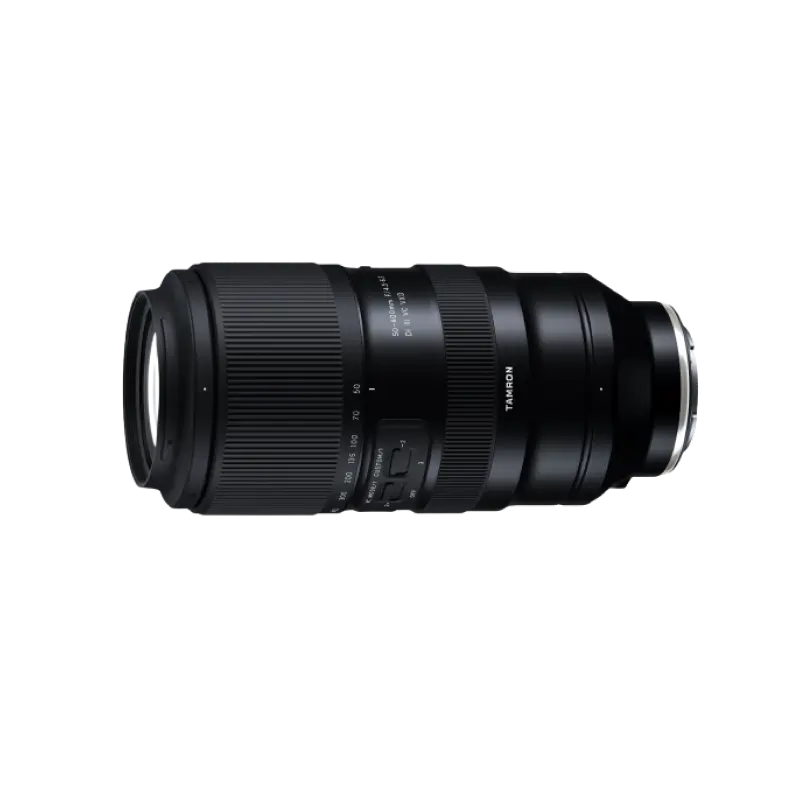
50-400mm F/4.5-6.3 Di III VC VXD (Model A067)
The 50-400mm F/4.5-6.3 Di III VC VXD (Model A067) is an ultra-telephoto zoom lens with an 8x zoom starting at 50mm at the wide-angle end and compatible with full-frame mirrorless cameras. The lens delivers uncompromised high image quality over the entire 50-400mm focal length range, yet is as compact and lightweight as a 100-400mm class lens. Equipped with the VXD mechanism and the VC mechanism, the lens can quickly focus on the subject's movement when shooting sports and wild birds. The 50-400mm F4.5-6.3 VC is a new ultra-telephoto zoom lens that combines unparalleled image quality and mobility.
Learn more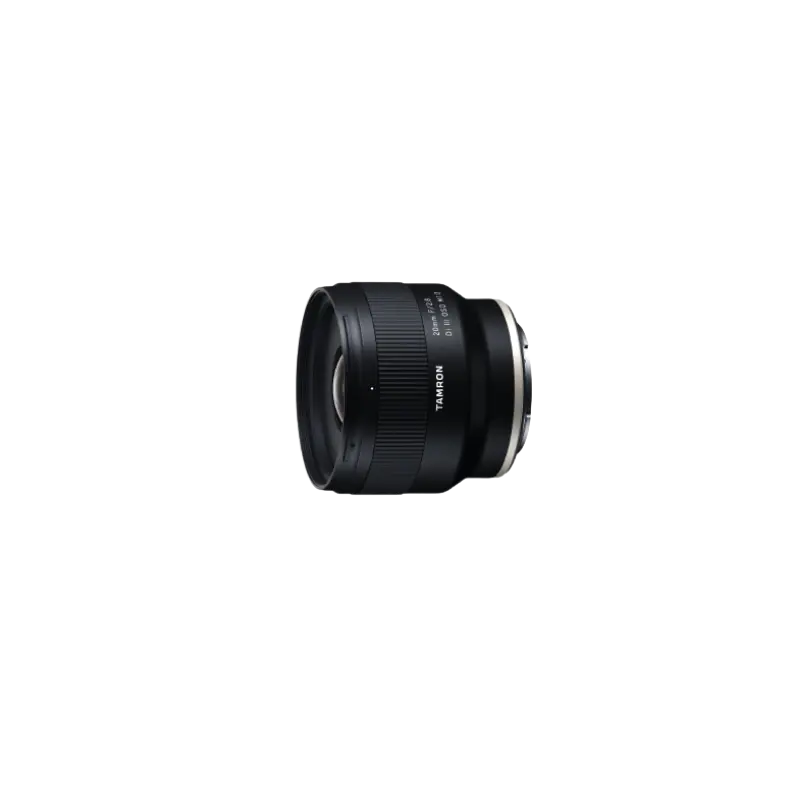
20mm F/2.8 Di III OSD M1:2 (Model F050)
The 20mm F/2.8 Di III OSD M1:2 (Model F050) is a 20mm fixed focal lens featuring F/2.8 and high close-up shooting, allowing you to enjoy ultra wide-angle photography in earnest. With a MOD (Minimum Object Distance) of 0.11m, you can enjoy the world of ultra wide-angle photography that you have never experienced before.
Learn more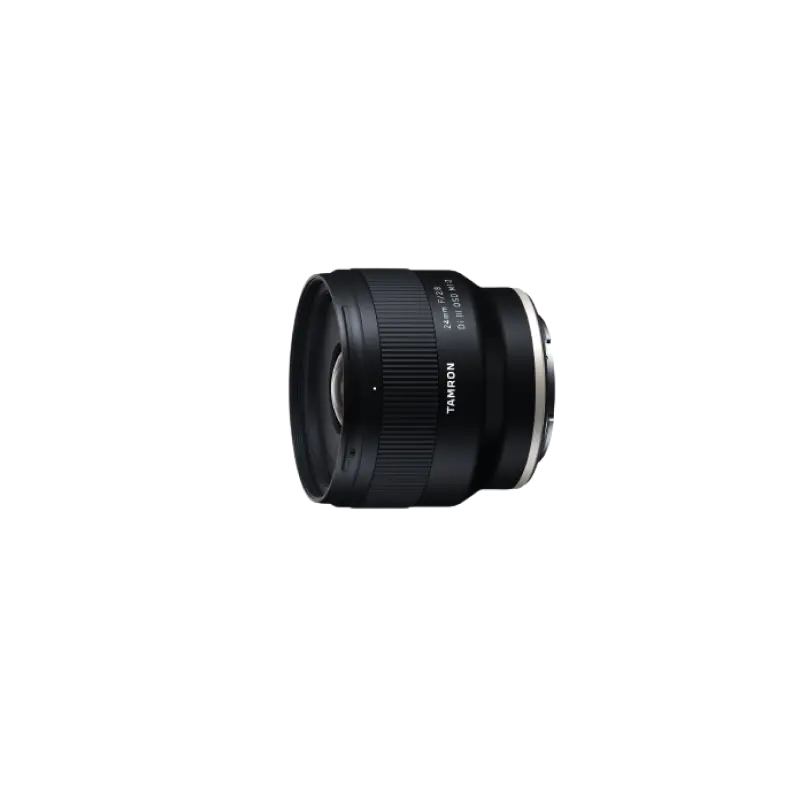
24mm F/2.8 Di III OSD M1:2 (Model F051)
The 24mm F/2.8 Di III OSD M1:2 is a wide-angle fixed focal lens that allows you to get incredibly close-up. Its focal length is 24mm and the MOD (Minimum Object Distance) is 0.12m. The compact and lightweight design that allows you can shoot light, making it ideal for snapshots.
Learn more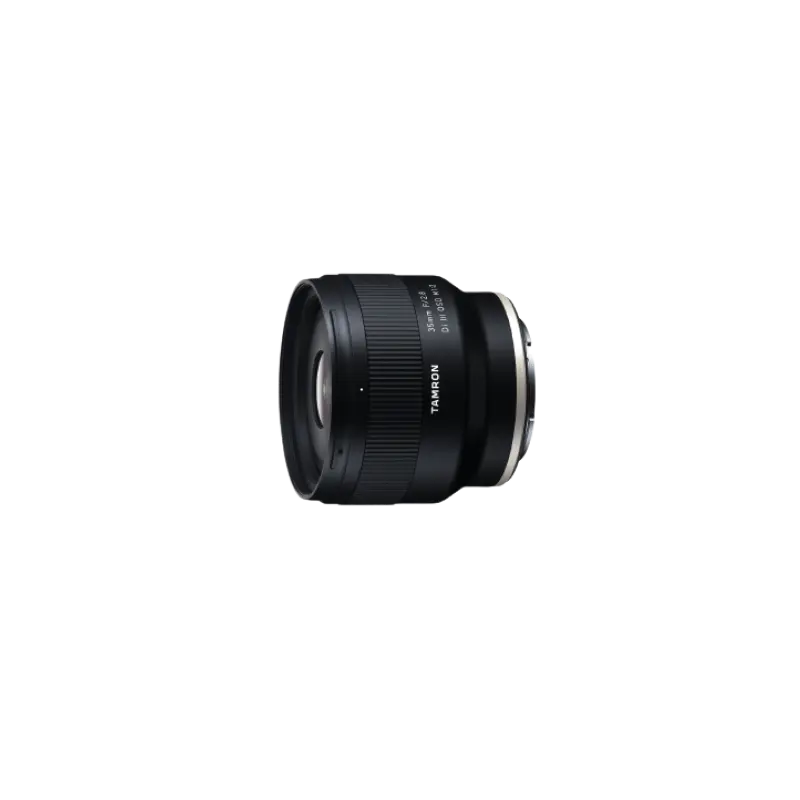
35mm F/2.8 Di III OSD M1:2 (Model F053)
The 35mm F/2.8 Di III OSD M1:2 is an F/2.8 large aperture fixed focal lens. The MOD (Minimum Object Distance) is 0.15m. You can enjoy the beautiful bokeh that brings out the subject.
Learn more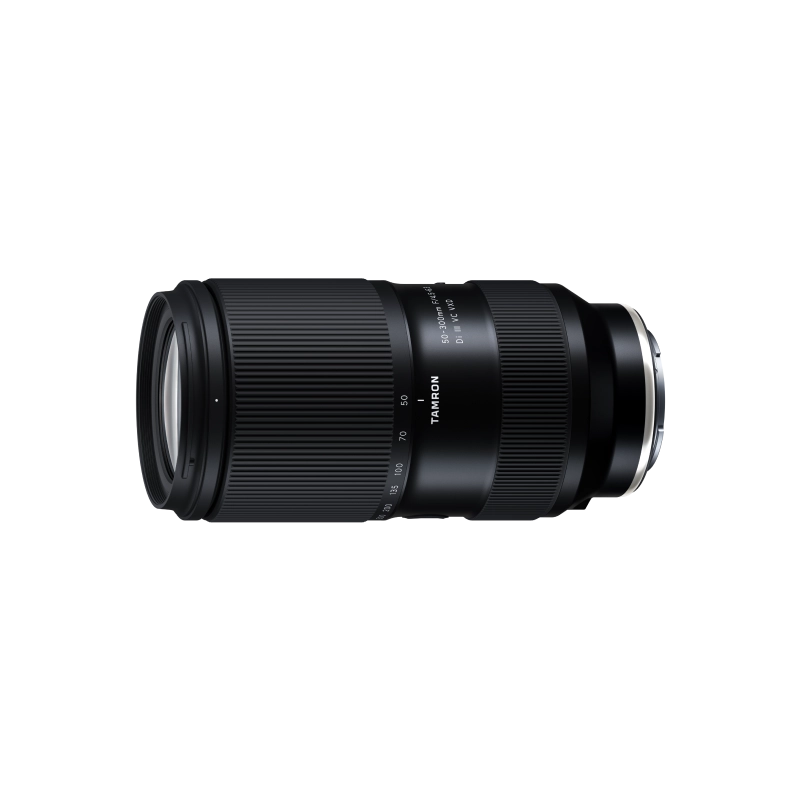
50-300mm F/4.5-6.3 Di III VC VXD (Model A069)
50-300mm F/4.5-6.3 Di III VC VXD (Model A069) is a 6x telephoto zoom lens for Sony E-mount that delivers outstanding convenience and image quality. Discover the groundbreaking capabilities of a 300mm telephoto zoom that starts from 50mm at the wide end.
Learn more